Key Takeaways
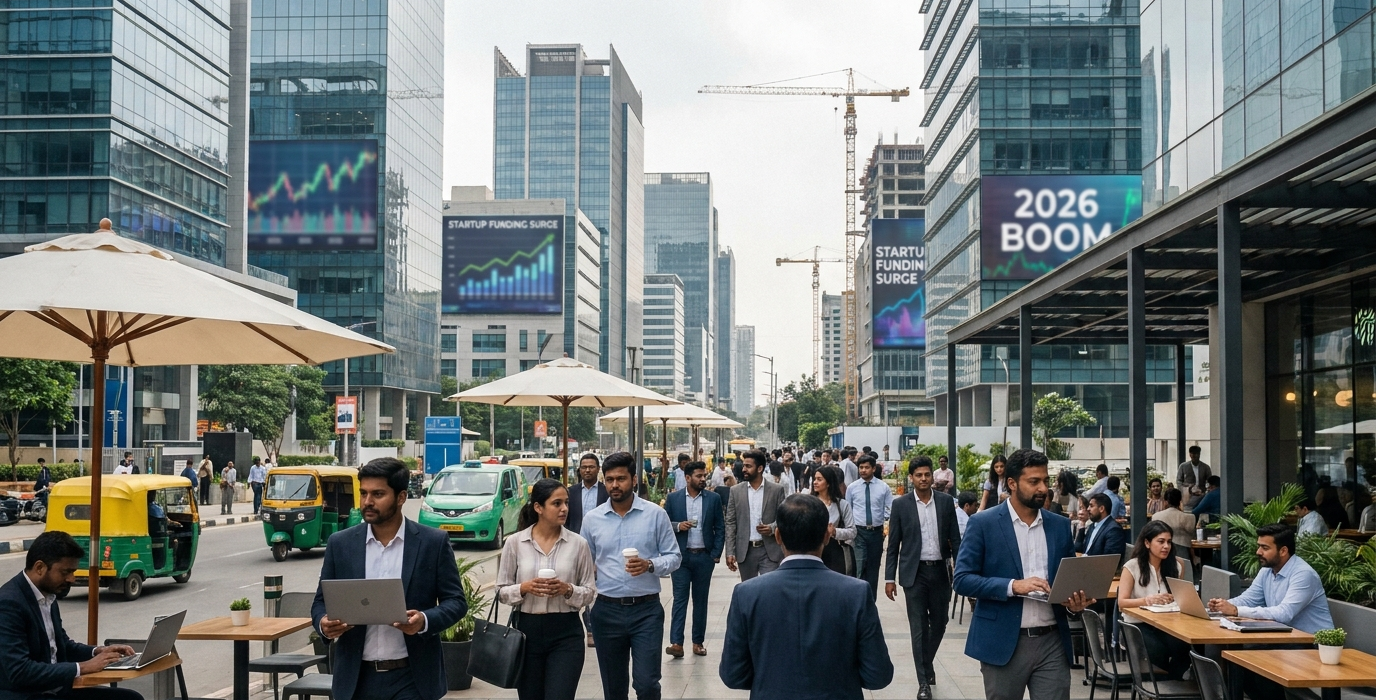
- Bangalore’s startup ecosystem is experiencing an unprecedented funding surge in 2026, driven by AI, sustainability, and deep tech innovations.
- Seed and Series A rounds are seeing significant increases, making it a prime time for early-stage companies to seek capital.
- Investors are prioritizing scalable business models and strong leadership teams, with a keen eye on global market potential.
- While the spotlight is on tech, traditional sectors like AgriTech and FinTech are also witnessing robust investment, indicating a diversified growth trajectory.
Bangalore Ignites: A Record-Breaking Funding Year for India’s Silicon Valley
The buzz in Bangalore is louder than ever. As of August 2026, India’s tech capital is witnessing a venture capital outpouring that eclipses all previous years. We’re talking about a record-breaking surge, a tidal wave of investment washing over innovative startups. This isn’t just a few big deals; it’s a broad-based acceleration across multiple sectors, signaling a new era of growth.
What’s fueling this inferno? A potent cocktail of global economic recovery, a maturing Indian tech landscape, and a renewed investor appetite for disruptive technologies. From artificial intelligence breakthroughs to groundbreaking sustainable solutions, Bangalore’s entrepreneurs are not just dreaming big; they’re attracting the capital to make those dreams a reality. This boom is creating a vibrant ecosystem where ideas are nurtured and scaled at an astonishing pace.
For founders, this is a golden period. The sheer volume of capital available means more opportunities to secure funding, even at earlier stages. However, it also means increased competition and a higher bar for what investors are looking for. We’ll delve into the specific sectors, the investor sentiment, and what you, as a founder or aspiring entrepreneur, need to know to navigate this dynamic landscape. Get ready to understand why Bangalore is truly the place to be in 2026.
The AI Avalanche: How Intelligent Technologies Are Driving Investment
Artificial Intelligence (AI) is no longer a futuristic concept; it’s the engine powering Bangalore’s 2026 funding boom. Startups leveraging AI for everything from predictive analytics and personalized healthcare to hyper-efficient logistics are attracting significant attention. Investors see AI as the foundational technology that will redefine industries, and they are backing companies that can demonstrate clear value and scalability.
We’re observing a particular surge in funding for AI startups focused on generative AI for content creation, AI-powered cybersecurity solutions, and AI for scientific discovery, especially in pharmaceuticals and materials science. Companies that can showcase proprietary algorithms or unique datasets are particularly prized. The ability to translate complex AI capabilities into tangible business outcomes is key. Many of these firms are already seeing substantial pre-orders and pilot programs with major corporations, validating their market readiness.
One surprising trend is the emergence of AI solutions tailored for traditional Indian industries. Think AI-driven crop management for agriculture in Punjab or AI-powered fraud detection for small and medium enterprises in the bustling markets of Surat. These aren’t just niche applications; they represent a massive, untapped market. The investment here is not just about the technology itself, but about how it can solve deeply ingrained problems and unlock new efficiencies across the Indian economy.
Sustainability Takes Center Stage: Green Tech’s Green Rush
Beyond the digital realm, a powerful wave of conscious investment is sweeping through Bangalore, centered on sustainability. Startups developing innovative solutions for renewable energy, waste management, circular economy models, and clean transportation are finding open wallets. The global imperative to address climate change has translated into a significant financial commitment from investors who are actively seeking out companies that offer both environmental and economic returns.
We’re seeing a notable uptick in funding for companies working on advanced battery technologies for electric vehicles and grid storage, novel materials for sustainable packaging, and water purification and conservation technologies. The Indian government’s push for Net Zero goals by 2070, coupled with increasing consumer awareness, provides a fertile ground for these green ventures. Investors are not just looking at the environmental impact; they are meticulously evaluating the business models for long-term viability and profitability.
A fascinating development is the rise of AgriTech startups focusing on sustainable farming practices. These companies are using technology to reduce water usage, minimize pesticide reliance, and improve soil health. For instance, a startup based in North Bangalore is developing bio-fertilizers derived from agricultural waste, offering a dual benefit of waste reduction and enhanced crop yields. This convergence of technology and ecology is proving to be a highly attractive proposition for VCs, demonstrating that ‘doing good’ can indeed be very profitable.
Deep Tech Deep Dives: Unlocking the Future with Foundational Innovations
The funding frenzy isn’t limited to software and AI. Bangalore’s reputation as a hub for deep technology is being solidified in 2026 with substantial investments flowing into startups pushing the boundaries of science and engineering. These are companies working on complex, often hardware-intensive, innovations that have the potential to create entirely new markets or fundamentally disrupt existing ones.
Sectors like biotechnology, advanced materials science, quantum computing, and robotics are witnessing unprecedented interest. Investors are backing companies with strong R&D capabilities, patent portfolios, and teams comprising leading scientists and engineers. The long gestation periods and high capital requirements for deep tech are no longer deterrents; instead, they are seen as indicators of defensible moats and significant long-term value creation. The potential for a significant return on investment, albeit over a longer horizon, is driving this interest.
Consider the advancements in personalized medicine driven by biotech startups in Bangalore. Companies are developing novel drug delivery systems and diagnostic tools that promise to revolutionize healthcare. Another exciting area is advanced materials, with some startups creating lightweight, high-strength composites for aerospace and automotive applications, directly challenging established global players. The sheer intellectual capital present in Bangalore, drawing from institutions like IISc, is a magnet for these ambitious ventures.
FinTech and AgriTech: Traditional Powerhouses Reimagined
While AI and deep tech grab headlines, the venerable sectors of FinTech and AgriTech are far from stagnant. In fact, they are experiencing a robust resurgence in 2026, attracting significant capital as they leverage new technologies to address persistent challenges and unlock new opportunities within India and beyond.
FinTech continues to evolve, moving beyond basic digital payments. We’re seeing substantial investment in embedded finance solutions, AI-driven credit scoring for MSMEs, decentralized finance (DeFi) platforms tailored for the Indian market, and RegTech solutions to help financial institutions navigate complex compliance landscapes. The sheer scale of India’s unbanked and underbanked population, coupled with increasing digital literacy, presents an immense growth runway. Startups that can offer inclusive and secure financial services are particularly attractive.
AgriTech, crucial for India’s economy, is also seeing a remarkable influx of capital. Investment is flowing into precision agriculture, supply chain optimization, farm-to-fork traceability platforms, and innovative financing solutions for farmers. The integration of IoT, AI, and blockchain is enabling greater efficiency, transparency, and profitability across the agricultural value chain. A surprising fact: some AgriTech startups are now using satellite imagery and AI to provide hyper-local weather forecasts and pest detection, offering real-time actionable insights directly to farmers via mobile apps.
| Sector | Key Focus Areas in 2026 | Investor Sentiment | Average Seed/Series A Deal Size (Approx.) |
|---|---|---|---|
| Artificial Intelligence (AI) | Generative AI, AI for Science, Cybersecurity, Enterprise AI | Extremely High | $2M – $10M+ |
| Sustainability/Green Tech | Renewable Energy, EV Batteries, Waste Management, Sustainable Materials | Very High | $1.5M – $7M+ |
| Deep Tech | Biotech, Advanced Materials, Quantum Computing, Robotics | High | $3M – $15M+ |
| FinTech | Embedded Finance, MSME Lending, DeFi, RegTech | High | $1M – $8M+ |
| AgriTech | Precision Agriculture, Supply Chain, Traceability, Farmer Finance | High | $0.8M – $5M+ |
Navigating the Boom: What Founders and Investors Need to Know
This record-breaking funding environment in Bangalore is creating unparalleled opportunities, but it also demands strategic navigation. For founders, the key is to move beyond just having a good idea; you need a robust business plan, a clear path to profitability, and a strong, adaptable team. Investors are increasingly scrutinizing unit economics and the long-term vision of startups.
Demonstrating traction and customer acquisition is more critical than ever. While innovative technology is essential, it must be coupled with a demonstrable market need and a scalable go-to-market strategy. Building relationships with investors early, even before you’re actively fundraising, can provide invaluable insights and potential future backing. Networking within Bangalore’s vibrant startup ecosystem, attending industry events, and seeking mentorship are crucial steps.
For investors, the challenge lies in identifying genuine long-term potential amidst the hype. Due diligence must be thorough, focusing on the team’s execution capabilities, the defensibility of their technology, and their understanding of the market landscape. The increased competition for deals means that investors need to be agile and decisive. Ultimately, the 2026 Bangalore boom is not just about capital; it’s about backing the right teams with the right vision to build the future.
“Bangalore in 2026 is a testament to India’s entrepreneurial spirit. We’re seeing founders not just aim for market disruption, but for global impact, backed by a confluence of technological advancement and a maturing investment ecosystem.”
Frequently Asked Questions
What are the hottest sectors for startup funding in Bangalore in 2026?
The hottest sectors are Artificial Intelligence (AI), Sustainability/Green Tech, Deep Tech (including Biotech and Advanced Materials), FinTech, and AgriTech. These areas are attracting significant venture capital due to their disruptive potential and alignment with global and national priorities.
Is it still a good time for early-stage startups to seek funding?
Yes, it’s an excellent time. Seed and Series A rounds are seeing substantial increases, with more capital available for promising early-stage companies. However, competition is high, so demonstrating a clear value proposition and traction is essential.
What do investors look for in startups during this funding surge?
Investors are prioritizing scalable business models, strong and experienced leadership teams, defensible technology or intellectual property, clear customer acquisition strategies, and a demonstrable path to profitability. They are also increasingly focused on ESG (Environmental, Social, and Governance) factors.
Are there any surprising investment trends in Bangalore this year?
Yes, there’s a significant rise in AI solutions for traditional Indian industries like agriculture and MSMEs, and AgriTech startups using advanced tech like satellite imagery and AI for hyper-local insights. The focus on deep tech with long gestation periods is also notable, indicating a mature investment outlook.