Key Takeaways
- India’s Edtech sector is consolidating in 2026, with a focus shifting from broad reach to deep, specialised learning and hybrid models.
- Expect significant growth in K-12 supplementary education, test preparation, and upskilling for the evolving job market.
- Affordability and accessibility remain paramount, driving innovation in low-bandwidth solutions and vernacular content.
- Regulatory clarity and a renewed emphasis on teacher training are shaping the future of online and blended learning.
The Shifting Sands of India’s Edtech Revolution
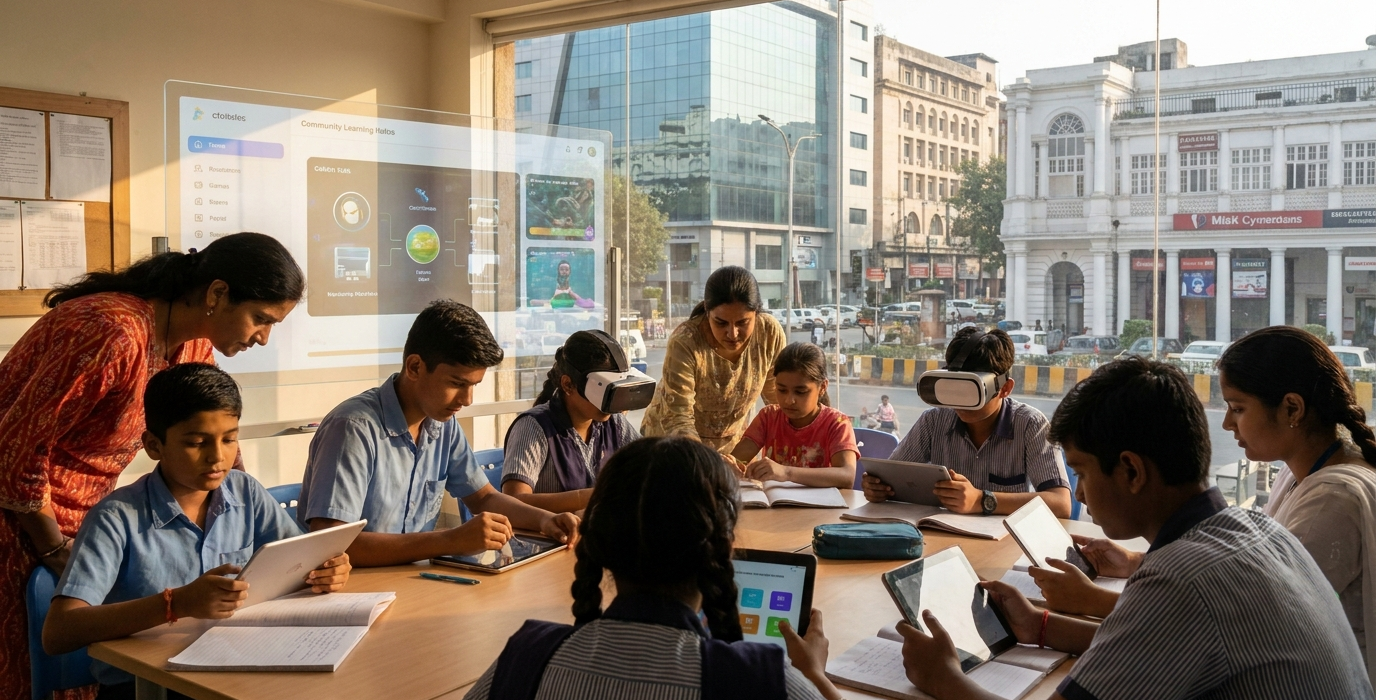
The dazzling, often chaotic, growth phase of India’s Edtech sector appears to be entering a more mature, strategic era in 2026. Gone are the days of unfettered expansion driven by pandemic-induced necessity. Today, we’re witnessing a significant consolidation and a sharper focus on pedagogical value and demonstrable outcomes. Companies are no longer just chasing user numbers; they are meticulously building platforms that offer genuine learning depth, catering to the diverse needs of students from kindergarten to lifelong learners. This evolution is driven by a more discerning parent and student base, coupled with increasing regulatory scrutiny and a global shift towards blended learning environments. We are moving beyond the novelty of online classes to a sophisticated ecosystem where technology truly augments and enhances the educational journey.
The sheer scale of the Indian market, with its vast young population and a growing aspirational class, ensures that Edtech will remain a crucial component of the learning landscape. However, the nature of this component is changing. The initial boom, fuelled by venture capital and a desire for quick market share, has given way to a more sustainable, impact-driven approach. Companies that can demonstrate a clear return on investment – not just in terms of financial metrics but, more importantly, in academic improvement and career advancement – are the ones poised for long-term success. This demands a deeper understanding of the Indian learner, their unique challenges, and their aspirations.
From Freebies to Foundational Skills
The days of offering extensive free content as a primary customer acquisition strategy are waning. In 2026, there’s a palpable shift towards paid offerings that provide tangible value and measurable progress. Parents and students are increasingly willing to invest in platforms that can demonstrably improve grades, secure admissions into competitive institutions, or equip individuals with job-ready skills. This doesn’t mean free resources disappear entirely; they often serve as valuable lead magnets, drawing users into a funnel that highlights premium, more intensive learning experiences. The focus is on demonstrating a clear pathway from foundational understanding to mastery, with Edtech playing a pivotal role at each step.
Navigating the K-12 Labyrinth: Supplementary Learning Takes Centre Stage
The K-12 segment continues to be the bedrock of India’s Edtech market, but the strategy has evolved significantly. While some platforms still offer comprehensive curriculum delivery, the real growth and innovation lie in supplementary learning and test preparation. Parents understand that excelling in competitive entrance exams like JEE, NEET, and CLAT, or ensuring their child performs well in school board examinations, requires targeted, high-quality support beyond regular schooling. Edtech providers are responding by offering specialised modules, AI-powered personalized practice sessions, and mock tests that closely mimic actual exam conditions.
These platforms are also increasingly focusing on vernacular content. With a significant portion of India’s student population learning in regional languages, providing access to quality supplementary education in Hindi, Tamil, Bengali, and other languages is no longer a niche offering but a necessity. This move democratises access and ensures that students from diverse linguistic backgrounds are not left behind. The integration of live doubt-clearing sessions with experienced educators and data-driven performance analytics further strengthens these offerings. It’s about providing a holistic support system that addresses the academic anxieties and aspirations of millions of young Indians.
Personalised Pathways, Proven Progress
One of the most exciting developments is the sophistication of AI in personalising the learning journey. Algorithms now meticulously track student performance, identify weak areas, and adapt the curriculum in real-time. This is far beyond simple adaptive testing; it’s about creating individualised learning pathways that cater to each student’s pace and learning style. For instance, a student struggling with quadratic equations in their Class 10 maths might receive additional explanations, varied practice problems, and even video tutorials specifically addressing their misconceptions, all automatically generated by the platform. This granular approach ensures that no student is left behind, and high achievers are continuously challenged.
Upskilling and Reskilling: Bridging the Employability Gap
Beyond K-12, the demand for upskilling and reskilling courses is exploding in 2026. India’s rapidly evolving economy, driven by digital transformation, AI, and the gig economy, necessitates a workforce that can adapt and acquire new skills. Edtech platforms are stepping in to bridge this critical employability gap, offering courses in areas like data science, artificial intelligence, machine learning, digital marketing, cloud computing, and cybersecurity. These are often developed in collaboration with industry leaders, ensuring that the curriculum is relevant and aligned with current job market demands.
The format of these courses is also adapting. While traditional online degrees and certifications remain popular, we’re seeing a rise in micro-credentials and bootcamps. These shorter, intensive programs allow professionals to quickly acquire specific, in-demand skills without committing to lengthy academic pursuits. Many platforms are also focusing on placement assistance, partnering with companies to connect skilled graduates with relevant job opportunities. This tangible outcome is a major draw for individuals looking to advance their careers or transition into new fields. The average salary increase for individuals who complete these specialised upskilling programs in 2026 is now consistently reported to be between 15-25%, a significant incentive.
| Upskilling Platform | Key Focus Areas | Typical Course Duration | Average Price Range (INR) | Placement Assistance |
|---|---|---|---|---|
| UpGrad | Data Science, AI/ML, Business Management | 6-12 months (PG Diplomas) | ₹1,50,000 – ₹4,00,000 | Yes, strong industry partnerships |
| Simplilearn | Digital Marketing, Cloud Computing, Cybersecurity | 3-6 months (Certifications) | ₹50,000 – ₹1,50,000 | Yes, dedicated career services |
| Great Learning | AI, Machine Learning, Analytics | 4-9 months (PG Programs) | ₹1,00,000 – ₹3,00,000 | Yes, extensive alumni network |
| Coursera (with Indian university partners) | Broad range: Tech, Business, Arts | Varies (Specialisations, Master’s) | ₹20,000 – ₹10,00,000+ | Varies, often depends on the specific program |
The Vernacular Voice: Breaking Language Barriers in Learning
Perhaps one of the most impactful trends of 2026 is the renaissance of vernacular content in Edtech. For too long, the digital learning revolution in India was predominantly English-centric, inadvertently excluding millions of students and learners. Now, platforms are actively investing in creating high-quality educational content in regional languages like Hindi, Tamil, Telugu, Marathi, and Bengali. This is not simply about translation; it involves culturally adapting content and using educators who are fluent and adept at explaining complex concepts in a way that resonates with local students.
This shift is particularly crucial in the K-12 segment, where young learners are more comfortable and receptive to instruction in their mother tongue. It also extends to vocational training and upskilling, ensuring that individuals across India, regardless of their English proficiency, can access opportunities for professional development. Companies are employing innovative methods, including AI-powered voice synthesis in regional languages and creating communities of learners and educators within these linguistic groups. The success of these initiatives can be seen in the rapid growth of user engagement in non-metro cities and Tier-2/Tier-3 towns, indicating a significant untapped market now being effectively reached.
A Surprising Fact:
One particularly interesting development is the rise of Edtech platforms focusing on “Bharat skills” – traditional Indian crafts and vocational trades being taught using modern digital tools and pedagogical approaches. This aims to preserve cultural heritage while also creating new economic opportunities.
Affordability and Accessibility: The Unchanging Imperative
Despite technological advancements and the emergence of premium offerings, affordability and accessibility remain the cornerstones of Edtech success in India. The vast majority of Indian households operate on tight budgets, and educational expenses are a significant consideration. Edtech providers are keenly aware of this and are continuously innovating to make their services more accessible. This includes offering flexible payment plans, subscription models that cater to different budgets, and importantly, developing solutions that work well on low-bandwidth internet connections.
The concept of “Edtech for Bharat” is gaining serious traction. This means designing platforms that are not only affordable but also intuitive and easy to use, even for individuals with limited digital literacy. The use of lightweight applications, offline content download options, and interactive voice response (IVR) based learning modules are all part of this strategy. Furthermore, many companies are exploring partnerships with local community centres and educational trusts to provide access points and support systems in remote areas. The goal is to ensure that the benefits of digital learning reach every corner of India, not just the urban elite.
“The future of Edtech in India isn’t about replacing teachers; it’s about empowering them and making quality education accessible to every child, everywhere, in a language they understand.”
The Regulatory Landscape and the Quest for Quality Assurance
The Edtech sector in India has matured to a point where regulatory clarity and a robust framework for quality assurance are becoming increasingly important. In 2026, we are seeing greater collaboration between Edtech companies, educational institutions, and government bodies to establish standards and guidelines. This is a positive development, as it helps to build trust with consumers and ensures that the focus remains on genuine learning outcomes rather than just marketing hype.
The National Education Policy (NEP) 2020 continues to be a guiding force, emphasizing the integration of technology in education and the development of critical thinking skills. Edtech companies are aligning their offerings with these policy objectives, focusing on pedagogical soundness and evidence-based teaching methodologies. There’s also a growing emphasis on teacher training and professional development for educators who are increasingly using Edtech tools in their classrooms. This ensures that technology is used effectively to enhance, not just deliver, education. A surprising aspect of this trend is the emergence of specific certification programs for teachers in using AI-powered Edtech tools, a testament to the evolving role of educators.
Frequently Asked Questions
What is the current state of Edtech in India in 2026?
India’s Edtech sector is in a phase of consolidation and maturation in 2026. The focus has shifted from rapid user acquisition to providing deep, specialised learning experiences and demonstrable outcomes, with strong growth in K-12 supplementary education, test prep, and professional upskilling. Affordability and vernacular content are key drivers.
Are Edtech courses still relevant for career advancement?
Yes, Edtech courses are highly relevant for career advancement in 2026, especially in upskilling and reskilling for in-demand fields like data science, AI, and digital marketing. Many courses now offer micro-credentials and placement assistance, directly bridging the employability gap.
How is Edtech addressing the needs of students in non-metro areas?
Edtech is increasingly focusing on accessibility and affordability for students in non-metro areas through vernacular content, low-bandwidth solutions, flexible payment plans, and partnerships with local community centres. The goal is to ensure equitable access to quality education.
What is the role of AI in Indian Edtech in 2026?
AI plays a crucial role in personalising learning pathways, offering adaptive testing, providing AI-powered tutors and doubt-clearing, and analysing student performance to identify weak areas. It’s enhancing the effectiveness and efficiency of educational delivery.
Will traditional schooling be replaced by Edtech?
No, the trend in 2026 is towards a blended learning approach, where Edtech complements and enhances traditional schooling. Edtech aims to empower teachers and students with additional resources and personalised learning experiences, rather than replacing the human element of education.