Key Takeaways
- India’s EV market is poised for significant growth, driven by government incentives and falling battery costs.
- The charging infrastructure is rapidly expanding, with a focus on both public fast chargers and home charging solutions.
- New battery technologies and local manufacturing are key to reducing costs and increasing range.
- Two- and three-wheelers will continue to dominate sales, but four-wheeler adoption is accelerating.
The Unstoppable Surge: India’s Electric Vehicle Revolution Accelerates
The hum of electric motors is no longer a whisper; it’s a growing chorus on Indian roads. As we navigate 2026, the nation’s electric vehicle (EV) landscape is transforming at an unprecedented pace. What was once a niche segment is now firmly on the path to mainstream adoption, fuelled by a potent mix of policy support, technological advancements, and a burgeoning consumer appetite for cleaner, more sustainable transportation. We’re witnessing a fundamental shift, moving beyond mere novelty to a robust, evolving ecosystem that promises to redefine mobility for millions across the subcontinent and beyond.
The government’s unwavering commitment, visible through schemes like the Faster Adoption and Manufacturing of Electric Vehicles (FAME) program, has been instrumental. These incentives, coupled with state-level policies, are making EVs more accessible and attractive. Simultaneously, global advancements in battery technology are translating into longer ranges and quicker charging times, directly addressing earlier consumer concerns. This synergistic push is creating a virtuous cycle, where increased demand encourages more investment, leading to further innovation and affordability.
“India’s EV journey is not just about cleaner air; it’s about becoming a global manufacturing hub for sustainable mobility, creating jobs and fostering technological self-reliance.”
Advertisement300×250 / native
This isn’t just about cars; it’s a comprehensive transformation affecting two-wheelers, three-wheelers, buses, and even commercial fleets. The sheer scale of India’s population and its diverse transportation needs present unique challenges and immense opportunities. Understanding these dynamics is crucial for anyone looking to navigate or participate in this rapidly evolving market. We are at a pivotal moment, where the decisions made today will shape the future of Indian transport for decades to come.
Charging Ahead: The Expanding Network and Evolving Solutions
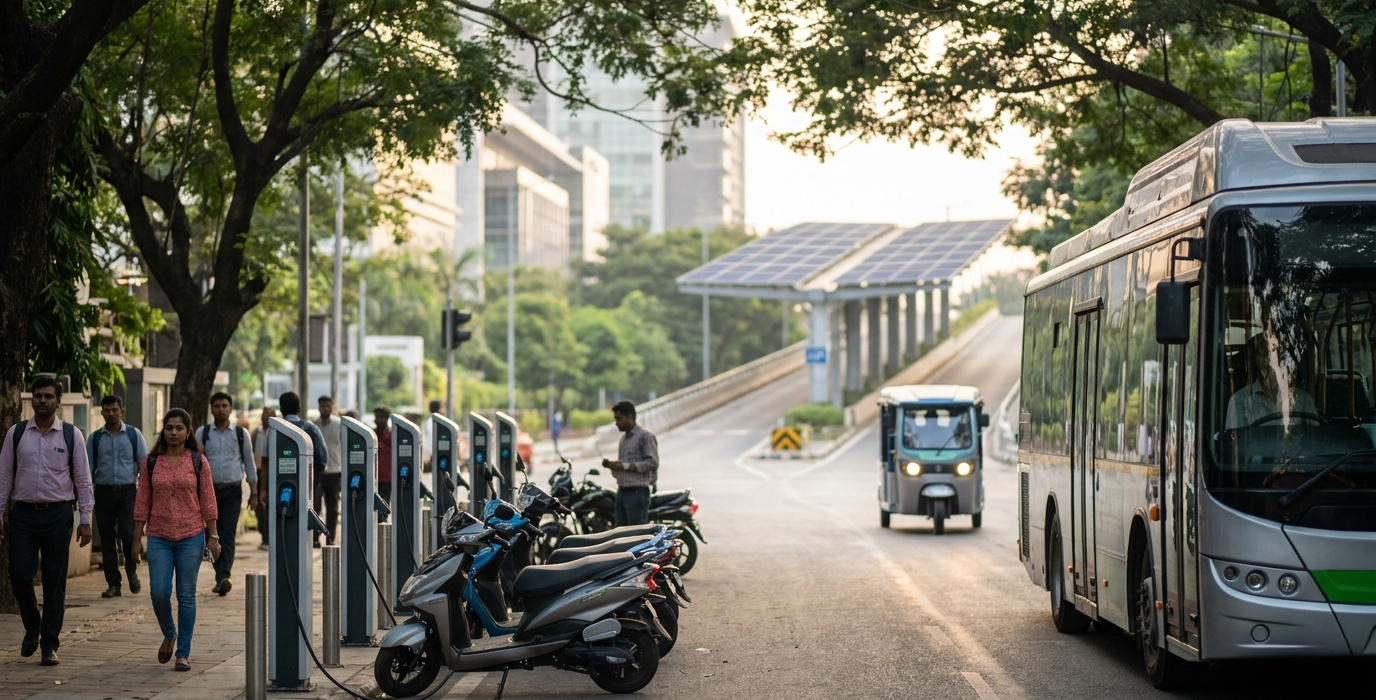
The perennial question mark over electric vehicle adoption in India has always been the charging infrastructure. However, 2026 sees this concern steadily receding. The charging network is not just growing; it’s diversifying, catering to a spectrum of user needs. From high-speed DC fast chargers popping up along national highways and in urban centres to the increasing prevalence of AC home charging solutions, the options are becoming more robust.
Companies are investing heavily in building out public charging stations, often in partnership with businesses and real estate developers. You’ll find charging points at popular shopping malls in cities like Bengaluru and Gurugram, and increasingly, at petrol stations, integrating seamlessly into existing refuelling habits. This expansion is crucial for alleviating range anxiety, a significant barrier for many potential EV buyers. The goal is to make charging as convenient, if not more so, than filling up a conventional vehicle.
Furthermore, innovative solutions are emerging. Battery swapping stations, particularly popular for two- and three-wheelers in dense urban areas, offer an almost instantaneous ‘refuel’ experience. Imagine swapping a depleted battery for a fully charged one in under a minute at a local hub in Delhi or Mumbai – this is becoming a reality. We’re also seeing a push towards smart charging solutions that optimize energy usage, often integrating with renewable energy sources, further enhancing the sustainability appeal. The foresight in planning for this infrastructure is a testament to India’s commitment to leading the EV transition.
Battery Breakthroughs: Powering India’s Electric Future
The heart of any electric vehicle is its battery, and the advancements in battery technology are arguably the most critical driver of India’s EV boom. We are seeing a dramatic reduction in battery costs, a trend that directly translates into more affordable EVs for the average Indian consumer. This is largely due to economies of scale in manufacturing, improved chemistries, and increasingly, localized production of battery components within India itself.
Lithium-ion batteries remain dominant, but research and development are pushing boundaries. Solid-state batteries, promising higher energy density, faster charging, and enhanced safety, are moving from the lab towards commercial viability. While they may not be widespread by the end of 2026, early prototypes and pilot projects are already generating significant buzz. This next generation of battery technology could fundamentally alter EV performance, enabling longer ranges and even faster charging than currently possible.
A surprising fact you might not be aware of is India’s significant progress in developing battery recycling infrastructure. With the surge in EV adoption, managing end-of-life batteries is paramount. Several initiatives are underway to establish efficient and environmentally sound recycling processes. Companies are exploring ways to recover valuable materials like lithium, cobalt, and nickel, reducing reliance on imports and promoting a circular economy. This proactive approach to battery lifecycle management is a crucial, often overlooked, aspect of India’s sustainable EV strategy, securing its position as a leader in responsible electrification.
Two-Wheelers Lead the Charge: Dominance and Diversification
When we talk about India’s EV revolution, the undeniable champions are the two- and three-wheelers. These segments have consistently outpaced their four-wheeled counterparts in sales volume, and 2026 shows no signs of this trend abating. Their popularity is a direct reflection of India’s mobility needs, where scooters and motorcycles are the primary mode of transport for millions in both urban and rural areas.
The affordability factor plays a huge role. Electric scooters and motorcycles are now often priced competitively, or even cheaper, than their internal combustion engine (ICE) equivalents, especially when considering the lower running costs. The ongoing government subsidies and the increasing variety of models available, from utilitarian commuter bikes to sporty performance scooters, cater to a wide range of preferences and budgets. Brands like Ather Energy, Ola Electric, and TVS Motor Company are continuously innovating, introducing models with longer ranges and smarter features.
The impact on daily life is palpable. You’ll see countless electric scooters weaving through the bustling streets of Chennai and Pune, their silent operation a stark contrast to the roar of traditional engines. This shift is not just about personal mobility; it’s also about the transformation of delivery services. E-commerce giants and logistics companies are rapidly electrifying their fleets of two- and three-wheelers, reducing operational costs and their carbon footprint. The rapid adoption in this segment is a crucial stepping stone, building consumer confidence and paving the way for greater EV acceptance across the board.
The Four-Wheeler Frontier: Accelerating Adoption and New Entrants
While two- and three-wheelers currently dominate the Indian EV market share, the four-wheeler segment is experiencing an impressive acceleration in 2026. The once-limited choices have exploded, with both established Indian manufacturers and global players introducing a diverse range of electric cars. This increased competition is driving innovation and pushing prices down, making electric sedans, SUVs, and hatchbacks a more viable option for a growing number of Indian households.
Tata Motors continues its strong lead with models like the Nexon EV and Tiago EV, which have become household names. However, they now face formidable competition from Maruti Suzuki, Hyundai, MG Motor, and even premium brands like BYD entering the fray with compelling offerings. The focus is on developing vehicles that meet the specific needs of Indian consumers, including good ground clearance for varied road conditions, robust build quality, and features that align with local preferences.
The range and charging capabilities of these electric cars are also improving significantly. Many new models now offer ranges well over 300-400 kilometres on a single charge, alleviating range anxiety for longer commutes and weekend getaways. Furthermore, the increasing availability of DC fast charging means that longer journeys are becoming more practical. The perception of EVs as expensive, impractical curiosities is rapidly fading, replaced by a growing recognition of their performance, quiet operation, and lower running costs, making them an increasingly attractive proposition for the discerning Indian buyer.
Government Push and Policy Evolution: Shaping the Future
The Indian government’s role in shaping the electric vehicle ecosystem cannot be overstated. From the initial push through the FAME scheme to ongoing policy adjustments, the intent has always been to foster domestic manufacturing, encourage adoption, and build a sustainable charging infrastructure. As of 2026, these policies continue to evolve, reflecting the dynamic nature of the market and the need for continuous adaptation.
The Production Linked Incentive (PLI) schemes for automotive and advanced chemistry cell (ACC) battery manufacturing are crucial. They aim to attract global investment and encourage local companies to set up large-scale manufacturing facilities. This not only reduces the cost of EVs by localizing component production but also creates significant employment opportunities and positions India as a global hub for EV manufacturing. We are already seeing the fruits of these policies, with several major battery plants and component manufacturing units commencing operations.
Beyond manufacturing, policy interventions are focusing on several key areas. This includes promoting electric mobility in public transport, with states like Kerala and Maharashtra actively electrifying their bus fleets. There’s also a growing emphasis on developing robust battery recycling standards and regulations, ensuring that the environmental benefits of EVs extend throughout their lifecycle. The government is also working to standardize charging connectors and protocols, simplifying the user experience and ensuring interoperability across different charging networks. This comprehensive policy approach is the bedrock upon which India’s electric vehicle future is being built.
Frequently Asked Questions
Is buying an electric car in India cost-effective right now?
For many Indian consumers, especially those with regular commutes, electric cars are becoming increasingly cost-effective. The lower running costs due to cheaper electricity versus petrol/diesel, combined with government subsidies and reduced maintenance, often offset the higher initial purchase price. Total cost of ownership over 5-7 years can be significantly lower than comparable ICE vehicles.
What is the biggest challenge for EV adoption in India?
While improving rapidly, the primary challenge remains charging infrastructure availability and speed, especially outside major metropolitan areas. Range anxiety, though diminishing, is still a concern for some consumers considering longer journeys. Initial purchase price also remains a barrier for a segment of the population.
Will electric scooters and motorcycles replace petrol variants entirely soon?
It’s highly probable that electric two- and three-wheelers will significantly outsell petrol variants within the next 3-5 years. Their inherent advantages in running costs, urban convenience, and government support make them ideal for the Indian context. Complete replacement will take longer, but the shift is undeniable.
Are there government schemes available to help purchase EVs?
Yes, the Indian government offers central and state-level subsidies under schemes like FAME (Faster Adoption and Manufacturing of Electric Vehicles). These subsidies directly reduce the upfront cost of EVs. Additionally, some states offer road tax and registration fee exemptions, further enhancing affordability. You should check the latest updates for specific state benefits.
What are the key battery technologies being developed for Indian EVs?
Currently, Lithium-ion batteries dominate. However, significant research and development are focused on solid-state batteries, which promise greater safety, energy density, and faster charging. India is also investing heavily in indigenous battery manufacturing and recycling technologies to reduce import dependence and promote a circular economy.