Key Takeaways
- Indian space startups are rapidly evolving, moving beyond satellite launches to focus on deep space exploration and resource utilisation.
- Government initiatives and private investment are fuelling this growth, creating a fertile ground for innovation in areas like asteroid mining and interplanetary communication.
- Several young companies are already making waves with ambitious projects, aiming to contribute significantly to humanity’s presence in space within the next decade.
- Challenges remain in funding, regulatory hurdles, and technological development, but the spirit of innovation and national pride is pushing the sector forward.
The New Space Race: India’s Ambitious Leap Beyond Earth Orbit
India’s space odyssey, once primarily defined by the stoic achievements of ISRO, is now buzzing with the vibrant energy of its burgeoning private sector. We’re not just talking about launching satellites anymore; a new generation of Indian startups is setting its sights on the stars, quite literally. Their ambitions stretch far beyond Earth’s orbit, venturing into the challenging yet incredibly promising realms of deep space exploration and extraterrestrial resource utilisation. This isn’t science fiction; it’s the tangible vision of entrepreneurs who believe India can and will be a major player in humanity’s interstellar future.
These ventures are driven by a potent mix of technical prowess, audacious dreams, and a growing ecosystem of support. From Bengaluru’s tech hubs to the industrial corridors of Gujarat, innovative minds are coalescing around groundbreaking projects. We are witnessing the birth of companies aiming to mine asteroids, establish interplanetary communication networks, and even develop technologies for future Martian colonies. The narrative is shifting from merely reaching space to actively inhabiting and benefiting from it. This transformation signals a profound moment for India, positioning it at the forefront of a global space revolution that promises economic growth, scientific advancement, and a redefined sense of national aspiration.
From Satellites to Asteroids: The Expanding Scope of Indian Space Ventures
The initial wave of Indian space startups focused on the more accessible segments of the market, such as satellite manufacturing and launch services. This laid a crucial foundation, building expertise and establishing a track record. However, the current trajectory shows a distinct and exciting pivot towards more ambitious, long-term goals. Companies are now actively exploring the feasibility of asteroid mining, aiming to tap into the vast mineral wealth present in our solar system. This is a monumental undertaking, requiring advancements in robotics, propulsion, and autonomous systems.
Another significant area of focus is interplanetary communication. As we send more probes and eventually humans to distant celestial bodies, reliable and high-bandwidth communication becomes paramount. Startups are developing novel solutions, including quantum communication technologies, that could revolutionize how we connect with our explorers across vast cosmic distances. Think of real-time data streams from Mars, not just delayed reports. Furthermore, the long-term vision includes in-situ resource utilisation (ISRU), enabling future missions to utilise local resources on planets like Mars for fuel, water, and construction materials, thereby reducing reliance on Earth-based supplies. This shift signifies a maturing of the Indian space ecosystem, capable of tackling complex, multi-decade projects.
Government Push and Private Capital: Fueling the Interstellar Dream
The Indian government has been instrumental in fostering this new era of space exploration. The “Atmanirbhar Bharat” (Self-Reliant India) initiative, coupled with the establishment of the Indian National Space Promotion and Authorisation Centre (IN-SPACe), has created a more conducive environment for private players. IN-SPACe acts as a single-window agency for regulatory approvals, technical assistance, and sharing of ISRO’s expertise and facilities. This has democratized access to space, allowing startups to leverage existing infrastructure and gain crucial operational experience.
This governmental support has, in turn, attracted significant private investment. Venture capital firms, both domestic and international, are increasingly recognizing the immense potential of the Indian space sector. They see not just the technological innovation but also the massive market opportunities that lie ahead. Early-stage funding for concept development, followed by larger Series A and B rounds for prototype testing and mission execution, is becoming more common. This influx of capital, combined with the strategic vision of government bodies, is creating a powerful synergy. It’s a virtuous cycle where innovation breeds investment, and investment enables further innovation, propelling India’s space ambitions forward at an unprecedented pace.
Pioneering Innovations: Startups Charting New Cosmic Territories
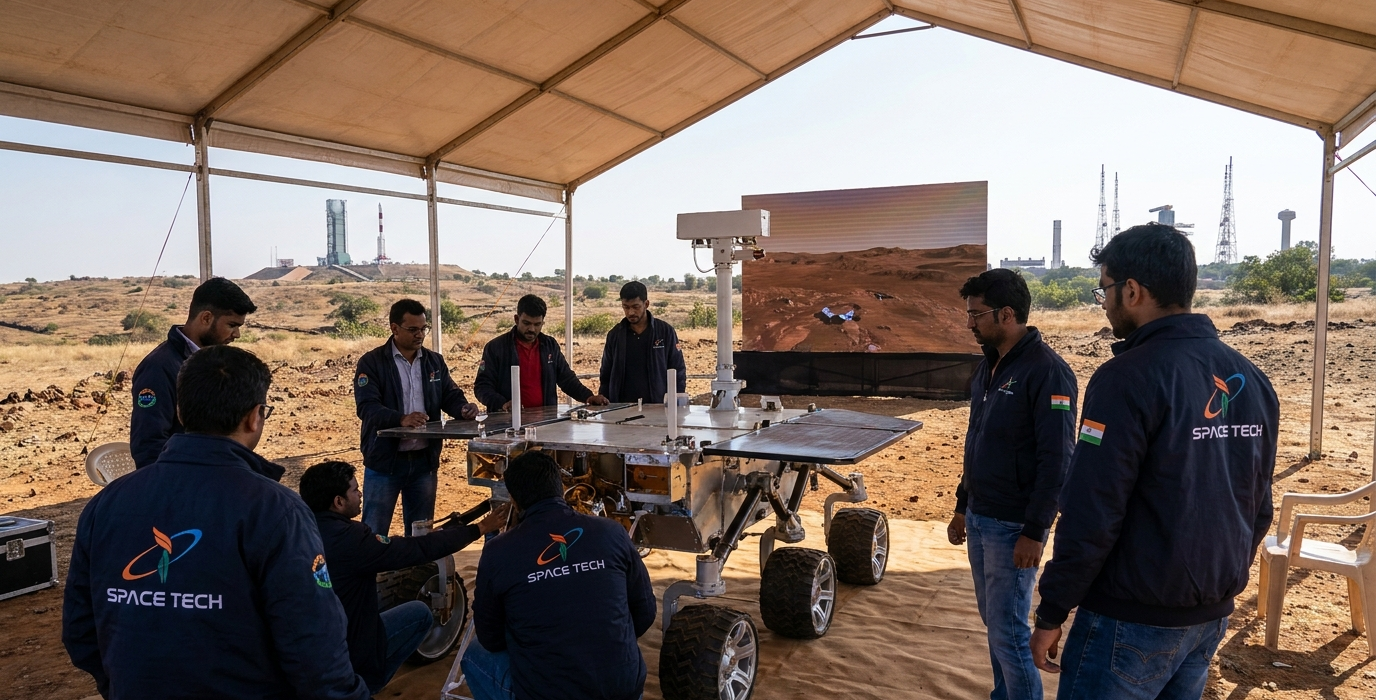
Several Indian startups are already making tangible progress in their ambitious endeavours. Take, for example, AstroForge India, a Bengaluru-based company that is developing advanced robotics and AI for autonomous asteroid prospecting. Their initial focus is on demonstrating the feasibility of identifying and characterising mineral-rich asteroids using miniaturized sensor payloads. They aim to conduct their first orbital test mission by late 2027, a remarkably aggressive timeline for such a complex undertaking.
Another notable player is SkySat Communications, headquartered in Hyderabad. This firm is at the forefront of developing a next-generation deep-space optical communication network. Their innovative use of laser technology promises data transmission rates orders of magnitude higher than current radio-frequency systems. This could be a game-changer for future Mars missions and beyond, enabling rich, real-time scientific data return. A surprising fact about SkySat is their successful demonstration of a quantum-encrypted communication link between two ground stations over a distance of 500 kilometres in early 2026, hinting at future security protocols for interplanetary communication.
The Road Ahead: Challenges and Opportunities in the Cosmic Frontier
Despite the exhilarating progress, the path for Indian space startups is not without its significant challenges. Funding remains a perennial concern, especially for projects with such long gestation periods and high capital requirements. While private investment is growing, securing the billions of dollars needed for asteroid mining or establishing a Martian outpost will require sustained confidence and innovative financial models. Regulatory frameworks, though improving, still need to adapt to the unique demands of deep space activities, including questions of resource ownership and space debris mitigation.
Technological hurdles are also substantial. Developing robust systems that can operate reliably in the harsh vacuum of space, withstand extreme temperatures, and navigate autonomously over vast distances requires cutting-edge engineering. The journey from a concept to a fully operational deep-space mission is fraught with complexity. However, these challenges also represent immense opportunities. For every hurdle, there’s a potential for groundbreaking innovation. The sheer scale of the untapped resources in space, coupled with the growing global demand for advanced technologies, positions India’s space startups for significant long-term success.
A Glimpse into the Future: India’s Celestial Ambitions for 2030 and Beyond
Looking ahead to 2030 and the subsequent years, the vision for India’s deep space endeavors becomes even clearer. We can anticipate the first automated missions to Near-Earth Asteroids (NEAs), potentially conducted by Indian startups, for resource assessment. These missions will pave the way for eventual robotic mining operations. Furthermore, expect to see significant advancements in interplanetary propulsion systems, with Indian companies contributing to more efficient and faster transit times to Mars and beyond.
The development of orbital manufacturing and assembly capabilities will also be crucial. Imagine components for future deep-space telescopes or habitat modules being fabricated in orbit using materials sourced from space. We might even see the initial stages of lunar resource prospecting by Indian private entities, laying the groundwork for sustained lunar presence. A particularly fascinating, though currently speculative, prospect is the development of advanced life support systems tailored for Martian environments, drawing inspiration from India’s own challenges in sustaining life in diverse terrestrial climates. The ambition is not just to explore, but to build a sustainable human presence among the stars, with India playing a pivotal role.
The true measure of our success in space won’t just be about reaching distant planets, but about our ability to sustainably thrive there, transforming cosmic resources into tangible benefits for humanity.
Frequently Asked Questions
What is the main focus of emerging Indian space startups?
Beyond traditional satellite services, these startups are aggressively pursuing deep space exploration, including asteroid mining, interplanetary communication, and technologies for future off-world settlements on Mars.
How is the Indian government supporting these ventures?
The government provides crucial support through initiatives like “Atmanirbhar Bharat” and by establishing IN-SPACe, which offers regulatory approvals, technical assistance, and access to ISRO’s facilities.
What are the biggest challenges facing Indian space startups?
Key challenges include securing substantial long-term funding, navigating evolving regulatory frameworks for deep space activities, and overcoming complex technological hurdles in developing robust space-faring systems.
When can we expect to see concrete results from these deep space initiatives?
While early missions and technology demonstrations are expected in the late 2020s, significant milestones like asteroid prospecting and advanced interplanetary communication networks are anticipated to mature by the early to mid-2030s.