Key Takeaways
- Indian agri-tech startups are attracting significant venture capital in 2026, driven by innovations in precision agriculture, supply chain efficiency, and sustainable farming practices.
- Companies focusing on AI-driven crop monitoring, drone-based pest management, and blockchain for traceability are seeing the most investor interest.
- Emerging players are leveraging digital platforms to connect farmers directly with consumers and businesses, bypassing traditional intermediaries and improving farmer incomes.
- Government initiatives and a growing awareness of climate change impacts are further fueling investment in agri-tech solutions that promote resilience and efficiency.
The Green Revolution Gets a Digital Makeover
The landscape of Indian agriculture is undergoing a profound transformation, and 2026 marks a pivotal year for its digital evolution. Venture capital firms, both domestic and international, are pouring unprecedented funds into the agri-tech sector. This surge isn’t just about new gadgets; it’s about fundamentally rethinking how we grow food, manage resources, and support our farmers. We’re witnessing a powerful convergence of cutting-edge technology and age-old agricultural wisdom, creating solutions that are not only innovative but also deeply relevant to India’s unique challenges and opportunities.
From the fertile plains of Punjab to the spice-laden hills of Kerala, startups are deploying artificial intelligence, drones, IoT sensors, and blockchain technology to enhance productivity, reduce waste, and improve farmer livelihoods. These aren’t just aspirational projects; they are tangible solutions being implemented on the ground, demonstrating real impact. Investors are recognizing the immense potential for disruption and the critical role these technologies play in ensuring food security and driving economic growth for millions.
Precision Agriculture: AI and Drones Take Flight
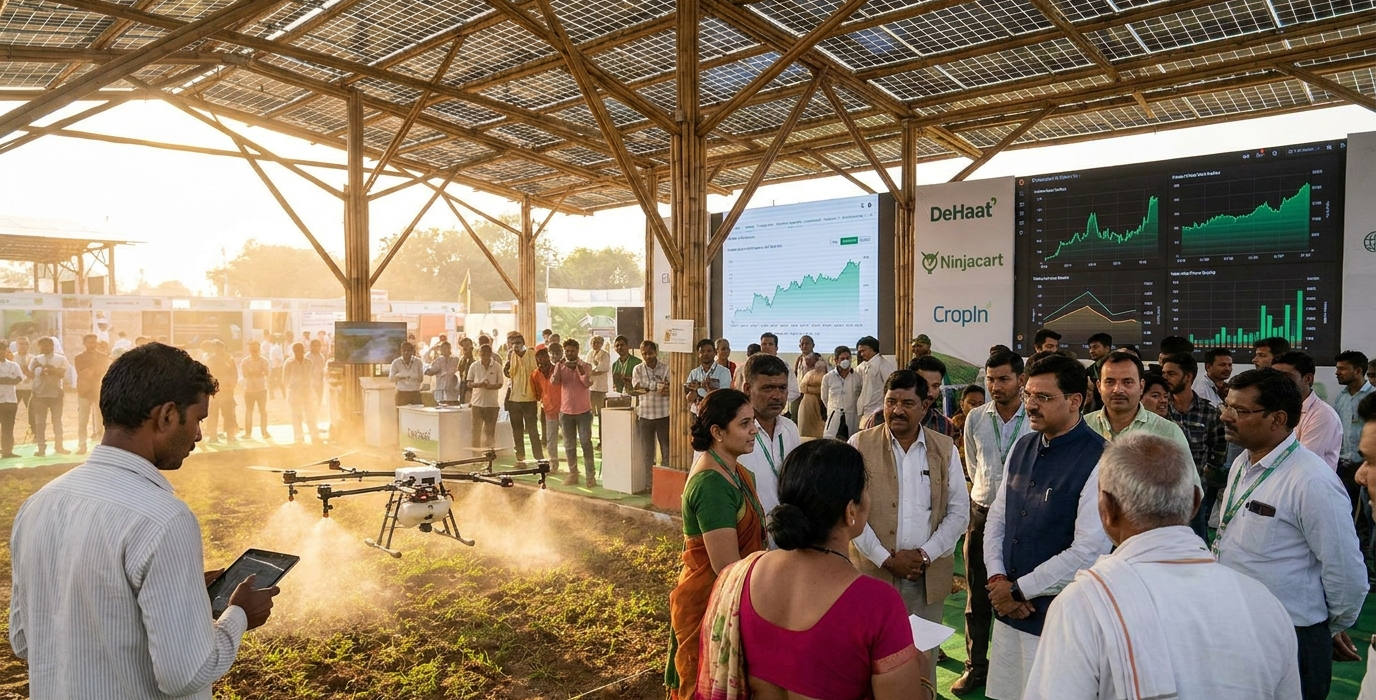
One of the most exciting frontiers in Indian agri-tech in 2026 is precision agriculture, powered by artificial intelligence and drone technology. Startups are developing sophisticated AI algorithms that analyze vast datasets – including satellite imagery, weather patterns, and soil conditions – to provide farmers with hyper-localized insights. This allows for optimized irrigation, targeted fertilization, and early disease detection, moving away from the one-size-fits-all approach of traditional farming.
Companies like AgriSense AI, based out of Bengaluru, are leading the charge. Their platform, which uses machine learning to predict pest outbreaks with over 90% accuracy, has become indispensable for large-scale cotton and rice cultivation across Maharashtra and Andhra Pradesh. Similarly, drone services for spraying pesticides and fertilizers, a practice once confined to niche applications, are now becoming mainstream. Startups such as SkyHarvest Solutions, operating out of Rajasthan, offer subscription-based drone services that significantly reduce chemical usage, lowering costs for farmers and minimizing environmental impact.
The real game-changer here is the actionable intelligence these technologies provide. Instead of relying on intuition or broad weather forecasts, farmers receive precise instructions on when and where to apply specific inputs. This not only boosts yields but also conserves precious resources like water and fertilizers. We’re seeing a tangible shift towards data-driven farming, making agriculture more efficient and sustainable than ever before.
Supply Chain Innovation: Bridging the Farmer-Consumer Gap
The inefficiencies in India’s agricultural supply chain have long been a critical bottleneck, leading to significant post-harvest losses and lower incomes for farmers. In 2026, a wave of startups is tackling this challenge head-on by leveraging digital platforms and blockchain technology to create more transparent, efficient, and direct links between producers and consumers.
Platforms like FarmConnect, a prominent player originating from Haryana, are revolutionizing how produce reaches our tables. They use a robust digital marketplace that connects farmers directly with retailers, restaurants, and even individual households in urban centers like Delhi and Mumbai. By cutting out multiple layers of intermediaries, farmers receive a fairer price for their produce, and consumers benefit from fresher, often more affordable, goods.
Furthermore, the integration of blockchain technology is building unprecedented trust and traceability. Startups like AgriTrace, with operations spanning across Gujarat and Tamil Nadu, are implementing blockchain solutions that allow consumers to scan a QR code on their produce and trace its journey from farm to fork. This includes details about the farmer, cultivation practices, and transit times, enhancing food safety and empowering consumers with knowledge. This level of transparency was almost unimaginable just a few years ago.
The impact of these innovations extends beyond just economics. Reduced transit times and better cold chain management mean less spoilage, contributing to food security and a more sustainable food system. We are seeing a palpable shift towards valuing the farmer’s effort and ensuring they are compensated justly.
Sustainable and Climate-Resilient Agriculture
With the increasing reality of climate change impacting weather patterns and agricultural yields across India, startups focused on sustainable and climate-resilient farming practices are gaining significant traction in 2026. Investors are recognizing that the future of agriculture must be environmentally conscious and adaptable to a changing climate.
One key area of innovation is in developing drought-resistant crops and water-efficient farming techniques. Companies like AquaHarvest Innovations, based in arid regions of Karnataka, are developing genetically improved seeds that require significantly less water while maintaining high yields. They are also promoting advanced micro-irrigation systems tailored for diverse soil types and microclimates.
Another critical focus is on organic and regenerative agriculture. Startups are not only promoting these practices but also creating marketplaces and certification systems to validate them. EcoFarm Collective, an initiative gaining momentum in the Western Ghats of Kerala and Tamil Nadu, works with smallholder farmers to transition to organic farming, providing training, bio-fertilizers, and a guaranteed premium market for their produce. They are also championing practices like intercropping and cover cropping to improve soil health and biodiversity.
The growing consumer demand for organic and sustainably produced food is a significant driver for these startups. They are tapping into a market that is willing to pay a premium for products that are good for their health and the planet. This symbiotic relationship is fostering a more responsible and resilient agricultural ecosystem for the future.
FinTech and Agri-Credit: Empowering Farmers Financially
Access to timely and affordable credit remains a perennial challenge for millions of Indian farmers. In 2026, agri-tech startups are increasingly integrating financial technology (FinTech) solutions to bridge this gap, providing innovative credit and insurance products tailored to the unique needs of the agricultural sector.
These startups are leveraging alternative data sources, such as farm productivity records, weather data, and market price information, to assess creditworthiness more accurately than traditional banks. This allows them to offer loans to farmers who might otherwise be excluded from the formal financial system. KrishiLoan, a prominent FinTech player operating in Uttar Pradesh and Bihar, uses AI-powered risk assessment models to disburse small, flexible loans for seeds, fertilizers, and equipment, often within 24-48 hours.
Beyond credit, parametric insurance products are also gaining prominence. These policies, often triggered by specific weather events like unseasonal rainfall or drought, provide rapid payouts without the need for extensive damage assessments. CropSecure Insurance, active in regions prone to extreme weather, offers innovative weather-based insurance that protects farmers against specific climate-related risks. The claims process is often automated, ensuring quick financial relief when it’s needed most.
The integration of these FinTech solutions is not just about providing capital; it’s about building financial resilience for farmers. By offering accessible credit and robust insurance, these startups are empowering farmers to invest in their farms, mitigate risks, and build a more stable future. This financial inclusion is a critical component of the broader agri-tech revolution.
The Rise of Agri-Tech Ecosystems and Farmer Collectives
Beyond individual startups and technologies, we are witnessing the emergence of robust agri-tech ecosystems in 2026. These are collaborative networks where startups, research institutions, government bodies, and crucially, farmer collectives, work together to drive innovation and adoption.
In regions like Punjab and Haryana, traditional farmer cooperatives are being revitalized with digital tools and modern management practices. Punjab Agri Collective, for example, has partnered with several agri-tech firms to provide its members with access to precision farming equipment, shared drone services, and direct market linkages. This collective approach amplifies the impact of individual technologies, making advanced solutions accessible and affordable for a larger number of farmers.
These collectives are also becoming powerful platforms for knowledge sharing and peer-to-peer learning. Farmers are able to share their experiences with new technologies, provide feedback to startups, and collectively negotiate better terms with suppliers and buyers. This organic growth of community-driven innovation is a vital factor in the widespread adoption of agri-tech solutions.
A surprising fact is that some of the most successful implementations of advanced agri-tech are not happening in large, corporate farms but within these revitalized farmer collectives. Their inherent trust, established networks, and ability to aggregate demand make them ideal partners for agri-tech companies looking for scalable deployment. This demonstrates that the human element, combined with technology, is the key to unlocking the full potential of Indian agriculture.
“The future of Indian agriculture isn’t just about smarter machines; it’s about smarter communities empowered by technology, ensuring prosperity reaches every farmer.”
Frequently Asked Questions
What are the main areas of agri-tech innovation in India in 2026?
The primary areas are precision agriculture (AI, drones), supply chain management (blockchain, digital marketplaces), sustainable and climate-resilient farming practices, and agri-FinTech solutions (credit, insurance). These innovations aim to boost productivity, reduce waste, improve farmer incomes, and enhance environmental sustainability.
How is AI being used in Indian agriculture?
AI is used for predicting crop diseases and pest outbreaks, optimizing irrigation and fertilizer application based on soil and weather data, analyzing crop health from imagery, and forecasting yields. This allows for more precise and efficient farming decisions.
What role does blockchain play in Indian agri-tech?
Blockchain is primarily used to enhance transparency and traceability in the agricultural supply chain. It enables consumers and businesses to track the origin of produce, verify certifications (like organic), and ensures fair pricing and reduced fraud throughout the value chain.
Are there government initiatives supporting agri-tech startups in India?
Yes, the Indian government actively supports agri-tech innovation through various schemes, grants, and policy initiatives aimed at modernizing agriculture, improving farmer incomes, and promoting sustainable practices. Many startups benefit from these programs.