Key Takeaways
- AI-powered precision agriculture tools are boosting crop yields and reducing resource waste across India.
- Sensors, drones, and satellite imagery provide farmers with real-time data for informed decision-making on irrigation, fertilization, and pest control.
- AI is helping to predict weather patterns and disease outbreaks, mitigating risks for farmers and ensuring food security.
- The adoption of these technologies is creating new opportunities and challenges for the Indian agricultural workforce.
The Dawn of Smart Farming: AI Arrives on Indian Soil
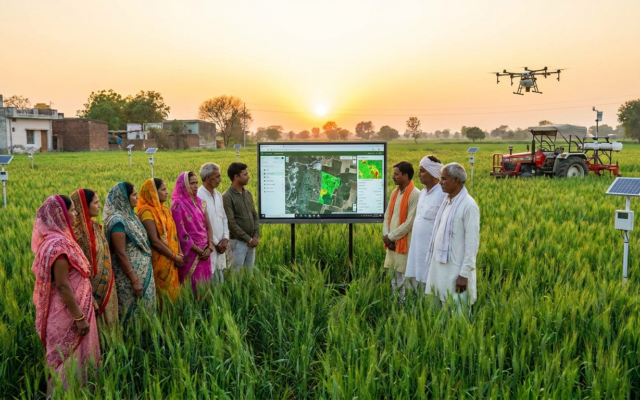
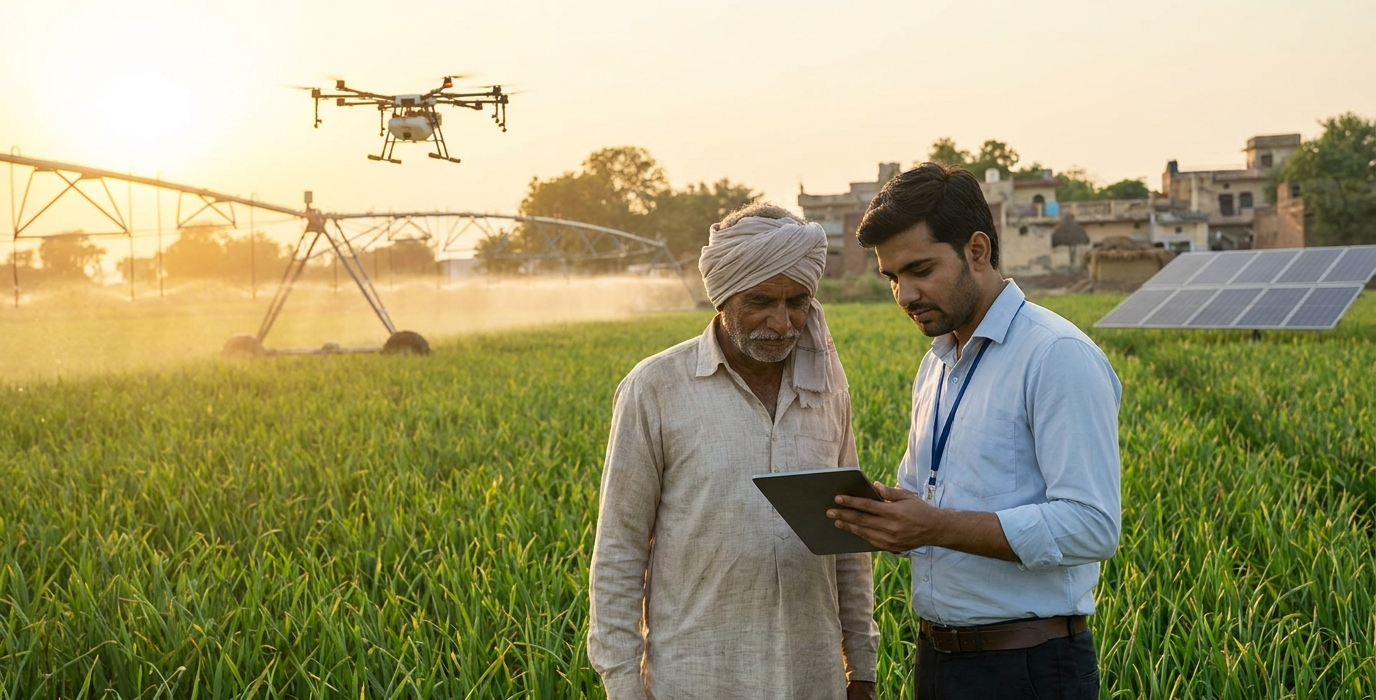
Imagine a farmer in Haryana, no longer relying on guesswork for his wheat crop. Instead, a small drone buzzes overhead, capturing high-resolution images. Back in his modest farmhouse, a tablet displays a detailed map of his fields, highlighting areas where nutrient levels are low or where a potential pest infestation is brewing. This isn’t science fiction; it’s the reality of AI-driven agriculture transforming farms across India, from the fertile plains of Punjab to the sun-baked fields of Rajasthan. Today, on 5 August 2026, we’re witnessing a profound shift, where sophisticated algorithms and data analytics are becoming as essential to farming as the monsoon rains.
This technological revolution is addressing some of India’s most pressing agricultural challenges. With a growing population and the increasing impact of climate change, ensuring food security while promoting sustainable practices is paramount. AI offers a powerful toolkit to achieve this balance. It enables farmers to move away from traditional, often inefficient, methods towards a more precise and data-informed approach. This transition means optimising resource utilisation, from water and fertilisers to pesticides, thereby reducing both costs and environmental impact.
The journey of AI in Indian agriculture is not just about advanced technology; it’s about empowering the farmer. It’s about providing them with tools that can make their lives easier, their yields higher, and their farms more resilient. We’re seeing a tangible difference being made, not just in the fields, but in the livelihoods of millions.
Precision Agriculture: The Power of Data-Driven Insights
At its core, AI-powered precision agriculture involves using technology to manage variations within fields. Instead of treating an entire field uniformly, AI systems analyse data to identify specific needs in different zones. This granular approach is a game-changer for Indian farmers who often operate on tight margins. Think about irrigation: instead of flooding an entire field, AI can direct water precisely where and when it’s needed, based on soil moisture levels and crop requirements. This not only conserves precious water resources, a critical issue in many parts of India, but also prevents waterlogging and root diseases.
Sensors are the eyes and ears of this system. Deployed across fields, they collect real-time data on soil health, humidity, temperature, and even the presence of certain nutrients. This information is then fed into AI algorithms, which process it rapidly to generate actionable insights. Drones equipped with multispectral cameras can go a step further, assessing plant health, detecting nutrient deficiencies, and identifying early signs of stress or disease that might be invisible to the naked eye. Even satellite imagery plays a role, providing broader insights into crop health and growth patterns over larger areas.
This data deluge might sound complex, but the beauty of AI is its ability to simplify it for the farmer. Mobile applications and user-friendly dashboards translate raw data into straightforward recommendations. Farmers receive alerts on their phones, advising them on when to irrigate, what fertilisers to apply, and in what quantities. This direct, actionable advice empowers them to make informed decisions, reducing the risk of costly errors and maximising the return on their investments.
Predictive Analytics: Foreseeing Challenges and Seizing Opportunities
One of the most significant contributions of AI to agriculture is its ability to predict future events. Weather forecasting, for instance, has always been crucial for farmers, but AI takes it to an entirely new level. By analysing vast datasets of historical weather patterns, satellite data, and atmospheric conditions, AI models can provide more accurate and localised short-term and long-term weather predictions. This helps farmers plan their sowing, harvesting, and other critical activities, minimising the impact of unexpected droughts or unseasonal rains, which have become increasingly common due to climate change.
Beyond weather, AI is proving invaluable in predicting and managing crop diseases and pest outbreaks. Early detection is key to effective control, and AI algorithms can identify subtle patterns and correlations in environmental data that signal a potential problem before it becomes widespread. For example, by monitoring temperature, humidity, and rainfall patterns in specific regions, AI can predict the likelihood of fungal diseases like blight affecting potato crops in Himachal Pradesh or prevalent pests like the Fall Armyworm impacting maize cultivation in Karnataka.
This predictive power allows farmers to take proactive measures. Instead of reacting to a full-blown infestation, they can implement targeted preventative treatments, often using less pesticide and at a lower cost. This not only protects their current crop but also contributes to more sustainable farming practices by reducing the overall reliance on chemical interventions. The ability to anticipate challenges gives farmers greater control over their operations and significantly reduces the economic risks associated with unpredictable agricultural environments.
Optimising Resource Management: Water, Nutrients, and Beyond
The judicious use of resources is central to sustainable agriculture, and AI is proving to be an indispensable ally in this endeavour. Water scarcity is a growing concern across India, particularly in arid and semi-arid regions. AI-powered irrigation systems, often referred to as “smart irrigation,” can significantly reduce water consumption. These systems integrate data from soil moisture sensors, weather forecasts, and evapotranspiration rates to determine the exact amount of water a crop needs and the optimal time to deliver it. This precision means that every drop of water counts, ensuring that crops receive adequate hydration without waste.
Similarly, AI is revolutionising fertiliser application. Soil testing, while beneficial, can be time-consuming. AI, coupled with sensor technology, can analyse soil nutrient levels in real-time and recommend specific fertiliser blends for different parts of the field. This “variable rate application” ensures that crops receive the precise nutrients they require, preventing over-fertilisation, which can lead to nutrient runoff and water pollution, and under-fertilisation, which stunts growth. For example, a farmer growing sugarcane in Uttar Pradesh might receive recommendations for varying potash levels across his fields based on AI analysis.
This focus on optimisation extends to other inputs as well. AI can help farmers choose the most appropriate seed varieties based on local soil conditions and climate projections. It can also assist in managing farm machinery more efficiently, optimising routes for tractors and reducing fuel consumption. By minimising the overuse of water, fertilisers, and pesticides, AI not only cuts down on costs for farmers but also significantly reduces the environmental footprint of agriculture, contributing to a healthier ecosystem.
The Role of Drones and Robotics in Farm Operations
Drones have emerged as a transformative technology in modern Indian agriculture, offering capabilities that were once unimaginable for the average farmer. Beyond aerial imaging for crop health monitoring, drones are increasingly being used for targeted spraying of fertilisers and pesticides. This is a far cry from the blanket spraying of the past, which often led to wastage and environmental contamination. Drones can precisely target affected areas, reducing the amount of chemicals used by as much as 30-50% in some applications, while also minimising exposure risks for farm workers. Imagine a drone carefully applying a bio-pesticide only to the specific leaves showing signs of infestation in a tea plantation in Darjeeling.
Robotics, while still in its nascent stages in many Indian farms, holds immense future potential. Automated weeding robots, for instance, can navigate fields and remove weeds mechanically or with targeted micro-dosing of herbicides, reducing the need for manual labour and chemical weed killers. For larger agricultural enterprises, autonomous tractors guided by AI can perform tasks like ploughing and harvesting with remarkable precision, operating 24/7 if needed.
The adoption of these technologies, however, brings its own set of considerations. The initial cost of drones and robotic equipment can be a barrier for smallholder farmers. However, innovative business models, such as drone-as-a-service (DaaS) platforms, are emerging, allowing farmers to hire drone services on an as-needed basis. This democratises access to advanced technology, making it more affordable and accessible.
The integration of AI into agriculture isn’t just about advanced tools; it’s about democratizing knowledge and empowering farmers with the insights they need to thrive in an increasingly complex world.
Challenges and Opportunities for the Indian Farmer
While the promise of AI in agriculture is immense, its widespread adoption in India is not without its challenges. A significant hurdle is the digital divide. Many farmers, particularly in remote rural areas, lack access to reliable internet connectivity and the necessary digital literacy to operate sophisticated AI-powered devices. Bridging this gap requires concerted efforts in infrastructure development and targeted training programs. The government’s Digital India initiative is a step in the right direction, but continued focus on rural connectivity is crucial.
Another challenge is the initial investment cost. High-tech solutions like advanced sensor networks, drones, and AI analytics platforms can be expensive, posing a significant barrier for small and marginal farmers who constitute a large segment of India’s agricultural community. While ‘drone-as-a-service’ models are helping, more accessible financing options and subsidies are needed to encourage uptake. Data privacy and ownership also remain critical concerns. As more data is collected from farms, clear guidelines and regulations are needed to ensure that farmers’ data is protected and used ethically.
However, these challenges are accompanied by substantial opportunities. The adoption of AI is creating a demand for new skills, leading to the emergence of agri-tech startups and specialized service providers. This sector is not only driving innovation but also creating new employment opportunities in rural areas, from drone operators and data analysts to AI system maintainers. Furthermore, by increasing efficiency and yields, AI can help Indian agriculture become more competitive on the global stage, potentially boosting exports and contributing to the nation’s economic growth. The integration of AI also fosters collaboration and knowledge sharing among farmers through digital platforms, creating stronger agricultural communities.
Frequently Asked Questions
What is precision agriculture?
Precision agriculture uses technology, including AI, sensors, and GPS, to manage variations within fields. It allows farmers to apply water, fertilisers, and pesticides only where and when they are needed, optimising resource use and improving crop yields.
How can AI help predict crop diseases?
AI algorithms analyse vast amounts of data, including weather patterns, soil conditions, and historical disease outbreaks. By identifying subtle correlations, they can predict the likelihood of specific diseases appearing, allowing farmers to take preventative measures early.
Are AI farming tools expensive for Indian farmers?
The initial cost can be a barrier, but solutions like ‘drone-as-a-service’ and government initiatives are making these technologies more accessible. Many platforms offer tiered pricing based on farm size and service needs.
What is the impact of AI on farm labour?
AI can automate repetitive tasks, potentially reducing the need for manual labour in some areas. However, it also creates new job opportunities in technology management, data analysis, and specialized services, requiring new skill sets.