Key Takeaways
- India’s education sector is rapidly integrating AI in 2026, moving beyond pilot projects to widespread adoption.
- AI tools are personalizing learning pathways, offering adaptive assessments, and automating administrative tasks for educators.
- Challenges remain, including digital infrastructure disparities, teacher training, and ethical considerations around data privacy.
- The future promises AI-powered content creation, intelligent tutoring systems, and predictive analytics to identify at-risk students early.
The Dawn of the AI-Powered Classroom: A 2026 Reality
The hum of artificial intelligence is no longer a distant futuristic whisper; it’s the vibrant pulse of India’s evolving educational landscape in 2026. From the bustling metropolises like Mumbai to the more remote villages in Rajasthan, AI is steadily weaving its way into the fabric of learning. This isn’t just about introducing new gadgets; it’s a fundamental shift in how knowledge is imparted, absorbed, and assessed. We’re witnessing a generation of students and educators who are no longer just curious about AI but are actively benefiting from its transformative power.
The initial skepticism has largely given way to cautious optimism and, in many cases, genuine enthusiasm. Schools and universities across the nation are exploring and implementing AI solutions that were once confined to research papers or high-tech labs. This integration is driven by a clear understanding of AI’s potential to address long-standing challenges in Indian education, such as large class sizes, diverse learning needs, and the need for continuous skill development. The goal is not to replace human educators, but to augment their capabilities and create a more engaging, effective, and equitable learning experience for every student.
Personalized Learning Pathways: Tailoring Education to the Individual
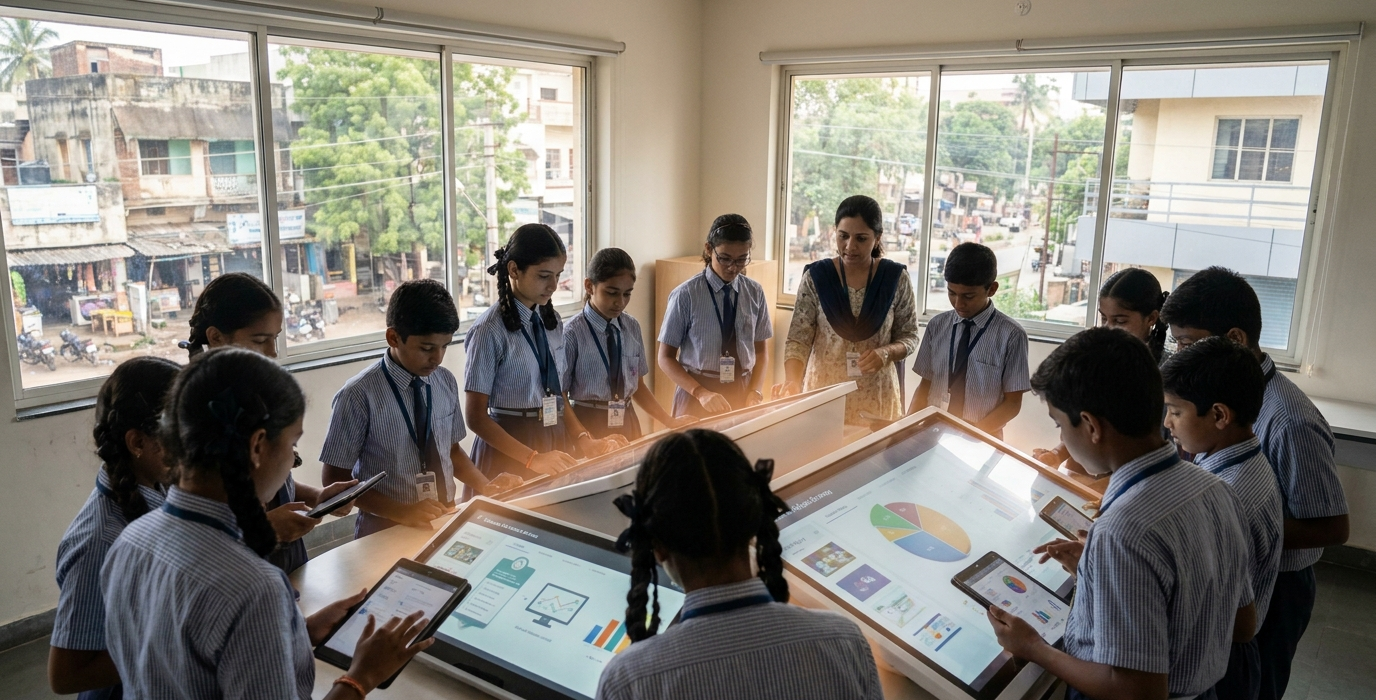
One of the most significant impacts of AI in Indian education in 2026 is its ability to deliver truly personalized learning experiences. Gone are the days when every student in a classroom was expected to learn at the same pace and through the same methods. AI-powered platforms can now analyze a student’s learning style, strengths, weaknesses, and pace of comprehension in real-time. Based on this data, they can curate customized learning modules, recommend specific resources, and adapt the difficulty of exercises.
Imagine a student in Chennai struggling with calculus. An AI tutor can identify the precise concepts causing difficulty, provide supplementary explanations, and offer targeted practice problems. Conversely, a student excelling in physics can be presented with advanced challenges and research opportunities, keeping them stimulated and engaged. This adaptive approach ensures that no student is left behind, nor is any student held back. It’s about fostering a learning environment where each individual’s potential can be fully realized, moving beyond the one-size-fits-all model that has long characterized traditional schooling. We are seeing a significant rise in platforms that offer these dynamic learning paths, transforming the student’s journey from a rigid curriculum to a flexible, supportive exploration of knowledge.
Adaptive Assessments and Instant Feedback
Beyond personalized content, AI is revolutionizing how student progress is measured. Traditional exams often provide a snapshot of knowledge on a particular day, but AI-driven assessments offer a continuous, dynamic evaluation. These systems can adjust the complexity of questions based on a student’s performance, providing a more accurate and nuanced understanding of their mastery. More importantly, students receive immediate, actionable feedback.
This instant feedback loop is crucial for effective learning. Instead of waiting days or weeks for graded papers, students can understand their errors right away and correct them. This immediate reinforcement helps solidify learning and prevents misconceptions from taking root. For educators, these AI tools provide detailed analytics on class-wide and individual student performance, allowing them to identify areas where the teaching strategy might need adjustment or where specific students require more attention. This data-driven approach empowers teachers to intervene proactively, rather than reactively.
Automating the Administrative Burden: Freeing Up Educators
The administrative load on teachers in India has always been substantial, often detracting from their primary role of teaching and student engagement. In 2026, AI is stepping in to alleviate much of this burden. Tasks such as grading objective assignments, managing student records, scheduling parent-teacher meetings, and even generating basic progress reports can now be automated. This frees up invaluable time for educators to focus on what truly matters: designing engaging lessons, providing individual student support, and fostering critical thinking and creativity.
Consider the sheer volume of paperwork involved in a typical school in Delhi or Bengaluru. AI-powered systems can streamline attendance tracking, manage exam timetables, and even assist in the allocation of resources. This automation isn’t just about efficiency; it’s about empowering teachers. By reducing the time spent on mundane administrative duties, educators can invest more energy into pedagogical innovation, professional development, and building stronger relationships with their students and their families. This shift allows for a more human-centric approach to education, where technology serves as a supportive tool rather than a replacement for human connection.
AI in Content Creation and Curation
Furthermore, AI is beginning to play a role in content development. While human creativity remains paramount, AI tools can assist in generating practice questions, summarizing complex texts, and even suggesting relevant external resources to supplement curriculum materials. This can be particularly helpful for educators looking to create diverse and engaging learning materials for their students. For instance, an AI could help a teacher in a small town in Kerala generate multiple-choice questions based on a chapter from a textbook, ensuring a variety of assessment options.
The true power of AI in education lies not in replacing the teacher, but in empowering them with insights and tools that were previously unimaginable, allowing for a more deeply personalized and effective learning journey for every student.
Bridging the Digital Divide: Challenges and Opportunities
Despite the rapid advancements, the integration of AI in Indian education in 2026 is not without its hurdles. A significant challenge remains the digital divide. While urban centers often boast robust internet connectivity and access to the latest devices, many rural and remote areas still struggle with basic infrastructure. This disparity means that the benefits of AI-driven education might not reach all students equally, potentially exacerbating existing inequalities.
Ensuring equitable access to technology and high-speed internet is paramount. Government initiatives and private sector partnerships are crucial in bridging this gap. Efforts are underway to deploy low-cost, robust digital learning devices and to expand internet connectivity to underserved regions. However, this is a long-term endeavor that requires sustained investment and strategic planning. Without addressing this fundamental infrastructure issue, the promise of AI in education will remain a partial reality for many.
Teacher Training and Digital Literacy
Another critical aspect is teacher training. For AI tools to be effective, educators need to be adequately trained on how to use them, understand their capabilities, and integrate them seamlessly into their teaching methodologies. Many teachers, particularly those who have been in the profession for a long time, may require significant upskilling. Comprehensive training programs, workshops, and ongoing support are essential to ensure that teachers feel confident and competent in utilizing these new technologies.
The goal is to equip educators with the skills to leverage AI as a co-pilot in their teaching, not to overwhelm them. This involves not only technical training but also pedagogical guidance on how to best incorporate AI-driven insights into their classroom practices. Digital literacy for both teachers and students is no longer an optional extra but a core competency for navigating the modern educational landscape.
Ethical Considerations: Data Privacy and Algorithmic Bias
As we embrace AI in education, we must also confront the ethical considerations that come with it. The collection and analysis of student data, while essential for personalization, raise significant concerns about privacy and security. Robust data protection policies and transparent practices are crucial to ensure that student information is handled responsibly and ethically. Parents and students need to be informed about what data is being collected, how it is being used, and how it is being protected.
Furthermore, there is the risk of algorithmic bias. If the AI systems are trained on biased data, they could perpetuate or even amplify existing societal prejudices, impacting areas like student assessment, resource allocation, or even future career recommendations. Vigilance in developing and deploying AI systems that are fair, transparent, and free from bias is therefore essential. This requires continuous auditing of algorithms and a commitment to diverse and representative datasets. We need to ensure that AI serves as a force for inclusivity, not exclusion, in our educational institutions.
Surprising Fact 1: AI-Powered Language Learning in Tribal Dialects
One of the most unexpected and heartwarming applications of AI in India in 2026 is its use in preserving and promoting indigenous languages. Initiatives in states like Jharkhand and Chhattisgarh are employing AI to create language learning tools for tribal dialects that have historically had limited written resources. These AI systems can help document oral traditions, create interactive learning modules, and even assist in translation, ensuring that these rich linguistic heritages are passed down to future generations. This goes far beyond typical educational applications, showcasing AI’s potential for cultural preservation.
The Future of Learning: Intelligent Tutoring and Predictive Analytics
Looking ahead to the remainder of 2026 and beyond, the role of AI in education is poised for even greater expansion. We are moving towards sophisticated intelligent tutoring systems (ITS) that can engage students in natural language conversations, explain complex concepts in multiple ways, and provide personalized feedback that mirrors the guidance of a human tutor. These systems will become increasingly adept at understanding emotional cues and adapting their approach accordingly, making learning more empathetic and effective.
Another frontier is predictive analytics. AI can analyze vast amounts of student data to identify patterns that might indicate a student is at risk of falling behind, disengaging, or even dropping out. Early identification allows educators and support staff to intervene proactively with targeted interventions and support, preventing academic struggles before they become insurmountable. This shift from reactive to proactive support is a game-changer for student success and well-being.
Surprising Fact 2: AI for Identifying Learning Disabilities Earlier
In a significant advancement, AI is now being used to help identify potential learning disabilities, such as dyslexia or ADHD, at an earlier stage than previously possible. By analyzing patterns in a child’s writing, reading speed, and even their interaction with digital learning platforms, AI algorithms can flag potential indicators for educators and parents. This early detection, observed in pilot programs in schools around Pune, can lead to timely interventions and specialized support, significantly improving a child’s educational trajectory and overall development.
AI in Higher Education and Skill Development
The impact of AI is not limited to K-12 education; it is also transforming higher education and skill development in India. Universities are leveraging AI for research, automating laboratory processes, and providing personalized career guidance to students. For example, AI platforms can analyze job market trends and student skill sets to recommend relevant courses and internships, helping graduates make informed decisions about their future careers.
In the realm of vocational training and upskilling, AI is crucial for developing adaptive learning modules that cater to the rapidly evolving demands of the job market. Online learning platforms are increasingly incorporating AI to offer personalized learning paths for professionals seeking to acquire new skills or enhance existing ones. This ensures that India’s workforce remains competitive and adaptable in the face of technological change. The agility afforded by AI in tailoring educational content to specific industry needs is a critical asset for the nation’s economic growth.
Frequently Asked Questions
What are the primary benefits of AI in Indian education in 2026?
In 2026, the primary benefits include personalized learning pathways tailored to individual student needs, adaptive assessments that provide instant feedback, and the automation of administrative tasks for educators, freeing them to focus on teaching.
How is AI addressing the issue of diverse learning needs in India?
AI helps by analyzing individual learning styles and paces, then curating customized content and exercises. This allows students to learn at their own speed and through methods that best suit them, ensuring no one is left behind or held back.
What are the biggest challenges to AI adoption in Indian schools?
The main challenges are the digital divide, meaning unequal access to technology and internet connectivity, the need for comprehensive teacher training to effectively use AI tools, and addressing ethical concerns like data privacy and algorithmic bias.
Will AI replace teachers in India?
No, the widespread consensus in 2026 is that AI is designed to augment, not replace, teachers. AI tools can handle repetitive tasks and provide data-driven insights, allowing educators to focus on higher-level teaching, mentorship, and fostering critical thinking and emotional intelligence.
How can parents ensure their children benefit safely from AI in education?
Parents should stay informed about the AI tools their children’s schools are using, understand the data privacy policies, and engage in open conversations with their children about responsible technology use. Advocating for transparent and ethical AI practices within schools is also key.