Key Takeaways
- AI is revolutionising Indian agriculture by offering data-driven insights for better crop management and resource allocation.
- Precision farming techniques, powered by AI, are leading to significant yield increases and reduced waste in regions like Punjab and Maharashtra.
- Smallholder farmers can benefit immensely from affordable AI tools and government-backed initiatives, fostering inclusivity.
- The integration of AI promises a more sustainable and profitable future for Indian agriculture, addressing challenges from climate change to market volatility.
The Dawn of Smart Farming: AI Takes Root in India
The scent of monsoon rain on parched earth is a familiar comfort across India, but a new aroma is emerging in our farmlands – that of innovation. Artificial intelligence is no longer a futuristic concept confined to urban tech hubs; it’s actively taking root in the very soil that sustains our nation. From the vast wheat fields of Punjab to the spice plantations of Kerala, AI-powered tools are becoming indispensable allies for farmers, promising not just incremental improvements but a fundamental transformation of how we grow our food. This isn’t about replacing the farmer’s deep-rooted knowledge, but about augmenting it with unprecedented data and predictive capabilities.
We’re witnessing a paradigm shift where farmers are moving beyond traditional practices, guided by gut feeling and seasonal patterns. Now, they have access to sophisticated analytics that can predict pest outbreaks before they strike, optimise irrigation schedules down to the last drop, and even forecast market demand with remarkable accuracy. This digital revolution is empowering every farmer, from the largest estate owner in Uttar Pradesh to the smallest marginal farmer in Bihar, to make more informed decisions, thereby increasing their yields and their livelihoods. The implications for food security and the rural economy are profound, positioning India at the forefront of agricultural innovation on a global scale.
Precision Agriculture: Cultivating Smarter, Not Just Harder
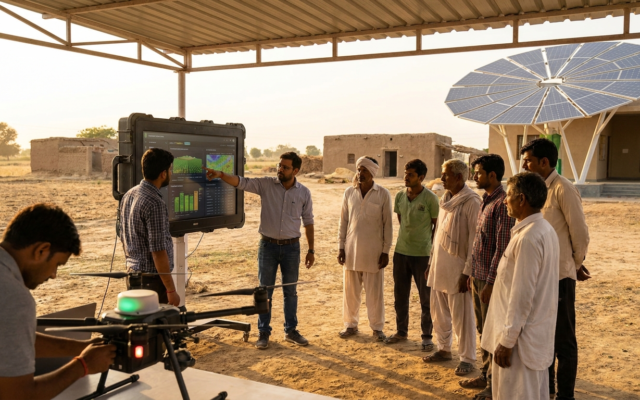
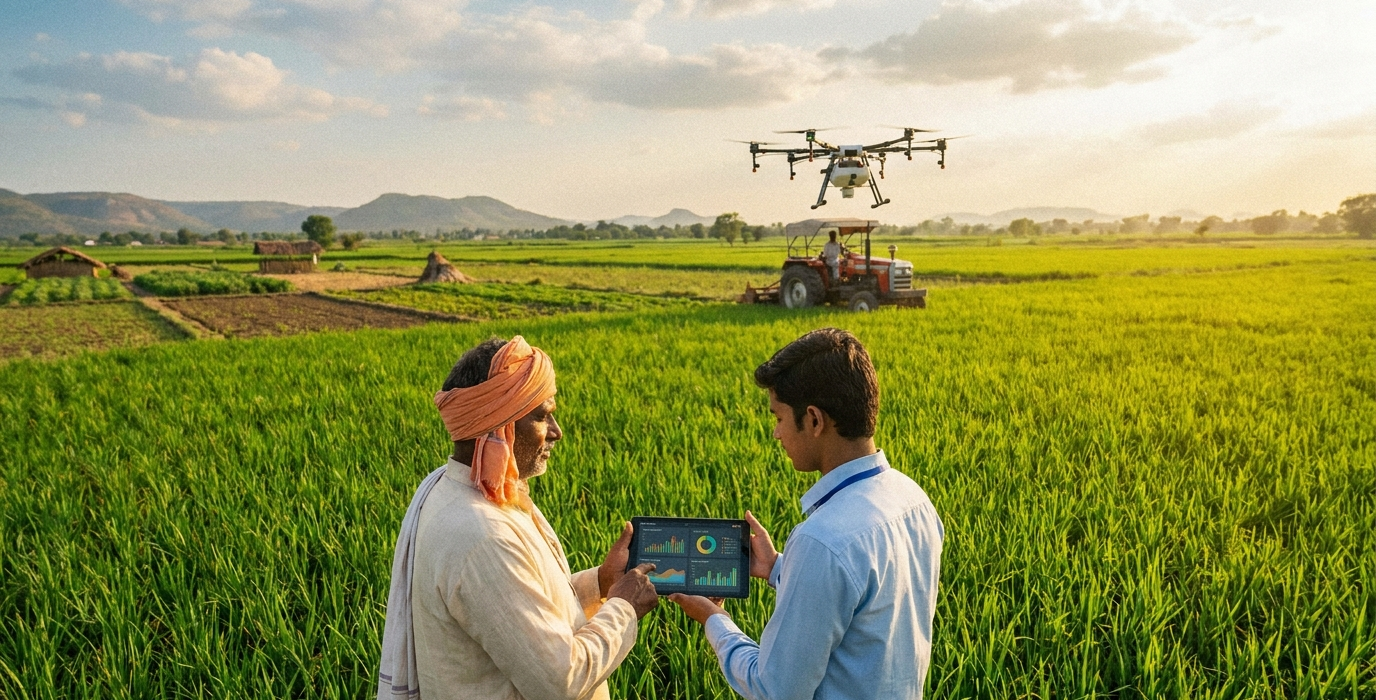
Precision agriculture, powered by AI, is perhaps the most tangible manifestation of this technological revolution. Imagine a farmer in Telangana, instead of broadcasting fertilisers across an entire field, using AI-driven drone imagery to identify specific nutrient deficiencies in small patches of their land. This allows for targeted application of fertilisers and pesticides, minimising waste and environmental impact. This approach, often referred to as “variable rate application,” is proving to be a game-changer.
AI algorithms analyse data from various sources – satellite imagery, soil sensors, weather stations, and even historical yield data – to create hyper-localised farming plans. This means that irrigation can be adjusted based on the precise moisture needs of different sections of a field, and pests can be detected and treated with pinpoint accuracy. For instance, AI models can predict the likelihood of a fungal infection based on humidity, temperature, and wind patterns, alerting farmers days in advance. This proactive approach drastically reduces crop loss and the need for broad-spectrum chemicals, making farming more sustainable and profitable.
Unlocking the Potential of AI for Crop Health
One of the most exciting applications of AI in precision agriculture is in disease and pest detection. Sophisticated computer vision algorithms can identify early signs of crop diseases or pest infestations from high-resolution images captured by drones or even smartphones. These systems are trained on vast datasets of plant images, allowing them to distinguish between healthy plants and those under stress with remarkable accuracy. Farmers receive immediate alerts, often with recommendations for the most effective and environmentally friendly treatments. This not only saves crops but also reduces the overuse of pesticides, contributing to healthier produce and a cleaner environment.
AI-Powered Irrigation and Water Management
Water scarcity is a growing concern across India, particularly in drought-prone regions like Rajasthan and parts of Tamil Nadu. AI is stepping in to ensure that every precious drop of water is used optimally. By integrating data from soil moisture sensors, real-time weather forecasts, and crop-specific water requirements, AI systems can predict exactly when and how much water each part of a field needs. This moves us away from scheduled irrigation, which can often lead to over- or under-watering, towards a demand-driven approach.
Consider a farmer in Gujarat, whose fields might have varying soil types and microclimates. An AI-powered irrigation system can tailor watering schedules for each zone, ensuring that crops receive precisely what they need. This not only conserves water but also promotes healthier root development and prevents waterlogged conditions that can damage crops and soil health. The savings in water can be substantial, sometimes as much as 30-40%, which is critical in regions facing water stress. Furthermore, these systems can be integrated with smart pumps and valves, allowing for automated, hands-off management of irrigation.
Smart Irrigation for Arid Lands
The impact of smart irrigation extends beyond mere conservation. By providing consistent and optimal moisture levels, AI helps plants grow more robustly, leading to improved yields. This is particularly beneficial for high-value crops that are sensitive to water fluctuations. The ability to manage water resources efficiently also makes farming more resilient to the vagaries of climate change, where unpredictable rainfall patterns are becoming the norm. We are seeing early successes in regions that have historically struggled with water availability, demonstrating AI’s potential to transform arid landscapes into productive farmlands.
Predictive Analytics for Yield and Market Forecasting
The uncertainties of the agricultural market can be a constant source of anxiety for farmers. AI, however, is bringing a new level of predictability to this complex equation. By analysing a multitude of factors, including historical yield data, weather patterns, soil conditions, government policies, and even global market trends, AI algorithms can provide forecasts for crop yields and potential market prices. This empowers farmers to make strategic decisions about what to plant, when to harvest, and where to sell their produce for the best return.
Imagine a farmer in Haryana planning their Rabi sowing. An AI platform could analyse projected rainfall, soil health reports, and anticipated market demand for wheat and mustard. It might then suggest optimal planting densities and even predict the likely price range at harvest time, allowing the farmer to negotiate better contracts with buyers or consider alternative crops if market conditions appear unfavourable. This foresight is invaluable, helping to mitigate risks associated with price volatility and oversupply.
A Surprising Fact: AI Optimising Crop Insurance Claims
Beyond yield and market predictions, AI is also streamlining agricultural insurance processes. In the event of crop damage due to natural calamities, AI-powered image analysis can quickly assess the extent of the loss, verifying claims much faster than traditional manual methods. This ensures that farmers receive timely compensation, allowing them to replant and recover more quickly. A pilot project in Maharashtra, for instance, demonstrated that AI could assess crop damage from hailstorms with 95% accuracy within 24 hours of receiving drone imagery, a task that previously took weeks.
AI-Powered Supply Chain Management and Traceability
The journey of food from farm to fork is often complex and fraught with inefficiencies. AI is revolutionising the agricultural supply chain by enhancing traceability, optimising logistics, and reducing post-harvest losses. When food products are tagged with IoT sensors and their journey is tracked by AI systems, we gain unparalleled visibility. This allows for better inventory management, reduces spoilage during transit, and ensures that consumers receive fresher, higher-quality produce.
For instance, AI can predict optimal harvesting times to ensure produce reaches markets at peak freshness. It can also identify bottlenecks in the supply chain and suggest alternative routes or transportation methods to minimise delays. This is particularly important for perishable goods like fruits, vegetables, and dairy products, where timely delivery is crucial. The benefits extend to reducing food waste, a significant global challenge, by ensuring that produce is channelled efficiently to where it’s needed most.
Ensuring Food Safety with AI-Driven Traceability
Traceability is another critical area where AI is making a profound impact. Consumers increasingly demand to know the origin of their food and how it was produced. AI-powered blockchain solutions can create immutable records of a product’s journey, from the farm where it was grown to the retail shelf. This not only builds consumer trust but also helps in quickly identifying and recalling contaminated products if any issues arise, thereby enhancing food safety standards across the country. This technology is particularly relevant for exports, where stringent traceability requirements are often mandated by importing nations.
Empowering Smallholder Farmers: AI for Inclusivity
The narrative of AI in agriculture often focuses on large-scale operations, but its potential to uplift millions of smallholder farmers across India is equally significant. Initiatives are now focused on making AI tools accessible and affordable for these farmers, who form the backbone of Indian agriculture. This includes developing user-friendly mobile applications that provide real-time advice, leveraging AI-powered chatbots for instant query resolution, and promoting community-based adoption of technology.
Government programmes and agritech startups are collaborating to provide digital extension services, often through local intermediaries or farmer producer organisations (FPOs). These services can offer personalised recommendations on everything from seed selection and soil management to pest control and market access. The goal is to democratise access to advanced agricultural knowledge, ensuring that no farmer is left behind in this technological wave. We are seeing AI-driven advisory services being delivered in local languages, making them practical and relevant for farmers in every corner of India.
A Surprising Fact: AI Identifying Edible Wild Plants
Beyond conventional crops, AI is even being used to identify and catalogue edible wild plants in remote areas, helping tribal communities and forest dwellers to better understand and utilise their local biodiversity for food and medicinal purposes. This application, though niche, highlights the expansive and often unexpected ways AI can contribute to food security and sustainable resource management. Imagine an AI app that can identify a wild herb based on a photo, providing information on its nutritional value and traditional uses.
The Road Ahead: Challenges and Opportunities
While the promise of AI in Indian agriculture is immense, several challenges need to be addressed to ensure widespread and equitable adoption. Digital literacy and infrastructure remain key hurdles, especially in rural areas. Many farmers may require training and support to effectively use AI-powered tools. Furthermore, access to reliable internet connectivity and affordable hardware is crucial. Government investment in rural digital infrastructure and subsidies for technology adoption will play a vital role.
Another critical aspect is data privacy and security. As more data is collected from farms, robust frameworks are needed to protect farmers’ information. Building trust in AI systems is paramount, and this can only be achieved through transparency and demonstrable benefits. The development of region-specific AI models that account for diverse agro-climatic zones and cropping patterns is also essential for maximum efficacy.
Despite these challenges, the opportunities are vast. AI has the potential to transform Indian agriculture into a more resilient, efficient, and sustainable sector, capable of feeding a growing population while mitigating environmental impact. The integration of AI is not just about technology; it’s about empowering farmers with knowledge and tools to build a brighter, more prosperous future for themselves and for India. We are on the cusp of an agricultural renaissance, driven by the intelligent application of technology.
Frequently Asked Questions
What is precision agriculture?
Precision agriculture is a farming management concept that uses information technology to ensure that crops and soil receive the treatment they need, precisely when they need it, to optimize yield, quality, and profitability. AI plays a crucial role by analysing data from sensors, drones, and satellites to provide these precise recommendations.
How can AI help small farmers in India?
AI can help small farmers by providing affordable mobile-based advisory services, predicting pest and disease outbreaks, optimising irrigation and fertiliser use, and offering market price forecasts. This empowers them to make better decisions, increase yields, and reduce costs, even with limited resources.
What are the biggest challenges to AI adoption in Indian agriculture?
The main challenges include low digital literacy among farmers, inadequate rural internet infrastructure, the cost of technology, and the need for region-specific AI solutions. Building trust and ensuring data privacy are also critical factors.
Can AI help combat climate change impacts on farming?
Yes, AI can help by enabling more efficient water and resource management, predicting extreme weather events, and developing climate-resilient crop varieties through data analysis. This allows farmers to adapt to changing conditions and minimise losses.
What is the future of AI in Indian agriculture?
The future is very promising, with AI expected to drive significant improvements in yield, sustainability, and farmer livelihoods. We will likely see wider adoption of autonomous farming equipment, AI-driven breeding programs, and integrated farm management systems that create a more efficient and robust agricultural ecosystem.