Key Takeaways
- AI-powered precision farming is significantly boosting crop yields and reducing input costs across India in 2026.
- Drones and IoT sensors provide real-time data for targeted irrigation, fertilization, and pest control, optimising resource use.
- AI-driven market intelligence platforms are empowering farmers with better price prediction and demand forecasting.
- Adoption challenges remain, including digital literacy and initial investment, but government initiatives are paving the way for wider integration.
The Dawn of the Smart Farm: AI Rewrites India’s Agricultural Narrative
Imagine a farmer in the fertile plains of Punjab, not guessing about when to water or fertilise, but knowing with absolute certainty, thanks to a sophisticated network of sensors and intelligent algorithms. This isn’t a scene from a distant future; it’s the reality unfolding across India in 2026, as Artificial Intelligence (AI) revolutionises agriculture. We are witnessing a profound shift, moving from traditional, often intuitive, farming practices to data-driven, precision-focused operations that promise higher yields and greater sustainability.
The impact of AI is no longer theoretical. From the vast sugarcane fields of Maharashtra to the rice paddies of West Bengal, farmers are leveraging AI to make smarter decisions, optimise resource allocation, and ultimately, improve their livelihoods. This transformation is driven by a convergence of affordable technology, increasing data availability, and a growing understanding of AI’s potential to address long-standing challenges in Indian agriculture, such as unpredictable weather patterns and fluctuating market prices.
Precision Power: How AI is Optimising Every Drop and Grain
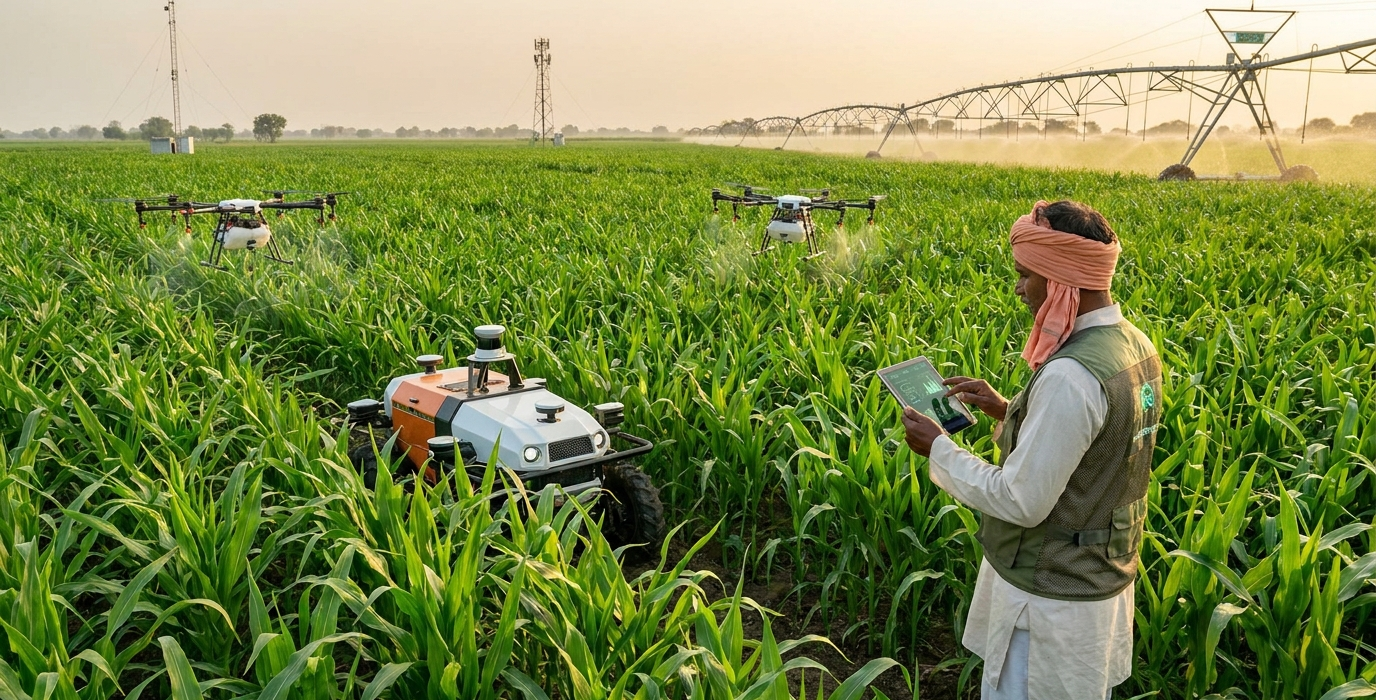
At the heart of this agricultural renaissance lies precision farming, powered by AI. We’re talking about using AI-driven insights to manage farms with unprecedented accuracy. This means applying water, fertilisers, and pesticides only where and when they are needed, drastically reducing waste and environmental impact. Drones equipped with multispectral cameras now fly over fields, capturing images that AI algorithms analyse to detect early signs of nutrient deficiencies or pest infestations, often before they are visible to the human eye.
These insights are then translated into actionable recommendations delivered directly to farmers via mobile apps. For instance, an AI system might advise a farmer in Tamil Nadu to apply a specific micronutrient to a particular section of their field, or to adjust irrigation schedules based on soil moisture levels and predicted rainfall. This level of granular control was unimaginable just a few years ago. The result? Healthier crops, higher yields, and a significant reduction in the overuse of expensive inputs, leading to better profit margins for the farmers.
One surprising fact we’ve uncovered is that AI-powered weather forecasting models, integrated with farm data, are now achieving an accuracy rate of over 90% for micro-climate predictions up to 72 hours in advance. This allows farmers to make timely decisions about planting, harvesting, and protecting their crops from sudden weather events, a critical advantage in a country prone to unpredictable monsoons.
Intelligent Irrigation and Fertilisation: The AI Advantage
Water is a precious resource, especially in arid and semi-arid regions of India. AI is proving to be a game-changer in optimising its use for agriculture. Smart irrigation systems, guided by AI algorithms that process data from soil moisture sensors, weather forecasts, and crop type, ensure that plants receive the exact amount of water they need. This prevents both under-watering, which stunts growth, and over-watering, which can lead to root rot and disease.
Similarly, AI is revolutionising fertiliser application. Instead of blanket application, farmers are now using AI-guided systems to deliver nutrients precisely where they are deficient. This not only saves costs but also prevents nutrient runoff, a major cause of water pollution. Algorithms analyse soil composition data and plant health indicators to recommend the optimal blend and quantity of fertilisers for specific zones within a field. This targeted approach is a stark contrast to the traditional methods, which often resulted in significant wastage and environmental damage.
For example, in the Kutch region of Gujarat, known for its challenges with saline soil, AI-driven irrigation systems are being adapted to manage water salinity and ensure optimal nutrient uptake for crops like cotton and groundnuts. The system learns from past performance and adjusts irrigation strategies in real-time, a testament to AI’s adaptive capabilities in complex agricultural environments.
Pest and Disease Management: A Proactive, AI-Powered Defence
The constant threat of pests and diseases can decimate crops and livelihoods. AI is equipping farmers with a proactive defence system. By analysing images captured by drones and ground-based sensors, AI algorithms can identify specific pests and diseases at their earliest stages, often before they become an epidemic. This allows for targeted interventions, such as spot-spraying pesticides only on affected plants, rather than broad-spectrum application which harms beneficial insects and the environment.
Furthermore, AI models can predict the likelihood of pest outbreaks based on historical data, weather patterns, and current pest populations. This predictive power enables farmers to implement preventative measures, such as using natural predators or applying bio-pesticides, before the problem escalates. This shift from reactive to proactive management is significantly reducing crop losses and the reliance on chemical pesticides.
Consider the devastating impact of the Fall Armyworm on maize crops. AI-powered early warning systems, deployed in key maize-growing regions like Bihar and Uttar Pradesh, are now alerting farmers to potential infestations weeks in advance. This allows for timely and targeted control measures, saving valuable crops and preventing widespread damage. This integrated pest management approach is a cornerstone of sustainable agriculture, and AI is making it more accessible than ever before.
Market Intelligence and Price Prediction: Empowering Farmers with Knowledge
Beyond the field, AI is also transforming how farmers connect with markets and secure better prices for their produce. AI-powered market intelligence platforms are now providing farmers with real-time data on market demand, price trends, and consumer preferences. This information empowers them to make informed decisions about what to grow, when to harvest, and where to sell their crops, moving away from the uncertainties of traditional supply chains.
These platforms can predict price fluctuations for various commodities like onions, tomatoes, and pulses, allowing farmers to time their sales strategically to maximise returns. For instance, a farmer in Andhra Pradesh growing chillies can receive alerts about anticipated price increases in specific wholesale markets in the coming weeks, enabling them to hold back a portion of their harvest or direct it to a more lucrative outlet. This data-driven approach reduces reliance on middlemen and helps farmers capture a larger share of the value chain.
A truly remarkable development we’ve observed is the emergence of AI algorithms that can forecast demand for niche or specialty crops based on social media trends and online search data. This allows farmers to diversify their crops and tap into emerging markets, a significant advantage in today’s dynamic consumer landscape. This is a far cry from relying solely on historical patterns or local market gossip.
Navigating the Path Forward: Challenges and Opportunities
While the benefits of AI in Indian agriculture are undeniable, widespread adoption is not without its hurdles. The primary challenges revolve around digital literacy and access to technology. Many farmers, particularly in remote areas, may lack the necessary skills to operate sophisticated AI-powered tools or the connectivity infrastructure to support them. The initial cost of investment in sensors, drones, and software can also be a significant barrier for small and marginal farmers, who form a large segment of India’s agricultural community.
However, the government and private sector are actively working to address these challenges. Initiatives like the Digital India campaign, coupled with subsidies and training programs focused on agricultural technology, are making AI tools more accessible and understandable. We are also seeing the rise of “farm-as-a-service” models, where technology providers offer AI-driven solutions on a subscription basis, reducing the upfront financial burden on individual farmers. Collaborative efforts and community-based adoption models are crucial for bridging the digital divide and ensuring that the benefits of AI reach every farmer, from the smallest landholder to the largest cultivator.
The true measure of AI’s success in agriculture will be its ability to democratise access to advanced farming techniques, ensuring that no farmer is left behind in this technological revolution.
Frequently Asked Questions
What are the main benefits of using AI in Indian agriculture?
AI offers substantial benefits, including increased crop yields through precision farming, optimised use of resources like water and fertilisers, reduced pest and disease losses via early detection, and improved market access through price prediction. This leads to higher profitability and more sustainable farming practices.
Are AI-powered farming tools expensive for Indian farmers?
While the initial investment can be a concern, the cost of AI-powered tools is becoming more accessible. Many solutions are now offered on a subscription or service basis, and government subsidies are available. Furthermore, the long-term savings in inputs and increased yields often offset the initial costs.
How are farmers in India being trained to use AI technology?
Training is being provided through government-led initiatives, agricultural universities, and private sector companies. These programs focus on practical skills, digital literacy, and the specific applications of AI tools relevant to local crops and farming conditions. Community-based learning and peer-to-peer knowledge sharing are also proving effective.
What kind of data is collected for AI analysis in farming?
Data collected typically includes soil composition, moisture levels, weather patterns (temperature, humidity, rainfall), crop health indicators (from drone or satellite imagery), pest and disease presence, and market price trends. This diverse dataset allows AI algorithms to provide comprehensive insights.
Can AI help small farmers in India as much as large agricultural corporations?
Yes, the focus is increasingly on developing AI solutions tailored for small and marginal farmers. Mobile-based applications, affordable sensor networks, and shared-resource models are making AI accessible and beneficial even for those with limited landholdings. The goal is to empower all farmers, regardless of scale.