Key Takeaways
- The Indian job market in 2026 and beyond will see significant shifts driven by AI, creating new roles while transforming existing ones.
- Adaptability and continuous learning are paramount for professionals to thrive in this evolving landscape, with a focus on skills that complement AI.
- Emerging AI-powered sectors like personalized healthcare, sustainable agriculture, and advanced manufacturing will offer substantial career opportunities.
- India’s demographic advantage can be leveraged to become a global AI talent hub, provided there’s strategic investment in education and infrastructure.
The Dawn of the AI-Augmented Workforce in India
The year is 2026, and the whispers of artificial intelligence have become a roar, fundamentally reshaping India’s employment landscape. We’re no longer just talking about hypothetical future scenarios; the integration of AI is happening now, impacting everything from our daily commutes to the very nature of our professional lives. For many in India, the immediate concern isn’t job displacement, but rather job transformation. Think of it less as jobs disappearing and more as jobs evolving, demanding new skills and a different approach to work.
This evolution presents both immense opportunities and undeniable challenges. Professionals across industries are grappling with how to stay relevant. The good news is that India, with its vast and young population, is uniquely positioned to harness the power of AI. We have the potential to not only adapt but to lead in the global AI revolution. This requires a proactive approach, a willingness to embrace change, and a commitment to upskilling.
The narrative of AI stealing jobs is overly simplistic. Instead, we are witnessing the birth of the AI-augmented workforce. AI will handle repetitive, data-intensive tasks, freeing up human talent for more creative, strategic, and empathetic work. This shift is already visible in sectors like customer service, where AI chatbots handle initial queries, allowing human agents to focus on complex problem-solving and building customer relationships. The key lies in understanding which skills will be amplified by AI and which will become less critical.
The Shifting Sands of Traditional Roles
Traditional roles are undergoing a profound metamorphosis. Data entry clerks, for instance, are seeing their tasks automated. However, this doesn’t spell their doom; it signals a need for them to transition into roles that manage, interpret, and strategize based on the data AI generates. A former data entry operator might become a data analyst, or a data curator ensuring the quality and ethical use of AI inputs. Similarly, back-office administrative functions are being streamlined by AI-powered software.
This transformation isn’t limited to blue-collar or entry-level positions. Even roles traditionally considered safe, like those in finance and law, are experiencing the AI effect. AI can now draft legal documents, identify financial anomalies, and even perform basic diagnostic medical analyses. The human professional in these fields will increasingly be the one who provides the nuanced judgment, the ethical oversight, and the client-facing empathy that AI currently cannot replicate. The focus shifts from execution to interpretation and strategic application.
Consider the impact on the manufacturing sector in places like Pune or Chennai. While robots have been present for years, AI is making them smarter, more adaptable, and capable of handling more complex assembly lines. This means human workers will likely move from repetitive manual labor to overseeing these intelligent systems, troubleshooting, and participating in the design and maintenance of AI-driven production processes. The demand for skilled technicians and AI integration specialists is set to surge.
New Frontiers: AI-Powered Industries and Job Creation
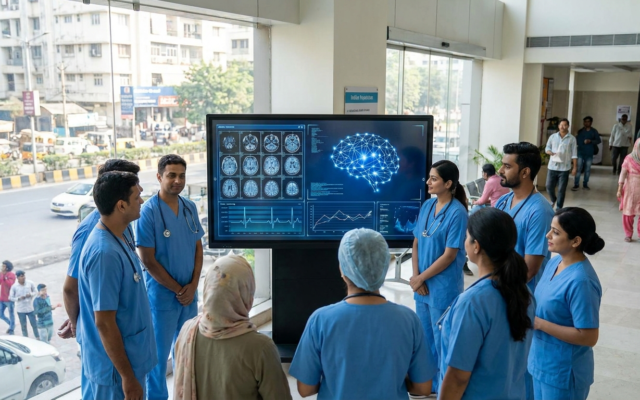
The most exciting aspect of AI’s integration is the emergence of entirely new industries and job categories that were barely imaginable a decade ago. These are not just niche roles; they are poised to become major employment generators in India. Think about personalized healthcare, where AI analyzes individual genetic data, lifestyle, and medical history to create bespoke treatment plans. This will necessitate roles like AI-driven diagnostic specialists, personalized health strategists, and bio-informaticians who can interpret complex AI outputs.
Another burgeoning field is AI-enhanced sustainable agriculture. With climate change posing significant threats, AI is being deployed to optimize crop yields, predict weather patterns with unprecedented accuracy, and develop precision farming techniques. This creates demand for agricultural data scientists, AI-powered irrigation system managers, and environmental AI consultants who can help farmers leverage these technologies to reduce waste and increase productivity. Imagine the impact in regions like Punjab or the farming belts of Maharashtra.
Furthermore, the expansion of AI in areas like smart cities, personalized education, and immersive entertainment is creating a ripple effect of new job opportunities. We’re talking about AI ethics officers ensuring fairness and transparency, AI-driven content creators developing interactive learning modules or virtual experiences, and urban AI planners designing more efficient and sustainable city infrastructures. These roles require a blend of technical acumen and domain-specific knowledge, highlighting the evolving nature of work.
One surprising fact is that by 2026, the demand for AI ethics and governance specialists is projected to outstrip the supply of qualified professionals by a significant margin. This highlights the critical need for education and training in this area, ensuring that AI development and deployment are aligned with societal values and legal frameworks. India’s proactive stance in this domain could set a global precedent.
The Rise of the “AI Whisperer” and Prompt Engineer
Within these new frontiers, we are seeing the rise of roles that sound almost futuristic. The “AI Whisperer” or Prompt Engineer is one such example. This individual is skilled in crafting precise instructions and questions for AI models to elicit the desired output. It’s an art and a science, requiring deep understanding of how AI “thinks” and communicates. These professionals are crucial for unlocking the full potential of AI tools, whether for creative writing, complex data analysis, or sophisticated coding.
This role is particularly relevant in content creation and marketing, where AI can generate drafts of articles, ad copy, and social media posts. A prompt engineer ensures that the AI output is not only relevant but also engaging, accurate, and aligned with brand voice. Similarly, in software development, prompt engineers can help accelerate the coding process by generating snippets of code or debugging complex algorithms. The ability to communicate effectively with AI is becoming a core competency.
The surprising demographic fact is that a significant portion of these emerging AI roles are being filled by individuals who previously worked in humanities and liberal arts fields. Their strong communication, critical thinking, and problem-solving skills, when combined with AI training, make them ideal candidates for roles like AI ethics officers, AI content strategists, and even prompt engineers. This underscores that a diverse educational background can be a powerful asset in the AI era.
“The future of work in India isn’t about humans versus machines, but about humans working smarter, with AI as our most powerful collaborator.”
Upskilling and Reskilling: Your Roadmap to AI-Ready Careers
The most critical takeaway for every Indian professional is the imperative to upskill and reskill. The pace of technological change means that what you know today might not be sufficient for tomorrow. Fortunately, India’s educational ecosystem is rapidly adapting. Online learning platforms, vocational training institutes, and university-level programs are offering specialized courses in AI, machine learning, data science, and related fields. These are often accessible and affordable, making continuous learning a realistic goal.
Focus your learning on areas that complement AI. This includes critical thinking, complex problem-solving, creativity, emotional intelligence, and leadership. These are the “human” skills that AI cannot easily replicate and will become even more valuable. For example, a doctor who can effectively use AI diagnostic tools but also possesses strong empathy and communication skills will be far more effective than one who relies solely on technology. We need to cultivate these uniquely human strengths.
Several initiatives are emerging to support this transition. The National Skill Development Corporation (NSDC) and various state governments are launching programs focused on AI and digital literacy. Many large corporations are also investing heavily in internal training and development for their employees. Keep an eye on these opportunities; they are designed to help you navigate the AI-driven job market with confidence. The key is to view learning not as a one-time event, but as an ongoing journey.
Navigating the Learning Landscape: Where to Start
For those unsure where to begin, start by identifying the skills that are in demand within your current industry or a field you aspire to enter. Online platforms like Coursera, edX, and Udemy offer a vast array of courses, from introductory AI concepts to advanced machine learning algorithms. Many of these platforms offer certifications that can bolster your resume. Look for courses that provide hands-on projects, allowing you to build a portfolio of practical experience.
Consider micro-credentials and bootcamps that offer intensive, focused training in specific AI technologies. These are often shorter and more practical than traditional degrees, allowing for quicker entry into new roles. For instance, a bootcamp focused on Python for data science or a micro-credential in natural language processing could be invaluable. Don’t underestimate the power of networking either; connect with professionals in AI-related fields and attend industry webinars and conferences.
The surprising aspect here is the growing trend of interdisciplinary learning. Individuals are combining AI knowledge with their existing expertise, leading to unique and highly sought-after skill sets. A historian with AI skills, for example, might excel at digital humanities projects, analyzing vast archives with unprecedented speed and insight. This blend of specialized domain knowledge and AI proficiency is where true innovation and career advantage lie in 2026.
The Indian Advantage: A Global Hub for AI Talent
India’s demographic dividend – a large, young, and increasingly educated population – is its greatest asset in the AI era. This translates into a massive pool of potential talent capable of driving innovation and filling the growing demand for AI professionals worldwide. The country’s IT sector, already a global powerhouse, provides a strong foundation for AI development and adoption. We have the infrastructure, the entrepreneurial spirit, and the intellectual capital to excel.
The government’s “Digital India” initiative and its focus on promoting AI research and development are crucial enablers. Investments in supercomputing facilities, AI research labs, and initiatives to foster collaboration between academia and industry are laying the groundwork for India to become a leading AI nation. This strategic focus is vital for ensuring that India not only consumes AI but also creates and exports AI solutions. The potential for economic growth and job creation is immense.
We are already seeing Indian startups and research institutions making significant strides in AI. From developing AI solutions for accessibility to creating advanced algorithms for financial fraud detection, the innovation is palpable. The government’s vision of making India a leader in AI is not just aspirational; it’s becoming a tangible reality. This positions India as a prime destination for global companies looking to tap into AI talent and develop cutting-edge AI applications.
A surprising statistic reveals that by 2026, India is projected to be one of the top three countries globally in terms of AI patent applications filed by startups. This demonstrates the country’s burgeoning innovative capacity and its ambition to be at the forefront of AI research and development. This surge in intellectual property creation is a strong indicator of future economic competitiveness and job growth.
Bridging the Gap: Infrastructure and Accessibility
While the talent pool is vast, ensuring equitable access to AI education and opportunities is crucial. Bridging the digital divide and ensuring widespread internet connectivity, especially in rural areas, remains a priority. Investments in robust digital infrastructure are paramount for democratizing AI education and enabling individuals from all walks of life to participate in the AI revolution. This includes ensuring access to affordable computing resources and reliable internet services.
Moreover, fostering a culture of lifelong learning and providing accessible training programs are key. This means creating pathways for individuals to acquire new skills throughout their careers. Partnerships between government, industry, and educational institutions are vital in developing curricula that are relevant, up-to-date, and responsive to the evolving demands of the AI job market. The goal is to create a truly inclusive AI ecosystem.
The Future is Collaborative: Human-AI Partnerships
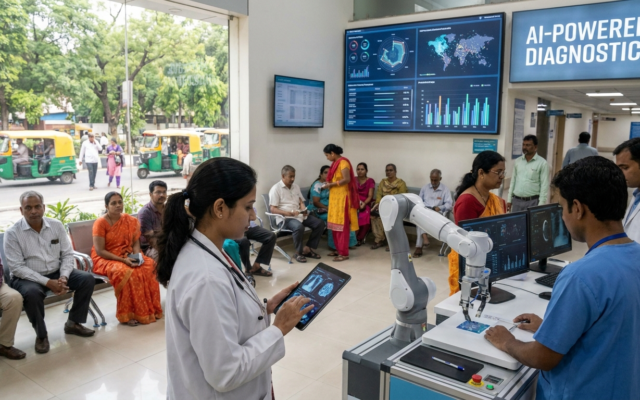
The overarching theme for the Indian workforce in 2026 and beyond is collaboration. AI is not an adversary; it’s a tool, a partner that can amplify human capabilities. Imagine a doctor in Bengaluru using AI to analyze medical scans with superhuman speed and accuracy, allowing them to spend more time consulting with patients and providing compassionate care. Or a teacher in Mumbai leveraging AI to personalize lesson plans for each student, catering to individual learning paces and styles.
This collaborative future requires a mindset shift. We must move away from viewing AI as a threat and instead embrace it as a means to enhance productivity, creativity, and problem-solving. The jobs of the future will demand individuals who can effectively interface with AI systems, interpret their outputs, and apply them to complex real-world challenges. This synergy between human intelligence and artificial intelligence is where the true potential lies.
We are already seeing this collaboration in action. Architects are using AI to generate design options and optimize building performance. Engineers are employing AI for predictive maintenance, preventing costly equipment failures. Even artists are collaborating with AI to create novel forms of digital art. The possibilities are endless, and they all point towards a future where human and AI capabilities are intertwined, leading to unprecedented innovation and progress.
Ethical Considerations and Responsible AI Deployment
As we embrace this collaborative future, it is imperative that we do so responsibly. Ethical considerations surrounding AI deployment – such as data privacy, bias in algorithms, and job displacement – must be at the forefront of our discussions and policy-making. India’s commitment to responsible AI development will be a critical factor in its success. This includes establishing clear guidelines, promoting transparency, and ensuring accountability in AI systems.
The development of AI ethics committees within organizations and the establishment of regulatory frameworks by the government are essential steps. Educating the public about AI and its implications will also foster informed dialogue and enable society to navigate the changes effectively. By prioritizing ethical considerations, we can ensure that AI serves humanity and contributes to a more equitable and prosperous future for all Indians.
Frequently Asked Questions
What are the most in-demand AI skills for 2026?
For 2026, in-demand AI skills include machine learning, deep learning, natural language processing (NLP), computer vision, AI ethics and governance, data science, and prompt engineering. Beyond technical skills, strong problem-solving, critical thinking, creativity, and emotional intelligence are also highly valued.
Will AI replace my job in India?
While AI will automate many tasks, it’s more likely to transform jobs rather than eliminate them entirely. New roles will emerge, and existing jobs will require new skills to work alongside AI. Focus on developing skills that complement AI, such as strategic thinking, creativity, and interpersonal communication.
Where can I learn AI skills in India?
You can learn AI skills through online platforms like Coursera, edX, and Udemy, as well as Indian institutions offering specialized courses and bootcamps. Look into initiatives by the National Skill Development Corporation (NSDC) and university programs focusing on AI and data science.
How can I prepare my career for the AI revolution?
Prepare by embracing continuous learning and upskilling. Identify AI-relevant skills in your field, focus on developing uniquely human capabilities, and stay informed about industry trends. Networking with professionals in AI-related fields can also provide valuable insights and opportunities.
What are the ethical concerns surrounding AI in India?
Key ethical concerns include data privacy, algorithmic bias leading to discrimination, job displacement, and the responsible use of AI in sensitive areas like surveillance and decision-making. Proactive policy-making and public discourse are essential to address these issues.