Key Takeaways
- AI-powered precision farming can dramatically increase crop yields, potentially by up to 40% in initial deployments, by optimising resource use.
- From predictive pest management to automated irrigation, AI offers tangible solutions for India’s diverse agricultural challenges.
- Early adopters are reporting significant cost savings on water, fertilisers, and pesticides, making farming more sustainable and profitable.
- While widespread adoption faces infrastructure and training hurdles, a growing ecosystem of startups and government initiatives are paving the way for an AI-driven agricultural future.
The Promise of Precision: How AI is Reshaping Indian Farmlands
Imagine a farmer in Punjab, not just guessing when to water their wheat, but knowing precisely how much moisture each section of their field needs, down to the millilitre. Picture a village in Maharashtra receiving real-time alerts about an impending pest outbreak, allowing for targeted intervention before it devastates their soybean crop. This is no longer science fiction; this is the emerging reality of AI in Indian agriculture. Today, on August 3rd, 2026, we stand at the cusp of a potential agricultural revolution, one driven by intelligent algorithms and data-driven insights. The goal? To significantly boost productivity, enhance sustainability, and improve the livelihoods of millions of our farmers.
The sheer scale of Indian agriculture presents both immense challenges and unparalleled opportunities for AI. With over 55% of our population still reliant on farming, any advancement here has a profound ripple effect. Traditional methods, while deeply rooted in our culture, often struggle with unpredictable weather patterns, soil degradation, and the efficient use of precious resources like water. AI offers a sophisticated toolkit to address these age-old problems, transforming farming from an art of intuition to a science of precision. We are seeing a paradigm shift, moving towards smart farming solutions that promise a significantly brighter future for our farmlands.
Unlocking Yield Potential: Data-Driven Farming Takes Root
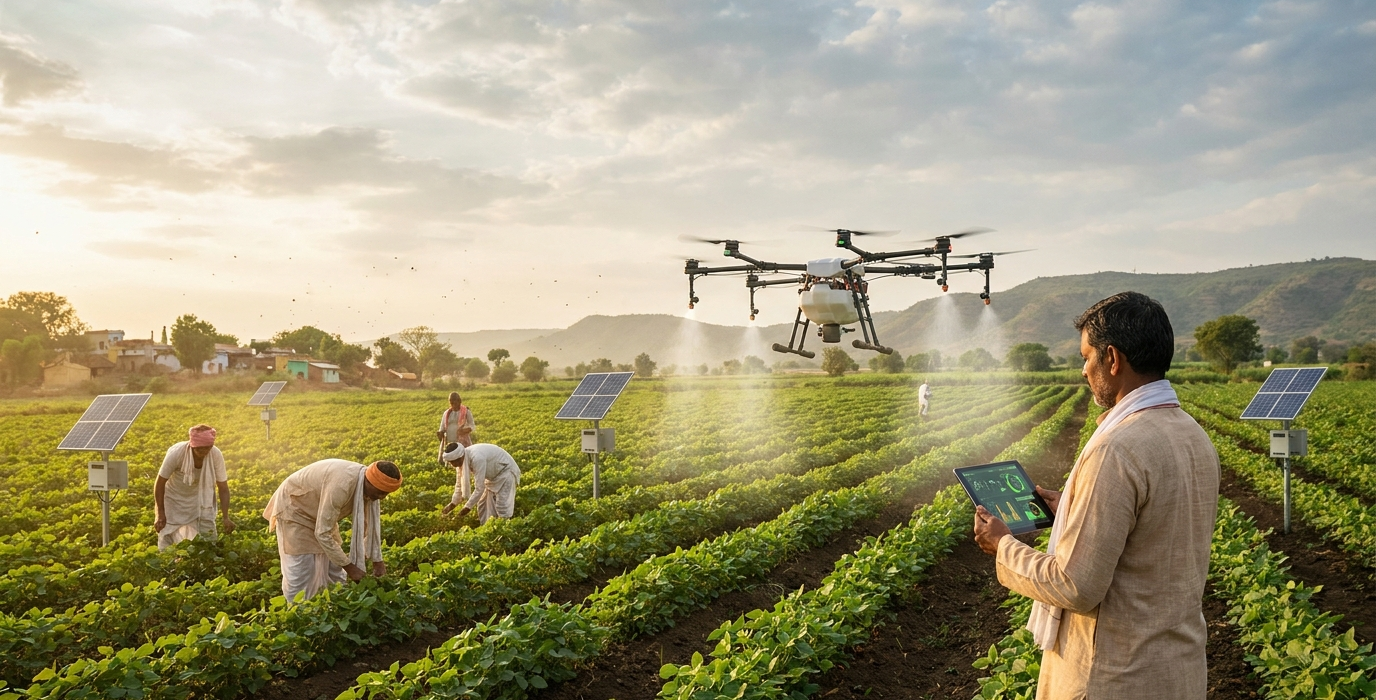
The core of AI in agriculture lies in its ability to process vast amounts of data and translate it into actionable insights. Think of it as giving every single plant on your farm a voice, and AI as the translator that understands their needs. Sensors, drones, and even satellite imagery are constantly collecting data on soil health, weather conditions, crop growth, and pest presence. AI algorithms then analyse this information to provide farmers with hyper-localised recommendations. For instance, instead of a blanket application of fertiliser across an entire field, AI can pinpoint areas that are nutrient-deficient, recommending the exact type and quantity of fertiliser needed, thereby reducing waste and maximising absorption.
This precision approach directly translates to increased yields. Studies and early pilot projects across states like Haryana and Rajasthan have already demonstrated yield increases of 15-40% for key crops like rice and cotton. This isn’t about magic; it’s about optimising every input. By ensuring crops receive the right amount of water, nutrients, and protection at the precise moment they need it, we eliminate much of the guesswork and inefficiency that has plagued traditional farming for centuries. The potential for India to not only feed its growing population more effectively but also become a significant player in global food security is immense.
Predictive Power: Tackling Pests and Diseases Before They Strike
One of the most destructive forces in agriculture is the unpredictable onslaught of pests and diseases. A single outbreak can wipe out months of hard work and investment. AI is emerging as a powerful shield against these threats through predictive analytics. By analysing historical data on pest behaviour, weather patterns, and crop susceptibility, AI models can forecast the likelihood and timing of pest infestations. This allows farmers to move from a reactive mode – spraying pesticides only after seeing damage – to a proactive one, implementing preventive measures or targeted treatments.
Imagine a farmer in Tamil Nadu, alerted via their smartphone that a specific type of aphid is likely to infest their brinjal crop within the next ten days, based on current humidity levels and the growth stage of the plants. This early warning empowers them to use biological pest control methods or a minimal, targeted application of organic pesticides, preventing widespread damage. This not only saves the crop but also significantly reduces the environmental impact and health risks associated with indiscriminate pesticide use. Furthermore, AI can identify early signs of disease through image recognition, allowing for prompt diagnosis and treatment, often before visible symptoms appear. This predictive power is a game-changer for crop resilience.
Water Woes Solved: Smart Irrigation for a Thirsty Nation
Water scarcity is a critical challenge for Indian agriculture, exacerbated by climate change. Traditional irrigation methods are often inefficient, leading to significant water wastage through evaporation and runoff. AI-powered smart irrigation systems are revolutionising how we manage this precious resource. These systems integrate data from soil moisture sensors, weather forecasts, and plant-specific water requirements to automate and optimise irrigation schedules. Farmers can set up systems that deliver water precisely when and where it’s needed, at the optimal flow rate.
Consider a farmer in the arid regions of Gujarat. Instead of relying on fixed irrigation timings that might over- or under-water different parts of the field, an AI system can dynamically adjust watering based on real-time soil moisture readings. If a particular area is already adequately hydrated due to recent rainfall, the system will skip watering that section altogether. This intelligent approach can lead to water savings of up to 30-50%, a monumental achievement in water-stressed areas. This not only conserves water but also reduces energy costs associated with pumping water and minimises the risk of waterlogging, which can harm crop roots and lead to diseases. The long-term implications for sustainable agriculture are profound.
From Field to Fork: Enhancing Efficiency and Traceability
The impact of AI extends beyond the farm gate, optimising the entire agricultural supply chain. In the realm of logistics and market access, AI can help predict crop yields more accurately, enabling better planning for storage, transportation, and distribution. This reduces post-harvest losses, a significant problem in India where a substantial portion of produce spoils before reaching consumers. AI-powered platforms can also connect farmers directly with buyers, cutting out intermediaries and ensuring fairer prices for the produce.
Furthermore, AI is enhancing traceability in the food system. By leveraging blockchain technology alongside AI, we can create transparent records of a product’s journey from seed to plate. Consumers can scan a QR code on their produce and learn about its origin, cultivation practices, and even the farm it came from. This builds trust and confidence, particularly for consumers in urban centres like Mumbai and Bengaluru who are increasingly concerned about food safety and provenance. This enhanced efficiency and transparency ultimately benefit everyone involved, from the farmer to the end consumer. A surprising fact here: some AI systems are now being trained to detect minute variations in fruit ripeness using hyperspectral imaging, allowing for more precise harvesting and reducing spoilage during transit.
Challenges and the Road Ahead: Bridging the Digital Divide
Despite the immense potential, the widespread adoption of AI in Indian agriculture is not without its hurdles. The primary challenges revolve around infrastructure, affordability, and digital literacy. Many rural areas still lack reliable internet connectivity, a prerequisite for many AI-powered solutions. The cost of advanced sensors, drones, and AI software can also be prohibitive for small and marginal farmers, who form the backbone of Indian agriculture. Moreover, a significant portion of our farming community may not have the necessary digital skills to operate these new technologies effectively.
To overcome these obstacles, a multi-pronged approach is essential. Government initiatives like Digital India and schemes promoting agricultural technology adoption are crucial. Partnerships between tech companies, agricultural universities, and farmer producer organisations (FPOs) are vital for developing cost-effective, localised AI solutions and providing adequate training and support. Educational programs focusing on digital literacy and the practical application of AI tools are also paramount. We must ensure that this technological leap benefits all farmers, not just a select few. The future of Indian agriculture hinges on our ability to bridge this digital divide and empower every farmer with the tools they need to thrive in an AI-driven world.
Frequently Asked Questions
What are the biggest benefits of AI in Indian farming?
The key benefits include increased crop yields through precision farming, reduced wastage of water and fertilisers, early detection and prevention of pests and diseases, and improved resource management leading to higher profitability and sustainability.
Is AI technology affordable for small Indian farmers?
While high-end solutions can be expensive, a growing number of startups are developing cost-effective, cloud-based AI platforms and affordable sensor technologies. Government subsidies and cooperative models through FPOs are also making these tools more accessible to smallholders.
How does AI help in water conservation in agriculture?
AI-powered smart irrigation systems use soil moisture sensors and weather data to deliver water precisely when and where it’s needed, significantly reducing overwatering and wastage compared to traditional methods. This can lead to substantial water savings.
Can AI help in improving the quality of Indian produce?
Yes, AI can help improve quality by optimising nutrient levels, detecting diseases early, and ensuring optimal harvesting times based on factors like ripeness and size, leading to more consistent and higher-grade produce.
What training is needed for farmers to use AI tools?
Farmers will need training in basic digital literacy, using smartphone apps for data input and receiving recommendations, understanding sensor data, and operating drones if applicable. Many AI platforms are being designed with user-friendly interfaces to simplify adoption.