Key Takeaways
- AI is dramatically speeding up the diagnosis of critical diseases like cancer and diabetic retinopathy, often with greater accuracy than human analysis alone.
- New AI-powered tools are personalizing treatment plans, leading to more effective interventions and reduced side effects for patients across India.
- Remote patient monitoring powered by AI is extending healthcare access to underserved rural and remote areas, bridging the urban-rural divide.
- The integration of AI is not replacing doctors but augmenting their capabilities, freeing them for more complex patient interactions and strategic care.
The Dawn of AI-Assisted Diagnosis in India
Imagine a world where life-threatening conditions are detected not in weeks, but in mere minutes. This is no longer a distant dream, but a rapidly unfolding reality across India, thanks to the burgeoning field of Artificial Intelligence in healthcare. From the bustling AI labs in Bengaluru to remote diagnostic centres in the Northeast, AI is proving to be a formidable ally in the fight against disease. Its ability to process vast datasets with incredible speed and identify subtle patterns invisible to the human eye is fundamentally reshaping how we diagnose illnesses.
Consider the impact on cancer detection. Traditional mammography screening, while effective, relies on the keen observation of radiologists who must meticulously scan countless images. AI algorithms, trained on millions of such scans, can now flag suspicious areas with remarkable precision and speed. This not only reduces the workload on these specialists but also catches cancers at their earliest, most treatable stages. Early detection is paramount, and AI is becoming our sharpest tool in achieving it, offering a crucial advantage in patient survival rates.
Personalized Treatment Journeys, Powered by Data
Beyond diagnosis, Artificial Intelligence is ushering in an era of hyper-personalized medicine. For decades, treatment protocols have often been based on generalized patient profiles. However, AI’s capacity to analyze an individual’s genetic makeup, lifestyle factors, and specific disease markers allows for the creation of bespoke treatment plans. This means therapies are no longer one-size-fits-all; they are tailored to maximize efficacy and minimize adverse reactions for each unique patient.
In oncology, for instance, AI can predict how a particular patient might respond to different chemotherapy regimens or immunotherapy drugs based on their genomic data and tumour characteristics. This predictive power helps oncologists make more informed decisions, selecting the treatment most likely to succeed while avoiding potentially harmful or ineffective options. This level of precision is not just about better outcomes; it’s about enhancing the patient’s quality of life throughout their treatment journey, a significant leap forward for Indian healthcare.
Bridging the Divide: AI and Rural Healthcare Access
One of the most profound impacts of AI in India is its potential to democratize healthcare access. The vast rural and remote populations often face significant barriers to quality medical care, from a shortage of specialists to long travel distances. AI-powered telemedicine platforms and remote diagnostic tools are actively working to bridge this critical gap.
Imagine a village health worker in a remote corner of Himachal Pradesh. Using an AI-enabled device, they can capture high-resolution images of a patient’s retina. This image is then instantly analyzed by an AI algorithm, which can detect early signs of diabetic retinopathy, a leading cause of blindness. The results are communicated back to the health worker and, if necessary, to a consulting ophthalmologist located hundreds of kilometres away. This not only saves the patient a gruelling journey but also ensures timely intervention, preventing irreversible vision loss. This is a game-changer for millions.
AI as a Doctor’s Superpower: Augmenting, Not Replacing
A common concern surrounding AI in healthcare is the fear of job displacement for medical professionals. However, the current trajectory and sentiment in India suggest a different narrative: AI is not poised to replace doctors but to empower them. Think of AI as an incredibly sophisticated assistant, capable of performing repetitive, data-intensive tasks with unparalleled speed and accuracy.
This augmentation frees up valuable time for doctors. Instead of spending hours poring over scans or sifting through patient histories, AI can pre-process this information, highlighting critical findings. This allows physicians to dedicate more of their precious time to direct patient interaction, complex problem-solving, and building stronger doctor-patient relationships. It enhances their diagnostic capabilities and allows them to focus on the human element of care, which AI can never replicate.
Revolutionizing Radiology: Seeing the Unseen with AI
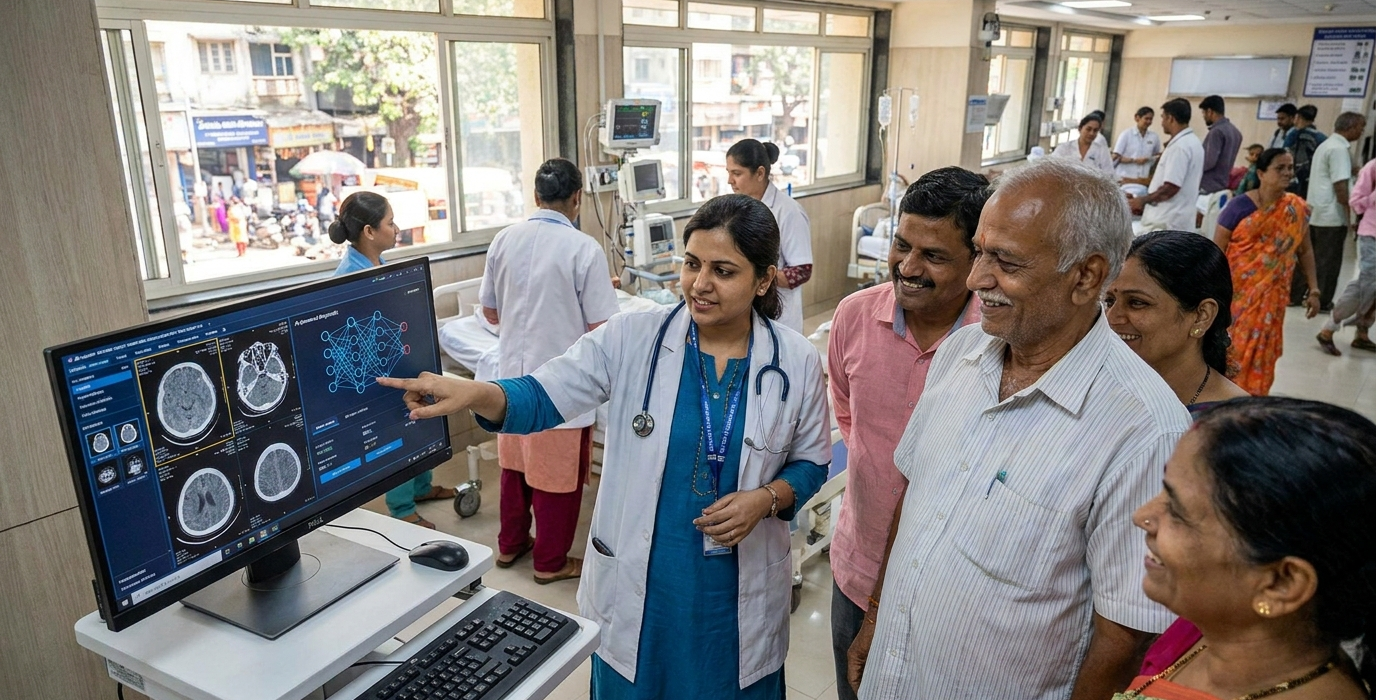
Radiology is one of the fields experiencing the most immediate and dramatic transformations due to AI. The sheer volume of medical imaging – X-rays, CT scans, MRIs – generated daily presents a significant challenge for even the most dedicated radiologists. AI algorithms, trained on massive datasets of annotated images, are proving exceptionally adept at identifying abnormalities.
For example, AI models are now being deployed to screen chest X-rays for signs of tuberculosis (TB), a pervasive health concern in India. These systems can flag potential TB cases with high sensitivity, allowing public health officials to prioritize testing and treatment in affected areas. This is particularly crucial in resource-constrained settings where timely diagnosis is often difficult. Another surprising application is in detecting subtle fractures that might be missed in busy emergency rooms; AI can highlight these areas, prompting a closer look from the radiologist.
The Future is Now: Innovations on the Horizon
The integration of AI into Indian healthcare is still in its early stages, but the pace of innovation is astonishing. We are witnessing the development of AI-powered tools that can predict patient deterioration in intensive care units, analyze pathology slides for cancerous cells with remarkable accuracy, and even assist in surgical planning by creating 3D models from medical scans.
The implications for public health are immense. AI can help in predicting disease outbreaks by analyzing patterns in social media, news reports, and even wastewater data. This proactive approach allows health authorities to deploy resources more effectively and implement preventive measures before an epidemic takes hold. Furthermore, AI is being used to develop new drug discovery pipelines, potentially leading to breakthrough treatments for diseases that currently have limited options. The era of AI-driven preventative and personalized healthcare is not a future concept; it is actively being built today.
Frequently Asked Questions
How is AI improving the speed of medical diagnoses in India?
AI algorithms can analyze medical images, such as X-rays or CT scans, and patient data significantly faster than humans. This allows for the rapid identification of potential diseases, often flagging critical conditions within minutes, thereby speeding up the diagnostic process considerably.
Will AI replace doctors in Indian hospitals?
The current trend indicates that AI is augmenting, not replacing, medical professionals. AI tools handle data-intensive tasks like image analysis, freeing up doctors to focus on patient care, complex decision-making, and building relationships with patients.
What are some surprising benefits of AI in Indian rural healthcare?
AI is enabling remote diagnosis of conditions like diabetic retinopathy and tuberculosis through portable devices, drastically improving access to specialist care for individuals in remote villages. It’s also helping to predict local health trends for better resource allocation.
How does AI contribute to personalized treatment plans in India?
By analyzing a patient’s unique genetic information, lifestyle, and specific disease markers, AI can help predict how they will respond to different treatments. This allows doctors to create highly tailored treatment regimens that are more effective and have fewer side effects.