Key Takeaways
- AI is moving beyond simple recipe suggestions to offer hyper-personalized meal plans and real-time cooking assistance tailored to Indian palates and dietary needs.
- New AI-powered kitchen gadgets, like smart ovens and intelligent blenders, are integrating with apps to automate complex cooking tasks and ensure consistent results, even for traditional dishes.
- Beyond convenience, AI is playing a crucial role in food safety and sustainability, from predicting spoilage to optimizing ingredient sourcing for Indian households.
- The future of Indian cooking involves AI as a collaborative partner, enhancing creativity and accessibility for home cooks of all skill levels.
AI: Your New Sous Chef for Authentic Indian Flavours
The aroma of a perfectly tempered tadka, the complex layering of spices in a biryani, the delicate balance of sweet and sour in a Bengali fish curry – these are the hallmarks of Indian cuisine. For generations, these culinary traditions have been passed down through families, a sacred art form. Now, in 2026, artificial intelligence is stepping into the heart of the Indian kitchen, not to replace these cherished methods, but to augment and elevate them. Forget generic recipe apps that offer bland, one-size-fits-all suggestions. Today’s AI is sophisticated, learning your specific tastes, dietary restrictions, and even the ingredients you have on hand to craft truly bespoke culinary experiences. Imagine an AI that understands your preference for a spicier Vindaloo or knows you’re trying to reduce your sugar intake for your next Diwali feast. That future is not just arriving; it’s already simmering.
This evolution is driven by rapid advancements in machine learning and data analytics. AI algorithms can now process vast amounts of information, from nutritional databases and regional Indian cooking styles to individual user feedback. They can predict flavour pairings with uncanny accuracy and even adapt classic recipes to fit modern health trends or ingredient availability. We are witnessing a paradigm shift where technology is becoming an intuitive extension of the cook, making complex dishes more accessible and inspiring new levels of culinary creativity. This isn’t about devaluing traditional skills; it’s about empowering more people to achieve authentic, delicious results with greater ease and confidence.
Personalized Nutrition and Palate Matching
One of the most exciting frontiers for AI in Indian kitchens is hyper-personalization. No two Indian families eat exactly alike, and our dietary needs are incredibly diverse, influenced by region, health goals, and personal preferences. AI is now capable of going far beyond simply suggesting “dal makhani.” By analysing your health data, activity levels, and even your past meal choices (with your permission, of course), AI can curate daily meal plans that are nutritionally balanced and perfectly aligned with your specific requirements. For example, if you’re a fitness enthusiast in Bengaluru aiming for muscle gain, an AI might suggest a high-protein breakfast of idli with a protein-fortified chutney, followed by a light, lentil-based lunch.
Furthermore, AI understands the nuances of Indian flavours. It can learn that you prefer the earthy notes of mustard oil in your Bengali dishes or a tangier profile for your Gujarati farsan. This deep understanding allows AI to suggest ingredient substitutions that maintain the authentic spirit of a dish while adhering to your dietary goals. Are you lactose intolerant but craving a creamy paneer dish? An AI could suggest the perfect plant-based alternative, ensuring the texture and flavour remain as close to the original as possible. This level of granular control over both nutrition and taste is a game-changer, making healthy eating not a chore, but a delightful, personalized journey.
Consider the growing trend of “flexitarian” diets within India. AI can help individuals navigate this by offering creative ways to incorporate more plant-based meals without sacrificing the comforting flavours of their favourite curries. It can suggest innovative uses for seasonal vegetables available in local markets like Koyambedu in Chennai or Ghazipur in Delhi, ensuring freshness and reducing food waste. The ability of AI to adapt and learn from your feedback means that over time, your AI culinary assistant becomes an indispensable partner, truly understanding your unique gastronomic landscape. This is a level of culinary partnership we could only dream of a few years ago.
Smart Appliances: The Future of Effortless Indian Cooking
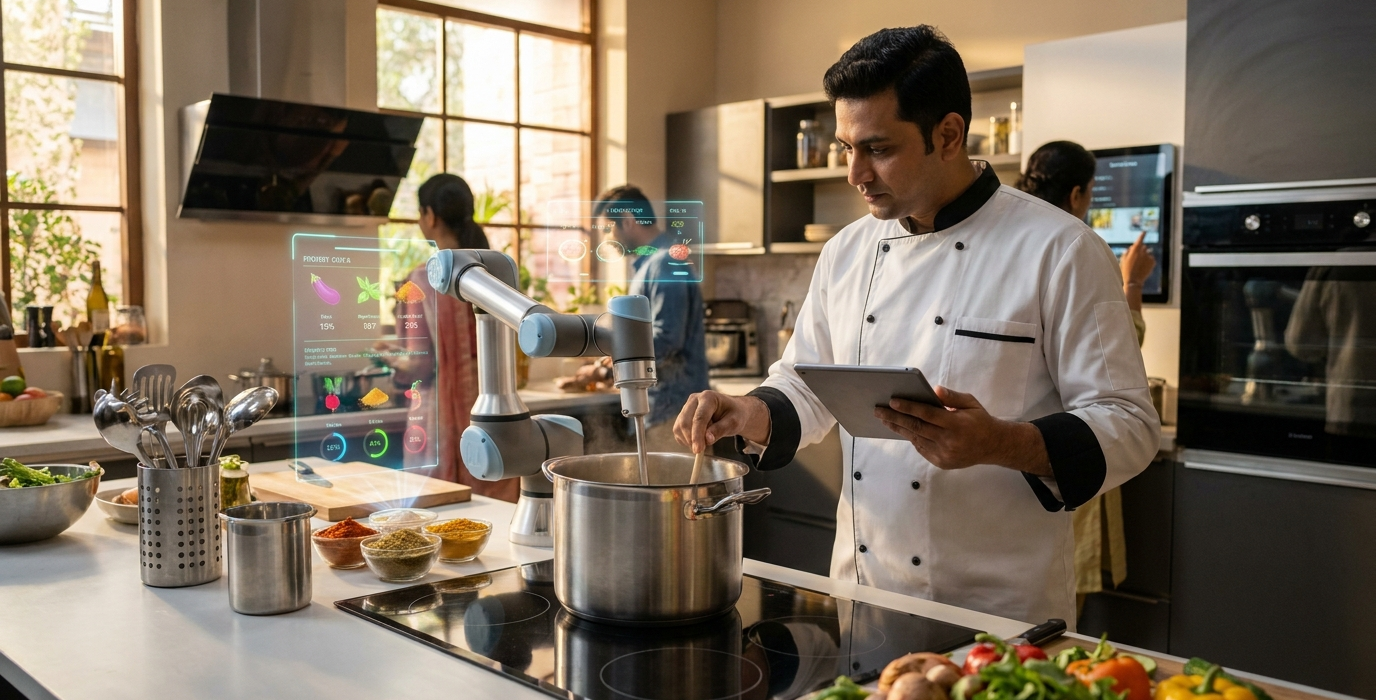
The integration of AI into kitchen appliances is transforming how we approach cooking, especially for complex Indian recipes. Smart ovens in Indian homes are no longer just tools for baking; they are becoming intelligent cooking stations. These ovens can connect to AI-powered recipe platforms, downloading precise cooking instructions for dishes like a perfect *rogan josh* or a fluffy *pulao*. The AI then controls the oven’s temperature, humidity, and cooking time with remarkable accuracy, eliminating the guesswork that often accompanies traditional methods. You simply select the recipe, add your ingredients, and let the AI guide the appliance to deliver restaurant-quality results.
Beyond ovens, intelligent blenders and food processors are also entering the fray. Imagine a blender that knows the exact speed and duration needed to achieve the perfect *masala* paste for a Goan fish curry, preventing over-processing or uneven texture. Some advanced models can even detect the consistency of ingredients and adjust their settings in real-time. This means you can achieve that smooth, velvety consistency for your tomato-based gravies or the coarse texture required for certain chutneys, all with minimal effort. These appliances are designed to be intuitive, often controlled via simple voice commands or a user-friendly app, making them accessible even to those less comfortable with technology.
A surprising fact is that some high-end smart refrigerators are now equipped with AI-powered inventory management. They can track the produce inside, suggest recipes based on what’s available and nearing its expiry date, and even automatically add items to your online grocery list. This not only helps in reducing food waste, a significant concern in Indian households, but also ensures you always have the necessary ingredients for your AI-curated meal plans. The convenience is immense, freeing up your time and mental energy for more enjoyable aspects of cooking and family life. We are moving towards a kitchen where technology works seamlessly in the background, empowering you to create culinary magic.
AI in Food Safety and Sustainability
The application of AI in the Indian kitchen extends beyond mere convenience and flavour enhancement; it’s making significant strides in food safety and sustainability. In a country where food quality and freshness are paramount, AI is emerging as a powerful ally. For instance, AI-powered sensors are being developed to analyze the microbial load and spoilage indicators in raw ingredients like *paneer* or fish. These sensors can provide real-time alerts to consumers and retailers, helping to prevent the consumption of contaminated food and significantly reducing foodborne illnesses. This technology offers a new layer of assurance for households across India, from the bustling markets of Delhi to the coastal towns of Kerala.
Moreover, AI is instrumental in optimizing ingredient sourcing and reducing food waste. By analyzing weather patterns, crop yields, and market demand, AI can help predict the availability and price of seasonal produce. This enables consumers and even small-scale farmers to make informed decisions, encouraging the purchase of local, in-season ingredients. This not only supports sustainable agriculture but also ensures that consumers are getting the freshest, most nutritious produce available. It’s a win-win situation that benefits both the environment and our health. We are seeing AI play a role in making our food systems more resilient.
Consider the sophisticated AI algorithms used in commercial kitchens and food processing units that are now trickling down to home applications. These systems can monitor cooking temperatures and times to ensure food is cooked to safe internal temperatures, killing harmful bacteria. They can also predict the shelf life of packaged goods more accurately than traditional methods, leading to better inventory management and fewer expired products being discarded. A fascinating, though still nascent, application is AI’s ability to analyze the chemical composition of food to detect adulteration, a persistent challenge in some markets. As these technologies become more accessible, they promise a safer and more environmentally conscious approach to feeding our families.
Enhancing Culinary Creativity and Skill Development
AI is not just about automation; it’s also a powerful tool for fostering culinary creativity and enhancing skill development. For aspiring home cooks in India, the complexity of traditional recipes can sometimes be daunting. AI-powered platforms are now offering interactive cooking classes where the AI acts as a patient tutor, providing step-by-step guidance, visual cues, and real-time feedback. Imagine learning to make a perfect *gulab jamun* with an AI that adjusts its instructions based on your speed and precision, offering tips on achieving the ideal syrup consistency or shaping the perfect spheres. This personalized approach makes learning new skills less intimidating and more rewarding.
Furthermore, AI can act as a creative collaborator, pushing the boundaries of traditional Indian cuisine. By analyzing vast databases of recipes, flavour profiles, and ingredient interactions, AI can suggest novel combinations and fusion dishes that you might never have conceived of on your own. For example, an AI might suggest infusing a classic South Indian *sambar* with subtle Japanese umami notes or incorporating Middle Eastern spices into a traditional North Indian *korma*. These suggestions are not random; they are based on learned principles of flavour harmony and culinary science, offering a unique blend of innovation and authenticity. This opens up a world of exciting new culinary possibilities for the adventurous cook.
The AI’s ability to learn from your cooking habits and preferences means it can also help you refine your own techniques. If it notices you consistently over-salt your dishes, it might offer subtle prompts to taste as you go or suggest using less salt in future preparations. It can also help you understand the ‘why’ behind certain cooking steps, explaining the chemical reactions that occur when you temper spices or the science behind achieving a perfect crisp texture. This educational aspect empowers you to become a more intuitive and skilled cook, moving beyond rote memorization to a deeper understanding of the culinary arts. We are entering an era where AI amplifies our own innate abilities.
The AI Chef: A Collaborative Future for Indian Kitchens
Looking ahead to 2026 and beyond, the role of AI in the Indian kitchen is best understood as that of a collaborative partner, not a replacement for human ingenuity. The goal is to augment our abilities, making complex culinary tasks more manageable and inspiring new avenues of creativity. For the busy professional in Mumbai, AI can streamline meal planning and preparation, ensuring healthy, home-cooked meals are still a reality amidst demanding schedules. For the curious home cook in Kolkata, AI can unlock new recipes and techniques, expanding their repertoire and deepening their passion for cooking. This technology is democratizing high-quality cooking.
The integration is becoming seamless. We’re seeing AI move from standalone apps to integrated systems within smart homes. Imagine your voice assistant suggesting a recipe based on what’s in your smart fridge, then automatically preheating your AI-enabled oven and displaying the instructions on your smart display. This interconnectedness removes friction and makes the entire cooking process more fluid. It’s about creating an environment where technology serves your culinary ambitions without becoming intrusive or overly complicated. The focus remains on the joy of cooking and the pleasure of sharing delicious food.
We can anticipate even more sophisticated AI applications emerging, such as predictive maintenance for kitchen appliances, personalized dietary coaching that adapts to real-time biometric data, and even AI-driven virtual reality cooking experiences that allow you to practice complex techniques in a safe, simulated environment before attempting them in your own kitchen. This isn’t about creating robots in our kitchens; it’s about leveraging intelligent systems to enhance our lives and our connection to food. The future of Indian cooking is a harmonious blend of tradition and technology, where AI empowers us to celebrate our rich culinary heritage while embracing innovation.
“AI in the kitchen isn’t about replacing the soul of Indian cooking; it’s about providing a smarter, more intuitive way to express it, making culinary excellence accessible to everyone, everywhere.”
Frequently Asked Questions
What are the most popular AI-powered kitchen gadgets in India right now?
Currently, smart ovens with AI recipe integration are gaining traction. Intelligent blenders capable of creating perfect masalas and AI-enabled refrigerators that track inventory and suggest meals are also becoming increasingly popular, especially in metropolitan areas.
Can AI truly replicate the authentic taste of traditional Indian dishes?
AI excels at analyzing and replicating flavour profiles based on vast datasets of authentic recipes. While it can achieve remarkable accuracy, the human touch, intuition, and subtle variations in ingredients that come from generations of experience still play a vital role. AI acts as a powerful assistant to achieve these authentic tastes.
Is AI in the kitchen accessible for everyone, or is it only for the affluent?
While high-end smart appliances can be an investment, the accessibility of AI is growing rapidly. AI-powered recipe apps are widely available and often free or low-cost. As technology matures, the cost of integrated AI features in appliances is expected to decrease, making them more accessible to a broader range of Indian households.
How does AI help with dietary restrictions common in India, such as gluten-free or dairy-free diets?
AI is excellent at identifying and substituting ingredients to meet specific dietary needs. It can suggest plant-based alternatives for dairy, gluten-free flours for traditional recipes, and tailor meal plans to avoid allergens or specific food groups while ensuring nutritional completeness and flavour. This makes managing dietary restrictions much easier and more enjoyable.
Will AI make traditional Indian cooking methods obsolete?
No, the intention is not to make traditional methods obsolete but to augment and preserve them. AI can help document and teach these methods, making them more accessible to younger generations. It also allows experienced cooks to experiment and innovate while staying true to the essence of their culinary heritage.