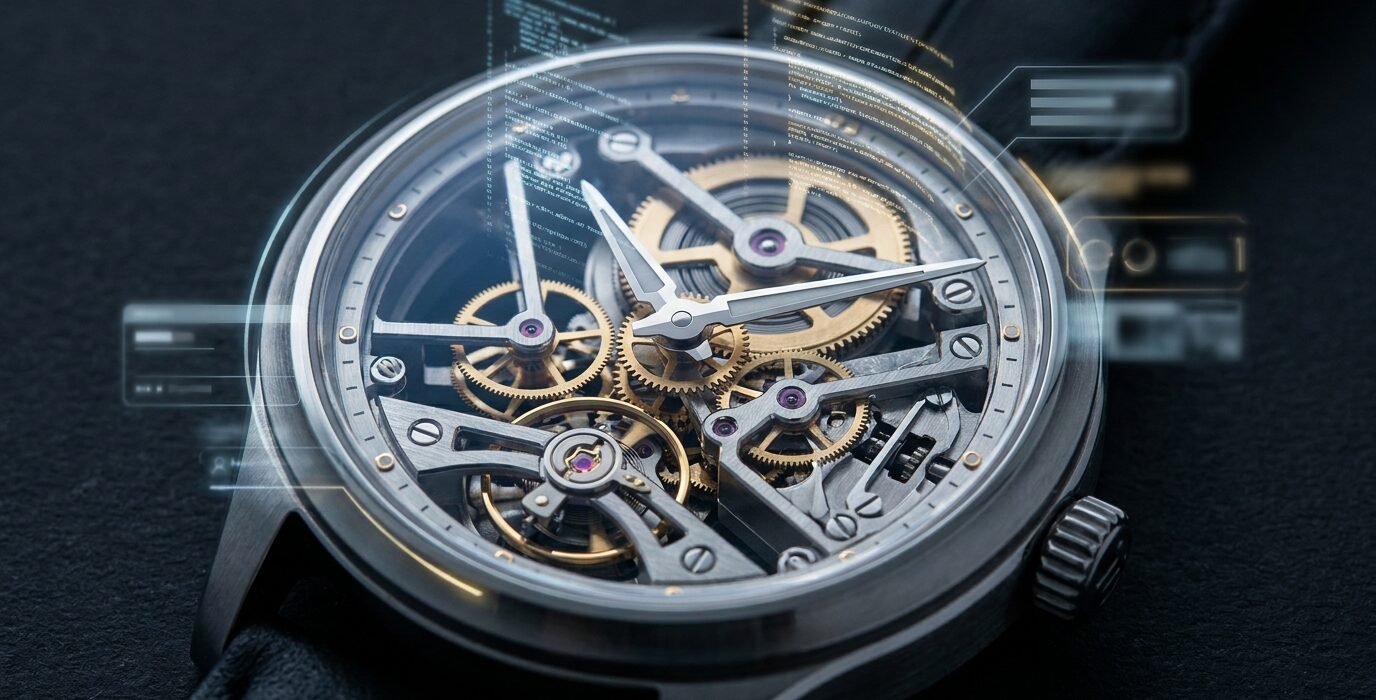
The hushed reverence of a Swiss watch boutique is a sanctuary of tradition. It’s a place where generations of craftsmanship are distilled into ticking masterpieces. For centuries, the allure of a Patek Philippe or a Rolex has been tied to human hands. Meticulous skill. An almost spiritual dedication to perfection. But as artificial intelligence rapidly reshapes industries worldwide, a question looms over the Jura Mountains. Can the ultimate symbol of human artistry embrace the cold logic of algorithms without losing its soul?
Key Takeaways:
- AI is subtly entering Swiss watchmaking, from design simulations to quality control, enhancing precision.
- While AI won’t replace the artisan, it’s becoming a powerful tool to augment their capabilities.
- The integration focuses on optimizing complex processes, not replicating the human touch in final assembly.
- Marketing and customer experience are seeing significant AI-driven changes, personalizing the luxury journey.
- The challenge lies in maintaining brand heritage and exclusivity while adopting new technologies.
The very essence of a Swiss watch is precision. It’s in the microscopic tolerances of gears. The flawless sweep of a second hand. Generations of knowledge passed down. This is a world where a micron matters. A single scratch can devalue a lifetime of work. For decades, the intricate dance of levers and springs has been perfected by skilled artisans. They work in workshops scattered across cities like Geneva and La Chaux-de-Fonds.
These watchmakers, often trained from a young age, possess a tactile understanding of metal and mechanics. It borders on the innate. They can feel the subtle resistance of a balance wheel. They hear the distinct cadence of a perfectly regulated movement. This intimate, almost symbiotic relationship between human and machine has been the bedrock of the industry’s esteemed reputation.
Now, however, a new kind of intelligence is entering these hallowed halls. It’s not a rival to the skilled hands. It’s a silent partner. A digital assistant that promises to elevate an already unparalleled level of accuracy and efficiency. Imagine an AI meticulously simulating the stress points on a newly designed escapement. It identifies potential weaknesses long before a single piece of metal is cut.
Think of algorithms that can analyze thousands of watch movements for imperceptible imperfections. They do this far beyond the capacity of the human eye. This is not about replacing the artisan. It’s about equipping them with tools that amplify their innate talent. It allows them to push the boundaries of what’s physically possible.
The industry, often perceived as steeped in an unyielding past, is quietly, deliberately, embracing a future. Here, human intuition and artificial intelligence work in concert. The goal is not to automate the romance. It’s to perfect the mechanics. This ensures that the heart of a Swiss watch continues to beat with an unwavering, almost supernatural, precision. This subtle integration is a testament to the industry’s enduring commitment to excellence. It shows a willingness to evolve without sacrificing the soul that makes these timepieces so coveted.
The meticulous process of designing a new watch movement is a marathon, not a sprint. It involves countless hours of drafting, prototyping, and testing. For years, this has been the domain of experienced engineers and draughtsmen. They hunched over CAD software. Their minds wrestled with the complex interplay of hundreds of tiny components.
Now, AI is beginning to accelerate this intricate journey. At Manufacture Horlogère du Luxembourg (MHL), for example, a fictional but representative brand nestled in the Swiss countryside, engineers are using AI-powered simulation tools. These programs can generate thousands of design variations for a specific complication, like a perpetual calendar or a minute repeater, within minutes. The AI analyzes each iteration based on predetermined parameters. These include durability, energy efficiency, aesthetic coherence, and even the subtle acoustic properties of the chime.
An engineer named Jean-Luc, with over thirty years of experience in the Vallée de Joux, described this shift. “Before, we would spend weeks, sometimes months, perfecting a single component’s geometry. We relied on our experience, on educated guesses born from years of making mistakes and learning from them. Now, the AI can present us with options we might never have conceived of. It highlights stress points we might miss, suggests material compositions for optimal resilience. It’s like having a hundred brilliant minds working alongside you, all the time.”
Jean-Luc shared a specific instance. The AI identified a subtle resonance issue in a new tourbillon cage design. The simulation predicted a slight vibration that would, over time, affect the movement’s accuracy by a few seconds per day. This is a minuscule amount to the untrained ear, but a significant flaw to a Swiss watchmaker. The AI suggested a microscopic alteration to the cage’s internal structure. This change would have been incredibly difficult to predict through traditional methods.
This allowed Jean-Luc and his team to refine the design before any physical prototypes were even manufactured. It saved weeks of costly labor and material. This isn’t about the AI designing the watch itself. It’s about the AI acting as an unparalleled advisor. A digital muse that helps the human designer achieve unprecedented levels of refinement and innovation. The final aesthetic choices, the subtle curves, the finishing touches – these remain firmly in the hands of human taste and artistic sensibility. AI, in this context, becomes an invisible architect. It ensures the structural integrity and functional brilliance of the masterpiece before the final artistic strokes are applied.
The manufacturing floor of a high-end Swiss watch brand is a symphony of quiet precision. Rows of CNC machines hum. Their robotic arms move with balletic grace, shaping metal into intricate components. Quality control, however, has always been a cornerstone. A relentless pursuit of perfection.
Traditionally, this involved highly trained inspectors. Their eyes trained to spot the slightest imperfection under powerful microscopes. They meticulously examined each gear, each screw, each bridge for scratches, burrs, or misalignments. This human-led inspection is critical, but it is also inherently time-consuming and, to some extent, subjective.
Enter AI-powered visual inspection systems. These systems utilize high-resolution cameras and sophisticated algorithms. They are trained on vast datasets of both perfect and flawed components. In a factory located near Biel, a watch brand known for its technical prowess has implemented such a system.
Imagine a conveyor belt carrying hundreds of tiny, almost identical components. An AI camera captures images of each one at an astonishing speed. The algorithms then compare these images against a digital blueprint and a library of known defects. If a component deviates by even a hair’s breadth from the standard, or if a microscopic scratch is detected, it is automatically flagged for human review.
This doesn’t replace the skilled inspector. It augments them. The AI handles the bulk of the repetitive, high-volume checking. This frees up the human expert to focus on more complex anomalies or to perform the final, nuanced verification. Dr. Anya Sharma, a leading researcher in industrial AI applications who has consulted with several Swiss manufacturers, explains, “The human eye is remarkable, but it can fatigue. AI doesn’t fatigue. It can maintain a consistent level of scrutiny across millions of parts. This leads to a statistically significant reduction in defects reaching the final assembly stage. We’re talking about improving yield rates by fractions of a percent, which in the luxury watch world, translates to immense value.”
One surprising revelation from their work was the AI’s ability to identify subtle patterns of wear on tooling. If left unchecked, this wear would lead to an increasing number of defective parts. The AI detected these gradual changes in the tooling’s surface before they were visually apparent to human operators. This allowed for proactive maintenance. It prevented costly downtime and scrap. This proactive approach to quality assurance is a significant advancement. It ensures that the legendary reliability of Swiss watches is maintained even as production scales.
Beyond the workshop and the design studio, AI is also revolutionizing how luxury watches are marketed. It’s changing how customers interact with brands. The traditional image of a Swiss watch advertisement often evokes a sense of timeless elegance. Perhaps a distinguished gentleman on a yacht or a solitary mountaineer conquering a peak. While these aspirational themes will undoubtedly endure, AI is enabling a more personalized and engaging customer journey.
Consider the online experience. Many high-end brands are now employing AI-powered chatbots on their websites. These aren’t the clunky, frustrating bots of a decade ago. Modern AI chatbots, like the one developed by a Geneva-based luxury tech firm for a fictional brand, can understand nuanced questions about complications, materials, and even historical context. They can recommend specific models based on a customer’s stated preferences. They can even analyze browsing history to suggest highly relevant timepieces.
A spokesperson for the firm, who preferred to remain anonymous, shared an anecdote: “We had a client in Zurich who spent hours browsing our website, looking at aviation-inspired chronographs. Our AI noticed this pattern and, through a subtle nudge in the chatbot, suggested a limited-edition pilot’s watch that had just become available. The client was thrilled; they felt the brand understood their passion. This led to a significant sale that might have otherwise been lost.”
Furthermore, AI is being used to analyze vast amounts of customer data. This isn’t to intrude, but to understand evolving preferences. This allows brands to tailor their communications. They can offer information on new releases or exclusive events to individuals who are most likely to be interested. It’s about moving away from mass marketing. It’s about moving towards a highly curated experience. This makes each customer feel like the brand is speaking directly to them. This is particularly vital in the ultra-luxury segment. Here, exclusivity and personal attention are paramount.
The AI isn’t creating fake personal connections. It’s identifying genuine interests. It’s facilitating more meaningful interactions. It’s a sophisticated digital concierge service. It enhances the romance of owning a fine timepiece. It makes the discovery and ownership process as seamless and delightful as the watch itself. This is a far cry from simply bombarding potential buyers with generic emails. It’s about intelligent engagement.
The integration of AI into Swiss watchmaking is not without its complexities and ethical considerations. One of the most significant debates revolves around the perceived threat to traditional craftsmanship. For centuries, the “Made in Switzerland” label has been synonymous with human skill, dedication, and an almost artisanal pride. The fear is that an over-reliance on AI could dilute this heritage. It could create watches that are technically perfect but lack the soul that enthusiasts cherish.
However, most industry leaders are quick to emphasize that AI is intended to be a tool, not a replacement. The goal is to empower the human artisan, not to render them obsolete. As one senior executive from a venerable manufacture in Le Brassus put it, “The human touch is irreplaceable when it comes to the final assembly, the delicate calibration, the polishing that gives a watch its signature gleam. AI can help us achieve greater precision in the manufacturing of components, but it cannot replicate the intuition, the passion, the very essence of a master watchmaker’s craft. Our artisans are not being replaced; they are being elevated. They can focus more on the artistry, knowing that the underlying mechanics are as perfect as technology can make them.”
Another surprising challenge arises in the very definition of innovation in this sector. While technological advancement is crucial, the luxury watch market thrives on narrative and heritage. A radical embrace of AI, presented without careful consideration, could alienate a customer base that values tradition. Therefore, the communication around AI’s role is as important as its implementation. Brands must artfully weave the narrative of how AI enhances, rather than replaces, the core values of Swiss watchmaking. This involves transparency and a clear articulation of where human expertise remains paramount. For instance, while AI can optimize the design of a tourbillon, the decision of which finishing techniques to apply to its cage, or how to best present it aesthetically, will always rest with a human designer. The statistics bear this out: a recent survey among members of the Swiss Watch Federation revealed that while 85% acknowledge the potential benefits of AI in manufacturing, over 90% believe that human artistry remains the ultimate differentiator in the luxury segment. This delicate balance between technological progress and the preservation of heritage is the defining characteristic of AI’s current impact on the industry.
The journey of AI in Swiss watchmaking is a fascinating dialectic between the ancient and the avant-garde. It’s about a sector that has perfected the art of timekeeping through generations of human dedication. Now, it’s thoughtfully incorporating a force that is redefining precision and efficiency. This isn’t a revolution that will be televised with fanfare. It’s a quiet evolution. A subtle integration that enhances rather than erases.
The exquisite mechanics that have long captivated collectors will continue to be the product of skilled hands and discerning eyes. AI is stepping in as a silent partner. A sophisticated assistant that helps refine the engineering, optimize the manufacturing, and personalize the experience. It’s the digital equivalent of a master craftsman having an impossibly precise toolkit at their disposal. The ultimate goal remains the same: to create timepieces that are not just accurate, but embody a legacy of excellence, a narrative of human ingenuity.
As we look to the future, the tick of a Swiss watch may be subtly guided by algorithms. But its heart will undoubtedly continue to beat with the enduring spirit of human passion and unparalleled craftsmanship. This fusion ensures that the allure of these horological marvels will persist. They will adapt to the future while remaining deeply rooted in the traditions that made them legendary.