Key Takeaways
- Discover Bengal’s unique monsoon culinary landscape, from comforting khichuri to fresh Hilsa preparations.
- Explore regional variations and the cultural significance of monsoon foods across West Bengal.
- Learn about seasonal ingredients and how to best enjoy these ephemeral delicacies.
- Find out where to experience authentic monsoon meals in Kolkata and beyond.
The Symphony of the Monsoon: Bengal’s Culinary Awakening
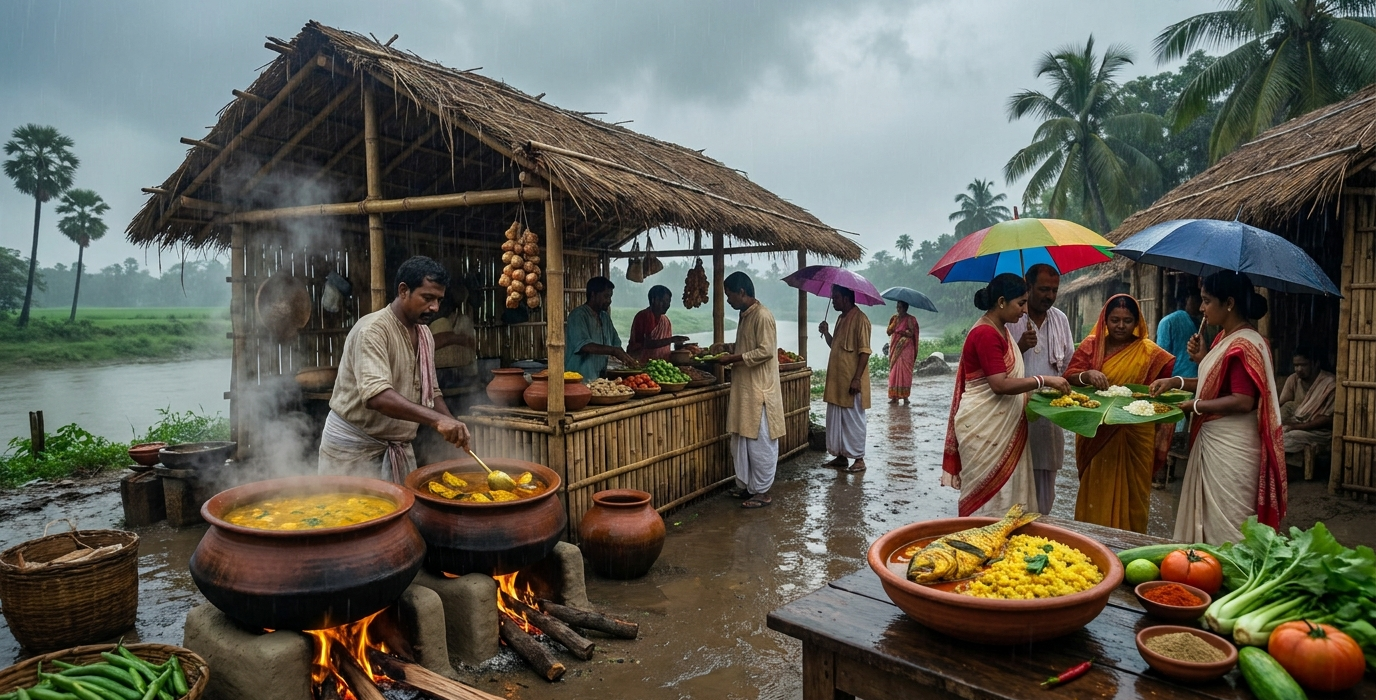
As the first fat drops of the monsoon begin to kiss the parched earth of West Bengal, a different kind of magic unfolds – a culinary one. The air, heavy with the scent of petrichor and damp soil, also carries the tantalizing aromas of kitchens gearing up for a season of comfort and indulgence. For Bengalis, the monsoon isn’t just a meteorological event; it’s a culinary canvas painted with earthy flavours, comforting textures, and the freshest ingredients nature bestows.
This is the season when the humble khichuri rises to royalty, when the elusive monsoon Hilsa makes its grand entrance, and when a plethora of leafy greens, hitherto unavailable, flood the markets. It’s a time to gather with family, to seek warmth in steaming bowls, and to savour flavours that are intrinsically linked to the soul of Bengal. We’ll guide you through this delectable journey, unearthing the treasures of Bengal’s monsoon kitchen.
Khichuri: The Undisputed King of Monsoon Comfort
If there’s one dish that defines the Bengali monsoon, it’s undoubtedly khichuri. Far from a simple rice and lentil porridge, Bengali khichuri is an art form. It’s a fragrant, flavourful medley cooked with love and a generous hand of ghee. The ideal monsoon khichuri is often made with gobindobhog rice, a fragrant short-grain variety that lends a subtle sweetness and a wonderfully soft texture.
The lentils of choice are usually masoor dal (red lentils) or moong dal (yellow lentils), sometimes a combination. What elevates it further are the additions: chunks of potato, cauliflower florets, peas, and sometimes even pieces of brinjal or pumpkin. A tempering of ghee with cumin seeds, bay leaves, and dried red chillies, known as a ‘phoron’, is drizzled over the top just before serving, releasing an intoxicating aroma that signals pure comfort. Often, it’s served with a dollop of pure ghee, a fried egg, or a crisp, spicy ‘begun bhaja’ (fried eggplant). The sheer warmth and heartiness of a well-made khichuri are unparalleled during the rainy season, making it a staple in every Bengali home.
The Jewel of the Rivers: Monsoon Hilsa
For many Bengalis, the monsoon is synonymous with the arrival of Ilish, or Hilsa fish. This anadromous fish, celebrated for its rich, oily flesh and delicate flavour, is deeply ingrained in Bengali culture and cuisine. While Hilsa is available year-round, the monsoon catch is considered the finest, prized for its perfect fat content and succulent texture after its upstream journey for breeding.
The preparations are as diverse as the rivers of Bengal. One of the most beloved is ‘Shorshe Ilish’, where the fish is steamed in a pungent mustard paste, often enhanced with a touch of poppy seeds and green chillies, traditionally cooked in a ‘dhakai’ style (from Dhaka, now in Bangladesh). Another classic is ‘Ilish Bhapa’, steamed in banana leaves with a flavourful paste. The simplicity of ‘Ilish Paturi’, marinated and lightly pan-fried, allows the fish’s natural flavour to shine. Even the roe, ‘ilish er dim’, is a delicacy, often fried to a crisp golden brown. The sheer joy of savouring fresh Hilsa during the monsoon is a culinary pilgrimage for many.
“The monsoon in Bengal isn’t just about the rain; it’s a season of culinary rediscovery, where humble ingredients transform into dishes of profound comfort and joy.”
The Bounty of the Fields: Monsoon Greens and More
As the rains nourish the land, a vibrant array of seasonal vegetables emerges. The monsoon transforms the agricultural landscape, bringing forth greens that are not available at other times of the year. These ‘monsoon greens’ are not only delicious but also packed with nutrients, believed to be particularly beneficial during this season.
Think of ‘Pui Shaak’ (Malabar spinach), with its tender stems and succulent leaves, often stir-fried with garlic and chillies. Then there’s ‘Lal Shaak’ (red amaranth), its vibrant crimson hue a feast for the eyes and its earthy flavour a delight. Other seasonal stars include ‘Kolmi Shaak’ (water spinach), ‘Palong Shaak’ (spinach, though available year-round, the monsoon varieties are often considered superior), and the delicate ‘Thankuni Shaak’ (Centella asiatica). Beyond greens, the season brings forth tender ‘Jhinge’ (ridge gourd), sweet ‘Potol’ (pointed gourd), and flavourful ‘Dherosh’ (okra). These vegetables are often prepared simply, allowing their natural freshness to be the star, perhaps in a light stir-fry or a flavourful curry.
Beyond the Classics: Exploring Lesser-Known Monsoon Delights
While khichuri and Hilsa often steal the spotlight, Bengal’s monsoon culinary scene is rich with other, perhaps less universally celebrated, but equally delightful dishes. One such gem is ‘Chingri Bora’ – fritters made with finely chopped shrimp, gram flour, and spices, fried to a perfect crisp. They are the ideal accompaniment to a steaming plate of khichuri, providing a delightful textural contrast.
Another unique offering is ‘Mochar Ghonto’, a dish made from the banana blossom. The intricate process of preparing the banana blossom – cleaning and finely chopping it – is a labour of love, but the resulting smoky, subtly sweet, and earthy flavour is incredibly rewarding. During the monsoon, the quality of the banana blossom is said to be at its peak. Furthermore, for those with a sweet tooth, the season offers ‘Narkel Naru’, sweet coconut balls, often made with fresh grated coconut and jaggery, providing a sweet counterpoint to the savoury monsoon fare. These dishes showcase the depth and diversity of Bengali home cooking during the rainy months.
Experiencing Bengal’s Monsoon Flavours: Where to Indulge
For travellers and locals alike, experiencing Bengal’s monsoon cuisine is a journey worth embarking on. In Kolkata, many heritage restaurants and traditional eateries embrace the season with special menus. Look for establishments that pride themselves on authentic Bengali fare, often found in areas like North Kolkata, where old-world charm and culinary traditions are fiercely preserved.
Beyond the city, venturing into smaller towns and villages can offer an even more authentic experience. Homestays and local ‘dhabas’ (roadside eateries) often serve the most genuine monsoon dishes, prepared with ingredients sourced directly from local farms. For instance, a village fair or a ‘haat’ (local market) during the monsoon can be a treasure trove of seasonal produce and home-cooked snacks. Don’t shy away from trying the roadside stalls that offer hot ‘telebhaja’ (deep-fried snacks) like ‘Begun Bhaja’ and ‘Chingri Bora’ – they are the perfect accompaniment to a rainy afternoon. A truly surprising fact is that some villages in the Sundarbans region have a unique delicacy called ‘Shingara’ (samosa) made with a filling of ‘Gondhoraj Lebu’ (Kaffir lime) zest, offering a zesty twist to the common snack, especially enjoyed during monsoon.
Frequently Asked Questions
What is the most iconic Bengali monsoon dish?
The most iconic Bengali monsoon dish is undoubtedly khichuri, a fragrant and comforting rice and lentil preparation often enhanced with seasonal vegetables and a generous dollop of ghee.
Is Hilsa fish only available during the monsoon?
No, Hilsa fish is available year-round, but the monsoon catch is considered the finest due to its optimal fat content and flavour after its migratory journey.
Are there vegetarian options for monsoon meals in Bengal?
Absolutely! Besides khichuri, Bengal offers numerous vegetarian monsoon delights, including dishes made with seasonal greens like Pui Shaak and Lal Shaak, as well as vegetables like ridge gourd and pointed gourd.
Where can I find authentic monsoon Hilsa preparations?
You can find authentic monsoon Hilsa preparations in traditional Bengali restaurants in Kolkata, especially those in North Kolkata, as well as in smaller towns and villages across West Bengal where fresh catches are celebrated.
What is ‘phoron’?
‘Phoron’ is the tempering of spices, typically ghee or oil infused with cumin seeds, bay leaves, and dried red chillies, which is drizzled over dishes like khichuri to enhance their aroma and flavour.