Key Takeaways
- Bengaluru’s water future hinges on a multi-pronged approach, blending traditional wisdom with cutting-edge technology.
- Rainwater harvesting, once a mandate, needs a serious revival and upgradation to meet 2027 demands.
- Wastewater recycling is no longer an option but a necessity, with significant advancements making it cost-effective and scalable.
- Smart water grids and real-time monitoring can drastically reduce losses and optimize distribution, even in densely populated areas.
The Looming Thirst: Bengaluru’s 2027 Water Reality
The vibrant Silicon Valley of India, Bengaluru, faces a formidable challenge as we inch closer to 2027: an escalating water crisis. For years, the city’s rapid urbanisation and burgeoning population have placed an unsustainable strain on its water resources. The once-plentiful lakes and the Cauvery river, its primary lifeline, are showing alarming signs of depletion and pollution. This isn’t a distant threat; it’s a tangible reality that demands immediate and innovative solutions. We are at a critical juncture where inaction will have severe consequences for millions of residents, businesses, and the very fabric of this dynamic metropolis.
The city’s dependence on the Cauvery, sourced from a considerable distance, highlights its vulnerability. Decreasing monsoon rainfall, coupled with an aging and leaky distribution network, exacerbates the problem. Estimates suggest that by 2027, Bengaluru could face a significant deficit in its daily water requirements. This deficit will not only impact households but also cripple industries and impact the city’s economic growth. The urgency cannot be overstated; proactive, sustainable, and technologically advanced strategies are paramount to ensure Bengaluru remains a habitable and thriving city. We must look beyond conventional methods and embrace a holistic approach to water management.
Revitalising Rainwater Harvesting: Beyond the Mandate
Rainwater harvesting (RWH) in Bengaluru has a chequered past. While a mandate for new constructions existed, its implementation and maintenance often fell short. For 2027, we need to reimagine RWH, transforming it from a compliance exercise into a cornerstone of water security. This involves not just installing systems but ensuring their efficacy through regular audits and community engagement. Think of it as upgrading from a simple bucket to an intelligent collection and storage system. The goal is to capture every possible drop, turning rooftops and open spaces into vital contributors to the city’s water supply.
This revival needs to be multifaceted. It includes retrofitting older buildings, encouraging individual household systems, and integrating RWH into public infrastructure like parks and commercial complexes. The Bangalore Water Supply and Sewerage Board (BWSSB) can play a crucial role by offering subsidies, technical support, and awareness campaigns. Furthermore, we must explore advanced filtration techniques to make harvested rainwater potable, reducing reliance on treated Cauvery water for all domestic needs. A surprising fact: a study by the Indian Institute of Science in Bengaluru found that effective rooftop rainwater harvesting could meet up to 30% of a household’s annual water demand in the city, a figure we simply cannot afford to ignore.
Wastewater Recycling: The Untapped Reservoir
The concept of wastewater recycling often conjures images of industrial processes, but its application in urban domestic settings is rapidly evolving, presenting a game-changer for Bengaluru in 2027. Every day, the city generates millions of litres of wastewater, much of which is currently discharged after basic treatment. This treated effluent, however, is increasingly being recognised as a valuable resource. Advanced treatment technologies can purify this water to a standard suitable for a wide range of non-potable uses, and even potable applications in some highly regulated scenarios.
Imagine a future where treated wastewater irrigates city parks, flushes toilets in commercial buildings, and even supplements industrial processes, thereby freeing up precious potable water for drinking and cooking. The economic viability of such projects has improved dramatically. Decentralised wastewater treatment plants, often smaller and more efficient, can be deployed in residential complexes and commercial hubs, reducing the need for extensive pipeline infrastructure and minimising energy consumption. The initial investment, while significant, is dwarfed by the long-term savings and the environmental benefits of reducing freshwater extraction. A truly remarkable development is the emergence of membrane bioreactor (MBR) technology, which can produce high-quality recycled water from sewage that is virtually indistinguishable from potable water, a testament to human ingenuity in resource management.
Decentralised Treatment for Maximum Impact
Instead of relying solely on large, centralised sewage treatment plants, a shift towards smaller, localised units can offer greater flexibility and efficiency. These plants can be designed to cater to specific communities or large complexes, ensuring that treated water is readily available for local reuse. This minimises transportation costs and potential leaks in the distribution network. Community buy-in is crucial here; transparent communication about the safety and benefits of recycled water will be key to overcoming any initial hesitancy.
Smart Water Grids: Precision in Distribution
The current water distribution network in Bengaluru is a patchwork of old and new infrastructure, leading to substantial water losses through leaks and pilferage. For 2027, the adoption of smart water grid technologies is not just desirable but essential. These systems employ sensors, data analytics, and communication networks to provide real-time information on water flow, pressure, and quality across the entire distribution system. This allows for immediate detection and repair of leaks, significantly reducing non-revenue water (NRW).
Smart grids empower water utilities with unprecedented control and visibility. They can monitor consumption patterns, identify areas of high demand or low supply, and dynamically adjust flow rates to ensure equitable distribution. This precision is vital for a city as vast and diverse as Bengaluru, where some areas might be suffering from chronic shortages while others receive more than their fair share due to inefficiencies. Predictive maintenance, enabled by data analytics, can anticipate equipment failures before they occur, preventing major disruptions.
“The future of urban water management lies not in finding new sources, but in managing our existing resources with unprecedented intelligence and efficiency. Smart technology is the key to unlocking this potential.”
The integration of smart meters at the consumer end further enhances this system. These meters provide accurate billing and allow consumers to monitor their own water usage, promoting conservation. The data collected can inform urban planning decisions, helping to anticipate future infrastructure needs based on actual demand. The adoption of IoT (Internet of Things) devices is central to this transformation, creating a connected ecosystem that optimizes every drop of water from source to tap.
Innovative Water Sources: Beyond Conventional Supplies
As we look towards 2027, Bengaluru cannot afford to rely solely on traditional sources like the Cauvery river and groundwater, which are under immense pressure. Exploring and integrating alternative water sources is a strategic imperative. This includes advanced treated wastewater, as discussed, but also ventures into desalination, though this is a more energy-intensive and costly option typically reserved for coastal cities. However, for a landlocked city, research into smaller-scale, localised desalination or atmospheric water generation technologies could offer niche solutions.
Another promising avenue is the scientific management and rejuvenation of existing, albeit depleted, groundwater sources. This involves understanding aquifer dynamics, implementing controlled extraction policies, and promoting artificial recharge structures. Furthermore, the city’s numerous lakes, many of which are currently polluted and encroached upon, hold immense potential. Investing in their ecological restoration and creating integrated urban water management plans that include these revived water bodies could significantly augment local water availability.
The Role of Technology in Source Diversification
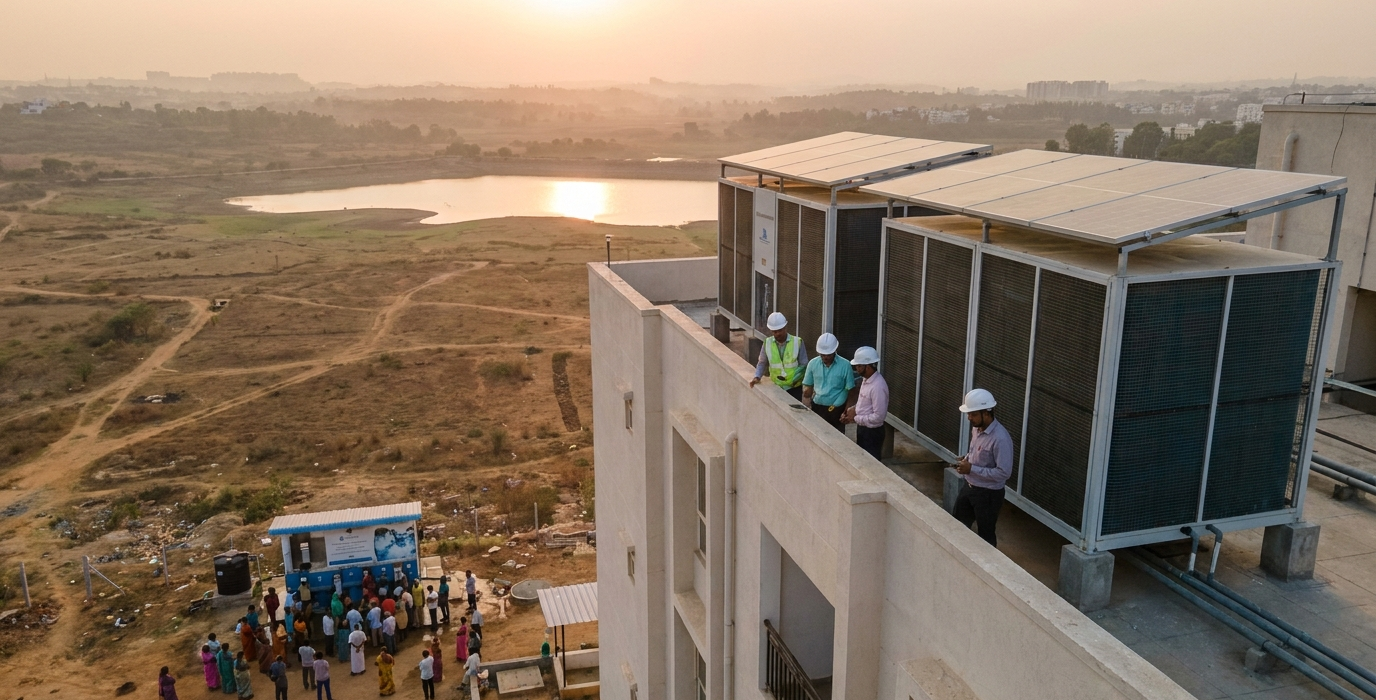
Cutting-edge technologies are making unconventional water sources more viable. For instance, advancements in reverse osmosis and other filtration techniques are making desalination more energy-efficient. Similarly, atmospheric water generators (AWGs), which extract water from ambient air, are becoming more sophisticated and suitable for specific applications, especially in areas with high humidity. While these might not replace large-scale supply, they can act as crucial supplementary sources, especially for critical facilities or in times of acute scarcity.
Policy and Community: The Human Element
While technological advancements and infrastructure upgrades are crucial, the human element remains the most vital component in addressing Bengaluru’s water crisis in 2027. Effective water management requires a strong policy framework, consistent enforcement, and, most importantly, the active participation of its citizens. The government and civic bodies need to implement and rigorously enforce policies related to water conservation, wastewater treatment, and sustainable usage. This includes stringent penalties for wastage and illegal borewells, and incentives for water-efficient practices.
Community engagement is where the real transformation happens. Awareness campaigns need to move beyond mere information dissemination to fostering a sense of collective responsibility. Schools, resident welfare associations (RWAs), and local businesses can all play a significant role in promoting water-saving habits. Imagine neighbourhood water audits, competitions for water-efficient households, or community-led initiatives for lake rejuvenation. These grassroots efforts, when supported by the administration, can create a powerful ripple effect.
“Our citizens are not just consumers of water; they are stewards of this precious resource. Empowering them with knowledge and a sense of ownership is as critical as any technological solution.”
A surprising aspect of community engagement is the potential for traditional knowledge to inform modern solutions. Practices like the traditional ‘tanker system’ management in some parts of rural Karnataka, where water was carefully rationed and distributed, could offer valuable lessons in equitable allocation and community oversight, adapted for an urban context. Fostering a water-conscious culture, where every individual understands their role in the larger water ecosystem, is paramount for Bengaluru’s sustainable future.
Frequently Asked Questions
What is the primary source of water for Bengaluru?
Bengaluru’s primary water source is the Cauvery river, which is a significant distance from the city. Groundwater and, increasingly, treated wastewater are supplementary sources.
How much water does Bengaluru lose annually due to leaks?
While exact figures fluctuate, studies and reports from the BWSSB suggest that water losses through leaks and non-revenue water can range from 30% to 50% of the supplied water in older parts of the network. Smart grid implementation aims to drastically reduce this.
Are there any government initiatives in 2026-2027 promoting rainwater harvesting?
Yes, the Karnataka government, through agencies like the BWSSB, continues to promote and mandate rainwater harvesting for new constructions. There’s a renewed focus in 2026-2027 on incentivising retrofitting and improving the maintenance of existing RWH systems, often with technical assistance programs.
How can an individual household contribute to Bengaluru’s water security?
Individual households can contribute significantly by practicing water conservation (e.g., shorter showers, fixing leaks), installing rainwater harvesting systems, reusing treated greywater for non-potable purposes, and being mindful of their overall water consumption. Reporting water wastage and leaks to the authorities also helps.
What is the current status of Bengaluru’s lakes and their role in water management?
Many of Bengaluru’s lakes are facing challenges like pollution and encroachment. However, there is a growing recognition of their importance as potential urban water bodies. Efforts are underway for the rejuvenation and restoration of several lakes, aiming to improve their ecological health and potentially use them as supplementary water sources after adequate treatment and management.