Key Takeaways
- The Digital Rupee (e₹) is set to revolutionise India’s payment landscape by August 2026, offering faster, cheaper, and more secure transactions.
- For consumers, expect enhanced privacy with direct peer-to-peer transfers and potential for offline payments, even without internet connectivity.
- Businesses will benefit from reduced transaction costs, improved cash flow management, and new avenues for digital innovation.
- The Reserve Bank of India’s phased rollout strategy ensures a smooth transition, with a focus on retail use cases and gradual integration into existing financial infrastructure.
The Dawn of India’s Digital Rupee: A 2026 Reality
As we move through 2026, India stands on the cusp of a significant financial evolution with the burgeoning Central Bank Digital Currency (CBDC), known as the Digital Rupee or e₹. This isn’t just another digital payment app; it’s a direct liability of the Reserve Bank of India (RBI), offering a tangible digital form of the Indian Rupee. The implications for how we manage our money, conduct business, and interact with the financial system are profound and far-reaching. You might be wondering how this digital evolution will directly impact your daily life, from your morning chai purchase to managing your business finances. The RBI’s careful, phased approach, which has been underway for some time, is now culminating in widespread accessibility, making the e₹ a practical tool rather than a distant concept.
The journey towards the e₹ has been strategic, with pilot programs testing its efficacy and security across various segments. By August 2026, the aim is to have a robust and user-friendly system integrated seamlessly into our existing payment ecosystems. Think of it as an upgrade to the physical cash you carry, offering the same trust and value but with the added benefits of digital technology. This means faster settlements, reduced intermediaries, and potentially lower transaction fees for everyone involved. The government’s commitment to financial inclusion also means that the e₹ is being designed with accessibility at its core, aiming to bring more people into the formal financial fold.
Understanding the Mechanics: How e₹ Works for You
The Digital Rupee operates on a two-tiered model, much like physical currency. The RBI issues the e₹, and commercial banks distribute it to the public. This ensures that the traditional banking system remains central to the process, offering a familiar framework for users. For you, this means accessing e₹ through digital wallets provided by your chosen bank or authorized payment service providers, much like you currently use UPI apps. The key difference lies in the underlying technology and the direct backing by the central bank, which lends it unparalleled credibility and security.
One of the most exciting aspects for consumers is the potential for offline payments. Imagine a scenario where you’re in a remote village in Ladakh with no internet signal, yet you can still pay for your necessities using your e₹ wallet. This is achieved through a token-based system, where the e₹ is represented by digital tokens. These tokens can be stored securely on your device and transferred peer-to-peer without requiring constant network connectivity. This feature alone promises to be a game-changer for financial inclusion, bridging the digital divide in far-flung corners of India. It’s a significant leap forward from current digital payment methods that are heavily reliant on internet access.
Benefits for Businesses: Streamlining Operations in 2026
For businesses, the Digital Rupee offers a compelling suite of advantages that can significantly streamline operations and boost profitability by 2026. One of the primary benefits is the potential for near-instantaneous settlement of transactions. Unlike traditional bank transfers that can take hours or even days to clear, especially during weekends and holidays, e₹ transactions can settle in real-time. This dramatically improves cash flow management, allowing businesses to access their funds immediately, reinvest, or meet urgent operational needs without delay.
Furthermore, the e₹ promises to reduce transaction costs. By cutting out intermediaries and reducing the complexity of cross-border payments, businesses can expect to see lower fees associated with their financial dealings. This is particularly impactful for small and medium-sized enterprises (SMEs) that often operate on tight margins. The transparency and traceability inherent in a digital currency also offer enhanced security and reduce the risk of fraud. Imagine a retail business in Jaipur no longer needing to manage large amounts of physical cash, thereby reducing the risk of theft and the costs associated with cash handling and reconciliation. The RBI is also fostering an environment where innovative business models can emerge, leveraging the unique capabilities of the e₹ for new services and efficiencies.
Privacy and Security: Your Data, Your Control
A common concern with digital transactions is data privacy. The RBI has explicitly stated that the Digital Rupee is designed with user privacy in mind. While transactions will be recorded to maintain the integrity of the financial system, the identity of the transacting parties will be anonymized to a significant degree, especially for retail transactions. This means that your spending habits will not be as readily accessible to third parties as they might be with some current payment platforms. The goal is to offer a level of privacy comparable to using physical cash, a significant differentiator in today’s data-driven world.
Security is paramount, and the e₹ is built on a robust technological framework. The distributed ledger technology (DLT) underlying the CBDC ensures that all transactions are immutable and tamper-proof. This significantly reduces the risk of cyber-attacks and fraud compared to centralized systems. For instance, imagine you are receiving a payment from a vendor in Surat; the e₹ transaction would be cryptographically secured, providing a much higher assurance of authenticity and preventing any possibility of a double-spend. The RBI is also continuously updating its security protocols to stay ahead of evolving threats, ensuring that your digital assets remain safe and secure. This focus on both privacy and cutting-edge security aims to build widespread trust and encourage adoption.
Navigating the e₹ Landscape: Wallets and Interoperability
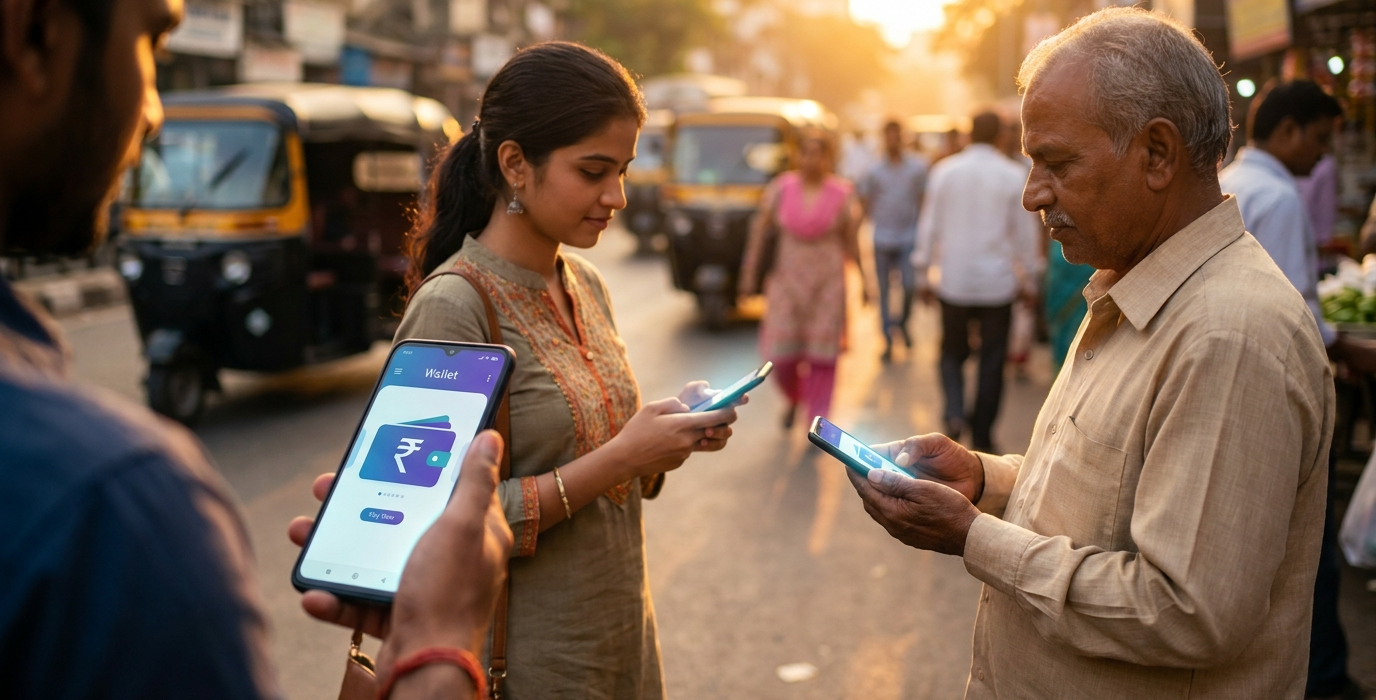
By August 2026, you will likely interact with the Digital Rupee primarily through specialized digital wallets. These wallets, offered by banks and authorized payment service providers, will serve as your gateway to holding, sending, and receiving e₹. Think of them as an evolution of your current UPI apps, but designed to handle both CBDC and existing payment methods. The RBI is emphasizing interoperability, meaning these wallets will ideally work seamlessly with each other and with existing payment rails like UPI and debit/credit cards. This ensures that you won’t be locked into a single ecosystem and can transact effortlessly across different platforms.
The integration process is being carefully managed. Initially, the focus is on retail use cases, allowing individuals to use e₹ for everyday purchases. As adoption grows, the RBI plans to introduce wholesale functionalities, enabling interbank settlements and other large-value transactions. This phased approach allows for testing, feedback, and gradual refinement of the system. For a consumer in a metro like Delhi, this means you can expect to see e₹ options appearing in your favourite shopping apps and at point-of-sale terminals, offering a new, efficient payment choice. The aim is to make the transition as smooth as possible, ensuring that the e₹ complements, rather than replaces, the existing diverse payment options you are accustomed to.
The Global Context: India’s Leap in Digital Currency
India’s move towards a Digital Rupee places it at the forefront of central bank digital currency development globally. While several countries are exploring or piloting CBDCs, India’s comprehensive approach, particularly its focus on retail adoption and offline capabilities, sets a high benchmark. The successful implementation of the e₹ by 2026 will not only transform domestic finance but also influence international discussions on digital currencies and cross-border payment systems. It’s a testament to India’s ambition to leverage technology for economic progress and financial inclusion on a grand scale.
The lessons learned from India’s pilot phases and the eventual widespread rollout will be invaluable to other nations. For instance, the challenges and successes encountered in integrating the e₹ with India’s vast and diverse banking infrastructure, from large public sector banks in Mumbai to smaller cooperative banks in rural Maharashtra, provide a real-world blueprint. Furthermore, the attention to consumer education and privacy protection in the Indian model offers a crucial perspective for global policymakers. As more countries adopt or consider CBDCs, India’s experience will be a critical reference point, potentially shaping the future of global digital finance and demonstrating the power of a well-executed central bank digital currency strategy. It positions India not just as a follower but as a leader in this technological frontier.
Frequently Asked Questions
What is the Digital Rupee (e₹)?
The Digital Rupee (e₹) is a Central Bank Digital Currency (CBDC) issued by the Reserve Bank of India (RBI). It is a digital form of the Indian Rupee, backed by the central bank, offering enhanced security and efficiency for transactions.
Will I need a new app to use the Digital Rupee?
You will likely use the Digital Rupee through specialized digital wallets provided by your bank or authorized payment service providers. These may be integrated into existing apps or be standalone applications, designed to be user-friendly and interoperable with current payment systems.
Can I use the Digital Rupee without an internet connection?
Yes, the Digital Rupee is designed to support offline payments. This feature is crucial for ensuring financial inclusion, allowing transactions even in areas with limited or no internet connectivity, using a token-based system.
Is my data safe with the Digital Rupee?
The RBI has emphasized strong privacy protections for the Digital Rupee. While transactions are recorded for integrity, user identities will be anonymized to a significant degree, aiming for a level of privacy comparable to physical cash transactions.
Will the Digital Rupee replace physical cash?
The Digital Rupee is intended to complement, not replace, physical cash and other forms of digital payments. The goal is to offer an additional, efficient, and secure payment option for consumers and businesses.