Key Takeaways
- India’s electric vehicle market is experiencing unprecedented growth in 2026, driven by government incentives and increasing consumer adoption.
- The charging infrastructure is rapidly expanding, with new solutions emerging to address range anxiety and accessibility, particularly in Tier 2 and 3 cities.
- Battery technology is evolving, promising longer ranges, faster charging, and more sustainable material sourcing, impacting long-term EV ownership costs.
- The two-wheeler segment continues to dominate, but the four-wheeler and commercial vehicle segments are showing significant upward trends.
The Electric Surge: India’s 2026 EV Landscape
The hum of electric motors is no longer a whisper in India; it’s a growing chorus. As we navigate August 2026, the electric vehicle (EV) revolution is in full swing, transforming our streets and our understanding of personal mobility. This isn’t just a trend; it’s a fundamental shift powered by a confluence of ambitious government policies, burgeoning technological advancements, and a palpable consumer desire for sustainable and cost-effective transportation. You’re witnessing a pivotal moment where traditional automotive giants and nimble startups alike are vying for a piece of this electrifying pie.
From the bustling metropolises like Delhi and Mumbai to the rapidly developing Tier 2 and Tier 3 cities such as Pune and Coimbatore, the sight of electric scooters, bikes, and cars is becoming increasingly commonplace. The Central government’s push through initiatives like FAME (Faster Adoption and Manufacturing of Hybrid and Electric Vehicles) has laid a robust foundation, offering significant subsidies and tax benefits that make EVs a more attractive proposition than ever before. This has not only spurred domestic manufacturing but has also attracted substantial foreign investment, positioning India as a global hub for EV production and innovation. We are seeing a virtuous cycle: more production leads to better economies of scale, which in turn drives down prices, making EVs accessible to a wider demographic.
The narrative of EVs in India has moved beyond early adopters to mainstream appeal. Factors like falling battery costs, improving performance, and a growing awareness of environmental concerns are collectively fueling this surge. The sheer variety of models available now, from ultra-affordable electric scooters to premium electric SUVs, means there’s an electric option for almost every need and budget. This rapid evolution is reshaping the automotive sector, creating new job opportunities in manufacturing, charging infrastructure, and battery technology, and fundamentally altering the way we think about our daily commutes and long-distance travel.
Government Push and Policy Evolution
The Indian government’s commitment to electric mobility is unwavering in 2026. Policies have evolved from initial adoption subsidies to a more comprehensive ecosystem approach. The FAME III scheme, which commenced in early 2025, continues to be a cornerstone, offering significant upfront purchase incentives, particularly for commercial and public transport vehicles. Beyond FAME, numerous state governments have introduced their own EV policies, often including additional subsidies on vehicle purchases, registration fee waivers, and road tax exemptions. For instance, states like Maharashtra and Gujarat are offering substantial incentives for setting up Giga factories for battery manufacturing, aiming to reduce import dependency.
The Production Linked Incentive (PLI) scheme for the automotive sector also plays a critical role, encouraging domestic manufacturing of advanced automotive components, including EV batteries and powertrains. This has led to a surge in local R&D and manufacturing capabilities. Furthermore, the government has been actively promoting the development of charging infrastructure through various tenders and partnerships. The establishment of dedicated EV zones in major industrial corridors and the mandate for charging points in new residential and commercial buildings are crucial steps. We’re also seeing a strong focus on developing a robust battery recycling ecosystem, addressing the long-term sustainability of the EV lifecycle.
One surprising fact is that by mid-2026, over 25 Indian cities have already surpassed their initial targets for electric bus deployment, a testament to the efficacy of the government’s fleet modernization programs. This aggressive push in public transport not only cleans up urban air but also familiarizes a large segment of the population with EV technology, acting as a powerful catalyst for private vehicle adoption. The policy framework is dynamic, constantly adapting to the fast-paced technological changes and market demands, ensuring India remains at the forefront of the global EV transition.
Charging Forward: The Infrastructure Revolution
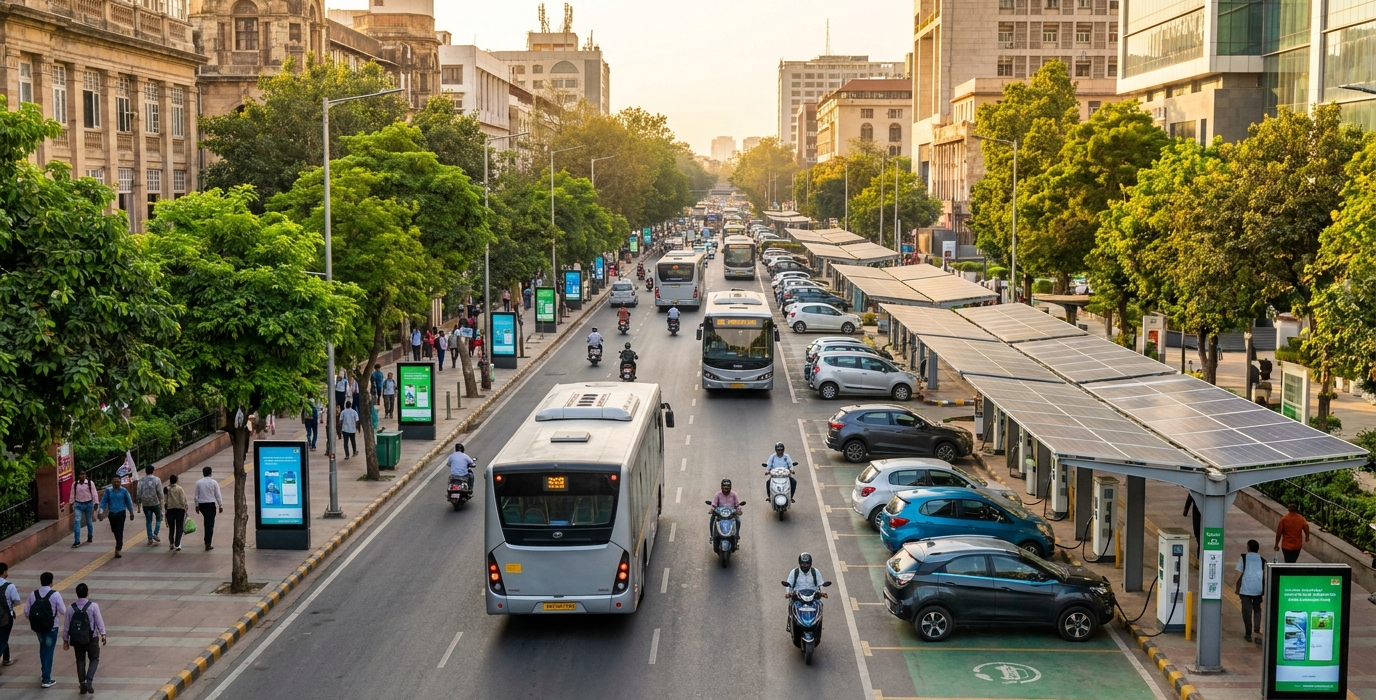
Range anxiety, once the bane of EV adoption, is rapidly becoming a relic of the past, thanks to a concerted effort in building out India’s charging infrastructure. As of August 2026, the landscape has transformed dramatically, with charging stations becoming increasingly ubiquitous. Public charging networks are expanding at an impressive pace, with a mix of fast chargers and slower AC chargers catering to different needs and vehicle types. Major highways connecting cities like Bengaluru to Chennai and Ahmedabad to Vadodara are now dotted with charging points, making inter-city travel more feasible.
This expansion isn’t limited to major urban centers. Significant progress is being made in Tier 2 and Tier 3 cities as well. Private players, spurred by government initiatives and the growing market demand, are investing heavily in establishing charging hubs in residential complexes, commercial areas, and even remote tourist destinations. Companies like ChargeZone and Statiq have been at the forefront, deploying thousands of charging points nationwide. We are also seeing innovative solutions emerging, such as battery swapping stations for electric two-wheelers, which drastically reduces charging time to mere minutes, akin to refueling a petrol vehicle.
A particularly encouraging development is the integration of smart charging technologies. These systems optimize charging schedules based on electricity grid load and off-peak tariffs, making charging more economical for consumers and more manageable for the grid. Smart charging also allows for vehicle-to-grid (V2G) capabilities in some advanced models, where EVs can feed power back into the grid during peak demand, turning them into mobile energy storage units. This symbiotic relationship between EVs and the grid is crucial for a sustainable energy future.
Battery Technology: Powering Tomorrow’s Drives
The heart of any electric vehicle is its battery, and in 2026, Indian manufacturers and researchers are making significant strides in battery technology. The focus is on increasing energy density for longer range, enhancing charging speeds, improving safety, and, crucially, reducing costs. Lithium-ion batteries remain the dominant technology, but we’re seeing advancements in chemistries like LFP (lithium iron phosphate), which offer better thermal stability and a longer cycle life, making them ideal for the Indian climate and usage patterns.
Local research institutions and automotive R&D centers are actively working on developing next-generation battery technologies, including solid-state batteries, which promise higher energy density and inherent safety advantages. While mass production of solid-state batteries is still a few years away, pilot projects and prototypes are already being showcased. Furthermore, there’s a strong emphasis on ‘battery-as-a-service’ (BaaS) models, where consumers can lease batteries instead of buying them outright. This significantly reduces the upfront cost of an EV and addresses concerns about battery degradation and replacement.
The sourcing of battery materials is also a critical area of focus. India is actively pursuing collaborations for the ethical and sustainable sourcing of critical minerals like lithium and cobalt, while also heavily investing in domestic recycling infrastructure. The goal is to create a closed-loop battery ecosystem, minimizing environmental impact and reducing reliance on imports. A surprising insight is that by mid-2026, several Indian startups have developed proprietary battery management systems (BMS) that are significantly improving the efficiency and lifespan of existing battery technologies, even in challenging Indian conditions.
Dominance and Diversification: Vehicle Segments
The electric vehicle market in India in 2026 is characterized by clear leadership in certain segments and rapid growth in others. The electric two-wheeler (E2W) segment continues to be the undisputed champion, accounting for the lion’s share of EV sales. Brands like Ola Electric, Ather Energy, and TVS Motor have captured significant market share with their stylish, feature-rich, and increasingly affordable scooters and motorcycles. The daily commute in cities is now undeniably greener, with these E2Ws weaving through traffic.
However, the electric four-wheeler (E4W) segment is exhibiting remarkable growth. Manufacturers like Tata Motors, with models like the Nexon EV and Tiago EV, have set a strong precedent, making electric cars accessible to a broader audience. MG Motor India and Hyundai have also expanded their EV portfolios, offering consumers more choices. The demand for electric SUVs and compact cars is steadily rising, driven by improving range, better charging facilities, and government incentives. We are seeing a distinct shift in consumer preference towards EVs for personal use.
The electric three-wheeler (E3W) and commercial vehicle (CV) segments are also experiencing a robust upswing. E3Ws, vital for last-mile delivery and local transport, are being rapidly electrified due to their lower running costs and environmental benefits. Several companies are introducing electric versions of popular auto-rickshaws and cargo carriers. For larger commercial fleets, including trucks and buses, the transition is gaining momentum. State transport undertakings are aggressively inducting electric buses into their fleets, and logistics companies are beginning to electrify their delivery vans to meet sustainability goals and reduce operational expenses.
Segment Performance Snapshot (Mid-2026 Projections)
| Vehicle Segment | Market Share (Approx.) | Growth Trend | Key Drivers |
|---|---|---|---|
| Electric Two-Wheelers (E2W) | 65% | Steady & Strong | Affordability, convenience, government subsidies, low running costs |
| Electric Four-Wheelers (E4W) | 20% | Rapidly Growing | Expanding model range, improving range, charging infrastructure, corporate fleet adoption |
| Electric Three-Wheelers (E3W) | 10% | Strong | Last-mile delivery needs, operational cost savings, government support |
| Electric Commercial Vehicles (Buses, Trucks) | 5% | Emerging & High Potential | Fleet operator cost savings, environmental regulations, public transport electrification |
The Evolving Consumer and Affordability
The perception of electric vehicles as expensive, niche products is rapidly fading in India by 2026. Affordability is no longer a significant barrier for a growing segment of consumers, thanks to a combination of factors. Government subsidies and tax benefits, as previously discussed, play a crucial role in bringing down the initial purchase price. When you factor in the lower running costs – electricity is significantly cheaper per kilometer than petrol or diesel – the total cost of ownership (TCO) for an EV often becomes more attractive than its internal combustion engine (ICE) counterpart over its lifespan.
The proliferation of electric two-wheelers has been a game-changer for the entry-level market. Many E2Ws are now priced competitively with their petrol equivalents, and their daily running costs are a fraction, making them an easy choice for daily commuters. For four-wheelers, while the upfront cost can still be higher, the increasing availability of more affordable models, coupled with attractive financing options and long-term savings on fuel and maintenance, is swaying consumer decisions. The total cost of ownership equation is becoming increasingly compelling.
Furthermore, the financing landscape for EVs is maturing. Banks and financial institutions are offering specialized loan products with attractive interest rates for EVs, recognizing the lower risk associated with their predictable running costs and government backing. The emergence of Battery-as-a-Service (BaaS) models also helps reduce the initial capital outlay for buyers. This multifaceted approach to affordability is democratizing EV ownership, making it accessible to a much wider demographic than ever before.
“The true tipping point for EV adoption in India wasn’t just about innovation; it was about making electric mobility financially viable for the everyday Indian. The synergy of subsidies, falling battery costs, and smart financing has unlocked a market that was always hungry for a cleaner, cheaper alternative.”
Challenges and the Road Ahead
Despite the exhilarating progress, the path to a fully electric India is not without its challenges. While charging infrastructure is expanding, grid capacity and stability remain a concern, especially in areas with high EV penetration. Ensuring that the electricity powering our EVs comes from renewable sources is also paramount to realizing the full environmental benefits. The supply chain for critical battery materials continues to be a geopolitical and logistical puzzle that requires sustained effort and strategic partnerships.
Battery recycling and disposal infrastructure needs to mature rapidly to handle the increasing volume of retired batteries. While progress is being made, robust policies and widespread adoption of recycling technologies are essential to prevent environmental issues down the line. Another area requiring continuous attention is consumer education and awareness. While adoption is high, misconceptions about EV performance, maintenance, and charging can still hinder uptake in certain segments.
Finally, the skill development required for manufacturing, servicing, and maintaining EVs is a critical factor. The automotive workforce needs to be upskilled and retrained to meet the demands of this new era. However, the momentum is undeniable. The economic and environmental imperative for electrification is clear, and India is demonstrably committed to overcoming these hurdles. The next few years will be crucial in solidifying our position as a global leader in sustainable mobility.
Frequently Asked Questions
What is the biggest challenge facing EV adoption in India in 2026?
While improving, the biggest challenge remains the uneven distribution and density of charging infrastructure, especially in rural and semi-urban areas. Range anxiety, though reduced, still exists for longer journeys outside major corridors.
Are electric vehicles in India more expensive to buy than petrol cars?
The initial purchase price for electric vehicles can still be higher for some models. However, thanks to government subsidies, lower running costs (electricity vs. fuel), and reduced maintenance, the total cost of ownership is often lower over the vehicle’s lifespan.
What is the average range of electric cars available in India in 2026?
In 2026, the average range for electric cars in India typically varies from 250 km to over 400 km on a single charge, with premium models offering even higher ranges. This is a significant improvement from previous years.
Will my electricity bill increase significantly if I charge an EV at home?
Charging an EV at home generally leads to a moderate increase in your electricity bill, which is usually offset by substantial savings on fuel costs. Off-peak charging further reduces the cost.
Is India’s EV market dominated by local or international brands?
The Indian EV market, particularly in the two-wheeler segment, sees strong dominance by domestic players like Ola Electric, Ather Energy, and TVS. In the four-wheeler segment, both domestic giants like Tata Motors and international brands like MG Motor and Hyundai have a significant presence.