Key Takeaways
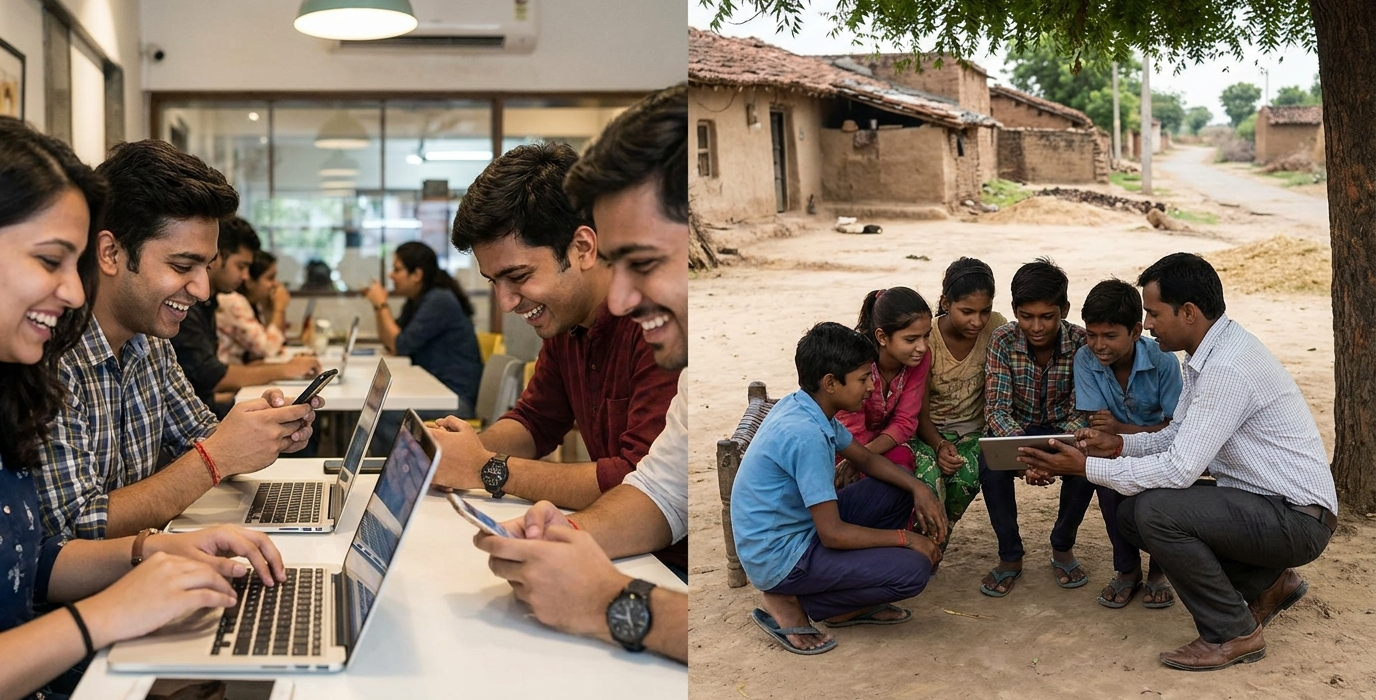
- India’s Gen Z is hyper-connected, but significant digital divides persist across urban-rural lines and socio-economic strata.
- While smartphones are ubiquitous, disparities in high-speed internet access, digital literacy, and device quality create uneven opportunities for learning and earning.
- The government’s ‘Digital India’ initiatives are showing progress, but private sector innovation and community-led programs are crucial for truly inclusive tech access.
- Investing in digital infrastructure, targeted literacy programs, and affordable, quality devices is vital to unlock the full potential of India’s youth.
The Smartphone Revolution: A Double-Edged Sword for India’s Youth
The ubiquitous glow of smartphone screens is a defining characteristic of India’s Gen Z. For many young Indians, these devices are not just communication tools but gateways to education, entertainment, and nascent economic opportunities. We see them on buses in Mumbai, sharing memes and catching up on online classes; we see them in small villages in Rajasthan, learning new skills through YouTube tutorials. This widespread adoption is a testament to India’s rapid digital transformation over the past decade.
However, beneath the surface of this digital saturation lies a complex reality. While smartphone penetration is high, the quality of connection and the ability to leverage these devices effectively are far from uniform. Many Gen Z individuals, particularly in rural areas or from lower-income households, are still reliant on limited mobile data plans and older, slower devices. This creates a subtle but significant barrier, impacting their ability to participate fully in an increasingly digital world. The dream of seamless digital access is, for many, still a work in progress.
The Urban-Rural Chasm in Connectivity
The most glaring disparity is the urban-rural divide. Major metropolitan centres like Delhi, Bengaluru, and Chennai boast robust broadband infrastructure and widespread 5G coverage. Here, students can easily access high-definition online lectures, participate in virtual internships, and engage with advanced digital tools. In stark contrast, many villages across states like Bihar or Uttar Pradesh struggle with intermittent internet connectivity and significantly slower speeds. This means that while their urban counterparts are exploring AI and coding, rural Gen Z might be wrestling with buffering videos or unable to download essential educational materials. This uneven playing field dictates who gets ahead and who gets left behind.
Beyond the Smartphone: The Literacy Gap and Device Disparities
Possessing a smartphone is only the first step; the ability to use it effectively is another. Digital literacy, encompassing everything from basic internet navigation to understanding cybersecurity and critically evaluating online information, is not universally acquired. Many young Indians, especially those whose primary education was not digitally integrated, may lack these fundamental skills. This limits their capacity to utilize online resources for job searching, financial management, or even accessing government digital services. It’s a gap that can prevent them from translating their connectivity into tangible benefits.
Furthermore, the quality of devices matters. While a top-tier smartphone can run multiple applications smoothly and offer a rich user experience, a budget device might struggle with complex software. This impacts everything from academic performance in online exams to the ability to participate in virtual job interviews that require stable video and audio. We’re not just talking about owning a device; we’re talking about owning a *capable* device that can genuinely level the playing field. The aspiration for better technology is real, and the financial constraints are a significant hurdle for many.
A Surprising Fact: Even with Smartphone Access, Over 40% of Indian Youth Report Experiencing ‘Connectivity Anxiety’
This anxiety stems from the fear of losing connection during crucial online activities, whether it’s an exam, an interview, or a vital work communication. This constant underlying stress, even for those with devices, highlights the fragility of their digital experience.
Government Initiatives: Laying the Foundation for Digital India
The Indian government has long recognized the importance of digital inclusion, with initiatives like ‘Digital India’ aiming to bridge these gaps. Programs such as BharatNet, which aims to provide broadband connectivity to all Gram Panchayats, are crucial for rural areas. The Common Service Centres (CSCs) also play a vital role, acting as access points for digital services in remote locations, helping citizens with everything from passport applications to digital payments. These efforts are steadily improving the foundational infrastructure.
Moreover, schemes promoting digital literacy, like the Pradhan Mantri Gramin Digital Saksharta Abhiyan (PMGDISHA), are designed to equip rural citizens with basic digital skills. The focus is on making technology accessible and understandable, ensuring that no one is left behind in the digital race. While these initiatives are commendable, their reach and effectiveness can vary significantly across different regions and demographics, underscoring the need for continuous evaluation and adaptation. We are seeing progress, but the scale of the challenge requires sustained and amplified efforts.
The Role of Private Sector Innovation and EdTech
The private sector, particularly the burgeoning EdTech industry, has emerged as a significant player in shaping Gen Z’s digital landscape. Companies offering online courses, skill-building platforms, and virtual tutoring have democratized access to learning resources that were once confined to expensive institutions. Platforms like BYJU’s, Unacademy, and Coursera are providing millions of young Indians with opportunities to upskill and reskill, often at a fraction of the cost of traditional education. This innovation is crucial for equipping Gen Z with the skills demanded by the modern job market.
However, the accessibility of these platforms is still tied to reliable internet and suitable devices. For those on the wrong side of the digital divide, these opportunities remain out of reach. Innovative solutions are needed, such as offline content delivery, low-bandwidth friendly platforms, and partnerships with local communities to provide shared access points. The goal must be to ensure that technological advancement translates into equitable opportunity for all young Indians, regardless of their background.
A Surprising Fact: Over 70% of EdTech users in Tier 2 and Tier 3 cities report using their smartphones for over 3 hours daily for educational purposes.
This statistic highlights the immense reliance on mobile devices for learning outside the major metros, emphasizing the critical need for affordable, high-quality smartphones and stable internet.
Bridging the Gap: Community-Led Initiatives and Future Outlook
Beyond government programs and corporate ventures, community-led initiatives are vital for fostering true digital inclusion. Local NGOs, libraries, and community centres in smaller towns and villages are stepping up to provide free internet access, digital literacy workshops, and basic computer training. These grassroots efforts often understand the unique challenges of their communities better than top-down approaches and can tailor solutions accordingly. For instance, a community in Kerala might focus on training local artisans to sell their crafts online, while a group in Uttar Pradesh might prioritize teaching basic digital banking.
Looking ahead, the future of digital inclusion for India’s Gen Z hinges on a multi-pronged approach. Continued investment in robust digital infrastructure, especially in rural and remote areas, is paramount. This must be complemented by targeted digital literacy programs that go beyond basic usage to foster critical thinking and digital citizenship. Ensuring affordability and accessibility of quality digital devices will also remain a key challenge. The journey to bridge India’s digital divide is ongoing, but with concerted effort, we can ensure that Gen Z is empowered to seize the opportunities of the digital age.
Frequently Asked Questions
What is the biggest challenge for Gen Z in India regarding technology?
The most significant challenge is the digital divide, which manifests as disparities in high-speed internet access, quality of devices, and essential digital literacy skills, particularly between urban and rural populations.
How is the Indian government addressing the digital divide?
The government is implementing initiatives like BharatNet for rural broadband, Common Service Centres (CSCs) for service access, and PMGDISHA for digital literacy to improve infrastructure and skills across the nation.
What role do EdTech companies play in bridging the gap?
EdTech companies offer accessible and affordable online learning resources that can supplement traditional education, helping Gen Z upskill and reskill for the modern job market, provided they have adequate connectivity and devices.
Are there non-governmental efforts to improve digital access?
Yes, community-led initiatives by NGOs, libraries, and local centres are crucial. They provide free internet, training, and tailored digital solutions that address specific local needs.