Key Takeaways
- Mumbai’s 2026 monsoon season sees a significant integration of AI-powered forecasting and real-time sensor networks to predict and manage urban flooding.
- Smart drainage systems, including automated sluice gates and adaptive pumps, are being deployed across key flood-prone areas like Dadar and Parel.
- Citizen science initiatives, leveraging mobile apps for reporting waterlogging, are feeding crucial data into municipal response systems.
- The city is piloting drone-based infrastructure monitoring to identify potential blockages and structural weaknesses in drains before they cause failure.
Mumbai’s Monsoon: A New Era of Preparedness Dawns in 2026
The monsoon in Mumbai has always been a double-edged sword. While vital for the region’s water security, the annual deluge has, for decades, brought the city to a standstill. This year, however, a palpable shift is underway. In the monsoon of 2026, Mumbai is not just bracing for the rains; it’s actively outsmarting them. A confluence of cutting-edge technology, enhanced civic engagement, and strategic infrastructure upgrades is redefining the city’s resilience against its most predictable, yet formidable, challenge.
Forget the days of purely reactive measures. Mumbai is now embracing a proactive, data-driven approach. From advanced weather prediction models to on-the-ground sensor networks, the city’s response mechanisms are more sophisticated than ever. This isn’t about simply moving water; it’s about understanding its flow, anticipating its impact, and orchestrating a swift, coordinated defence. You’ll see this transformation in the way alerts are issued, resources are deployed, and communities are engaged.
AI-Powered Early Warning Systems: Predicting the Deluge
At the heart of Mumbai’s 2026 monsoon defence lies a sophisticated Artificial Intelligence (AI) driven early warning system. This isn’t your grandmother’s weather report. It integrates real-time data from a sprawling network of IoT sensors strategically placed across the city, from the bustling heart of South Mumbai to the rapidly developing suburbs of Thane and beyond. These sensors monitor rainfall intensity, water levels in natural drains and the city’s extensive stormwater network, and even ground saturation levels.
This torrent of data is fed into AI algorithms that have been trained on decades of historical monsoon patterns, tidal influences from the Arabian Sea, and the city’s topographical quirks. The system can now predict potential waterlogging hot spots with unprecedented accuracy, often hours in advance. This allows the Municipal Corporation of Greater Mumbai (MCGM) to pre-emptively deploy resources, clear potential blockages, and issue targeted advisories to residents in vulnerable areas like Dadar, Parel, and Andheri. The goal is to move from informing citizens about floods to preventing them from happening in the first place.
One surprising fact is how this AI model is learning from micro-climates. It now accounts for urban heat island effects and how specific building densities can impact localized rainfall runoff, a level of granularity previously unachievable. This predictive power is a game-changer, offering precious time for preparedness.
Smart Drainage: Intelligent Water Management in Action
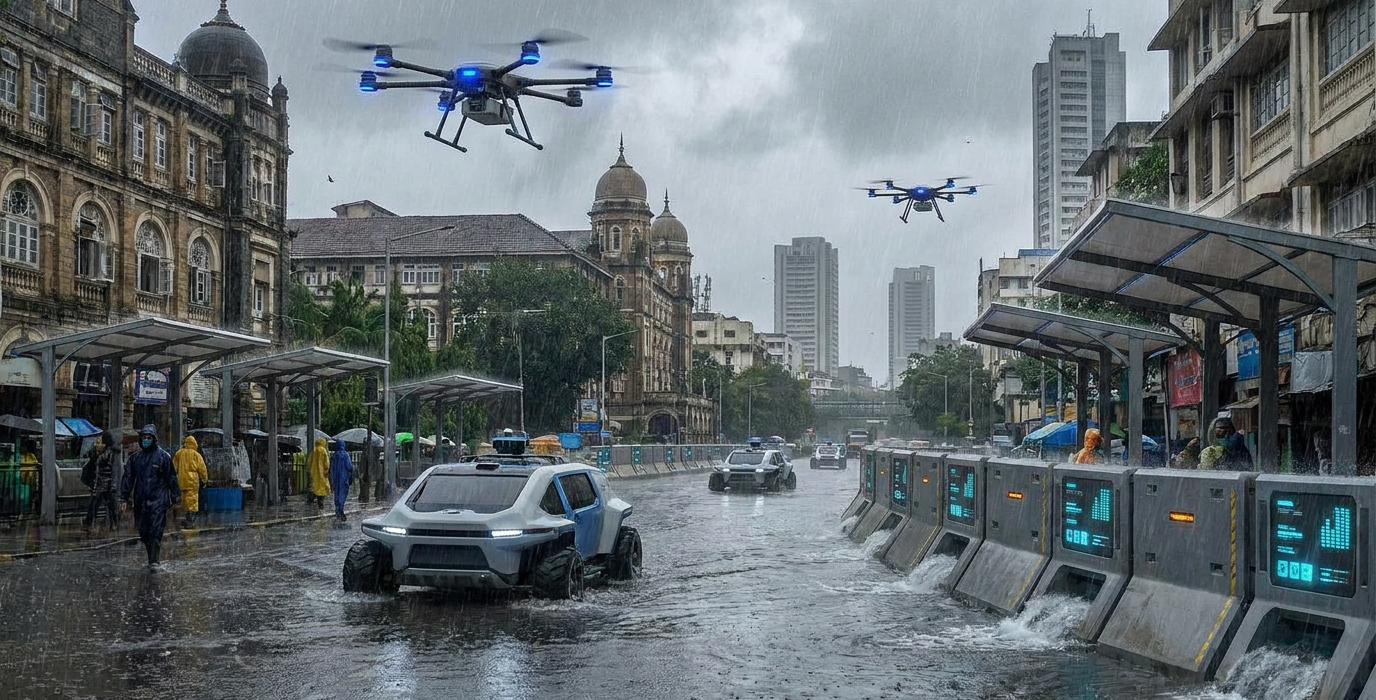
Mumbai’s legendary drainage system, often overwhelmed during heavy downpours, is undergoing a technological revolution. The traditional approach of passive water flow is being replaced by an active, intelligent network. Key arterial drains and low-lying areas are now equipped with smart sluice gates and adaptive pumping stations. These are not just automated; they are responsive to the real-time data fed by the AI warning system.
Imagine this: as the AI predicts an impending surge of water in a particular zone, the smart sluice gates automatically adjust their opening to manage the flow, diverting excess water to designated holding areas or larger conduits. If the water levels exceed pre-set thresholds, adaptive pumps kick in, not just at full blast, but with variable speed and capacity, optimising energy use and efficiently moving water away from critical infrastructure and residential areas. Areas like Kurla and Sion, notorious for waterlogging, are seeing significant upgrades.
The sheer scale of this upgrade is immense, involving over 500 critical points across the city. A fascinating insight is the integration of tidal data; the system can now intelligently manage outflows to the sea, preventing backflow during high tide, a common cause of prolonged flooding in coastal zones. This ensures that even when the sea is rough, the city’s drainage can still function effectively.
Citizen Science: The Eyes and Ears of the City
Technology alone cannot solve Mumbai’s monsoon challenges. This year, the city is placing a significant emphasis on empowering its citizens as active participants in flood management. The revamped “Mumbai Monsoon Watch” mobile application is at the forefront of this initiative. Citizens can now easily report waterlogging, clogged drains, or overflowing nullahs with just a few taps, attaching geotagged photos and videos.
This user-generated data is not just being collected; it’s being directly fed into the MCGM’s central command centre and integrated with the AI prediction models. This provides a crucial layer of ground-truth verification and identifies issues that might be missed by the automated sensor network. For instance, a sudden accumulation of debris after a strong gust of wind might not be immediately picked up by sensors but will be flagged by vigilant residents. This real-time feedback loop allows for much faster deployment of desilting teams and emergency services to specific problem areas.
The app also features real-time updates on flood-prone zones, traffic advisories, and evacuation routes, turning every Mumbaikar into a potential first responder. This collaborative approach fosters a sense of collective responsibility, turning a perennial problem into a shared mission. A surprising statistic from the beta testing phase indicated that citizen reports were able to pinpoint over 15% of minor blockages that the sensor network had not yet flagged.
Drone Surveillance: Proactive Infrastructure Health Checks
To complement the ground-level and AI-driven monitoring, Mumbai is deploying a fleet of advanced drones for aerial surveillance of critical monsoon infrastructure. These drones are equipped with high-resolution cameras, thermal imaging capabilities, and even LiDAR (Light Detection and Ranging) sensors. Their primary role is to conduct pre-monsoon and during-monsoon inspections of stormwater drains, bridges, retaining walls, and coastal defences.
This allows engineers to identify potential structural weaknesses, erosion, or blockages that might not be visible from the ground. For instance, thermal imaging can detect areas where water is seeping through a wall, indicating potential structural compromise. LiDAR can create precise 3D models of drainage channels, helping to identify silt accumulation or obstructions that might impede water flow. This proactive approach helps prevent infrastructure failure before it occurs, saving both lives and resources.
These drones are also invaluable during active flooding events. They can provide real-time aerial views to disaster management teams, helping them assess the extent of inundation, identify stranded individuals, and plan rescue operations more effectively. One fascinating application is their use in mapping debris accumulation in rivers and creeks that feed into the city’s drainage network, allowing for targeted clean-up operations.
Data Integration and Command Centres: Orchestrating the Response
The true power of Mumbai’s 2026 monsoon strategy lies in the seamless integration of all these diverse data streams. A state-of-the-art Disaster Management Command Centre, located centrally, acts as the nerve centre. Here, all data from AI forecasts, sensor networks, citizen reports, and drone surveillance converges onto a sophisticated dashboard.
This unified view allows emergency response teams to gain a comprehensive understanding of the evolving situation in real-time. They can visualize predicted flood zones, identify active waterlogging areas, track the status of drainage system operations, and monitor the deployment of field teams. This facilitates a highly coordinated and efficient response, minimizing confusion and maximizing the impact of available resources.
The integration extends beyond mere data visualization. It enables automated dispatch of resources, prioritisation of response efforts based on severity, and dynamic allocation of personnel and equipment. This shift from a fragmented approach to a holistically managed system is perhaps the most significant upgrade. It ensures that when the rains hit, the entire city’s machinery is working in perfect, technological harmony. A surprising capability being piloted is the use of predictive analytics to anticipate potential traffic gridlock based on rainfall intensity and known chokepoints, allowing for preemptive traffic management.
The Path Forward: Continuous Improvement and Citizen Partnership
While the technological strides of 2026 are impressive, Mumbai’s journey towards complete monsoon resilience is ongoing. The systems deployed are designed for continuous learning and improvement. As more data is collected, the AI models become more accurate, and the response strategies more refined. The partnership with citizens is also crucial for this evolution.
The MCGM is committed to regularly updating the “Mumbai Monsoon Watch” app based on user feedback and introducing new features that enhance citizen engagement. Public awareness campaigns are also being amplified to educate residents on how to best utilize the available technological tools and prepare their homes and communities for the monsoon. The aim is to foster a culture of preparedness, where technology and community work hand-in-hand.
This proactive, technology-infused, and community-driven approach marks a new chapter for Mumbai during its monsoon. It’s a testament to the city’s spirit of innovation and its unwavering determination to overcome its most persistent challenges. The goal is not just to survive the monsoon, but to thrive in its presence, ensuring that the city’s pulse continues to beat strong, come rain or shine.
“This year, we are moving beyond simply reacting to the monsoon. We are predicting it, managing its flow with intelligent systems, and empowering every citizen to be a part of the solution. It’s a symphony of technology and community.”
Frequently Asked Questions
What are the primary technological innovations being used in Mumbai for monsoon 2026?
Mumbai is employing AI-powered early warning systems, smart drainage networks with automated sluice gates and adaptive pumps, IoT sensor integration, citizen science mobile apps for reporting, and drone surveillance for infrastructure monitoring.
How does the AI early warning system work?
The AI system integrates real-time data from IoT sensors monitoring rainfall, water levels, and ground saturation with historical monsoon patterns and topographical data to predict potential waterlogging hot spots hours in advance.
Can citizens actually contribute to flood management in Mumbai?
Yes, through the “Mumbai Monsoon Watch” mobile app, citizens can report waterlogging and clogged drains with photos and videos. This data is fed into the municipal command centre and helps in identifying and addressing issues on the ground.
What is the role of drones in Mumbai’s monsoon preparedness?
Drones equipped with cameras and LiDAR sensors are used for pre-monsoon inspections of drains and infrastructure to identify potential weaknesses or blockages. During flooding, they provide aerial views for disaster management and rescue planning.