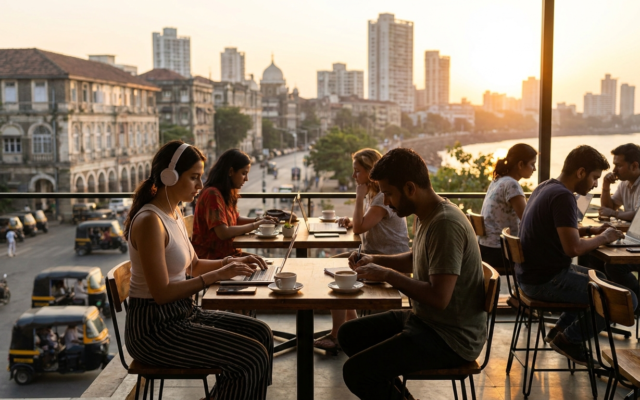
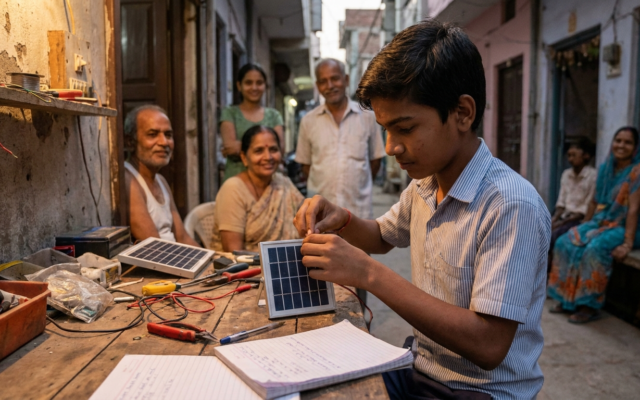
India in 2026 is no longer defined just by its ancient history, but by the relentless, quiet ambition of people working in the shadows of our bustling metros and quiet villages. From the tech corridors of Bengaluru to the terraced fields of Himachal, ordinary citizens are crafting extraordinary futures that rewrite the rules of what is possible.
Key Takeaways
- Innovation in India is increasingly bottom-up, driven by grassroots entrepreneurs using affordable digital tools to solve local infrastructure gaps.
- The shift toward sustainable agriculture is being led by a new generation of tech-literate farmers who prioritize soil health over raw yield.
- Digital literacy is no longer a luxury; it is the fundamental engine behind the formalization of the informal sector across Tier-2 and Tier-3 cities.
- Resilience is the common thread, with individuals turning systemic challenges into repeatable business models that scale across state lines.
The Digital Orchardist of Solan
In the lush, mist-covered valleys of Himachal Pradesh, Rajesh Kumar is not your typical orchardist. While his grandfather relied on seasonal monsoons and traditional intuition to harvest apples, Rajesh spends his mornings analyzing sensor-driven data on his smartphone. He is part of a growing movement of farmers who have integrated precision agriculture to combat the unpredictable weather patterns that have plagued the Himalayas in recent years.
By installing low-cost soil moisture sensors, he has reduced his water consumption by 40 percent while increasing his apple yield by nearly a third. It is a quiet revolution happening in the soil, one that relies on data rather than sheer physical labor. Rajesh’s story proves that the digital divide is closing faster than experts predicted, turning rural farmers into tech-literate stewards of the land.
What makes his story truly surprising is that he now exports his produce directly to high-end retailers in Singapore using blockchain-verified supply chains. He bypassed the traditional middlemen who dominated the trade for decades, ensuring that the premium price reaches his pocket rather than a commission agent’s ledger. This shift is reshaping the rural economy, proving that geography is no longer a barrier to global market access.
Coding for Change in Dharavi
When you walk through the narrow, vibrant lanes of Dharavi, you expect to see the hum of small-scale manufacturing. However, look closer at the backrooms, and you will find teenagers like Ananya Sharma writing Python scripts that power local logistics startups. Ananya, a 19-year-old self-taught programmer, built an application that helps local leather artisans track their raw material inventory in real-time.
She is one of the thousands of students graduating from low-cost coding bootcamps that have flourished in India’s most densely populated districts. These programs are often supported by initiatives aligned with the Ministry of Electronics and Information Technology, which focuses on bringing digital infrastructure to every corner of the country. Ananya’s code doesn’t just run on servers; it runs on the trust of shopkeepers who have finally digitized their daily ledgers.
Her work is a testament to the fact that Indian innovation is not just happening in the glass towers of Cyber City. It is happening on cracked smartphone screens in rooms where three generations live under one roof. By reducing the time artisans spend managing logistics, she has helped increase their monthly earnings by nearly 20 percent in less than a year.
The Green Architect of Coimbatore
In the scorching heat of Coimbatore, Senthil Nathan is redefining what it means to build a home. Instead of using energy-intensive concrete, he has pioneered a method of construction using compressed stabilized earth blocks (CSEBs) combined with recycled industrial waste. His company, which focuses on passive cooling, ensures that homes stay significantly cooler than the outside temperature without the constant hum of air conditioning.
Senthil’s philosophy is rooted in the idea that traditional Indian architecture already held the secrets to thermal efficiency. He simply added modern engineering rigor to ancient designs. His projects are currently being studied by urban planners who are desperate to find ways to reduce the carbon footprint of India’s rapidly expanding urban centers.
A surprising fact about his firm is that they manage to build these sustainable homes at a cost 15 percent lower than traditional builders. By sourcing materials locally and reducing the need for heavy machinery, he has eliminated the expensive overheads that usually plague eco-friendly construction. It is a model of sustainability that is actually profitable, which is why it is spreading across the southern states like wildfire.
| Feature | Traditional Concrete Home | Senthil’s Sustainable Model |
|---|---|---|
| Thermal Comfort | Requires AC for 8 months | Naturally cool year-round |
| Construction Cost | Baseline | 15% cheaper |
| Carbon Footprint | High | Net-Zero potential |
| Material Sourcing | Imported/Factory-based | Local/Recycled waste |
Banking on Trust in Odisha
In the rural outskirts of Bhubaneswar, Meena Devi has become a financial lighthouse for her community. As a banking correspondent for a major public sector bank, she traverses villages on a scooter, carrying a portable biometric machine that allows people to withdraw cash or deposit savings without traveling to a distant town. This is the human face of India’s push for financial inclusion.
Before Meena started her route, most villagers kept their savings under floorboards or in metal tins, vulnerable to theft and inflation. Today, she manages over 500 accounts, helping families plan for school fees and medical emergencies through formal banking channels. She is effectively the local branch, the loan officer, and the financial advisor all rolled into one.
Her success is built on the simple, powerful concept of trust. In a country where digital skepticism was once rampant, she spent months explaining how biometric authentication works. Now, the same villagers who were afraid to touch a computer screen are checking their account balances on the government’s dedicated mobile platforms every single morning.
The most profound technological transformations in India are not those that happen in the cloud, but those that take root in the soil of human relationships and trust.
The Women Who Move Mountains
In the remote villages of Uttarakhand, a collective of women known as the “Himalayan Harvesters” has taken control of the local silk-spinning industry. Traditionally, the women were relegated to picking raw silk, while the high-value processing was shipped to factories in other states. By pooling their resources and training in advanced loom technology, they now produce luxury textiles that are sold globally.
They have successfully leveraged digital marketplaces to reach luxury fashion houses in Europe. This shift has given them not just economic independence, but a seat at the table in village council meetings. When you control the income, you control the conversation, and these women have changed the power dynamics of their entire region.
They also operate a cooperative that ensures fair wages for every member, effectively insulating them from the volatility of the global textile market. Their story is a powerful reminder that when women are given access to the same tools and technology as men, the entire economic output of a community shifts upward. It is not just about making silk; it is about spinning a new social fabric.
The Future is Local
As we look at these stories, a pattern emerges: the most impactful work in India today is being done by people who look at a problem and refuse to wait for someone else to solve it. Whether it is a coder in a slum, an orchardist in the mountains, or a banker on a scooter, the common theme is agency. They have claimed their stake in the future.
This is the real India of 2026. It is messy, it is digital, and it is profoundly hopeful. We are moving toward an era where the barriers to entry—be it capital, information, or market access—are being dismantled by the very people they were meant to exclude.
If you want to understand where India is heading, do not just look at the stock market indices or the policy whitepapers. Look at the local entrepreneur in your own neighborhood who is using a smartphone to run a business that would have required a small office and a massive team just a decade ago. The future is not coming; it is already being built.
Frequently Asked Questions
How can I support local entrepreneurs in my area?
The best way to support local innovators is through direct purchase and by providing constructive feedback. Many small businesses are now listed on government-backed platforms like the Open Network for Digital Commerce (ONDC), which connects local vendors directly to consumers.
Is digital literacy really that high in rural India?
Yes, digital literacy has seen an exponential rise, largely driven by the widespread availability of low-cost data and the proliferation of simplified, vernacular-language apps. Most rural citizens now use digital tools for everything from utility payments to agricultural planning.
Where can I learn more about sustainable construction in India?
You can look into the Central Public Works Department guidelines on green building practices. Additionally, many private architectural firms now host workshops and open-house days to demonstrate the viability of earth-based construction techniques.
Are these small-scale success stories scalable?
Absolutely. Many of these models, such as the banking correspondent system or the digital agricultural support, are based on replicable frameworks that the government and private sector are actively scaling to ensure they reach every district in the country.