Key Takeaways
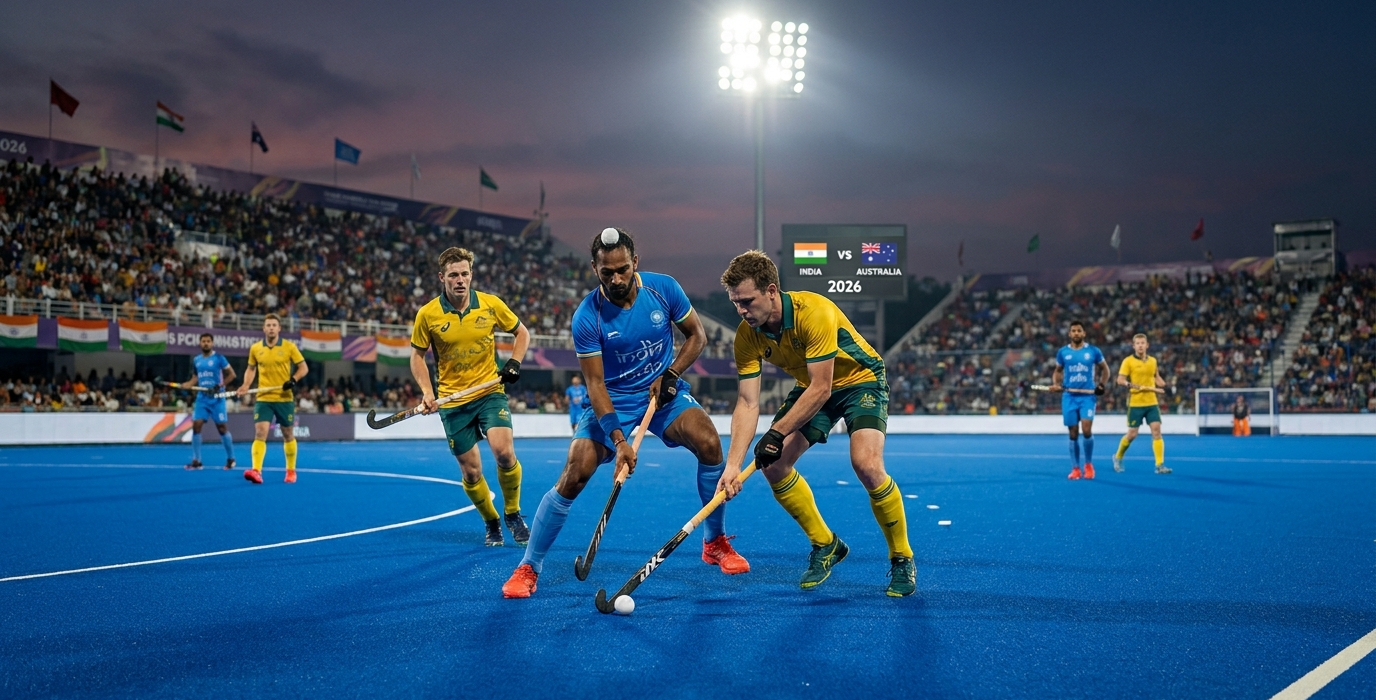
- The Indian and Australian men’s hockey teams are poised for a monumental clash in late 2026, continuing a storied rivalry steeped in grit and tactical brilliance.
- Expect a high-octane encounter showcasing India’s flair and attacking prowess against Australia’s relentless physicality and defensive solidity.
- Key battles will likely occur in the midfield, where control dictates the flow, and in the penalty corners, where clinical finishing separates champions from contenders.
- This encounter is more than just a game; it’s a significant indicator of both teams’ preparedness for major international tournaments in the upcoming cycle.
A Rivalry Forged in Fire: The 2026 Anticipation
As the sporting calendar for 2026 begins to solidify, one fixture ignites a particular fervor across the hockey-playing nations: the impending clash between the Indian and Australian men’s hockey teams. This isn’t just another match; it’s a continuation of a narrative etched in decades of fierce competition, tactical duels, and unforgettable moments. We’re talking about a rivalry that has consistently delivered breathtaking hockey, pushing both sides to their absolute limits.
India, with its rich history in the sport and a resurgence in recent years, brings a blend of dazzling individual skill, creative attacking patterns, and a passionate home crowd advantage, should the fixture be hosted in India. Australia, the perennial powerhouse, counters with an unyielding work ethic, formidable physical presence, and a tactical discipline that has made them a nightmare for opponents worldwide. The anticipation for this 2026 encounter is already palpable, promising a spectacle that will captivate fans from Bhubaneswar to Perth.
This clash is more than just bragging rights; it’s a crucial barometer for both teams. For India, it’s an opportunity to assert their dominance on the global stage against one of the toughest opponents. For Australia, it’s a chance to reaffirm their supremacy and test the evolving strategies of their rivals. The stage is set for a contest that will undoubtedly add another chapter to this legendary rivalry.
India’s Evolving Attack: Flair Meets Formidable Strategy
India’s hockey resurgence in recent years has been characterized by a potent blend of traditional flair and increasingly sophisticated tactical execution. In 2026, we can expect their attacking unit to be sharper, more cohesive, and devastatingly effective. The young talents who have emerged are now seasoned campaigners, bringing speed, agility, and an uncanny ability to unlock defenses. Their dribbling skills, honed on the dusty fields of Indian academies and refined in top-tier leagues, remain a cornerstone of their offensive strategy.
However, it’s not just about individual brilliance. Coach Graham Reid, or his successor, will have instilled a deeper understanding of structured attacking plays, focusing on quick transitions and exploiting spaces with precision. We will likely see a greater emphasis on variations in their penalty corner routines, a crucial area where they will need to be clinical against Australia’s formidable defense. Expect the forwards to create chances through intelligent movement off the ball and midfielders to seamlessly join the attack, overwhelming opponents with numbers and creativity.
The Indian forward line, likely spearheaded by experienced campaigners and supported by dynamic youngsters, will aim to dictate the tempo of the game. Their ability to execute under pressure, especially in the crucial final third, will be paramount. This isn’t the India of yesteryear; this is a team that combines the magic of its heritage with the pragmatism of modern hockey, making them a formidable force for any opponent.
Australia’s Unwavering Steel: The Kookaburras’ Dominance
Australia’s men’s hockey team, often referred to as the Kookaburras, has long been the benchmark for consistency and excellence in the sport. Their strength lies in a relentless, physical style of play, underpinned by exceptional fitness, disciplined defense, and a steely mentality. In the lead-up to their 2026 encounters, expect them to be as formidable as ever, a well-drilled unit that operates with the efficiency of a finely tuned machine.
Their defensive structure is legendary. They possess a knack for shutting down opposition attacks, often suffocating opponents with suffocating pressure and intelligent positioning. Goalkeepers like Andrew Charter, if still active, or his successors, have a reputation for making crucial saves, while field defenders are masters of the tackle and interception. This defensive solidity provides the platform for their own attacking forays, which are characterized by directness, power, and clinical finishing.
The Kookaburras’ penalty corner unit is one of the most feared in the world. Their drag-flickers and stoppers possess immense power and accuracy, capable of converting chances with ruthless efficiency. Against India’s often fast-paced but sometimes less structured defense, Australia will look to exploit any lapses with their trademark physicality and set-piece prowess. Their ability to control the midfield battle through sheer presence and work rate will also be a key factor, preventing India’s creative sparks from igniting.
Midfield Mayhem: The Engine Room of the Clash
The outcome of the 2026 India versus Australia hockey clash will very likely hinge on the battle in the midfield. This is the engine room where the game’s tempo is set, possession is won and lost, and the momentum shifts. For India, control of the midfield means allowing their creative forwards to flourish and their attacking patterns to unfold. They will rely on a combination of nimble ball-handlers and intelligent distributors to break down Australia’s press and find passing lanes.
Australia, conversely, will aim to dominate this area with their physicality and relentless pressing. Their midfielders are known for their incredible work rate, their ability to win 50/50 tackles, and their direct approach to moving the ball forward. They will seek to disrupt India’s rhythm, forcing turnovers and launching quick counter-attacks. A surprising fact about Australian midfield play is their historical reliance on a ‘second wave’ of midfielders coming on as substitutes, ensuring sustained pressure and intensity throughout the match, a tactic that has often worn down opponents.
The tactical battle here will be fascinating. Will India try to out-skill and out-pass their way through the Australian midfield, or will they match their physicality? Will Australia’s midfield power be enough to stifle India’s flair, or will India find ways to exploit the spaces left behind as Australian midfielders commit forward? The players who can maintain composure under pressure, make smart decisions, and execute with precision in this central zone will be instrumental in deciding the fate of the match.
Penalty Corners: The Ultimate Deciders
In any high-stakes hockey encounter, especially between two elite teams like India and Australia, penalty corners often prove to be the ultimate arbiters of victory. These set-piece situations offer the clearest scoring opportunities, and the teams that can execute them most effectively, and defend them most resolutely, gain a significant advantage. India has been working diligently to enhance their penalty corner attack, investing heavily in specialized training for their drag-flickers and blockers.
Australia, as mentioned, possesses one of the most potent penalty corner units in world hockey. Their drag-flickers are renowned for their power and accuracy, capable of finding the net from seemingly impossible angles. Their defensive routines during opposition penalty corners are equally impressive, built on swift reactions and aggressive blocking. A lesser-known but vital aspect of Australia’s penalty corner defense is their innovative use of video referrals to challenge decisions, a tactic that has, on occasion, turned the tide of a match.
For India to succeed, they must not only be clinical in their own penalty corners but also minimize the number of opportunities they concede to Australia. This means maintaining discipline in their tackling and defensive shape. The goalkeepers on both sides will face immense pressure during these moments, and their ability to make crucial saves could be the difference between a draw and a victory, or a win and a loss. Expect coaches to spend countless hours strategizing for these critical junfights.
Beyond the Field: The Legacy and Future Implications
The 2026 India vs. Australia hockey encounter is far more than just a single match; it’s a continuation of a rich sporting legacy that has captivated fans for generations. This rivalry has produced legendary players, iconic moments, and has played a significant role in shaping the global landscape of hockey. For India, these clashes are opportunities to measure their progress against the world’s best and to inspire a new generation of players back home.
For Australia, these encounters are vital tests of their enduring dominance and a chance to refine their strategies against a rapidly improving opponent. The implications of the 2026 fixture extend beyond the immediate result. The performance of both teams will provide valuable insights into their preparation for major international tournaments scheduled for the years that follow, including potential Olympic qualifiers or World Cup cycles. The winning team will gain immense psychological advantage and crucial ranking points.
Furthermore, the narrative surrounding this rivalry continues to evolve. The tactical innovations, the emergence of new stars, and the sheer intensity of the games all contribute to its enduring appeal. As we look forward to 2026, we can be certain that this clash will once again showcase the very best of what international hockey has to offer, leaving an indelible mark on the sport’s history.
Frequently Asked Questions
When is the next major India vs Australia hockey match expected in 2026?
While specific dates are still being finalized by international hockey federations, the anticipation is for a significant fixture in late 2026, likely as part of a major tournament or a dedicated bilateral series. We will provide updates as soon as official schedules are released.
What are the key strengths of the Indian and Australian hockey teams?
India is known for its flair, attacking creativity, and skillful individual players. Australia is renowned for its physical prowess, disciplined defense, relentless work ethic, and formidable penalty corner execution.
How has the rivalry between India and Australia evolved over the years?
The rivalry has transitioned from India’s historical dominance to a more competitive landscape. While Australia has often held the edge in recent decades, India has shown significant improvement, making their encounters increasingly unpredictable and thrilling.
Where can I watch the 2026 India vs. Australia hockey match?
Broadcast rights for major international hockey events are typically secured by sports channels and streaming platforms globally. We will share information on where you can watch the match in India and other regions as soon as it becomes available.