Key Takeaways
- Indian AI startups are moving beyond theoretical applications, focusing on tangible solutions for sectors like agriculture, healthcare, and logistics.
- These innovations are leveraging India’s vast datasets and unique challenges to create globally relevant AI technologies.
- Expect to see significant advancements in personalized healthcare, efficient supply chains, and sustainable farming practices powered by Indian AI by late 2026.
- Regulatory frameworks and data privacy are becoming crucial considerations for the growth and ethical deployment of AI in India.
AI Takes Root: Cultivating Smarter Agriculture
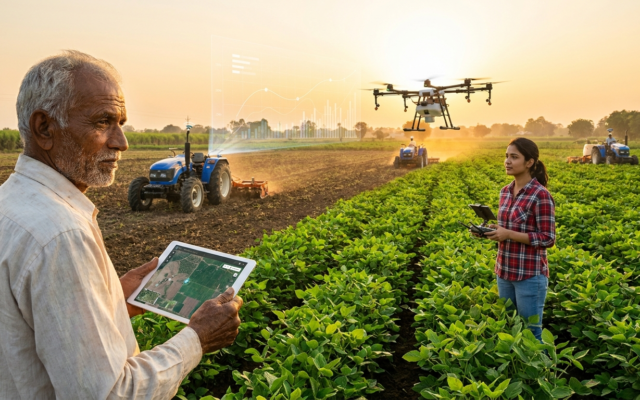
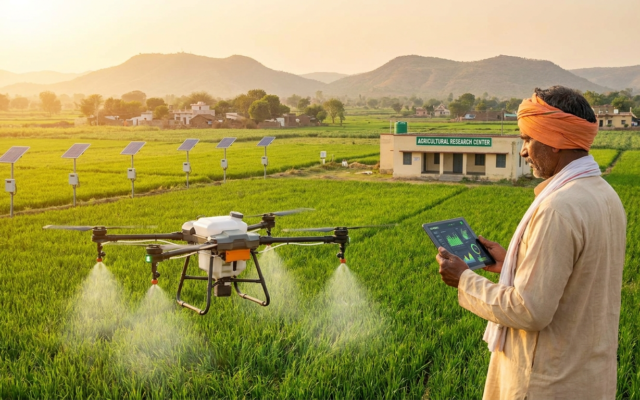
The fields of India, from the fertile plains of Punjab to the terraced slopes of the Western Ghats, are quietly undergoing a revolution, powered by artificial intelligence. It’s not about robots replacing farmers wholesale, but about providing them with unprecedented insights. Imagine an AI system analyzing satellite imagery and local weather patterns to predict pest outbreaks weeks in advance, or recommending precise irrigation schedules down to the litre. This is no longer science fiction; it’s the reality being built by Indian AI startups. Companies are developing platforms that can identify nutrient deficiencies in soil from drone-captured images, guiding farmers on the exact micro-nutrients needed. This targeted approach not only boosts crop yields but also significantly reduces the waste of water and fertilizers, contributing to more sustainable agricultural practices.
The sheer diversity of Indian agriculture presents a unique testing ground. A startup in Chennai might be developing an AI model for optimizing mango cultivation in Tamil Nadu, while another in Pune focuses on grape varietals in Maharashtra. These models are trained on vast datasets of local soil types, climate variations, and historical crop performance. This granular understanding allows for hyper-localized recommendations that traditional, broad-stroke agricultural advice simply cannot match. Furthermore, AI is being deployed to manage supply chain inefficiencies. By predicting demand more accurately and optimizing logistics, these technologies aim to reduce post-harvest losses, a perennial problem that costs India billions annually. The goal is clear: empower farmers with data-driven decision-making, making Indian agriculture more resilient, productive, and profitable.
Healthcare’s Intelligent Leap: Diagnostics and Beyond
India’s healthcare sector, grappling with a massive population and uneven access to specialized medical care, is a prime beneficiary of AI innovation. By 2026, you’ll find AI actively assisting doctors in diagnosing diseases with remarkable speed and accuracy. Think about AI algorithms trained on millions of retinal scans, capable of detecting early signs of diabetic retinopathy – a leading cause of blindness – even in remote areas with limited ophthalmologists. This technology is not just a supplement; it’s a force multiplier, extending the reach of expert medical opinion. Similarly, AI is revolutionizing medical imaging analysis. Algorithms can now sift through X-rays, CT scans, and MRIs, flagging suspicious anomalies that might be missed by the human eye, especially in high-volume screening scenarios.
Beyond diagnostics, AI is making significant inroads into personalized treatment plans. By analyzing a patient’s genetic makeup, medical history, and lifestyle data, AI can help oncologists tailor cancer therapies for maximum efficacy and minimal side effects. This level of personalized medicine, once the preserve of wealthy nations, is becoming increasingly accessible thanks to Indian AI development. Furthermore, AI-powered chatbots and virtual assistants are being deployed to manage patient queries, schedule appointments, and provide post-operative care guidance. This frees up valuable clinician time for more complex cases. The true impact lies in democratizing access to quality healthcare, especially in Tier 2 and Tier 3 cities, where specialized medical expertise is scarce. Companies are also working on AI models to predict disease outbreaks based on anonymized health data and environmental factors, enabling proactive public health interventions.
AI in Radiology: A Deeper Look
One area where AI is making a profound impact is radiology. Consider the sheer volume of medical images generated daily across India. AI algorithms, trained on diverse datasets from various Indian hospitals, can now detect subtle signs of tuberculosis, pneumonia, and even early-stage cancers with an accuracy that often rivals, and sometimes surpasses, human radiologists. This isn’t about replacing radiologists but about augmenting their capabilities, allowing them to focus on complex cases and reducing the time to diagnosis for routine scans. Startups are developing AI tools that can automatically segment organs and lesions, quantify tumor growth, and even predict treatment response based on imaging features. This level of detail and speed is transformative for patient outcomes.
Smarter Cities, Smoother Journeys: Logistics and Transportation
The arteries of India – its roads and railways – are a complex network that often struggles with congestion and inefficiency. AI startups are stepping in to untangle these challenges, creating smarter logistics and transportation systems. Imagine a future where delivery trucks optimize their routes in real-time, not just based on traffic, but also on predicted loading and unloading times at various destinations, factoring in local events and weather. AI is enabling dynamic route optimization that goes far beyond simple GPS navigation. This leads to reduced fuel consumption, lower emissions, and faster delivery times, which is critical for e-commerce and essential goods.
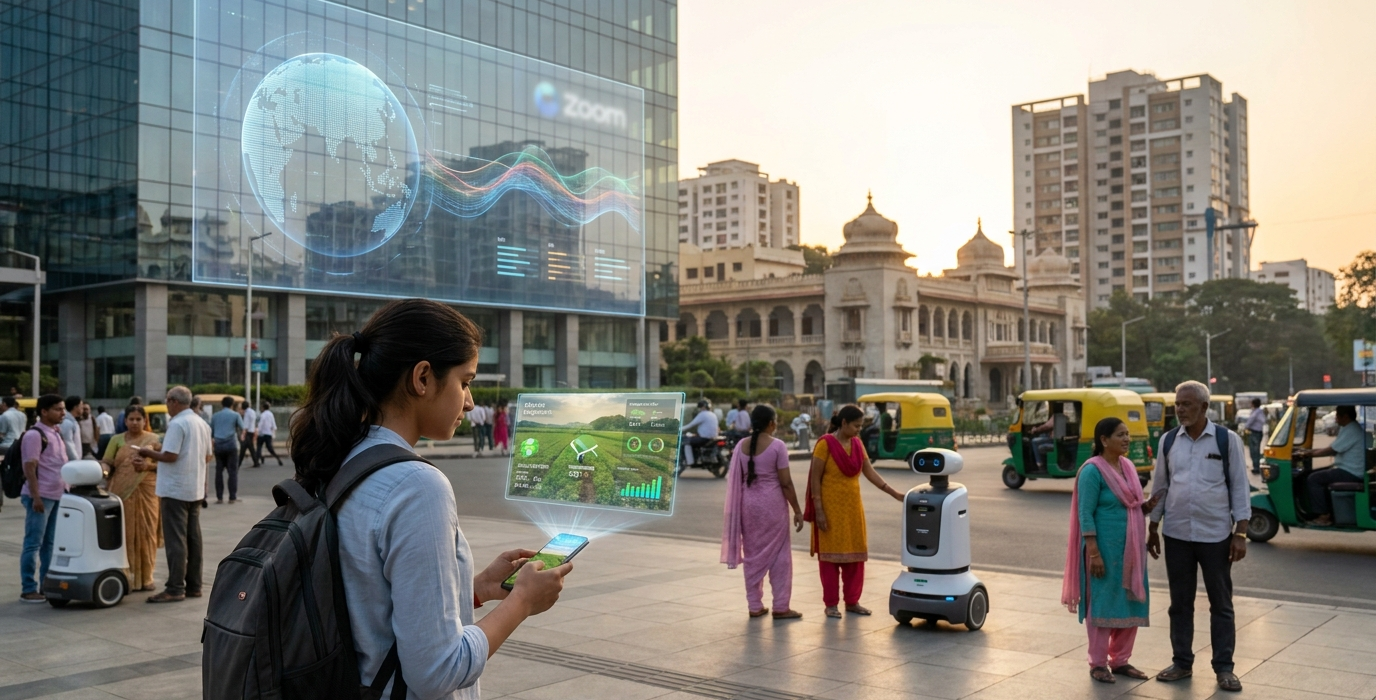
For urban transportation, AI is being used to manage traffic flow more effectively. By analyzing real-time data from traffic cameras, sensors, and even social media, AI can predict congestion points and adjust traffic light timings dynamically. This reduces travel times and frustration for millions of commuters in cities like Bengaluru and Mumbai. Furthermore, AI is being integrated into public transport scheduling. Instead of fixed routes and schedules, AI can help optimize bus and train frequencies based on actual passenger demand, reducing wait times and improving the overall passenger experience. The development of autonomous vehicle technology for specific industrial applications, such as port logistics or mining operations, is also gaining traction. These AI-powered systems are vital for improving operational efficiency and safety in demanding environments.
The Unseen Hand of Optimization
The impact of AI in logistics is often unseen by the end consumer, yet it’s profoundly felt in the reliability and speed of services. A surprising fact is that some AI solutions are specifically designed to predict and mitigate the effects of unpredictable events like sudden downpours or local festivals on delivery schedules. These systems learn from historical data to understand how such disruptions typically impact transit times, allowing for proactive rerouting and customer communication. This level of predictive capability significantly enhances supply chain resilience, a crucial factor in India’s rapidly growing economy.
“We’re not just building algorithms; we’re building solutions that address the fundamental inefficiencies in how goods and services move across India. The impact on cost, time, and sustainability is immense.”
Advertisement300×250 / native
AI in Manufacturing: Precision and Predictive Power
India’s manufacturing sector, a cornerstone of its economic aspirations, is embracing AI to enhance its competitiveness. By 2026, you’ll see AI playing a crucial role in improving product quality and reducing operational downtime. Predictive maintenance is a game-changer here. AI systems analyze sensor data from machinery – vibrations, temperature, acoustic patterns – to predict potential equipment failures before they occur. This allows for scheduled maintenance during off-peak hours, preventing costly breakdowns and production halts. Imagine a textile mill in Tiruppur or an automotive plant in Chennai receiving an alert that a critical machine component is showing early signs of wear, allowing for its replacement before it causes a line stoppage.
Quality control is another area ripe for AI intervention. Computer vision systems, powered by AI, can inspect products on assembly lines with unparalleled speed and consistency. They can detect microscopic defects, such as micro-cracks in electronic components or imperfections in painted surfaces, that would be difficult or impossible for human inspectors to spot reliably. This dramatically reduces the number of faulty products reaching the market, improving customer satisfaction and reducing warranty claims. Furthermore, AI is being used to optimize production scheduling and resource allocation. By analyzing order backlogs, material availability, and machine capacity, AI can create highly efficient production plans, maximizing throughput and minimizing waste. The adoption of AI in manufacturing is a clear signal of India’s ambition to become a global manufacturing hub.
The Rise of the ‘Digital Twin’
A fascinating application of AI in manufacturing is the creation of ‘digital twins’. These are virtual replicas of physical assets, processes, or systems, continuously updated with real-time data from their physical counterparts. By simulating various scenarios on the digital twin, manufacturers can test new production strategies, optimize machine settings, and predict the impact of changes without disrupting actual operations. This allows for a level of experimentation and refinement that was previously unimaginable. For example, an automotive manufacturer can use a digital twin of its assembly line to test the impact of introducing a new robot arm or reconfiguring the workflow, all within a virtual environment, before implementing it on the factory floor.
Personalized Learning and Skill Development
The pursuit of knowledge and skills is a lifelong journey, and AI is poised to make this journey more effective and accessible for millions in India. By 2026, you’ll encounter AI-powered platforms that adapt to individual learning styles and paces, moving beyond the one-size-fits-all approach that often characterizes traditional education. Imagine a student in a small town in Bihar using an AI tutor that identifies their specific learning gaps in mathematics and provides targeted exercises and explanations. This personalized feedback loop is crucial for building a strong foundation and fostering genuine understanding.
These AI systems can analyze a student’s performance on quizzes, assignments, and even their engagement patterns to create customized learning paths. If a student struggles with a particular concept, the AI can offer alternative explanations, additional resources, or break down the problem into smaller, more manageable steps. For professionals, AI is revolutionizing upskilling and reskilling initiatives. Platforms are emerging that assess an individual’s current skill set and career aspirations, then recommend relevant courses and micro-credentials. This is particularly important in a rapidly evolving job market, ensuring that the workforce remains adaptable and competitive. The focus is on making education more engaging, efficient, and ultimately, more equitable.
AI for Accessibility
A truly impactful application of AI in education is its potential to enhance accessibility for students with disabilities. AI-powered tools are being developed to provide real-time captioning for lectures, convert text to speech for visually impaired students, and even offer personalized support for students with learning differences like dyslexia. For instance, AI can analyze a student’s written work and provide constructive feedback on grammar, sentence structure, and clarity in a way that is tailored to their specific challenges. This ensures that no learner is left behind.
The Ethical Compass: Navigating AI’s Future
As AI becomes more deeply embedded in our lives and industries, the conversation around ethics, bias, and data privacy is paramount. By 2026, we’ll see a more robust framework emerging in India to govern the development and deployment of AI technologies. Regulatory bodies and industry consortia are actively working on guidelines to ensure that AI systems are fair, transparent, and accountable. The potential for bias in AI, often stemming from biased training data, is a significant concern. For example, an AI recruitment tool trained on historical hiring data might inadvertently perpetuate existing gender or caste biases. Startups and researchers are actively developing methods to identify and mitigate such biases.
Data privacy is another critical area. As AI systems rely on vast amounts of data, ensuring the secure and ethical handling of personal information is non-negotiable. India’s data protection laws are evolving to address these challenges, and AI developers are increasingly incorporating privacy-preserving techniques into their designs. Transparency in how AI systems make decisions is also crucial, especially in sensitive areas like finance or criminal justice. Efforts are underway to develop explainable AI (XAI) techniques, which aim to make AI decision-making processes more understandable to humans. This fosters trust and allows for effective oversight. Ultimately, the responsible development of AI in India will hinge on a delicate balance between innovation and ethical considerations.
The Surprising Link: AI and Cultural Preservation
Beyond the typical industrial applications, some Indian AI startups are using AI for surprisingly cultural purposes. One initiative, for instance, is employing AI to digitize and analyze ancient manuscripts, not just for preservation, but to unlock lost linguistic nuances and historical narratives. Another fascinating project uses AI to revive endangered regional dialects by creating interactive learning modules and voice synthesis tools, ensuring that linguistic heritage doesn’t fade away in the digital age. This demonstrates the broad and often unexpected impact AI can have.
Frequently Asked Questions
What are the biggest challenges for AI startups in India?
Key challenges include accessing high-quality, diverse datasets for training AI models, ensuring ethical and unbiased AI deployment, navigating evolving regulatory landscapes, and attracting and retaining top AI talent. The cost of advanced AI infrastructure and the need for widespread digital literacy among users also present hurdles.
How is AI being used to address India’s infrastructure challenges?
AI is being applied to optimize traffic management in smart cities, predict maintenance needs for bridges and roads, improve the efficiency of power grids, and streamline logistics for construction projects. Predictive analytics also helps in planning and resource allocation for large-scale infrastructure development.
Will AI lead to job losses in India by 2026?
While AI will automate some repetitive tasks, it is also expected to create new job roles in areas like AI development, data science, AI ethics, and AI system maintenance. The focus is shifting towards upskilling and reskilling the workforce to adapt to these changes and work alongside AI technologies.
What role does government policy play in India’s AI growth?
Government initiatives, such as the National Strategy for Artificial Intelligence, provide frameworks and funding for AI research and development. Policies around data governance, digital infrastructure, and ethical AI deployment are crucial for fostering a supportive ecosystem for AI startups.
Can AI solutions developed in India be adopted globally?
Absolutely. Many AI solutions developed in India are addressing universal challenges in sectors like healthcare, agriculture, and logistics. The country’s ability to innovate cost-effectively and its vast, diverse datasets make its AI technologies highly adaptable and scalable for international markets.