Key Takeaways
- India’s EV market is poised for significant growth, driven by government incentives and falling battery costs.
- Expect a wider range of affordable EV models, particularly in the two-wheeler and compact car segments.
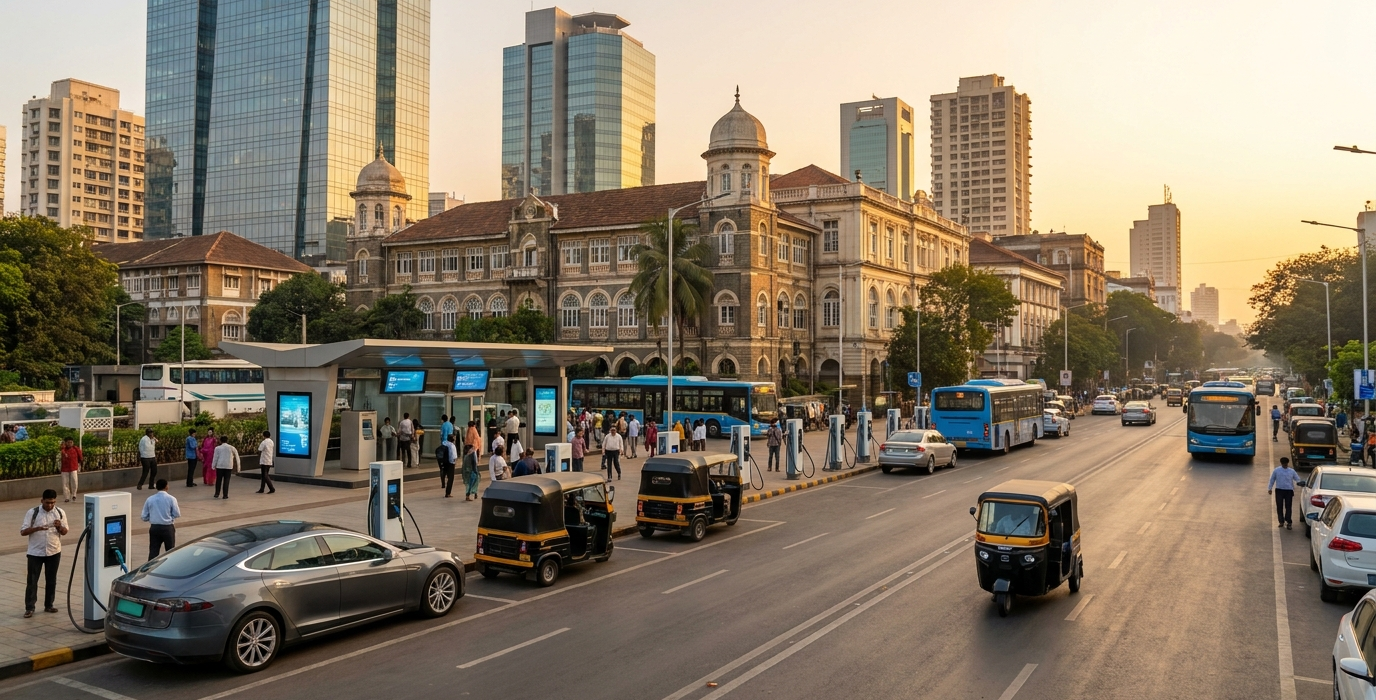
- Charging infrastructure expansion will be a critical focus, with innovative solutions emerging.
- Policy shifts are anticipated, potentially including revised FAME subsidies and a stronger emphasis on domestic manufacturing.
The Unstoppable Momentum: India’s EV Surge Continues
The hum of electric motors is growing louder across India, signalling a profound shift in personal transportation. As we navigate 2026, the country’s electric vehicle (EV) market isn’t just growing; it’s accelerating at a pace that’s reshaping the automotive landscape. This isn’t a fleeting trend; it’s a fundamental transformation fueled by a potent cocktail of government ambition, technological advancements, and a burgeoning consumer appetite for cleaner, more efficient mobility. The vision of a green India, once a distant aspiration, is now tangible, with EVs at its forefront.
The government’s commitment, particularly through schemes like FAME (Faster Adoption and Manufacturing of Electric Vehicles), has been a cornerstone of this progress. While the initial phases focused on kickstarting adoption, the upcoming policy adjustments for 2026 and beyond promise to deepen this impact. We’re seeing a strategic pivot towards sustainability, not just in terms of tailpipe emissions, but also in the entire EV ecosystem, from battery manufacturing to charging solutions. This comprehensive approach is crucial for long-term viability and widespread adoption, ensuring that the momentum we’re witnessing today translates into a lasting revolution.
A Shifting Landscape: From Niche to Mainstream
What was once a niche market, dominated by expensive imports and limited models, has rapidly evolved into a vibrant ecosystem. The two-wheeler segment, in particular, has led the charge, with electric scooters and motorcycles becoming a common sight in cities like Bengaluru, Pune, and Chennai. This success is now paving the way for greater penetration in the passenger car and commercial vehicle sectors. The affordability factor, coupled with improved range and performance, is making EVs a practical choice for a growing number of Indian households and businesses.
The sheer variety of models available is staggering. From sleek urban commuters to robust delivery vehicles, manufacturers are catering to diverse needs and budgets. This widening choice empowers consumers, allowing them to find an EV that perfectly fits their lifestyle and requirements. The days of limited options are well and truly behind us, as India solidifies its position as a global hub for EV innovation and production.
The Price Point Puzzle: Affordability Takes Centre Stage
One of the most significant drivers of EV adoption in India has been the increasing affordability of these vehicles. While the initial upfront cost was a major deterrent, a combination of falling battery prices and robust government incentives has significantly narrowed the gap with their internal combustion engine (ICE) counterparts. In 2026, we are witnessing a mature market where cost-effectiveness is no longer a distant dream but a present reality for many segments.
The reduction in battery costs, a critical component of EV pricing, has been particularly impactful. Advances in battery technology and economies of scale in manufacturing have led to a steady decline in per-kilowatt-hour expenses. This trend is expected to continue, making EVs even more competitive in the coming years. Coupled with lower running costs due to cheaper electricity compared to petrol or diesel, and reduced maintenance, the total cost of ownership for EVs is becoming increasingly attractive.
Beyond Subsidies: The Economics of Ownership
While government subsidies under schemes like FAME continue to play a role, their evolution is also a key story in 2026. We are seeing a potential recalibration, with a sharper focus on promoting indigenous manufacturing and higher technology adoption. This means that while incentives remain, they might be structured to reward greater local value addition and innovation. This strategic shift aims to build a self-reliant EV ecosystem within India, fostering domestic capabilities and creating employment opportunities.
The true affordability story, however, lies beyond the sticker price. When you factor in the savings on fuel, reduced servicing needs, and potential tax benefits, the overall economic advantage of owning an EV becomes undeniable. For an average commuter in Mumbai or Delhi, the annual savings on running costs can be substantial, making the initial investment a sound financial decision over the vehicle’s lifespan.
| EV Segment | Estimated Price Range (INR) – 2026 | Running Cost Savings (vs. ICE, per km) | Key Benefits |
|---|---|---|---|
| Electric Two-Wheeler (Scooter/Motorcycle) | ₹70,000 – ₹1,50,000 | ₹0.30 – ₹0.60 | Low running cost, city maneuverability, government incentives |
| Compact Electric Car | ₹10,00,000 – ₹15,00,000 | ₹1.00 – ₹1.50 | Lower fuel bills, reduced maintenance, environmental benefits, quiet ride |
| Electric Sedan/SUV | ₹20,00,000 – ₹35,00,000 | ₹1.50 – ₹2.00 | Premium features, longer range, advanced technology, significant fuel savings |
| Electric Commercial Van | ₹12,00,000 – ₹20,00,000 | ₹2.00 – ₹3.00 | Reduced operational expenditure for businesses, last-mile delivery efficiency |
Charging Forward: Infrastructure and Innovation
The expansion and improvement of charging infrastructure remain a paramount concern as India’s EV fleet grows. While the number of charging stations has seen impressive growth, especially in metropolitan areas like Hyderabad and Kolkata, ensuring accessibility and convenience for all users is the next frontier. We’re moving beyond just quantitative expansion to focus on qualitative improvements, including faster charging technologies and smarter grid integration.
The government and private players are investing heavily in building a robust charging network. Public charging stations are becoming more prevalent, not just along highways connecting major cities like Mumbai to Pune, but also within residential complexes and commercial hubs. Furthermore, innovative solutions are emerging, such as battery swapping stations for two-wheelers, which significantly reduce downtime. This is particularly beneficial for fleet operators and daily commuters who need quick turnarounds.
Smart Charging and Grid Integration
Beyond the sheer number of chargers, the intelligence of the charging network is gaining importance. Smart charging solutions are being deployed, allowing EVs to charge during off-peak hours, thereby optimizing grid load and reducing electricity costs for consumers. This integration with the power grid is crucial for managing the increased demand from EVs without straining existing infrastructure. We’re also seeing a push towards renewable energy sources powering these charging stations, further enhancing the environmental benefits of EVs.
A surprising fact is that by the end of 2026, it’s estimated that over 50% of new EV charging points installed in India will be ‘smart’ chargers, capable of remote monitoring and load balancing. This technological leap signifies a commitment to building a sustainable and efficient charging ecosystem that can support the rapid growth of electric mobility. The aim is to make charging as seamless and convenient as filling up a petrol tank, eliminating range anxiety and encouraging wider adoption.
“The future of mobility in India is undeniably electric. The convergence of policy, technology, and consumer demand is creating a powerful engine for growth that will redefine our cities and our relationship with the environment.”
Manufacturing Prowess: ‘Make in India’ for EVs
The ‘Make in India’ initiative is finding a powerful new expression in the electric vehicle sector. India is rapidly transforming from an importer of EVs to a significant global manufacturing hub. This shift is driven by a confluence of factors, including government policies incentivizing local production, the availability of a skilled workforce, and the sheer size of the domestic market, which provides a strong demand base. Companies, both Indian and international, are setting up manufacturing facilities across the country, from Gujarat to Tamil Nadu.
This domestic manufacturing push is not limited to assembling vehicles. There’s a concerted effort to build a complete EV supply chain within India, with a particular focus on battery manufacturing. As battery costs are a significant determinant of EV prices, developing indigenous battery production capabilities is crucial for long-term affordability and technological independence. We’re seeing collaborations and investments aimed at scaling up lithium-ion cell production and exploring alternative battery chemistries.
Beyond Assembly: Localising the Supply Chain
The ambition extends to components like electric motors, power electronics, and charging equipment. By localizing the production of these key components, India aims to reduce import dependency, create more jobs, and foster innovation. This not only strengthens the automotive sector but also has ripple effects across related industries, such as electronics and advanced materials. The government’s Production Linked Incentive (PLI) schemes are playing a vital role in encouraging these investments and building a robust domestic ecosystem.
A particularly interesting development is the emergence of several Indian startups focusing on innovative battery technologies and EV components. These agile players are bringing fresh perspectives and advanced solutions to the table, complementing the efforts of established manufacturers. Their success is crucial for India to not only meet its domestic demand but also to become a significant exporter of EVs and EV components in the coming years. The vision is clear: to lead, not follow, in the global EV revolution.
Policy Evolution: Navigating the Road Ahead
As the EV market matures, so too will the policy landscape. In 2026, we are seeing a strategic evolution of government policies, moving from broad-stroke incentives to more nuanced and targeted interventions. The focus is shifting towards ensuring long-term sustainability, promoting technological advancement, and fostering a truly self-reliant EV ecosystem. The lessons learned from the initial phases of adoption are informing these new directives.
The FAME scheme, for instance, is likely to undergo further revisions. While direct subsidies may continue, there’s a strong indication that they will be more closely tied to factors like localization of manufacturing, battery technology, and vehicle efficiency. This aims to push the industry towards higher value addition and more sustainable production practices. The government is keen to avoid a scenario where subsidies merely inflate prices without driving genuine innovation or cost reduction in the long run.
Beyond Subsidies: The Regulatory Framework
Beyond the FAME scheme, other policy levers are being strengthened. This includes regulations related to charging infrastructure standards, battery recycling, and the development of a skilled workforce. For instance, policies encouraging the establishment of battery recycling facilities are gaining traction, addressing the crucial end-of-life management of EV batteries. This circular economy approach is vital for the environmental sustainability of the EV transition.
Furthermore, we are likely to see increased emphasis on research and development (R&D) through targeted grants and collaborations between industry and academic institutions. The goal is to foster indigenous innovation in areas like battery management systems, advanced motor technologies, and alternative fuel sources for electric mobility. A surprising, yet critical, aspect being discussed is the potential for a ‘carbon credit’ system for EV adoption, rewarding consumers and businesses that switch to electric, thereby creating market-based incentives for decarbonization.
Consumer Confidence and the Future Outlook
The sustained growth of India’s EV market in 2026 is intrinsically linked to growing consumer confidence. This confidence is built on several pillars: the increasing reliability and performance of EVs, the expanding charging network, attractive pricing, and a growing awareness of the environmental and economic benefits. As more EVs take to the roads in cities like Delhi, Bengaluru, and Chennai, the visibility and familiarity of these vehicles naturally increase, normalizing their presence and encouraging further adoption.
Manufacturers are also playing a crucial role by offering robust warranties on batteries and other critical components, mitigating concerns about long-term maintenance and replacement costs. Test drives and accessible information about EV ownership are becoming more widespread, allowing potential buyers to experience the technology firsthand and address any lingering doubts. The narrative is shifting from ‘early adopter’ to ‘smart consumer’ as the benefits become clearer.
The Road Ahead: Continuous Innovation and Expansion
Looking ahead, the trajectory for India’s EV market remains exceptionally strong. We can anticipate a continuous influx of new models across all segments, including more affordable electric cars and advanced electric commercial vehicles. The innovation cycle is accelerating, with manufacturers constantly striving to improve battery density, charging speeds, and overall vehicle performance.
The underlying support for this growth will come from continued policy support, significant private sector investment, and the deepening of the domestic manufacturing ecosystem. The challenges of infrastructure and cost are being systematically addressed, paving the way for EVs to become the dominant mode of transportation in India sooner than many might have predicted. The journey is far from over, but the direction of travel is clear: towards a cleaner, quieter, and more sustainable automotive future for India and the world.
Frequently Asked Questions
Will government incentives for EVs continue in India in 2026?
Yes, government incentives are expected to continue, though their structure may evolve. Policies like FAME are likely to be recalibrated to focus more on encouraging domestic manufacturing, advanced technology adoption, and localized production, rather than just broad-based purchase subsidies.
How is the charging infrastructure developing in India?
Charging infrastructure is expanding rapidly, with a focus on both quantitative growth and qualitative improvements. Expect more public charging stations in cities and along highways, alongside innovative solutions like battery swapping. Smart charging technologies and integration with renewable energy sources are also becoming key features.
Are electric cars becoming more affordable for the average Indian consumer?
Yes, electric cars are becoming increasingly affordable due to falling battery costs, government incentives, and a wider range of models, especially in the compact car segment. The total cost of ownership, including fuel and maintenance savings, further enhances their affordability compared to traditional petrol or diesel cars.
What is the outlook for electric two-wheelers in India?
The electric two-wheeler segment is already a major success in India and is expected to continue its strong growth. Increased model variety, improved battery technology, and the convenience of battery swapping are key drivers of adoption for scooters and motorcycles.
Is India likely to become a major exporter of electric vehicles?
Yes, with the strong focus on ‘Make in India’ and the establishment of robust manufacturing capabilities, India is positioning itself to become a significant global player in EV manufacturing and exports. Localized production of components and batteries are crucial steps in this direction.