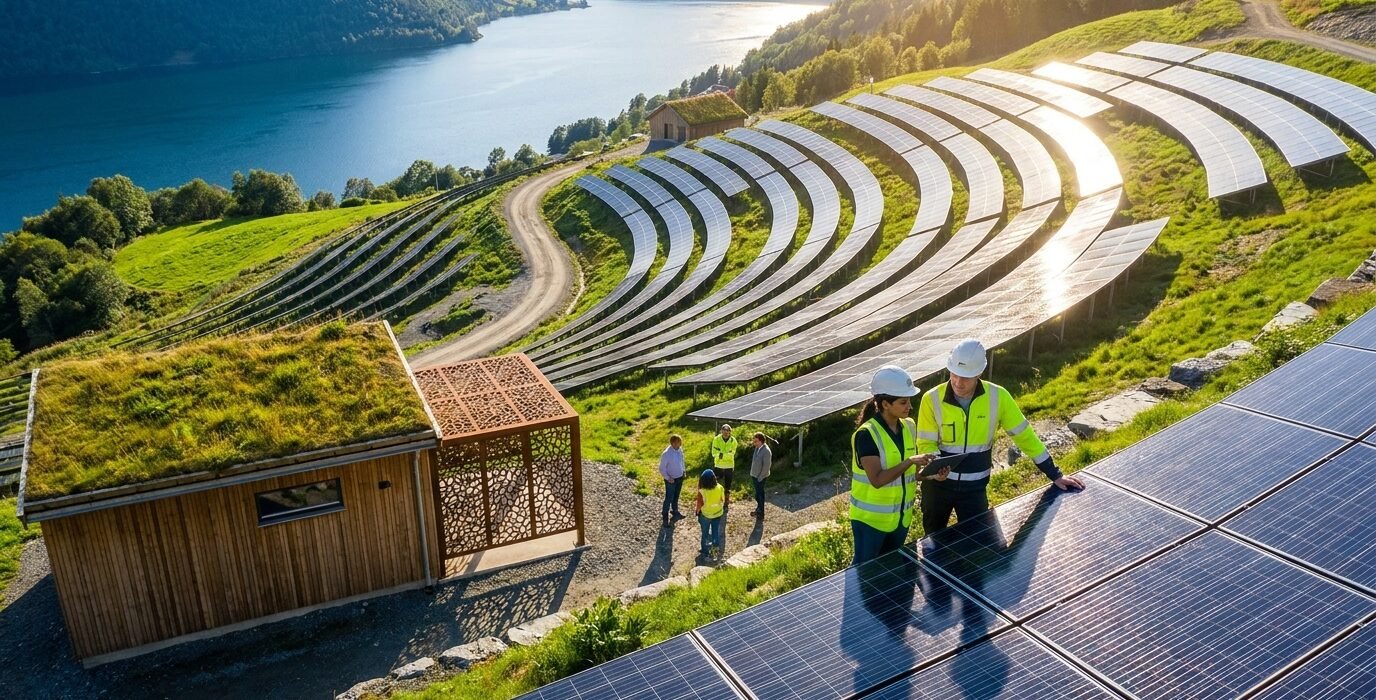
The crisp, Scandinavian air in Oslo often carries a whisper of innovation. It promises a cleaner future. Increasingly, that whisper is amplified by a chorus of voices from halfway across the globe – India. A surge of Indian startups, armed with ingenuity and a drive to tackle climate change, are finding fertile ground in Norway’s ambitious green technology landscape. This isn’t just a trickle. It’s a growing wave.
Key Takeaways:
- Indian startups are successfully integrating into Norway’s green tech ecosystem, leveraging the country’s strong sustainability focus.
- Key sectors attracting Indian innovation include renewable energy, electric mobility, and sustainable materials.
- Collaborations between Indian entrepreneurs and Norwegian institutions are crucial for mutual growth and knowledge exchange.
- Challenges like cultural differences and market access are being navigated through strategic partnerships and government support.
- The influx of Indian talent injects dynamism into Norway’s quest for a carbon-neutral future, creating a win-win scenario.
Oslo’s Embrace: A New Dawn for Indian Innovation
Walk through Oslo’s vibrant Grünerløkka district on a brisk morning. You might overhear conversations in Hindi or Tamil amidst the usual Norwegian chatter. This isn’t a coincidence. Norway, a nation deeply committed to environmental protection, is a leader in renewable energy. It has become an unexpected, yet increasingly vital, hub for Indian startups. These companies aim to make a mark in the global green tech arena. The country’s proactive policies are key. Substantial investment in research and development helps. A population keenly aware of climate issues creates an ideal environment for sustainable solutions to flourish.
For Indian entrepreneurs, Norway offers more than just a market. It’s a partner in their mission. Many Indian startups were born out of necessity. They had to address the unique environmental challenges faced in their home country. This has instilled a pragmatic and cost-effective approach to innovation. This can be incredibly valuable in a developed market like Norway. Here, scaling sustainable technologies efficiently is paramount.
Think of a startup developing advanced battery storage solutions. This is a critical component for Norway’s reliance on hydropower and intermittent wind energy. Or consider those creating biodegradable packaging alternatives. This addresses a growing demand driven by Norway’s strict waste management regulations. These are areas where Indian innovation can truly shine. It’s honed by scale and resourcefulness.
The Norwegian Agency for Development Cooperation (Norad), for instance, has been instrumental. It has fostered cross-border collaborations. It provides a crucial bridge for these nascent ventures.
The allure isn’t just about environmental goals. Norway’s robust economy is a draw. Its government’s dedicated funding for green initiatives provides a stable platform. Startups can grow and test their technologies here. Companies are attracted by the prospect of accessing capital. They also want to be part of a forward-thinking ecosystem. This ecosystem values and rewards sustainable practices. It’s a reciprocal relationship. Indian ingenuity meets Norwegian ambition. Together, they forge a path towards a greener planet.
From Bengaluru to Bergen: Fueling Norway’s Maritime Green Revolution
The vast, blue expanse of the Norwegian coastline isn’t just a picturesque backdrop. It’s a burgeoning frontier for green innovation. Indian startups are playing a significant role here. Norway’s maritime sector is a cornerstone of its economy. It is undergoing a profound transformation towards decarbonization. This is where companies like Ecolibrium Solutions are finding a perfect fit. This Indian firm specializes in advanced climate control systems. Their expertise in creating energy-efficient HVAC solutions was originally developed for India’s diverse climatic needs. It is proving highly adaptable to the demanding environments of Norwegian shipping and offshore operations.
Consider the challenges faced by a cargo ship. It traverses the icy waters of the Arctic. Or a ferry navigating the fjords. Maintaining optimal temperatures for both cargo and crew is complex. Doing so while minimizing fuel consumption is an engineering feat. Ecolibrium’s technology focuses on intelligent airflow and temperature management. It can significantly reduce a vessel’s energy footprint. This isn’t just about saving money. It’s about meeting stringent international emissions standards. It also helps meet Norway’s own ambitious climate targets for its shipping industry.
One of the key reasons for their success in Norway, according to their founders, is the country’s open attitude. It embraces new, sustainable technologies. Unlike some more established markets, Norway actively seeks out and pilots novel solutions. Entrenched interests can slow down innovation elsewhere. A specific project involved a major Norwegian shipping company. They wished to remain anonymous for competitive reasons. Ecolibrium’s systems were integrated into a pilot fleet. This resulted in a demonstrable reduction in fuel consumption by an average of 8%. This kind of tangible impact is what attracts and retains these Indian ventures.
The Norwegian Maritime Authority has also been a significant enabler. It provides clear regulatory frameworks. It offers encouragement for green maritime technologies.
The story of Indian startups in Norway’s maritime sector is a powerful testament. It shows how specialized knowledge can drive significant environmental progress. This happens when applied in the right context. It highlights a crucial aspect of this cross-border collaboration. Indian solutions are not just being transplanted. They are being refined and enhanced. This is by the unique demands of the Norwegian environment. This creates a truly symbiotic relationship.
Bridging the Gap: Cultural Dexterity and Collaborative Power
The journey of an Indian startup establishing itself in a Nordic country like Norway is never just about the technology. It’s a narrative woven with threads of cultural understanding. Adaptation is key. The painstaking effort to build trust is also vital. While the shared goal of environmental sustainability is a powerful unifier, navigating the nuances of Norwegian business culture requires a specific kind of dexterity. For founders like Anya Sharma, CEO of Solara Innovations, this was an initial hurdle. Her company develops low-cost solar panel cleaning robots.
“Back in Delhi, our pitch meetings were often dynamic, back-and-forth affairs,” Anya recalls. “There was a lot of emphasis on personal rapport.” She contrasts this with Norway. “In Norway, we found a more structured, data-driven approach. Decisions are made after thorough analysis. There’s a strong emphasis on long-term relationships built on transparency and reliability.” This shift in communication style demanded a recalibration of their entire go-to-market strategy. Solara Innovations invested in local consultants. They actively participated in Norwegian business etiquette workshops. They understood that building a presence meant more than just having a great product.
The success of Solara Innovations is a direct result of this adaptive approach. They have now secured pilot projects with several Norwegian municipalities. These cities are keen on optimizing their solar energy output. They didn’t just bring their robots. They brought a willingness to learn and integrate.
Furthermore, collaborations with Norwegian research institutions have been pivotal. The Norwegian Institute for Energy Research (IFE) is one such institution. IFE provided Solara with invaluable testing grounds. They also offered data analysis. This helped them fine-tune their robots for the specific challenges of Norwegian weather. This includes heavy snowfall and prolonged periods of low sunlight.
This emphasis on collaboration extends beyond formal partnerships. Many Indian founders have found a welcoming community. This community exists among Norwegian tech enthusiasts and environmental advocates. Informal networking events often foster genuine connections. These events have led to mentorship opportunities and shared insights. The Science Park in Trondheim is one such venue. It’s this blend of structured business engagement and organic community building that allows Indian startups to truly embed themselves in Norway’s green tech ecosystem. It proves that shared purpose can indeed bridge cultural divides.
The Unseen Advantage: Resourcefulness Meets Scandinavian Rigour
One of the most surprising aspects of the rise of Indian startups in Norway’s green tech scene is the potent combination. It’s Indian resourcefulness meeting Norwegian rigor. Often, Indian startups operate with leaner budgets. They have a necessity to innovate quickly and cost-effectively. This “frugal innovation” mindset was honed by India’s sheer scale and diverse economic strata. It offers a unique advantage when tackling complex sustainability challenges in a developed economy.
Take the example of Bio-Evolve Technologies. This startup from Pune has developed an advanced bio-digester system. It efficiently converts organic waste into biogas and nutrient-rich fertilizer. Bio-digestion is not new. However, Bio-Evolve’s proprietary microbial strains and process optimization techniques allow for significantly higher yields. They also achieve faster decomposition rates. This happens even in cooler climates.
Their initial challenge in Norway was convincing stakeholders. Could a solution developed for India’s warmer climate perform optimally in the sub-zero temperatures of a Norwegian winter?
“We anticipated skepticism,” says Dr. Ravi Kumar, Bio-Evolve’s lead scientist. “But what we found was an openness to rigorous scientific validation.” He explains, “Our proposal wasn’t just about the technology. It was about a comprehensive plan for testing and adaptation.” Norway’s commitment to waste management and the circular economy provided the perfect testbed. This is particularly true in municipalities like Bodø. Bio-Evolve partnered with a local waste management facility. Through meticulous data collection and iterative adjustments to their system’s insulation and microbial feed, they achieved performance metrics. These metrics not only met but exceeded Norwegian expectations.
A counter-intuitive finding in this process was how the stringent environmental regulations in Norway acted. Rather than being a barrier, they actually served to accelerate Bio-Evolve’s innovation. The need to meet specific methane capture rates was crucial. Ensuring the purity of the fertilizer byproduct also forced them to refine their technology. It was refined to an even higher standard than initially conceived. This rigor, combined with their inherent resourcefulness in optimizing processes, created a robust and highly efficient solution. It’s a powerful reminder that challenges can lead to truly remarkable outcomes. This happens when met with a collaborative and data-driven spirit. The Norwegian Environment Agency‘s clear guidelines on waste processing also provided a predictable framework. Bio-Evolve could align its technology effectively.
Beyond the Horizon: Scaling Green Dreams with Norwegian Support
The ambition of Indian startups doesn’t stop at finding a foothold in Norway. It extends to scaling their impact. They aim to leverage the Scandinavian nation as a springboard for wider European and global markets. Norway’s reputation for sustainability is strong. Its international trade connections are robust. This makes it an ideal launchpad. For companies like Re-Gen Materials, this strategic advantage is invaluable. This Indian firm pioneers the use of industrial waste. They create sustainable building materials from it.
Re-Gen’s innovative approach transforms fly ash. This is a byproduct of coal combustion. They turn it into high-strength, low-carbon cement alternatives. The challenge in Norway was not just proving the efficacy of their materials. It also involved navigating the complex building codes and standards. This is where the support structures available proved crucial. Norwegian incubators and accelerators, such as Innovation Norway, offer this support. These organizations provide not only funding. They also offer invaluable mentorship. Access to networks is provided. Guidance on regulatory compliance is also available.
“We received immense support from Innovation Norway,” shares Priya Menon, co-founder of Re-Gen Materials. “They connected us with key architects, construction companies, and government bodies.” She continues, “Their understanding of the European market, combined with their belief in our vision, was instrumental in securing our first major pilot project in Stavanger.” Stavanger is a city undergoing significant urban development. This project involves using Re-Gen’s materials in a new residential complex. The aim is to significantly reduce the carbon footprint associated with traditional cement production.
The success of such ventures is also bolstered by Norway’s active role. It participates in international climate agreements. It has a commitment to net-zero emissions. This creates a receptive audience. It also fuels a growing demand for the very solutions these Indian startups offer. The Norwegian government’s investment in green technologies further fuels this ecosystem. Funds like the Enova SF, a state enterprise, support environmentally friendly technology and innovation. It signifies a long-term commitment. This provides startups with the confidence that their investments in research and development will find a receptive and supportive market. This symbiotic relationship is a blueprint for future cross-border green tech growth. It’s where Indian innovation meets Norwegian market access and policy support.
A Shared Future: The Human Element in Green Transformation
As the sun sets over the fjords, casting a warm glow on the innovative ventures taking root in Norway, it’s the human element that truly defines the success of Indian startups in this green tech landscape. Beyond the data, the investment rounds, and the policy frameworks, there lies a shared human desire. It’s a desire to build a better, more sustainable future. This is the emotional core that binds entrepreneurs from India to their counterparts in Norway.
Consider the story of a young engineer from Chennai. He witnessed the impact of air pollution firsthand. This experience motivated him to dedicate himself to developing advanced air purification systems for urban environments. He found himself in Bergen. There, he collaborated with Norwegian researchers. They worked on adapting his technology. The goal was to capture particulate matter unique to coastal industrial zones. His motivation wasn’t just technological advancement. It was the hope of seeing children breathe cleaner air. This hope extended to both his home country and his adopted Norway. This personal commitment resonates deeply within Norway’s own strong environmental ethos.
The shared struggle and eventual triumphs create a powerful sense of camaraderie. Indian founders often speak of the warmth and genuine interest they’ve encountered. This interaction moves beyond mere business transactions to form meaningful connections. This human-to-human interaction is perhaps the most underestimated, yet most powerful, driver of cross-cultural innovation. It fosters resilience when challenges inevitably arise. This includes navigating unfamiliar regulations or adapting to a different work culture.
The impact of these collaborations extends beyond the economic and environmental. They foster a richer cultural exchange. Diverse perspectives are brought to problem-solving. Both societies are enriched. The presence of these vibrant Indian startups in Norway is a testament. It shows that the quest for a sustainable future knows no borders. It’s a shared responsibility. It’s driven by shared dreams. It’s built on the foundation of human ingenuity and a profound respect for our planet. This narrative is far from over. It’s just beginning to unfold. It promises an even brighter, greener horizon for both nations.