Key Takeaways
- The Chandrayaan-4 mission, slated for launch in late 2028, will focus on sample return from the Moon’s south pole, a region of significant scientific interest for water ice.
- This ambitious undertaking builds on the success of Chandrayaan-3 and aims to position India as a leader in advanced lunar exploration and resource utilization.
- Key objectives include deep drilling capabilities, demonstrating advanced robotics, and ensuring the safe return of lunar materials for detailed analysis on Earth.
- The mission’s success could pave the way for future human lunar missions and the potential extraction of valuable resources.
Mission Chandrayaan-4: India’s Next Giant Leap for Lunar Science
After the triumphant landing of Chandrayaan-3 on the Moon’s south polar region in August 2023, India’s space ambitions have reached new heights. Now, the Indian Space Research Organisation (ISRO) is setting its sights on an even more complex and scientifically rewarding endeavour: Chandrayaan-4. This mission, currently targeted for a late 2028 launch, represents a significant evolution from previous lunar explorations. It’s not just about landing; it’s about bringing a piece of the Moon back to Earth.
The primary objective of Chandrayaan-4 is a lunar sample return mission. This means landing a sophisticated robotic system near the south pole, collecting regolith (lunar soil) and rock samples, and then launching those samples back to Earth for in-depth analysis. Such a mission is incredibly complex, involving multiple modules and intricate orbital manoeuvres. Success would not only be a monumental achievement for India but would also provide invaluable data for understanding lunar geology, the origin of water ice, and the potential for in-situ resource utilization.
The South Pole: A Treasure Trove of Scientific Discovery
The choice of the Moon’s south polar region for Chandrayaan-4 is no accident. This area is of paramount scientific interest due to the presence of permanently shadowed craters, where temperatures are extremely low and are believed to harbour significant deposits of water ice. Water ice is crucial for future lunar exploration, not only as a potential source of drinking water for astronauts but also for producing rocket fuel and breathable oxygen.
Chandrayaan-4 aims to go beyond mere surface observation. The mission is being designed with deep drilling capabilities, allowing it to extract samples from several metres below the lunar surface. This is vital for understanding the history of water on the Moon, its distribution, and its form. Previous missions have detected hydrogen, a key component of water, but directly returning water ice samples will allow scientists to definitively confirm its presence, composition, and accessibility. The data gleaned from these samples could revolutionize our understanding of the solar system’s evolution.
Technological Innovations: Pushing the Boundaries of Robotics and Propulsion
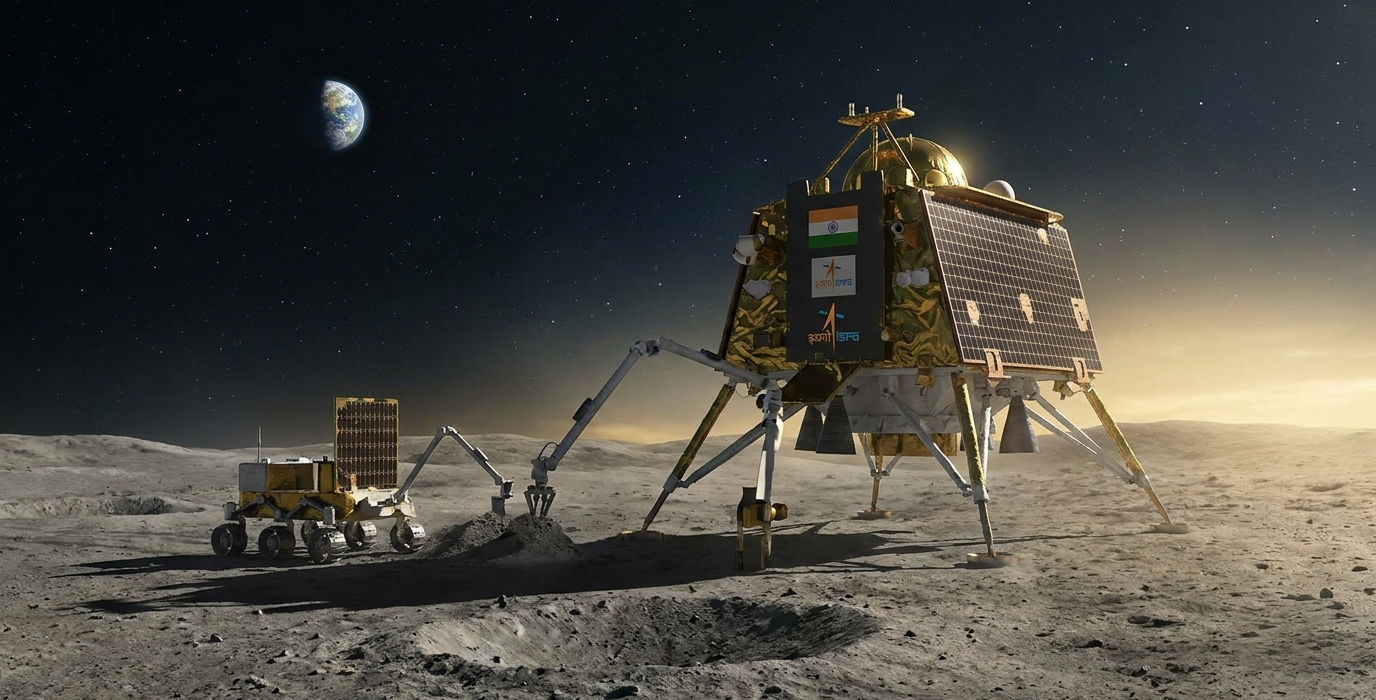
Executing a sample return mission requires a significant leap in technological capabilities. Chandrayaan-4 will involve a complex architecture, likely comprising a lander, a rover equipped for sample collection, an ascent vehicle to carry samples from the lunar surface, and an orbiter that will rendezvous with the ascent vehicle in lunar orbit to bring the samples back to Earth.
One of the key challenges will be the autonomous operation of sophisticated robotic systems. The rover will need to navigate challenging terrain, identify scientifically interesting sites, and collect samples with precision, all without direct human intervention. Furthermore, the ascent vehicle will need to successfully launch from the Moon and perform a precise orbital rendezvous with the return orbiter. This is a feat that only a handful of nations have achieved. ISRO is investing heavily in developing these advanced technologies, drawing lessons from previous missions like Chandrayaan-3 and the Mars Orbiter Mission (Mangalyaan).
“Chandrayaan-4 is not just a mission; it’s a testament to India’s growing prowess in complex space engineering and our commitment to unlocking the Moon’s scientific secrets.”
The Sample Return Process: A Complex Dance in Space
The journey of a lunar sample back to Earth is a multi-stage, highly orchestrated process. For Chandrayaan-4, this begins with the lander successfully touching down near the lunar south pole. A rover will then be deployed to collect the precious regolith and rock samples, potentially from depths achieved through drilling. Once collected, these samples will be sealed and loaded onto an ascent module.
The ascent module will then blast off from the lunar surface, entering orbit around the Moon. Here, it will need to rendezvous and dock with an orbiting return module. This complex docking manoeuvre, performed remotely from Earth, is critical for transferring the samples. The return module will then initiate its journey back to Earth, aiming for a controlled atmospheric re-entry and landing, likely in a predetermined zone in India. Ensuring the integrity of the samples throughout this journey is paramount, requiring specialized containment and handling procedures.
Global Collaboration and India’s Strategic Space Vision
While Chandrayaan-4 is primarily an Indian initiative, the international scientific community is keenly awaiting its results. ISRO has a history of fostering international collaboration, and it’s probable that partnerships will play a role in data analysis and future missions. The successful return of lunar samples will not only advance India’s scientific standing but also contribute to a global understanding of lunar evolution and the potential for space resource utilization.
This mission is a crucial step in India’s long-term vision for space exploration. It demonstrates a commitment to advanced capabilities, moving beyond simple exploration to complex scientific retrieval and technological demonstration. Success in Chandrayaan-4 will lay the groundwork for even more ambitious projects, potentially including crewed lunar missions and the establishment of a sustained presence on the Moon. It signifies India’s intent to be a major player in the future of space exploration and resource management, aligning with global aspirations for venturing further into the cosmos.
Beyond Chandrayaan-4: The Future of India’s Lunar Exploration
The successful execution of Chandrayaan-4 will be a significant milestone, but it’s just one step in ISRO’s evolving lunar roadmap. The agency is already considering future missions that could leverage the technologies developed for sample return. These might include establishing a more permanent lunar presence, perhaps a small research outpost or a robotic servicing station. The insights gained from the returned samples will undoubtedly shape the scientific priorities for these subsequent missions.
One surprising, specific fact about lunar sample return missions is the rigorous contamination control protocols. The samples are not just collected; they are handled in ultra-clean environments on Earth, often in specialized laboratories that mimic vacuum conditions. This is to ensure that any organic molecules or evidence of water found are genuinely lunar and not introduced from Earth’s atmosphere or the spacecraft itself. Another fascinating aspect is the potential for discovering unique lunar minerals or isotopes that could shed light on processes occurring deep within the Moon, far beyond what surface surveys can reveal.
Frequently Asked Questions
When is Chandrayaan-4 scheduled to launch?
The current target for the Chandrayaan-4 launch is late 2028. ISRO often provides updates on mission timelines, so it’s advisable to check their official announcements for the most current information.
What is the primary objective of Chandrayaan-4?
The primary objective is a lunar sample return mission. This involves collecting soil and rock samples from the Moon’s south pole and bringing them back to Earth for detailed scientific analysis.
Why is the Moon’s south pole important for Chandrayaan-4?
The south polar region is believed to contain significant deposits of water ice in permanently shadowed craters. This makes it a prime location for understanding lunar resources and the history of water in the solar system.
What new technologies will Chandrayaan-4 employ?
Chandrayaan-4 will require advanced technologies for deep drilling, autonomous rover operations, precise orbital rendezvous and docking, and the safe return of samples to Earth. This represents a significant upgrade from previous lunar missions.