Key Takeaways
- Bengaluru’s urban farming scene is rapidly expanding, driven by increasing environmental awareness and a desire for fresh, local produce.
- From rooftop gardens to community plots, diverse models are emerging, making sustainable food accessible to more city residents.
- Technological innovations, including hydroponics and vertical farming, are playing a crucial role in maximizing space and yield in dense urban environments.
- Government initiatives and community support networks are vital for the continued growth and success of urban agriculture in India’s tech capital.
The Rise of the Urban Farmer: Bengaluru’s Green Revolution
Bengaluru, a city synonymous with technological innovation and bustling IT parks, is witnessing a quieter, yet equally profound, revolution – one rooted in the soil, or more precisely, in urban soil. Across its sprawling landscape, from the balconies of high-rise apartments to the rooftops of commercial buildings, a vibrant urban farming movement is taking root. This isn’t just a hobby for a few; it’s a burgeoning ecosystem driven by a growing consciousness about food security, sustainability, and the simple joy of harvesting your own produce.
The urgency is palpable. As climate change impacts traditional agriculture and supply chains become increasingly complex, city dwellers are seeking more resilient and transparent food sources. Bengaluru’s unique demographic, with a large population of young professionals and a strong inclination towards adopting new trends, has proven to be fertile ground for this shift. The desire for pesticide-free, hyper-local vegetables and herbs is no longer a niche concern but a mainstream aspiration. We are seeing a significant increase in people actively seeking to reconnect with their food, understanding where it comes from and how it’s grown.
Rooftops Blossom: The Balcony and Terrace Revolution
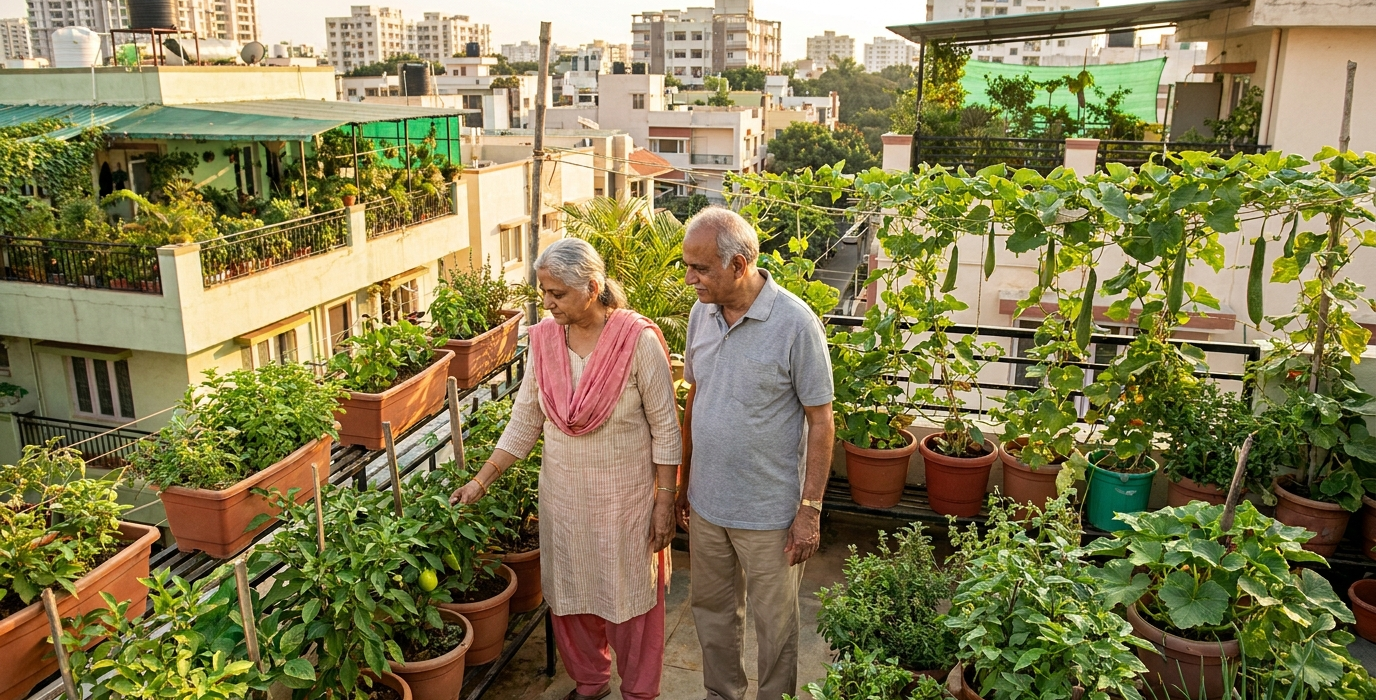
One of the most visible manifestations of Bengaluru’s urban farming boom is the transformation of rooftops and balconies into productive green spaces. Many residents, particularly in densely populated areas like Koramangala and Indiranagar, are meticulously cultivating everything from tomatoes and chillies to exotic herbs and leafy greens. These aren’t just decorative plants; they are carefully managed micro-farms providing fresh produce for daily consumption.
Innovative use of space is key. Many urban farmers employ vertical gardening systems, stacking planters to maximize yield in limited areas. Self-watering systems and grow lights are becoming increasingly common, allowing for year-round cultivation regardless of weather conditions. The initial investment might seem daunting, but the long-term benefits of fresh, healthy food and a reduced carbon footprint are proving to be a powerful incentive. We’ve spoken to numerous individuals who started with a few pots and have now expanded their operations to become neighborhood suppliers of organic produce, a testament to the scalability of these personal ventures.
A Surprising Harvest: Beyond Vegetables
While leafy greens and common vegetables dominate, some urban farmers are pushing boundaries. Did you know that Bengaluru’s urban farms are increasingly experimenting with growing mushrooms? Varieties like oyster and button mushrooms thrive in controlled indoor environments, often utilizing recycled organic matter like coffee grounds. This offers a protein-rich food source that requires minimal space and can be grown year-round, adding another layer of diversity to the city’s urban agriculture landscape.
Community Gardens: Cultivating Connections and Crops
Beyond individual efforts, community gardens are fostering a sense of collective responsibility and shared learning. These shared plots, often established on vacant land or within residential complexes, bring together neighbours to cultivate food collectively. These spaces are invaluable for skill-sharing, as experienced gardeners mentor newcomers, and for building stronger community bonds. The social aspect is as important as the harvest; these gardens become hubs for interaction and mutual support.
Initiatives like the one spearheaded by the “Hasiru Dala” collective in Bengaluru are empowering marginalized communities, including waste pickers, by providing them with land and training to cultivate organic produce. This not only enhances their livelihoods but also contributes to a circular economy by utilizing organic waste for composting. These community-driven projects are crucial for ensuring that the benefits of urban farming reach all sections of society, not just the affluent. We’re seeing a beautiful synergy here between environmentalism, social upliftment, and food sovereignty.
The Power of Shared Knowledge
The success of these community gardens often hinges on robust knowledge-sharing platforms. Online forums, WhatsApp groups, and regular workshops organised by local NGOs are vital for disseminating best practices, troubleshooting common issues (like pest control in urban settings), and sharing resources. This collaborative spirit ensures that no urban farmer is left to struggle alone, fostering a resilient and informed community.
Hydroponics and Vertical Farms: The High-Tech Frontier
The limitations of traditional soil-based farming in a concrete jungle have spurred the adoption of advanced agricultural technologies. Hydroponics, which grows plants in nutrient-rich water solutions without soil, and vertical farming, which cultivates crops in vertically stacked layers, are revolutionizing urban food production. These methods offer significantly higher yields in smaller footprints and use less water compared to conventional farming.
Companies and enterprising individuals are setting up sophisticated hydroponic and vertical farms in warehouses and repurposed industrial spaces across Bengaluru. These farms are often equipped with advanced climate control systems, LED lighting, and automated nutrient delivery, allowing for precise environmental management and optimal plant growth. The produce from these farms, often marketed as “ultra-fresh” and “sustainably grown,” is finding its way into high-end restaurants, organic stores, and direct-to-consumer subscription boxes. We are entering an era where technology and agriculture are deeply intertwined, creating efficient and sustainable food systems right within the city.
A Surprising Efficiency: Water Savings
The water efficiency of hydroponic systems is truly remarkable. Compared to traditional agriculture, which can lose a significant amount of water to evaporation and runoff, hydroponic systems can use up to 90% less water. This is a critical advantage in water-scarce urban environments like Bengaluru, where the demand for water is immense. This makes high-tech urban farming not just innovative but also an environmentally responsible choice.
Government Support and Policy: Nurturing the Green Shoots
Recognizing the immense potential of urban farming, the Karnataka government and various civic bodies are beginning to implement supportive policies and initiatives. These range from providing subsidies for setting up rooftop gardens to allocating land for community farming projects. The focus is on making urban agriculture a more accessible and economically viable option for citizens.
The “Karnataka State Policy for Urban Agriculture” (as proposed for 2026-2030) aims to integrate urban farming into the city’s planning framework, encouraging the development of green spaces and promoting local food production. There’s also a growing emphasis on providing training and technical assistance to aspiring urban farmers. By streamlining regulations and offering financial incentives, the government is helping to remove barriers and foster a more conducive environment for this sector to thrive. We believe that proactive policy support is crucial for scaling up these initiatives and ensuring their long-term success.
The Bengaluru Urban Agriculture Initiative (BUAI)
A key policy development has been the proposed establishment of the Bengaluru Urban Agriculture Initiative (BUAI) in late 2025, which is now gaining momentum. This initiative aims to create a central hub for urban farming, offering resources, training, and market linkages for urban farmers. It also focuses on promoting organic certification and developing local food markets within the city, further strengthening the urban food ecosystem. This consolidated effort signifies a serious commitment to integrating urban agriculture into the city’s fabric.
Challenges and the Path Forward: Overcoming Urban Hurdles
Despite the rapid growth, urban farming in Bengaluru faces its share of challenges. Limited space remains a primary constraint, particularly for those living in smaller apartments. Access to clean water, proper waste disposal for organic matter, and the initial cost of setting up advanced systems can also be deterrents. Furthermore, navigating urban regulations and securing permits for certain farming activities can be complex.
However, the spirit of innovation is strong. Solutions are emerging, from compact modular farming units designed for balconies to smart composting solutions for apartment dwellers. The growing demand for organic produce is also creating viable business models for urban farmers, allowing them to achieve economies of scale. The focus moving forward will be on creating more integrated urban planning that actively incorporates green spaces and promotes local food systems, fostering a truly sustainable and resilient Bengaluru. We are optimistic that with continued innovation and support, urban farming will become an integral part of the city’s future.
Frequently Asked Questions
What are the most popular crops grown in Bengaluru’s urban farms?
Currently, leafy greens like spinach, kale, and lettuce, along with tomatoes, chilies, herbs (basil, mint, coriander), and microgreens are the most popular choices due to their relatively quick growth cycles and high demand. However, interest in growing mushrooms and certain exotic vegetables is also on the rise.
Are there any government schemes available for urban farmers in Bengaluru?
Yes, the Karnataka government is increasingly introducing schemes and policies to support urban farming. These include subsidies for rooftop gardening, training programs, and efforts to allocate land for community farming. It’s advisable to check with local agricultural departments and urban planning authorities for the latest updates and available grants.
How can I start urban farming on my small balcony in Bengaluru?
You can start with simple container gardening using pots and grow bags. Focus on high-value, quick-growing crops. Vertical gardening systems are excellent for maximizing space. Consider self-watering pots to simplify maintenance. Many online resources and local workshops can guide you on specific techniques for balcony farming.
What are the main benefits of urban farming for city residents?
The primary benefits include access to fresh, healthy, and pesticide-free produce, reduced food miles (leading to a smaller carbon footprint), enhanced food security, opportunities for physical activity and stress relief, and the potential to foster community engagement through shared gardening spaces. It also helps in beautifying urban spaces.