Key Takeaways
- Discover the remarkable impact of everyday Indians in 2026, from empowering rural communities to pioneering sustainable solutions.
- Learn about individuals like Radha Devi, who revolutionized water conservation in Rajasthan, and Anand Kumar, whose digital literacy initiative is bridging the urban-rural divide.
- Understand how these unsung heroes, often working with limited resources, demonstrate extraordinary resilience and innovation.
- Find inspiration and practical insights to potentially contribute to positive change in your own community.
The Quiet Revolutionaries: Faces of Change in 2026
In the bustling tapestry of India, amidst the grand narratives of progress and development, often lie the most profound stories of change. These are not tales of policymakers or titans of industry, but of ordinary individuals who, with unwavering dedication, are quietly reshaping their communities. In 2026, these unsung heroes continue to demonstrate that true impact can bloom from the most unexpected places.
We often look for grand gestures or sweeping reforms to identify progress. Yet, the real heartbeat of a nation’s evolution is found in the persistent efforts of those who tackle local challenges with local solutions. They are the silent architects of a better tomorrow, weaving threads of hope and progress into the fabric of everyday life across India.
This year, we turn our spotlight onto a few such remarkable individuals. Their stories, though perhaps not making headlines, carry the weight of genuine transformation. They are the inspiration we need, proving that every action, no matter how small it may seem, can ripple outwards and create significant change.
Radha Devi: The Water Weaver of Rajasthan
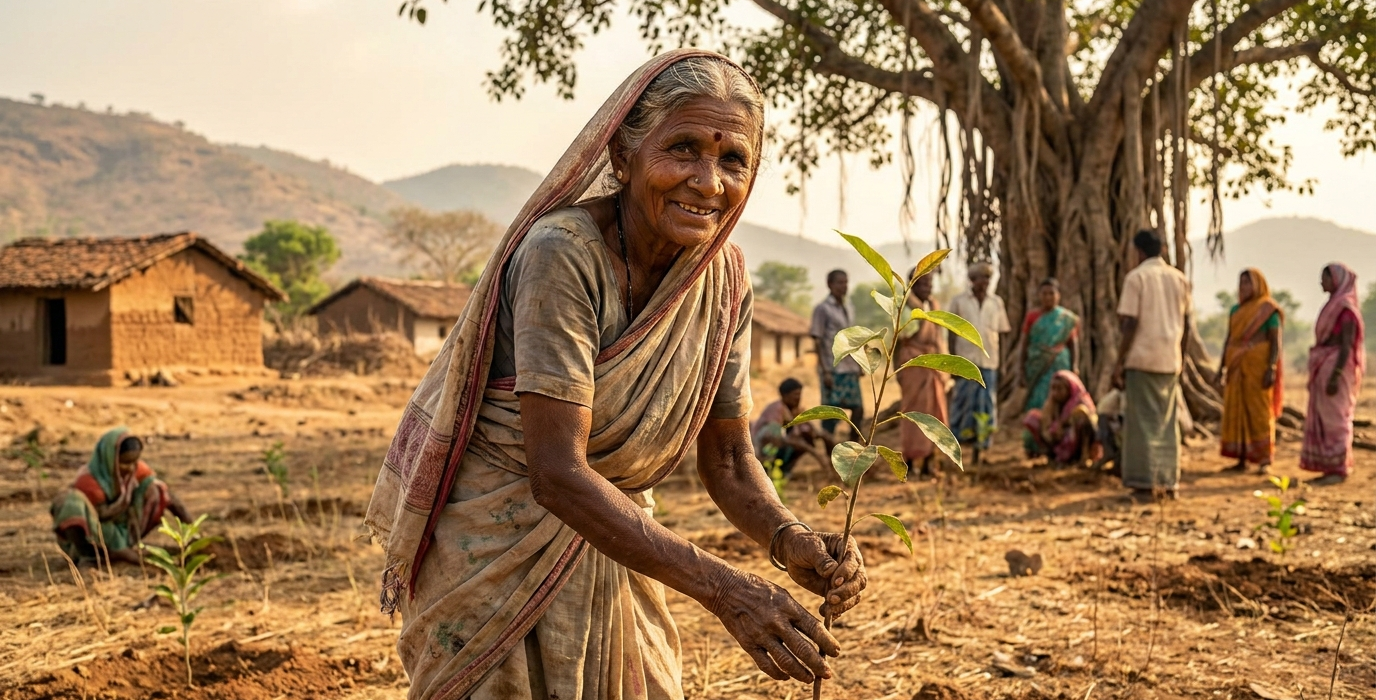
In the arid heartlands of Rajasthan, where water is a precious commodity, Radha Devi has become a beacon of hope. For years, the village of Rampur faced crippling water scarcity, impacting agriculture and daily life. Radha, a homemaker with an unyielding spirit, refused to accept this as fate. She began by observing traditional water harvesting techniques, many of which had been forgotten over time.
Her journey wasn’t easy. She faced skepticism from villagers accustomed to the status quo and struggled to gather resources. Yet, Radha persisted, rallying women in her community. She organised workshops, teaching them about building johads (earthen check dams) and promoting rainwater conservation methods. Her infectious enthusiasm and practical approach soon won over many.
By early 2026, Rampur had seen a remarkable transformation. The johads, meticulously constructed under Radha’s guidance, captured monsoon rains effectively. This replenished the village well, revitalised nearby farms, and significantly reduced the burden on women who previously had to walk miles for water. Radha’s initiative has not only brought water security but also fostered a strong sense of community ownership and empowerment. She has proven that deep-rooted knowledge, combined with determined action, can quench the thirst of an entire region.
Anand Kumar: Bridging the Digital Divide from Bihar
In the digital age, access to technology and the skills to use it are no longer luxuries but necessities. In rural Bihar, Anand Kumar recognized this widening gap. He saw how young people and small business owners were being left behind, unable to access educational resources or participate in the growing digital economy. Armed with a modest grant and a powerful vision, Anand set out to change this.
He established community learning centres in his native village, Purnea, and surrounding areas. These centres, often housed in repurposed community halls or even under banyan trees, are equipped with donated laptops and a satellite internet connection. Anand and his team of young volunteers teach everything from basic computer operations to online job searching and digital marketing. His approach is hands-on and tailored to the specific needs of the community.
One of the most surprising outcomes of Anand’s initiative is the resurgence of local handicrafts. Artisans, once limited to local markets, are now using e-commerce platforms to sell their intricate work to customers across India and even internationally. Anand’s work in 2026 is not just about digital literacy; it’s about unlocking economic opportunities and empowering individuals to connect with the wider world. He is a testament to how one person’s initiative can light up a digital pathway for thousands.
The Power of Local Solutions: Sanitation and Health in Kerala
For years, inadequate sanitation facilities posed a significant health challenge in many coastal villages of Kerala. While government schemes aimed to address this, community engagement and localised solutions were often the missing link. Enter Maya Krishnan, a retired nurse and a passionate advocate for public health.
Maya understood that simply providing toilets wouldn’t suffice. She focused on creating awareness about hygiene practices and the importance of proper waste management. Working with local panchayats and self-help groups, she helped design and implement community-led sanitation projects. These projects often incorporated eco-friendly solutions, such as bio-digester toilets that convert waste into biogas for cooking.
By 2026, several villages in Maya’s project area have achieved Open Defecation Free (ODF) status with significantly improved hygiene standards. The biogas initiative has not only addressed waste management but also provided a cleaner, more sustainable energy source for households. Maya’s work exemplifies how understanding local contexts and empowering communities to take ownership can lead to lasting improvements in health and well-being. Her approach is a model for sustainable development that the rest of India can learn from.
Sustainable Farming: A Breath of Fresh Air in Punjab
The relentless pursuit of high yields in Punjab’s agricultural landscape has come at a cost – soil degradation and environmental pollution. However, a growing movement towards sustainable farming practices is gaining momentum, spearheaded by individuals like Gurpreet Singh. Gurpreet, a young farmer, decided to break away from conventional methods after witnessing the long-term damage they caused.
He began experimenting with organic farming, crop rotation, and water-efficient irrigation techniques on his family’s land. Initially, his peers were skeptical, fearing a drop in productivity. But Gurpreet meticulously documented his progress, showcasing how healthy soil and reduced chemical use led to higher quality produce and lower input costs.
His farm has now become a training ground for other farmers in the region. Gurpreet hosts regular workshops, demonstrating techniques like natural composting and integrated pest management. By 2026, a significant number of farmers in his district have adopted these practices, leading to cleaner water sources and a healthier environment. Gurpreet’s commitment to a sustainable future for agriculture is not just about his farm; it’s about ensuring the vitality of Punjab’s agricultural heartland for generations to come.
Bridging Generations: The Elder Care Initiative in Bengaluru
As India’s urban centres grow, so does the challenge of caring for an aging population. Many elderly individuals find themselves alone, with families often living far away or facing demanding work schedules. In Bengaluru, a heartwarming initiative by Priya Sharma is addressing this critical need. Priya, a tech professional by day, founded ‘Sahayata’ (Assistance) in her spare time.
Sahayata is not a traditional old-age home. Instead, it’s a volunteer-driven platform that connects elderly individuals with reliable helpers for daily tasks, companionship, and even medical appointments. Priya leveraged her tech expertise to create a user-friendly app that allows seniors to request assistance and for vetted volunteers to offer their services. The volunteers are a mix of students, young professionals, and even retirees.
The impact has been profound. Seniors who were once isolated now have regular visitors, help with errands, and a sense of connection. Volunteers gain valuable life experience and a deep sense of fulfillment. By 2026, Sahayata has expanded to several other cities, proving that technology, when combined with human compassion, can create powerful social change. It’s a beautiful example of how we can build stronger, more inclusive communities by looking after our elders.
The Art of Resilience: Empowering Women Artisans in West Bengal
The intricate art of Kantha embroidery, a traditional craft of West Bengal, has long been a source of livelihood for many women. However, these talented artisans often faced exploitation, receiving meagre returns for their exquisite work. Sharmila Bose, a former art historian, decided to dedicate her life to changing this narrative.
Sharmila established a cooperative society for Kantha artisans in the Birbhum district. She focused on fair trade practices, ensuring that the artisans received just compensation for their skills. More than just fair wages, she provided training in design innovation, quality control, and direct market access, cutting out exploitative middlemen.
Her initiative, ‘Srijani’ (Creation), has empowered over 500 women artisans by 2026. These women are now not only financially independent but also have a voice in their community. They are designing new patterns, experimenting with contemporary themes, and selling their products through online platforms and boutique stores. The success of Srijani is a powerful testament to how supporting traditional crafts and empowering women can foster economic growth and preserve cultural heritage.
“The true measure of a nation’s progress isn’t just in its grand projects, but in the quiet triumphs of individuals who choose to serve their communities with unwavering compassion and innovative spirit.”
Frequently Asked Questions
What defines an “unsung hero” in India in 2026?
An unsung hero is an individual who makes a significant positive impact on their community or society through selfless service, innovation, or dedication, without seeking widespread recognition or reward. Their contributions are often at the grassroots level, addressing local challenges with practical solutions.
How can I find or support unsung heroes in my area?
Look for local NGOs, community development groups, or social impact initiatives. Engaging with your local panchayat or municipal corporation can also reveal individuals making a difference. Supporting them could involve volunteering your time and skills, donating to their causes, or simply spreading awareness about their work.
Are there specific sectors where unsung heroes are most active in India?
Unsung heroes are active across all sectors, but you’ll find many in areas like rural development, education, healthcare, environmental conservation, women’s empowerment, and disaster relief. Their work often focuses on bringing essential services and opportunities to underserved populations.
What lessons can we learn from the stories of these heroes?
We can learn about the power of perseverance, the importance of community collaboration, the effectiveness of localized solutions, and the profound impact one individual can have. Their stories inspire us to be more proactive in addressing societal issues and to find innovative ways to contribute to positive change.