Key Takeaways
- Rising temperatures and erratic rainfall are significantly impacting Karnataka’s coffee production, threatening yields and quality.
- Farmers are exploring new shade tree varieties and water management techniques to build resilience.
- The shift towards robusta coffee and exploring intercropping with spices are becoming crucial adaptation strategies.
- Investing in early warning systems and farmer education programs is vital for long-term sustainability.
The Brewing Storm: Karnataka’s Coffee Estates Under Climate Threat
The rolling hills of Karnataka, particularly the lush districts of Chikmagalur, Kodagu, and Hassan, are synonymous with the rich aroma of Indian coffee. For generations, these estates have not only been the backbone of local economies but also a significant contributor to India’s global coffee reputation. However, a brewing storm, unseen yet palpable, is threatening this iconic industry: climate change.
We’re not talking about subtle shifts anymore. The evidence is mounting, painting a stark picture for the future of our beloved Arabica and Robusta beans. Unpredictable monsoon patterns, rising average temperatures, and increased instances of extreme weather events are already taking their toll. For you, the coffee lover enjoying your morning cup, this translates to potential price fluctuations and, more importantly, a threat to the very quality and availability of the beans you cherish.
This article delves deep into the challenges faced by Karnataka’s coffee growers and the innovative ways they are adapting to ensure this vital crop continues to thrive. We will explore the scientific data, hear directly from farmers on the ground, and look at the practical solutions being implemented. Understanding these dynamics is crucial, not just for the industry, but for anyone who appreciates the intricate journey from bean to cup.
The Shifting Seasons: How Weather Patterns Are Disrupting Coffee Cultivation
For decades, coffee cultivation in Karnataka relied on predictable weather cycles. The monsoon, typically arriving in June, brought the essential rainfall needed for flowering and cherry development. Post-monsoon, a period of dry heat was ideal for cherry maturation and harvesting. This delicate balance is now in disarray. We are observing delayed or erratic monsoon onset, leading to water stress during critical growth stages.
Conversely, unseasonal heavy rains during harvesting periods can damage the ripe cherries, leading to increased fungal diseases and reduced bean quality. Higher average temperatures are also a major concern. Arabica, the more premium variety, is particularly sensitive to heat. Prolonged exposure to temperatures exceeding its optimal range can lead to stunted growth, reduced bean size, and a significant drop in yield. This directly impacts the delicate flavour profiles that make South Indian Arabica so sought after.
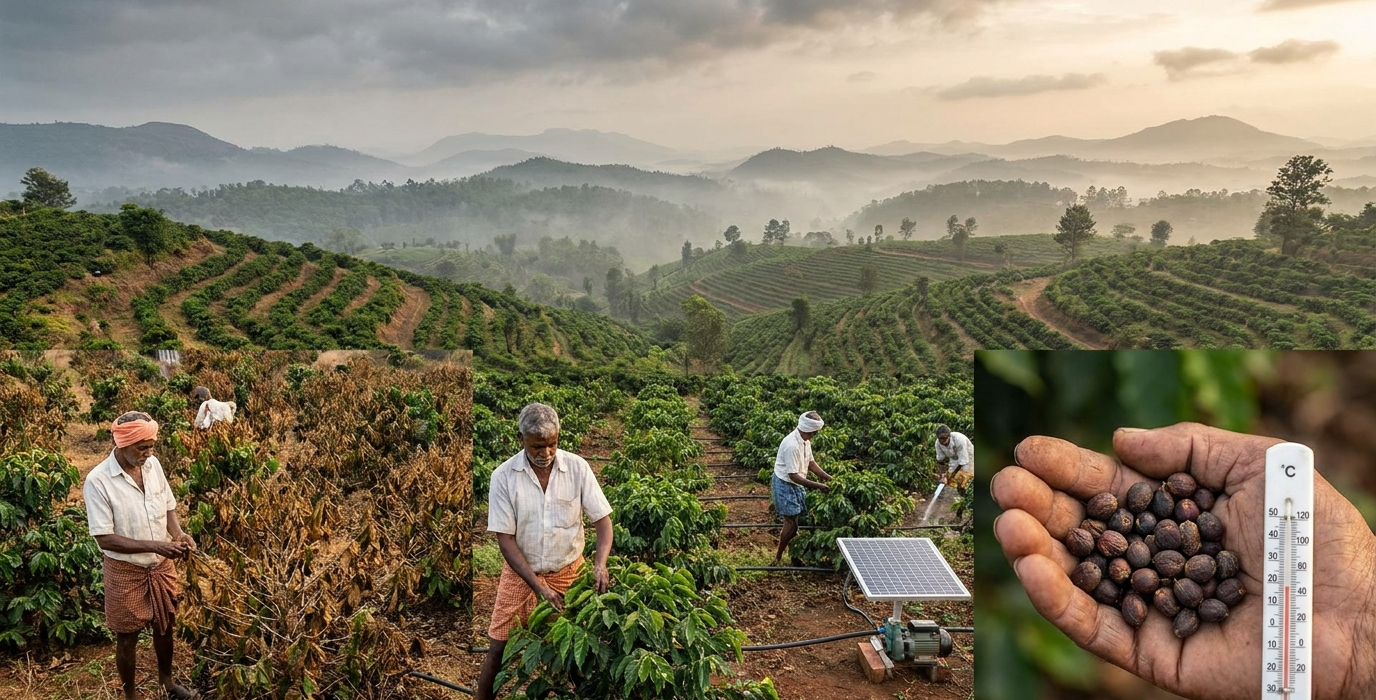
One surprising fact we’ve uncovered is the increasing incidence of “sunscald” on coffee berries. This phenomenon, caused by intense solar radiation during unusually hot periods, burns the outer layers of the cherry, affecting both its appearance and the quality of the beans inside. Farmers are reporting that these extreme events are becoming more frequent, making long-term planning a significant challenge. It’s a complex puzzle where every variable seems to be shifting.
Resilience in the Shade: Adapting Cultivation Practices
Faced with these challenges, Karnataka’s coffee growers are not standing idly by. Innovation and adaptation are now the watchwords across the estates. A primary focus is on revitalising shade management. Traditionally, coffee is grown under a canopy of shade trees like silver oak and jackfruit. These trees not only protect the coffee plants from harsh sun but also contribute to soil health and biodiversity.
However, with changing climate, farmers are exploring new, more resilient shade tree varieties. These include native species that are better adapted to local conditions and can withstand both drought and higher temperatures. The goal is to create a more stable microclimate within the coffee plantations, buffering the plants from extreme heat and irregular rainfall. This also involves careful pruning and canopy management to ensure optimal light penetration while maintaining adequate shade cover.
Another critical area of adaptation is water management. With rainfall becoming less predictable, efficient water harvesting and utilisation techniques are gaining prominence. Many estates are investing in drip irrigation systems and rainwater harvesting structures. Some are even experimenting with soil moisture sensors to ensure water is applied only when and where it’s needed, minimising wastage. This precision approach is crucial when water resources are under increasing strain.
Diversifying the Harvest: New Crops and New Strategies
The traditional reliance on a single crop like coffee is becoming increasingly risky. Many farmers are actively looking to diversify their plantations by introducing other crops that can either supplement their income or provide synergistic benefits to coffee cultivation. This is where the concept of intercropping comes into play, and it’s a strategy gaining significant traction.
We’re seeing a rise in coffee estates experimenting with planting spices like cardamom, pepper, and vanilla alongside their coffee bushes. These crops often thrive in similar shade conditions and can fetch good market prices, providing a crucial income buffer during lean coffee years. Furthermore, some of these intercrops can even help improve soil fertility and pest management for the coffee plants, creating a more robust and sustainable agroecosystem. This diversification is not just about financial security; it’s about building ecological resilience.
Beyond intercropping, there’s also a growing interest in exploring Robusta coffee varieties. While Arabica is prized for its nuanced flavours, Robusta is known for its hardiness and higher caffeine content. It is generally more tolerant to higher temperatures and erratic rainfall. As the climate shifts, planting more Robusta could become a pragmatic strategy for maintaining viable coffee production in certain regions of Karnataka. This shift requires careful consideration of market demand and processing capabilities, but it represents a significant adaptation strategy.
The Role of Technology and Knowledge Sharing
While traditional knowledge and on-the-ground experience are invaluable, the complexities of climate change necessitate the integration of modern technology and scientific insights. Coffee growers are increasingly turning to weather forecasting and early warning systems. These tools help them anticipate extreme weather events, allowing for timely interventions like protecting vulnerable plants or adjusting harvesting schedules.
The dissemination of this information is crucial. Initiatives by agricultural universities and research institutions are playing a vital role in educating farmers about climate-resilient practices. Workshops, field days, and demonstration plots are becoming common, showcasing the effectiveness of new shade tree varieties, water-saving techniques, and integrated pest management strategies. This knowledge transfer ensures that best practices are adopted widely across the estates.
A surprising finding here is the burgeoning use of mobile apps and digital platforms by farmers to access real-time weather data, market prices, and agricultural advisories. This digital leap is bridging geographical divides and empowering farmers with the information they need to make informed decisions. For instance, an app might alert a farmer in Sakleshpur about an impending hailstorm, allowing them to cover their most vulnerable coffee plants with protective netting.
The Future of Karnataka’s Coffee: Investing in Sustainability
The challenges posed by climate change to Karnataka’s coffee estates are significant, but not insurmountable. The ingenuity and determination of the farmers, coupled with scientific advancements and supportive policies, offer a path forward. However, this future hinges on continued investment and a collective commitment to sustainability. This means more than just individual farm-level adaptations; it requires a systemic approach.
Governments and private organisations have a crucial role to play in providing financial support and subsidies for adopting climate-smart technologies and practices. This could include incentives for installing drip irrigation, investing in disease-resistant coffee varieties, or planting diverse shade trees. Furthermore, strengthening research and development into climate-resilient coffee strains and innovative farming methods is paramount. We need to foster an environment where continuous learning and experimentation are encouraged.
“The weather is unpredictable, but our spirit isn’t. We are learning to work with nature, not against it, to ensure the legacy of our coffee estates continues for our children.” – A coffee grower from Kodagu.
Ultimately, the long-term sustainability of Karnataka’s coffee industry depends on building a robust and resilient agricultural system. This involves embracing diversification, leveraging technology, and fostering a strong sense of community among farmers. The journey ahead requires collaboration, innovation, and a deep respect for the land that has sustained this iconic industry for so long. The taste of your next cup of coffee might just depend on the actions we take today.
Frequently Asked Questions
What are the main climate change impacts on Karnataka’s coffee?
The primary impacts include rising temperatures affecting Arabica quality, erratic rainfall patterns leading to water stress or damage, and increased susceptibility to pests and diseases due to changing weather. This threatens both yield and the distinctive flavour profiles of Karnataka’s coffee.
Are there specific coffee varieties better suited to changing climates?
Yes, Robusta coffee generally exhibits higher tolerance to heat and erratic rainfall compared to Arabica. However, research is also ongoing to develop or identify Arabica varieties that show greater resilience to these changing conditions.
How are farmers protecting their coffee plants from extreme heat?
Farmers are enhancing shade cover by planting more diverse and native shade trees, optimising canopy management to regulate light and temperature, and implementing efficient water management techniques like drip irrigation and rainwater harvesting.
What role does diversification play in climate adaptation for coffee estates?
Diversification through intercropping with spices like cardamom and pepper provides an alternative income source, reducing reliance on coffee alone. It also helps create a more stable microclimate and can improve soil health, making the entire farm more resilient.
What kind of technological support is available for coffee growers?
Technology adoption includes using advanced weather forecasting and early warning systems, soil moisture sensors for precision irrigation, and mobile applications for accessing real-time agricultural advisories and market information. Training programs often facilitate the adoption of these tools.