Key Takeaways
- Discover how to enjoy paneer guilt-free on your weight loss journey with these light and flavourful recipes.
- Learn about paneer’s nutritional benefits, including its protein content, which aids satiety and muscle building.
- Explore innovative cooking methods like grilling, baking, and stir-frying to minimise added fats.
- Find inspiration for breakfast, lunch, dinner, and snacks, ensuring variety and sustained adherence to your diet.
Embracing Paneer for a Lighter You
Paneer, that beloved Indian cottage cheese, often gets a bad rap when you’re trying to shed those extra kilos. We picture it swimming in rich gravies or fried to a golden crisp, both undoubtedly delicious but not exactly diet-friendly. But what if we told you that paneer can actually be a powerful ally in your weight loss mission? It’s true. This versatile ingredient is packed with protein, which is crucial for feeling full and maintaining muscle mass as you lose weight.
The key lies in how we prepare it. Forget the heavy creams and excessive oil. We’re talking about smart cooking techniques and vibrant flavour combinations that let paneer shine without the added caloric burden. This article is your guide to unlocking the lighter side of paneer, offering practical, delicious recipes that you can easily incorporate into your daily meals. Get ready to reimagine paneer and make it a staple in your healthy eating plan, proving that weight loss doesn’t mean sacrificing taste or enjoyment.
The Protein Powerhouse: Why Paneer Works
Let’s dive into why paneer deserves a spot on your weight loss plate. Primarily, it’s an excellent source of casein protein, a slow-digesting protein that helps you feel satisfied for longer periods. This is your secret weapon against untimely hunger pangs and impulsive snacking. When you’re full, you’re less likely to overeat, a fundamental principle of calorie management.
Beyond satiety, paneer contributes significantly to your protein intake, which is essential for preserving lean muscle mass. As you lose weight, you want to ensure that the weight coming off is primarily fat, not muscle. Muscle tissue is metabolically active, meaning it burns calories even at rest. More muscle translates to a higher metabolism, making weight loss more sustainable. A 100-gram serving of paneer typically contains around 18-20 grams of protein, putting it in the same league as many lean meats.
Interestingly, paneer is also a good source of calcium, vital for bone health, and contains healthy fats, though the amount can vary depending on how it’s made. When we focus on low-fat versions or control the quantity of added fats during preparation, paneer becomes a nutrient-dense food that supports overall health while aiding your weight loss goals. It’s about making informed choices, not about complete elimination.
Breakfast Bliss: Energising Your Mornings
Starting your day with a protein-rich breakfast is a game-changer for weight management, and paneer is perfect for this. Forget sugary cereals or heavy parathas. We’re focusing on quick, nutritious options that will keep you energised until lunchtime.
Scrambled Paneer with Spinach
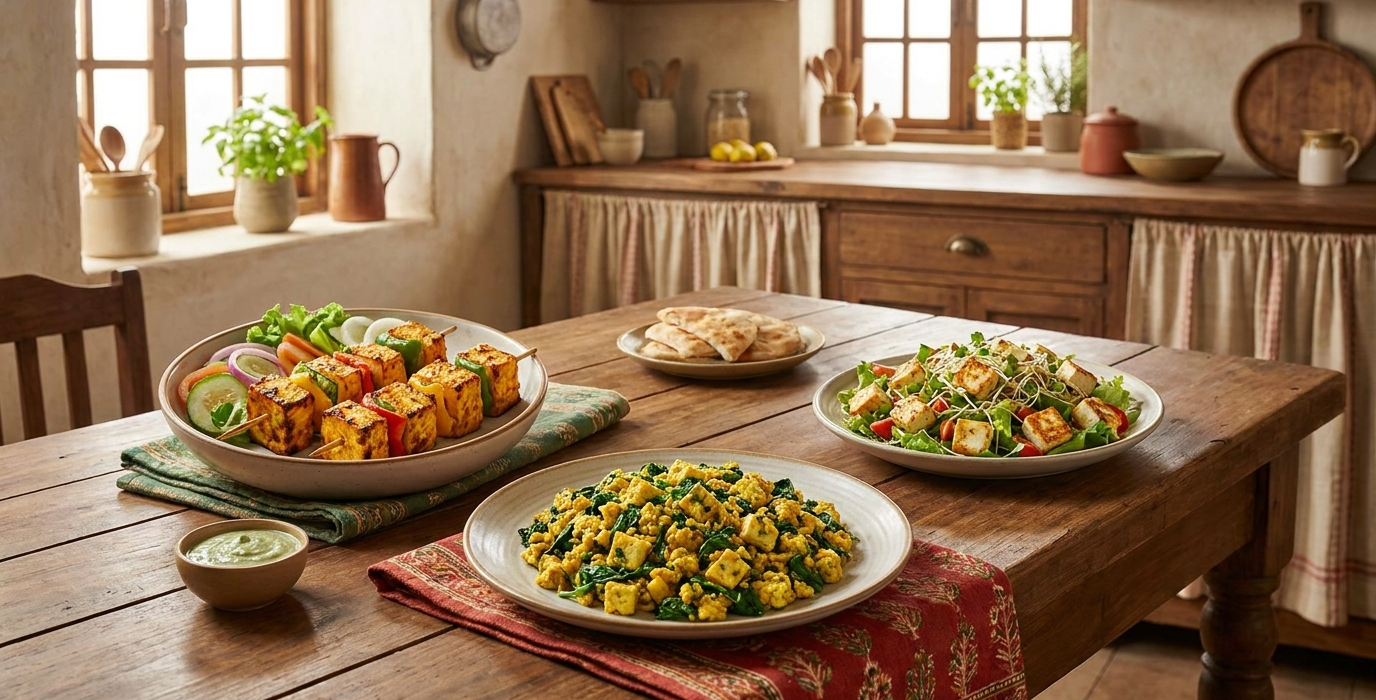
This dish is incredibly simple and can be on your plate in under 10 minutes. Crumble about 100 grams of paneer into a non-stick pan with a teaspoon of olive oil. Add a handful of chopped spinach, a pinch of salt, pepper, and perhaps a dash of turmeric for colour and antioxidants. Scramble until the paneer is heated through and the spinach is wilted. You can add finely chopped onions or tomatoes for extra flavour and nutrients. Serve with a slice of whole-wheat toast or a small bowl of sprouts.
Paneer and Vegetable Skewers (Morning Grill)
If you have a bit more time, these skewers are a delightful option. Cube paneer and your favourite vegetables like bell peppers, onions, and cherry tomatoes. Toss them lightly with a marinade made from yogurt, ginger-garlic paste, lemon juice, and mild spices like cumin and coriander powder. Thread them onto skewers and grill or bake until lightly browned and tender. This method uses minimal oil and is a visually appealing way to start your day. A surprising fact is that the traditional method of making paneer involves curdling milk with an acidic substance like lemon juice or vinegar, which is a far cry from the heavy gravies it’s often associated with.
These breakfast options provide sustained energy, help control appetite throughout the morning, and are packed with essential nutrients. They demonstrate that a healthy breakfast can be both satisfying and incredibly light.
Lunchtime Lightness: Midday Meals to Keep You Going
Lunch is often a tricky meal, especially if you’re working or on the go. We need something that’s satisfying enough to prevent that afternoon slump but light enough not to weigh us down. Paneer salads and stir-fries are your go-to solutions.
Spiced Paneer and Chickpea Salad
This vibrant salad is a complete meal in itself. Take 150 grams of paneer, cubed and lightly pan-fried or grilled (use minimal oil, or dry roast it). Combine this with a cup of boiled chickpeas, chopped cucumber, tomatoes, red onions, and fresh coriander. For the dressing, whisk together lemon juice, a tiny bit of olive oil, chaat masala, and a pinch of salt and pepper. The chaat masala adds a tangy punch without extra calories. This salad is not only filling due to the protein from paneer and fibre from chickpeas but also bursting with fresh flavours.
Quick Paneer and Vegetable Stir-fry
For a warm lunch, a stir-fry is ideal. Cube 150 grams of paneer and set aside. In a wok or a large pan, heat a teaspoon of sesame oil or any light cooking oil. Add your favourite stir-fry vegetables like broccoli florets, julienned carrots, bell peppers, and snap peas. Stir-fry for a few minutes until they are tender-crisp. Add the paneer cubes and toss gently. Season with soy sauce (low sodium), a dash of rice vinegar, and a pinch of red pepper flakes. This dish is quick, versatile, and you can adjust the vegetables based on what’s in season or in your fridge. You can enjoy this on its own or with a small portion of brown rice.
These midday meals ensure you’re getting a good balance of protein, fibre, and essential vitamins, keeping your energy levels stable and your hunger at bay. They are designed for ease of preparation and maximum nutritional benefit.
Dinner Delights: Satisfying and Sleep-Friendly
When it comes to dinner, we often crave comfort food, but for weight loss, it’s best to opt for lighter, easily digestible options. Paneer can be transformed into elegant yet simple dishes that won’t disrupt your sleep or add to your waistline.
Grilled Paneer Tikka Skewers
This is a classic for a reason, and it can be made incredibly healthy. Cut paneer into cubes and marinate them in a mixture of thick yogurt, tandoori masala, ginger-garlic paste, lemon juice, and a touch of kasoori methi (dried fenugreek leaves). Add chunks of bell peppers and onions to the marinade as well. Thread them onto skewers and grill or bake until they have a nice char. Serve with a fresh mint-coriander chutney (made without excessive oil or cream) and a side salad. The grilling process eliminates the need for large amounts of oil, making it a lean protein feast.
Paneer and Vegetable Kebabs (Baked)
These kebabs are a fantastic way to use up leftover vegetables. Grate or finely chop paneer and mix it with mashed boiled potatoes (use sparingly for binding), finely chopped mixed vegetables (like carrots, peas, beans), fresh herbs (coriander, mint), and spices such as cumin, coriander, and garam masala. Form them into small patties or seekh kebab shapes. You can coat them lightly with breadcrumbs (whole wheat) and bake them until golden brown. These are delicious served with a light yogurt dip. A surprising fact is that the texture of paneer can be significantly altered by the coagulant used; using kalchium sulphate (gypsum) instead of lemon juice yields a firmer curd, suitable for frying and grilling.
These dinner recipes are designed to be flavourful and satisfying, providing ample protein to aid overnight muscle repair without being heavy on the stomach. They prove that healthy dinners can be both nourishing and delightful.
Snack Smart: Guilt-Free Paneer Bites
Snacking is where many weight loss plans falter. We reach for processed snacks high in sugar and unhealthy fats. But paneer can be your secret weapon for a healthy, protein-packed snack that keeps you full and curbs cravings.
Paneer Cubes with Herbs
This is perhaps the simplest snack. Cube about 50 grams of paneer and toss them with a sprinkle of mixed herbs, black pepper, and a tiny pinch of salt. You can also add a squeeze of lemon juice. Eat them as is for a quick protein boost. This requires no cooking and is incredibly convenient when you’re on the move.
Baked Paneer Sticks with Spices
Cut paneer into finger-like sticks. Marinate them in a mixture of yogurt, garlic powder, onion powder, paprika, and a touch of cumin. Arrange them on a baking sheet lined with parchment paper and bake at 180°C (350°F) for about 10-15 minutes, or until lightly golden and firm. These are crispy, flavourful, and much healthier than fried snacks. They are great for dipping into a light salsa or a yogurt-based dip.
These snack ideas are perfect for bridging the gap between meals, providing sustained energy and preventing overeating at your next meal. They are easy to prepare and portable, making them ideal for busy lifestyles.
Incorporating Paneer: Tips for Success
Making paneer a regular part of your weight loss diet is simple with a few smart strategies. The goal is to maximise its benefits while minimising any potential drawbacks, primarily added fats and calories.
Choose Wisely and Prepare Smartly
When buying paneer, look for brands that use skimmed milk, which will have a lower fat content. Alternatively, you can make your own paneer at home using skimmed milk, giving you complete control over the ingredients. When cooking, embrace methods like grilling, baking, stir-frying with minimal oil, or even raw consumption in salads and snacks. If you must pan-fry, use a good non-stick pan and just a teaspoon of healthy oil like olive or coconut oil. Avoid deep-frying at all costs.
Portion Control is Key
While paneer is healthy, it’s still calorie-dense due to its fat and protein content. A typical serving size for weight loss purposes would be around 100-150 grams per meal. Be mindful of how much you’re consuming, especially if you are eating it in salads or stir-fries where other ingredients might also add calories. Measuring your portions can be incredibly helpful, particularly in the initial stages of your diet.
Here’s a quick comparison of paneer’s nutritional profile when prepared differently:
| Preparation Method | Approximate Calories (per 100g) | Approximate Protein (g) | Approximate Fat (g) |
|---|---|---|---|
| Plain/Boiled | 265 | 18 | 20 |
| Lightly Grilled (minimal oil) | 280 | 19 | 21 |
| Pan-Fried (moderate oil) | 350 | 18 | 28 |
| In Rich Gravy (e.g., Butter Masala) | 400+ | 15 | 30+ |
As you can see, the preparation method significantly impacts the calorie and fat content. By opting for lighter cooking techniques, you can enjoy paneer’s benefits without derailing your weight loss efforts.
“The beauty of paneer lies not in its richness, but in its versatility. By embracing lighter cooking methods, you transform it from a potential indulgence into a powerful tool for satiety and muscle support on your weight loss journey.”
Frequently Asked Questions
Is paneer good for weight loss?
Yes, paneer can be excellent for weight loss when prepared healthily. Its high protein content helps you feel full, reduces cravings, and supports muscle mass. Focus on grilling, baking, or stir-frying with minimal oil, and avoid rich gravies or deep-frying.
How much paneer can I eat daily for weight loss?
A general guideline is to consume around 100-150 grams of paneer per day, split across one or two meals. Portion control is vital. Listen to your body and adjust based on your overall calorie intake and activity level.
Can I eat paneer every day?
Eating paneer daily is generally fine as part of a balanced weight loss diet, provided you manage portion sizes and preparation methods. Variety is also important; ensure you include other protein sources and a wide range of vegetables and fruits.
What is the best way to cook paneer for weight loss?
The best methods are grilling, baking, and stir-frying with minimal oil. You can also enjoy it raw in salads or as a snack. These techniques preserve the protein content while keeping the fat and calorie count low.