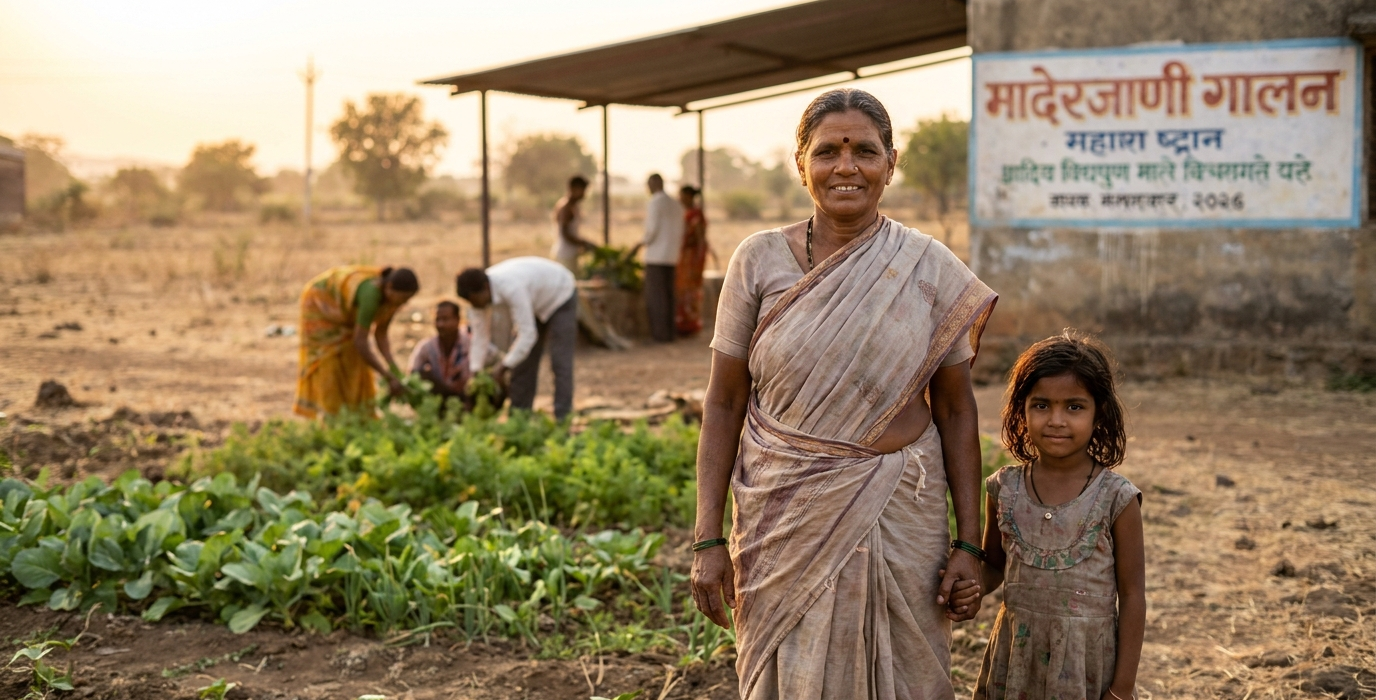
The Seed of Hope in Vidarbha’s Red Soil
In the heart of Vidarbha, a region often synonymous with agrarian struggles, a quiet revolution has been blooming. It’s a story that began not with grand pronouncements, but with a whisper of determination from a small village near Akola. This is the tale of Sunita Patil, a woman whose journey embodies the enduring spirit of Maharashtra.
Sunita, a homemaker for most of her life, found herself facing an unforeseen crisis in late 2025. Her husband, a farmer on their modest plot of land, fell gravely ill, leaving the family burdened with mounting medical expenses and the daunting responsibility of tending to their cotton crop. The monsoon had been erratic, and the future looked bleak. It was a situation many families in the region have faced, often with devastating consequences.
However, Sunita refused to be defined by her circumstances. With a steely resolve, she decided to take charge. Her initial foray into the fields was met with skepticism from some, but her focus remained unwavering. She remembered her grandfather, a skilled agriculturalist, sharing ancient wisdom passed down through generations. This ingrained knowledge, coupled with a fierce desire to protect her family, became her guiding light.
Her first major challenge was not just the physical labor, but also securing the necessary resources. Local moneylenders offered prohibitive interest rates, a common pitfall for farmers in distress. Sunita, however, sought out a government-backed cooperative society in Akola, a move that required persistent follow-up and navigating a labyrinth of paperwork. This initial success was a small victory, but it was a crucial one, setting a precedent for her future endeavors.
What truly set Sunita apart was her innovative approach. Instead of solely relying on traditional methods, she began researching sustainable farming practices. She learned about crop diversification, integrated pest management, and water conservation techniques, often through workshops organized by local NGOs and agricultural universities. She saw these not as burdens, but as pathways to a more secure future for her family and her land.
From Cotton Fields to Community Leadership
Sunita’s early days in the field were a harsh education. The scorching Vidarbha sun beat down relentlessly, and the physical demands were immense. Yet, with each dawn, she found renewed strength. She learned to identify early signs of pest infestation, to optimize irrigation, and to manage the soil’s fertility with natural compost. Her hands, once accustomed to domestic chores, became calloused and strong, a testament to her dedication.
Her transformation wasn’t just about mastering agricultural techniques. It was about reclaiming her voice and her agency. As she saw the positive impact of her efforts on her farm, her confidence soared. She began sharing her newfound knowledge with neighboring women farmers, initially in hushed conversations over shared cups of chai. These informal gatherings gradually evolved into organized discussions, where women shared their challenges and solutions.
One of the most significant turning points came in early 2026. Sunita organized a small group of women to collectively purchase high-quality, organic seeds. This bulk buying significantly reduced their individual costs, a common barrier to adopting better inputs. They also established a small community seed bank, ensuring access to good quality seeds for future planting seasons, a practice that has roots in traditional Indian farming but was being revitalized.
Her leadership was recognized when the local Gram Panchayat, seeing the tangible improvements in their village’s agricultural output, invited her to speak at a community meeting. She addressed the villagers, not as a struggling farmer, but as a knowledgeable advocate for change. Her passionate plea for community cooperation and adoption of modern, sustainable practices resonated deeply, marking her transition from a farmer to a respected community leader.
The Power of Collective Action: A Model for India
Sunita’s influence soon spread beyond her immediate village. News of her success and the collective spirit she fostered reached neighboring hamlets. Women from villages like Kapsi and Nandgaon, also grappling with similar agricultural and economic pressures, began seeking her guidance. This organic growth underscored the power of peer-to-peer learning and the deep-seated need for support networks among rural women.
In May 2026, Sunita, along with a core group of women she had mentored, formally established the “Vidarbha Mahila Shetkari Samuha” – the Vidarbha Women Farmers’ Collective. This wasn’t just another self-help group; it was a structured organization aimed at empowering women through education, resource pooling, and market access. They secured a small grant from a national rural development agency, which they used to purchase a small processing unit for turmeric and chilies, high-value crops in the region.
This collective action had a profound impact. By processing their produce locally, the women were able to command better prices, bypassing intermediaries who often exploited farmers. They learned about quality control, packaging, and branding. Their products, initially sold in local mandis, soon found their way to larger urban markets in Nagpur and even Mumbai, bringing in much-needed income for their families. This demonstrated a remarkable shift from subsistence farming to value-added agriculture.
The collective also became a platform for advocacy. They lobbied local authorities for better road infrastructure to transport their goods and for improved irrigation facilities. Their unified voice, backed by tangible economic success, carried significant weight. This story of collective action is a potent reminder that when women come together, their combined strength can overcome formidable obstacles.
Beyond the Harvest: Education and Empowerment
Sunita’s vision extended far beyond the immediate needs of farming. She understood that true empowerment lay in education and broader opportunities. A significant portion of the collective’s profits was reinvested into community development initiatives, with a strong focus on children’s education.
In July 2026, the Vidarbha Mahila Shetkari Samuha, in collaboration with a Mumbai-based education trust, inaugurated a small community learning center in Sunita’s village. This center provided free after-school tutoring for children, focusing on English and computer literacy, subjects often neglected in rural schools. It also offered adult education classes for women, teaching them financial literacy and basic legal rights.
Sunita herself became a beacon of inspiration for the younger generation. She would often visit the learning center, sharing her own journey and encouraging the children to dream big. She emphasized that while farming was an honorable profession, education was the key to unlocking a wider world of possibilities. She famously told a group of rapt students, “Your hands can nurture the earth, but your minds can build the future. Never stop learning.”
This holistic approach to empowerment, integrating economic upliftment with social and educational development, set the Vidarbha Mahila Shetkari Samuha apart. It showcased a model where agricultural success serves as a springboard for broader community progress, fostering a generation of informed and capable individuals.
The Future Blooms: A Resilient Maharashtra
As the monsoon rains continue to nourish the red soil of Vidarbha, Sunita Patil’s story is far from over. It’s a narrative that continues to unfold, inspiring countless others across Maharashtra and beyond. The Vidarbha Mahila Shetkari Samuha, once a small gathering of determined women, now boasts over 500 active members across ten villages, a testament to its enduring impact.
Their success has not gone unnoticed. Agricultural experts and policymakers frequently visit the region to study their model. Sunita has been invited to speak at national conferences, sharing her insights on rural development and women’s empowerment. She remains grounded, however, always returning to the fields and the women who are the heart of her movement.
One surprising fact that has emerged from the collective’s data is the significant increase in household income, averaging a 40% rise since their formation, which has directly correlated with improved child nutrition and school attendance rates. Another fascinating observation is the resurgence of traditional knowledge; the women have rediscovered and successfully implemented ancient techniques for natural pest control, significantly reducing their reliance on expensive chemical pesticides.
Sunita Patil’s journey from a crisis-ridden homemaker to a celebrated community leader is a powerful affirmation of the resilience embedded within the spirit of Maharashtra. Her story is a reminder that hope can bloom even in the harshest conditions, and that collective action, fueled by determination and a clear vision, can pave the way for a brighter future. We can all draw inspiration from her unwavering spirit and her commitment to nurturing not just crops, but also communities.
A Legacy of Empowerment: Lessons for a Global India
The impact of Sunita Patil and the Vidarbha Mahila Shetkari Samuha resonates far beyond the agricultural fields of Vidarbha. Their model of empowerment offers invaluable lessons for India’s diverse landscape and for developing nations worldwide. It demonstrates that sustainable development is not merely about economic growth, but about fostering agency, education, and community well-being.
What began as a personal struggle for survival has blossomed into a movement that addresses systemic issues. The collective has successfully advocated for better market linkages, ensuring fairer prices for their produce and reducing post-harvest losses. They have also been instrumental in raising awareness about climate-resilient farming practices, crucial in an era of unpredictable weather patterns.
The collective’s commitment to reinvesting profits into education and healthcare highlights a mature understanding of development. By ensuring children have access to quality education and that families are healthier, they are building a foundation for long-term prosperity. This foresight ensures that the benefits of their agricultural success are multi-generational, creating a virtuous cycle of progress.
Sunita’s personal transformation is perhaps the most profound aspect of this narrative. She embodies the power of an individual to ignite change. Her journey from a hesitant participant to a confident leader underscores the potential that lies dormant within many, waiting for the right catalyst. Her ability to blend traditional wisdom with modern practices is a blueprint for innovation that respects heritage while embracing progress.
As we look towards the future, the story of Sunita Patil and the Vidarbha Mahila Shetkari Samuha serves as a powerful testament to what can be achieved when communities are empowered. It’s a story of resilience, innovation, and the enduring strength of the human spirit, a story that deserves to be told and replicated across India and the globe. We are witnessing the seeds of a more empowered and prosperous rural India, sown by the hands of women like Sunita.