Key Takeaways
- Embrace seasonal produce like gourds, leafy greens, and citrus for balanced monsoon nutrition.
- Prioritize gut health with fermented foods and easily digestible preparations to combat seasonal digestive issues.
- Incorporate immune-boosting spices like turmeric, ginger, and tulsi into your daily meals and beverages.
- Stay hydrated with warm liquids and herbal teas, while limiting excessive cold or processed foods.
The Monsoon Kitchen: Embracing Seasonal Flavors for Vibrant Health
The monsoon season in India, often heralded by the scent of petrichor and the lush greenery it brings, also presents unique health challenges. As the humidity rises and temperatures dip slightly, our bodies can become more susceptible to infections and digestive discomfort. This year, 2026, is no different. We can, however, transform our kitchens into havens of wellness by focusing on foods that are not only delicious but also intrinsically suited to the season. Think of it as a culinary partnership with nature, where we harness the bounty of the rains to fortify our health and well-being.
Our approach to eating during the monsoon should be guided by wisdom passed down through generations, blended with modern nutritional understanding. The emphasis is on easily digestible, warming, and nutrient-dense foods. This is the time to embrace the vibrant colors and textures of seasonal produce, from the humble lauki (bottle gourd) to the zesty amla (Indian gooseberry). These ingredients are at their peak, offering maximum nutritional benefits and are naturally suited to help our bodies adapt to the changing environment. We’ll explore how simple adjustments to our daily meals can make a significant difference.
Nourishing Gourds and Greens: The Monsoon Staples
The monsoon season brings forth a delightful array of gourds and leafy greens that are perfect for your plate. Vegetables like lauki, tori (ridge gourd), and kaddu (pumpkin) are not only hydrating but also incredibly easy to digest. Their high water content helps in maintaining fluid balance, which is crucial when the air is damp. These vegetables are also rich in essential vitamins and minerals, supporting your immune system.
Leafy greens, while needing careful washing and preparation during this season, are powerhouses of nutrition. Palak (spinach), methi (fenugreek leaves), and sarson (mustard greens) are packed with iron, calcium, and antioxidants. Ensure you cook them thoroughly to eliminate any potential contaminants. A simple sabzi or a flavourful soup made with these greens can be both comforting and incredibly healthy.
Surprising Fact:
Did you know that the increased humidity during the monsoon can actually enhance the absorption of certain nutrients from vegetables? This makes them even more beneficial when consumed during this period.
Fortifying Your Gut: The Core of Monsoon Wellness
The monsoon’s dampness can create an environment where pathogens thrive, making gut health a paramount concern. A compromised digestive system can lead to a host of issues, from bloating and indigestion to more serious infections. Therefore, focusing on easily digestible foods and those that promote a healthy gut microbiome is essential.
Fermented foods are your best friends during this season. Dahi (yogurt) and its preparations like chaas (buttermilk) are excellent sources of probiotics, which help balance the gut flora. Homemade pickles, prepared hygienically, can also provide beneficial bacteria. However, it’s advisable to consume store-bought or commercially prepared pickles with caution, as they might contain higher salt content.
When preparing meals, opt for lighter cooking methods like steaming, boiling, or light sautéing. Avoid heavy, fried foods that can tax your digestive system. Including fibre-rich foods like whole grains and lentils, but ensuring they are well-cooked, aids in smooth digestion. Warm, soothing broths and clear soups are also excellent choices to keep your digestive system happy.
Digestible Grains and Legumes
Whole grains like khichdi (a comforting dish of rice and lentils) made with easily digestible grains like moong dal are ideal. This dish is not only nourishing but also gentle on the stomach. Lentils, especially split varieties like moong dal and masoor dal, are easier to digest than their whole counterparts. Ensure they are thoroughly cooked until soft.
The Spice Rack: Your Natural Pharmacy
The Indian spice rack is a treasure trove of ingredients that offer potent medicinal properties, and their role becomes even more critical during the monsoon. These spices are not just for flavour; they are powerful allies in fighting off seasonal ailments and boosting your overall immunity. We often overlook the simple, everyday spices that are readily available in our kitchens.
Turmeric, with its active compound curcumin, is a potent anti-inflammatory and antioxidant. Adding a pinch of turmeric to your milk, curries, or dals can have significant health benefits. Ginger, known for its warming properties, is excellent for digestion and can help alleviate cold and cough symptoms. Fresh ginger tea, with a hint of honey, is a perfect remedy for a sore throat.
Tulsi (holy basil) is another herb revered for its medicinal qualities. Its antiviral and antibacterial properties make it a superb agent for boosting immunity. A simple tulsi tea, made by steeping fresh leaves in hot water, can be a daily ritual to ward off infections. Other spices like black pepper, cardamom, and cloves also contribute to the warming and immune-boosting profile of monsoon meals.
Surprising Fact:
Black pepper, often used sparingly, can actually enhance the bioavailability of curcumin in turmeric by up to 2000%, making the combination incredibly powerful for health.
“Our kitchens are our first line of defense during the monsoon. By consciously choosing ingredients and preparation methods that align with the season’s needs, we can proactively safeguard our health and enjoy the rains to their fullest.”
Hydration Habits: Beyond Plain Water
While staying hydrated is always important, the way we hydrate during the monsoon deserves special attention. The increased humidity might make us feel less thirsty, but it’s crucial to maintain adequate fluid intake to flush out toxins and support bodily functions. However, consuming excessively cold beverages can be detrimental, potentially slowing down digestion and making us more prone to infections.
Warm liquids are your best bet. Herbal teas are fantastic options. Beyond tulsi, consider teas made from ginger, mint, or chamomile. These not only provide hydration but also offer therapeutic benefits. Warm water infused with lemon and honey is another excellent choice, aiding digestion and providing a dose of Vitamin C.
Chaas, or spiced buttermilk, is a traditional Indian drink that is incredibly cooling and beneficial for digestion. The probiotics in the yogurt help maintain gut health, and the spices like roasted cumin and black salt add flavour and further digestive aids. Limiting sugary drinks and aerated beverages is also advisable, as they can contribute to inflammation and offer little nutritional value.
The Role of Warm Beverages
A simple cup of warm water first thing in the morning can kickstart your metabolism and aid in detoxification. During the day, a thermos of warm herbal tea or lemon water can be your constant companion, helping you stay hydrated without the shock of cold liquids. This mindful approach to hydration can significantly contribute to your overall well-being during the monsoons.
Crafting Monsoon Meals: Simple, Soothing, and Satisfying
The key to successful monsoon eating lies in simplicity and mindful preparation. We want meals that are comforting, easy on the stomach, and packed with nutrients. This is the time to lean into recipes that utilize the seasonal produce we’ve discussed, prepared in ways that enhance digestibility and warmth.
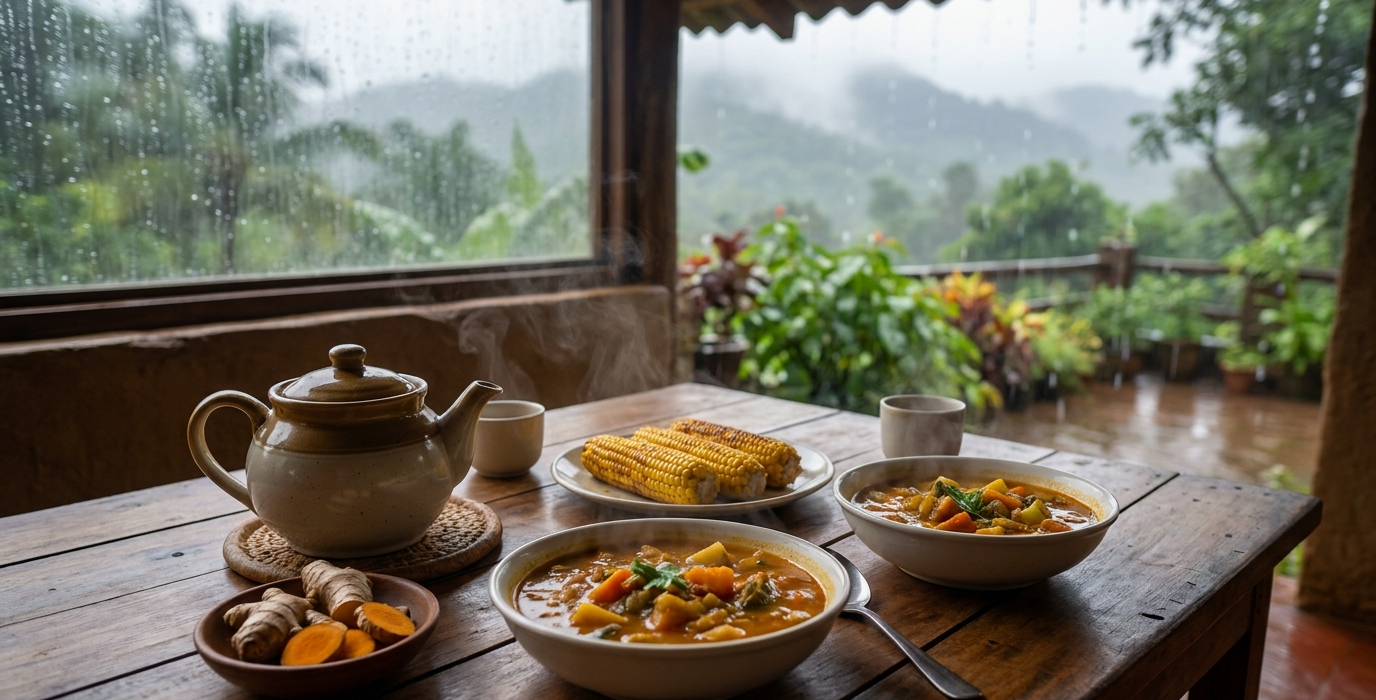
Think about the comforting embrace of a well-made khichdi, perhaps with a dollop of ghee for added richness and flavour. Soups and stews are also perfect. A hearty vegetable soup, enriched with ginger, garlic, and a medley of seasonal vegetables like carrots, beans, and pumpkin, can be a complete meal. The slow simmering process tenderizes the vegetables and melds the flavours beautifully.
Roasting or baking vegetables is another excellent method. It concentrates their flavours and makes them more palatable. A platter of roasted lauki, tori, or sweet potatoes, seasoned with minimal spices and a drizzle of olive oil, can be a delightful and healthy addition to your meals. Avoid deep-frying, as it increases the oil content and can be heavy on the digestive system.
The Art of Light Sautéing
For quick meals, light sautéing is your go-to technique. A quick stir-fry of greens with garlic and a pinch of turmeric, or sautéed mushrooms with herbs, can be prepared in minutes and is highly digestible. The goal is to retain the vibrant colours and nutrients of the ingredients while ensuring they are cooked through and easy to digest.
Building a Balanced Plate: Combining Flavors and Nutrients
Creating a balanced plate during the monsoon means ensuring a harmonious blend of macronutrients and micronutrients, while keeping digestibility and warmth in mind. This isn’t about restrictive dieting, but rather about making smart, season-appropriate choices that nourish your body from the inside out.
A typical monsoon meal could start with a light lentil soup or a clear vegetable broth. This acts as a warm, hydrating appetizer that prepares your digestive system for the main course. For the main, consider a portion of well-cooked rice or whole wheat roti. Pair this with a vegetable preparation that emphasizes easily digestible gourds or cooked leafy greens.
Include a source of protein that is light and easily digestible. Steamed fish, chicken preparations cooked in a broth, or well-cooked lentils like moong or masoor dal are good options. Avoid heavy red meats or overly rich gravies. A small portion of plain yogurt or a cucumber raita can add probiotics and a cooling element.
The Role of Fats
Healthy fats play a crucial role in nutrient absorption and overall health. A small amount of ghee or good quality cooking oil, used judiciously in your cooking, can be beneficial. Ghee, in particular, is considered highly nourishing and is known to aid digestion in Ayurvedic traditions. However, moderation is key, especially during the damp monsoon months.
Frequently Asked Questions
What are the best vegetables to eat during the monsoon in India?
Focus on easily digestible and hydrating vegetables like bottle gourd (lauki), ridge gourd (tori), pumpkin (kaddu), and okra (bhindi). Ensure leafy greens like spinach and fenugreek are washed thoroughly and cooked well. Avoid raw salads if you have a sensitive stomach.
How can I improve my digestion during the monsoon?
Prioritize warm, easily digestible foods. Include fermented foods like yogurt and buttermilk. Sip on warm herbal teas like ginger or tulsi. Avoid heavy, fried, and overly spicy foods. Eating smaller, more frequent meals can also help.
Are there any specific spices that are particularly good for monsoon health?
Yes, spices like turmeric, ginger, black pepper, cumin, cardamom, and cloves are highly beneficial. They possess warming, anti-inflammatory, antioxidant, and digestive properties that can help ward off seasonal ailments.
What kind of fluids should I drink during the monsoon?
Opt for warm liquids. This includes herbal teas, warm water with lemon and honey, vegetable broths, and spiced buttermilk (chaas). Limit cold beverages, sugary drinks, and aerated sodas.
How should I prepare leafy greens to ensure they are safe to eat during the monsoon?
Always wash leafy greens meticulously under running water to remove any dirt or potential contaminants. It is advisable to soak them in salt water or turmeric water for a few minutes before cooking. Cooking them thoroughly until they are tender is crucial for safety and digestibility.