Key Takeaways
- Mumbai’s Coastal Road Project, a monumental infrastructure undertaking, is reshaping urban mobility in India’s financial capital.
- The project aims to significantly reduce travel time, ease congestion, and provide a vital new corridor for commuters.
- Beyond traffic relief, the Coastal Road is designed with integrated public spaces and environmental considerations, signalling a new approach to urban development.
- While promising, challenges related to cost, environmental impact, and long-term maintenance require careful management.
Navigating the Future: Mumbai’s Coastal Road Takes Shape
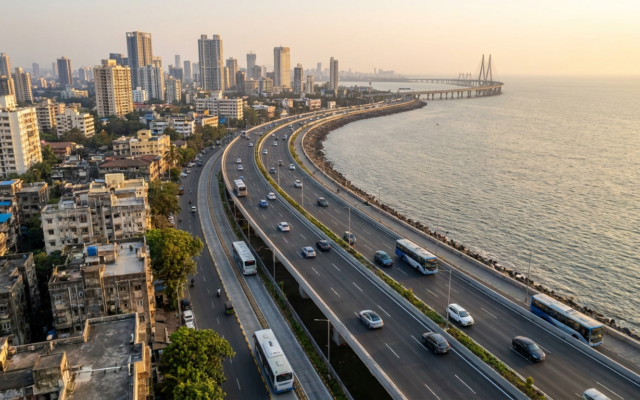
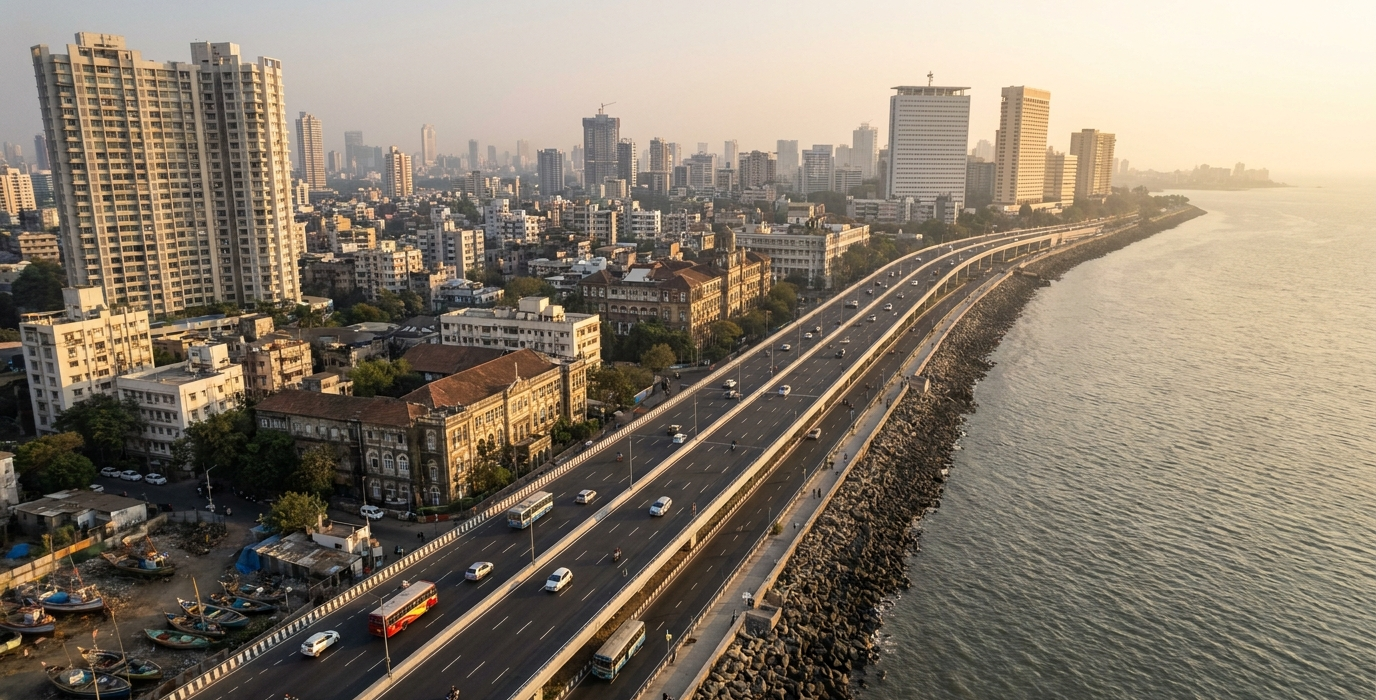
The skyline of Mumbai is undergoing a dramatic transformation, not just with towering skyscrapers, but with a ribbon of concrete and steel carving its way along the Arabian Sea. The ambitious Mumbai Coastal Road Project, a brainchild of civic planners and engineers, is rapidly evolving from a blueprint into a tangible reality. We’re talking about an infrastructure marvel that promises to redefine how millions of Mumbaikars navigate their bustling metropolis. This isn’t just another flyover; it’s a holistic approach to urban mobility, designed to tackle the perennial problem of traffic congestion that has long plagued India’s financial hub.
As of August 2026, significant sections of this mega-project are operational, and the impact is already palpable. The initial phases have drastically cut down travel times between key South Mumbai areas and the western suburbs. Imagine commuting from Nariman Point to Worli in mere minutes, a journey that once consumed an hour or more during peak traffic. This isn’t a futuristic dream; it’s the current reality for those who can access the operational stretches. The project’s sheer scale, involving reclaimed land, intricate interchanges, and multiple tunnels, is a testament to India’s growing prowess in executing complex infrastructure projects. We are witnessing a paradigm shift in how urban development is approached, with a focus on creating not just efficient transit but also enhanced urban living.
Easing the Gridlock: A New Artery for Mumbai
Mumbai has long been synonymous with its notorious traffic jams. The city’s geography, a narrow peninsula, coupled with its ever-growing population, has created a perfect storm for vehicular gridlock. Existing road networks, often built decades ago, struggle to cope with the sheer volume of vehicles. This daily struggle impacts not only individual productivity but also the city’s economic output. The Coastal Road was conceived as a direct answer to this pressing challenge. Its primary objective is to provide a high-speed, signal-free corridor, offering a much-needed respite for commuters.
The project’s design envisages a multi-lane carriageway that bypasses congested city streets, connecting vital business districts and residential areas. By diverting a significant portion of traffic away from the interior roads, it aims to decongest the city centre and improve the flow of essential services like ambulances and fire trucks. The reduction in travel time is not merely a convenience; it translates into hours saved daily for countless individuals. Think about the cumulative economic benefit when millions of hours are reclaimed from unproductive time spent in traffic. This is a strategic investment in Mumbai’s future, ensuring its continued growth and livability.
Beyond Commuting: Integrated Urban Development
What sets the Coastal Road apart from many conventional infrastructure projects is its ambitious vision for integrated urban development. It’s not just about moving cars; it’s about creating vibrant public spaces and enhancing the city’s environment. The project includes the development of expansive green belts, promenades, and recreational areas along the coastline. These spaces are designed to be accessible to all Mumbaikars, offering much-needed breathing room and avenues for leisure and community interaction.
Imagine weekend strolls along the sea, children playing in dedicated park areas, and cyclists enjoying safe, dedicated lanes – all integrated seamlessly with the transportation corridor. This dual-purpose approach, combining efficient mobility with the creation of public amenities, is a progressive step. It acknowledges that urban infrastructure should serve multifaceted needs, enhancing quality of life alongside functionality. The inclusion of features like rainwater harvesting systems and the use of sustainable materials in construction further underscore a commitment to environmental consciousness, a crucial aspect for a city as ecologically sensitive as Mumbai.
Technological Prowess and Engineering Marvels
The construction of the Coastal Road has been a monumental feat of engineering, pushing the boundaries of what is possible in urban infrastructure development. The project involves sophisticated techniques, including massive land reclamation from the sea, complex tunnel boring, and the construction of elevated sections over the Arabian Sea. These are not minor undertakings; they represent the cutting edge of civil engineering, requiring meticulous planning, advanced technology, and a highly skilled workforce.
One of the most striking features is the extensive land reclamation work. This process, while controversial due to environmental concerns, has been crucial in creating the space needed for the road and its accompanying amenities. The engineering involved in stabilising reclaimed land and ensuring its long-term durability against the sea is incredibly complex. Furthermore, the construction of the undersea tunnels, some of the longest of their kind in India, has required state-of-the-art tunnel boring machines (TBMs) and stringent safety protocols. These are the same types of advanced technologies being employed in major global infrastructure projects, showcasing India’s growing self-reliance and expertise.
The Coastal Road isn’t just about moving vehicles; it’s about reclaiming time, enhancing public spaces, and setting a new benchmark for sustainable urban development in India.
Advertisement300×250 / native
Environmental Considerations and Future Sustainability
The environmental impact of such a large-scale project has, understandably, been a significant point of discussion and concern. The Coastal Road project has faced scrutiny regarding its effects on marine ecosystems, coastal erosion, and biodiversity. However, the implementing authorities have stated that extensive environmental impact assessments (EIAs) were conducted, and mitigation measures are being put in place. These include the creation of artificial reefs to support marine life and the development of green buffers to minimise visual and noise pollution.
One surprising fact is the innovative use of construction debris. A significant portion of the material used for reclaiming land has reportedly been sourced from excavated material from other major infrastructure projects in the Mumbai Metropolitan Region, such as the Navi Mumbai International Airport and the Mumbai Trans Harbour Sea Link. This circular economy approach helps reduce the need for fresh raw materials and manages waste more effectively. The long-term sustainability of the Coastal Road will depend on continuous monitoring of its ecological footprint and proactive adaptation to any unforeseen environmental changes, ensuring that this vital artery does not come at an irreversible cost to Mumbai’s natural heritage.
Challenges Ahead: Costs, Maintenance, and Public Access
While the Coastal Road promises a brighter future for Mumbai’s commuters, it’s essential to acknowledge the challenges that lie ahead. The project’s colossal budget, running into thousands of crores of rupees, raises questions about cost-effectiveness and the allocation of public funds. Ensuring that the project remains within budget and that the long-term financial viability is sound is paramount. The maintenance of such a vast and complex infrastructure will also require significant ongoing investment and expertise. The corrosive nature of the sea environment necessitates regular upkeep to prevent deterioration and ensure safety.
Furthermore, ensuring equitable public access and understanding the full socio-economic impact are crucial. While the operational sections are open, the phased completion means that the full benefits will only be realised once the entire project is functional. There are also ongoing discussions about integrating this new corridor with Mumbai’s existing public transport network, such as the suburban railway and bus services, to create a truly seamless multi-modal transport system. The success of the Coastal Road will ultimately be measured not just by its engineering brilliance but by its ability to serve all sections of Mumbai’s population efficiently and sustainably for decades to come.
Frequently Asked Questions
When will the Mumbai Coastal Road be fully completed?
As of August 2026, significant portions of the Coastal Road are operational. However, the full completion, including all phases and integrated features, is expected by early 2027. The project is being rolled out in phases to allow for early benefits.
What are the key benefits of the Coastal Road?
The primary benefits include a drastic reduction in travel time between South Mumbai and the western suburbs, easing traffic congestion on existing city roads, and the creation of new public spaces like promenades and parks. It also aims to improve air quality by reducing idling time in traffic.
How has the Coastal Road been financed?
The project is primarily financed through municipal bonds issued by the Brihanmumbai Municipal Corporation (BMC), along with a significant contribution from the Maharashtra government. It represents one of the largest infrastructure investments by a municipal body in India.
What environmental measures have been taken for the Coastal Road?
Measures include conducting Environmental Impact Assessments (EIAs), developing artificial reefs to support marine life, planting mangroves along reclaimed areas, and implementing rainwater harvesting systems. Construction debris has also been repurposed to minimise waste.