Key Takeaways
- Mumbai’s EV charging infrastructure is rapidly expanding, with new stations popping up across the city, making electric vehicle ownership more practical.
- The city is implementing a multi-pronged approach, involving private players, government initiatives, and innovative charging solutions to meet growing demand.
- Understanding the types of chargers, their locations, and how to use them is crucial for EV owners to navigate Mumbai efficiently.
- Future developments promise faster charging, smart grid integration, and enhanced accessibility, further solidifying Mumbai’s role as an EV-friendly metropolis.
The Electric Pulse: Mumbai’s Charging Network Surges Ahead
Mumbai, a city perpetually in motion, is embracing a cleaner, greener future. The hum of electric vehicles (EVs) is becoming an increasingly familiar sound on its bustling streets. This shift isn’t just about individual choices; it’s backed by a significant and accelerating expansion of EV charging infrastructure across the metropolis. For anyone considering an electric car or already navigating Mumbai’s iconic traffic in one, understanding this evolving landscape is key.
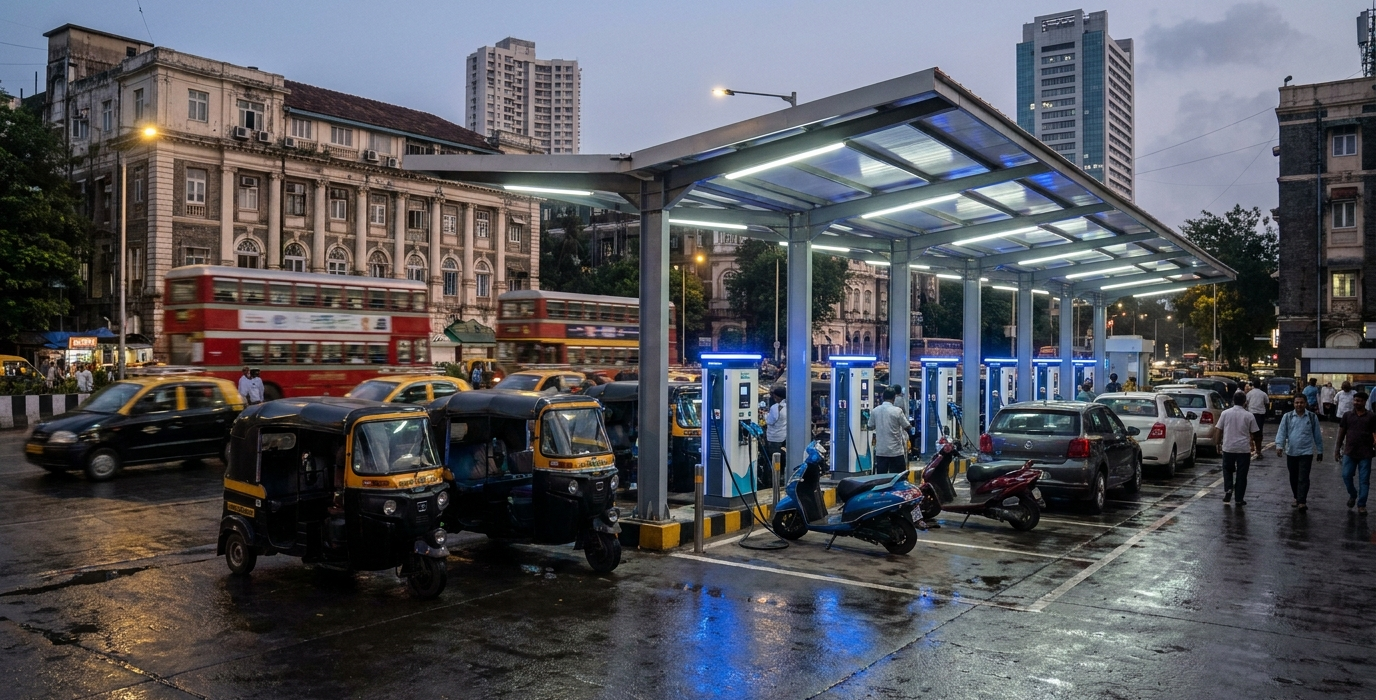
Gone are the days when finding a charging point felt like a treasure hunt. Today, the city is actively weaving a dense network of charging stations, from public car parks and residential complexes to commercial hubs and even roadside amenities. This strategic deployment is designed to alleviate range anxiety and integrate EVs seamlessly into the daily lives of Mumbaikars. We’re witnessing a conscious effort to make EV ownership not just a sustainable choice, but a convenient one.
Navigating the Charging Options: From Slow to Super-Fast
As Mumbai’s EV charging network grows, so does the variety of charging solutions available. Understanding these options will help you plan your journeys and charging needs effectively. You’ll primarily encounter three types of chargers: Level 1, Level 2, and DC Fast Chargers (DCFC).
Level 1 chargers utilize a standard 240V outlet and are the slowest, typically adding only a few miles of range per hour. They are best suited for overnight charging at home when you have ample time. Level 2 chargers, often found in public parking lots and workplaces, use a higher voltage and can charge an EV significantly faster, usually providing a full charge within 4-10 hours. This makes them ideal for topping up while you’re at work or shopping.
DC Fast Chargers are the game-changers for rapid charging. These powerful units can add hundreds of miles of range in as little as 20-30 minutes. They are strategically placed along major thoroughfares and in dedicated charging hubs, making them essential for longer trips or when you’re short on time. The availability and speed of DCFCs are crucial for making EVs a practical choice for daily commuting in a city as dynamic as Mumbai.
Public-Private Partnerships: Powering the Network
Mumbai’s impressive stride in EV charging infrastructure is largely a testament to effective public-private partnerships. The Municipal Corporation of Greater Mumbai (MCGM) and the state government are actively collaborating with private entities to accelerate the deployment of charging stations. This synergy is vital for overcoming the initial capital investment hurdles and ensuring a widespread, accessible network.
Companies like Tata Power, Statiq, and Magenta are at the forefront, setting up charging points in collaboration with housing societies, commercial establishments, and even petrol pumps. These partnerships leverage private sector expertise in technology and operations, while government bodies provide land, policy support, and regulatory frameworks. For instance, the recent initiative to install chargers in residential buildings, often a point of contention, is seeing significant traction due to these collaborative efforts. It’s a model that ensures scalability and speed.
This collaborative approach is also crucial for standardizing charging protocols and payment systems, making the user experience smoother. The goal is to create a unified ecosystem where EV owners can easily locate, access, and pay for charging services across different providers. This removes friction and encourages wider adoption of electric mobility.
Decoding the Charging Costs and Payment Methods
As you embrace electric mobility in Mumbai, understanding the economics of charging is essential. Charging costs can vary based on the type of charger, the electricity tariff, and the service provider. Generally, charging an EV is significantly cheaper than refuelling a petrol or diesel vehicle, offering substantial savings over time.
Most public charging stations operate on a per-unit (kWh) basis. Prices can range from ₹12 to ₹20 per kWh for AC charging, while DC fast charging might cost between ₹15 to ₹25 per kWh, depending on the provider and time of day. Some providers also offer subscription plans or membership programs that can offer discounted rates for frequent users.
Payment is typically seamless, with most apps allowing you to pay via UPI, credit/debit cards, or digital wallets. Many charging network apps are designed to be user-friendly, enabling you to locate available chargers, book a slot, and initiate/stop charging all from your smartphone. This digital integration makes managing your charging expenses straightforward and transparent.
The true measure of an EV-friendly city isn’t just the number of electric cars on the road, but the density and reliability of its charging infrastructure. Mumbai is proving it understands this equation.
Innovative Solutions and Future Prospects
Beyond the standard charging stations, Mumbai is also exploring innovative solutions to make EV charging even more accessible and efficient. One such development is the rise of battery swapping stations, particularly for two-wheelers and three-wheelers, which allows users to exchange a depleted battery for a fully charged one in a matter of minutes. This is a game-changer for commercial fleets and riders who depend on their vehicles for daily income.
Smart charging technologies are also gaining traction. These systems can optimize charging schedules based on grid load and electricity prices, helping to reduce costs for consumers and prevent strain on the power grid. Imagine your car automatically charging during off-peak hours when electricity is cheapest. Furthermore, the integration of renewable energy sources, like solar power, into charging stations is a key focus for long-term sustainability. This ensures that the electricity powering your EV is as clean as possible.
The future of EV charging in Mumbai looks even brighter. We can expect to see a continued expansion of charging points in public spaces, including metro stations, malls, and even streetlights. The government is also working on incentives to encourage private investment in charging infrastructure, aiming to create a robust and user-friendly network that supports the ambitious EV adoption targets. The focus is shifting towards creating a truly integrated and intelligent charging ecosystem.
Surprising Facts and Local Insights
Did you know that Mumbai has one of the highest concentrations of electric two-wheelers in India, a segment that is rapidly outpacing car adoption in the EV space? This surge in e-scooters and e-mopeds is a major driver for the demand for accessible charging solutions, especially in residential areas and commercial hubs frequented by delivery personnel.
Another interesting development is the emergence of ‘charging hubs’ – dedicated locations equipped with multiple chargers of varying speeds, often integrated with amenities like cafes or rest areas. These hubs are becoming social and practical points for EV owners, transforming the charging experience from a chore into a more integrated part of their day. For instance, a new hub near Bandra Fort has become a popular spot for EV owners to recharge their vehicles while enjoying the sea breeze. We’re also seeing a growing trend of charging points being installed in traditional petrol stations, blurring the lines between old and new energy infrastructures.
Frequently Asked Questions
Where can I find EV charging stations in Mumbai?
You can find EV charging stations using various mobile apps like Tata Power, Statiq, PlugShare, and government portals. These apps show real-time availability, charger types, and pricing. Many are located in public parking lots, malls, residential complexes, and along major roads.
How much does it cost to charge an EV in Mumbai?
The cost varies, but generally ranges from ₹12-₹20 per kWh for AC charging and ₹15-₹25 per kWh for DC fast charging. It’s significantly cheaper than refuelling a petrol or diesel car, offering substantial savings.
Are there government incentives for setting up EV charging stations in Mumbai?
Yes, the Maharashtra government and the central government offer various incentives, including subsidies, tax benefits, and streamlined approvals, to encourage the installation of EV charging infrastructure by private entities and individuals.
Can I install an EV charger at my home in Mumbai?
Yes, you can install an EV charger at your home. Many housing societies are now facilitating this, and it’s often a straightforward process, especially for Level 1 and Level 2 chargers. Consult your building’s management and a qualified electrician for installation.
What is battery swapping and is it available for cars in Mumbai?
Battery swapping allows you to exchange a depleted battery for a fully charged one in minutes. It’s currently more prevalent for electric two-wheelers and three-wheelers in Mumbai, revolutionizing their usability for commercial purposes. It is less common for electric cars at this time.