Key Takeaways
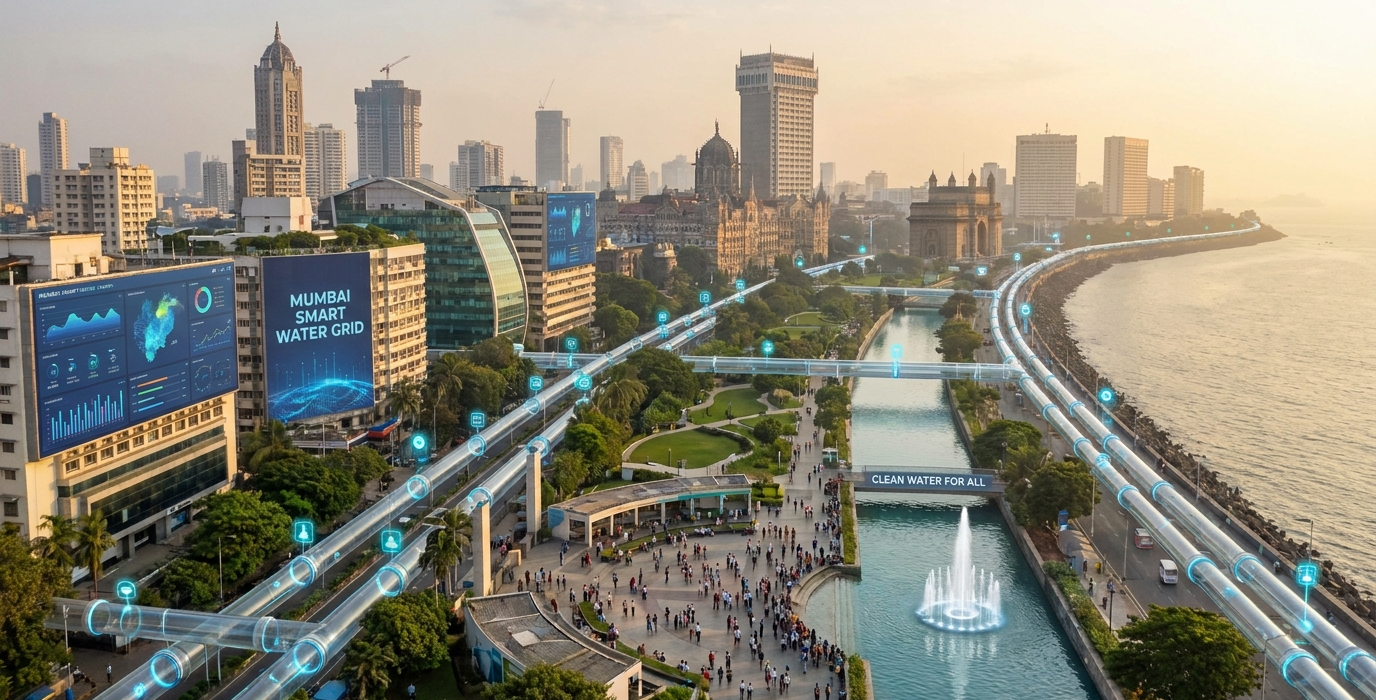
- Mumbai’s new smart water grid, operational since early 2026, uses AI and IoT for real-time leak detection and pressure management, drastically reducing water loss.
- The system integrates data from over 10,000 sensors across the city, providing granular insights into water flow and quality.
- Citizens can now access real-time water availability and report issues via a dedicated mobile app, fostering greater transparency and accountability.
- Initial data shows a 15% reduction in non-revenue water and a significant improvement in water pressure in previously underserved areas like Dharavi.
The 2026 Mumbai Water Revolution: More Than Just Taps
For decades, Mumbaikars have grappled with the perennial challenge of water scarcity. The monsoon’s bounty often felt like a distant memory by the dry summer months, leading to rationing and widespread frustration. However, as we stand in August 2026, a quiet revolution is transforming the city’s relationship with its most precious resource. The Mumbai Municipal Corporation (BMC), in partnership with global tech firms and local innovators, has successfully rolled out its ambitious smart water grid, and the early results are nothing short of remarkable.
This isn’t just about laying new pipes or building bigger reservoirs. The 2026 smart water grid is a symphony of cutting-edge technology, orchestrated to deliver water more efficiently, equitably, and sustainably. We’re talking about artificial intelligence (AI), the Internet of Things (IoT), and advanced data analytics working in concert beneath the bustling streets of India’s financial capital. The goal? To ensure that every drop counts, from the distant Bhandup Treatment Plant to the smallest chai stall in Bandra.
Under the Hood: The Tech That’s Making it Happen
At the heart of Mumbai’s smart water grid lies an intricate network of sensors, meticulously installed across the city’s vast water distribution system. These devices, numbering over 10,000 and counting, are the eyes and ears of the new network. They continuously monitor crucial parameters like water flow, pressure, and even basic quality indicators such as turbidity. This constant stream of data is then transmitted wirelessly to central command centres, where sophisticated algorithms and AI models get to work.
The true magic of the smart grid is its ability to process this deluge of information in real-time. If a pipe bursts in Malabar Hill or a significant leak develops in Wadala, the sensors detect the anomaly almost instantaneously. This allows the BMC’s operations team to dispatch repair crews with unprecedented speed, minimising water loss. Furthermore, the AI can predict potential failure points based on historical data and operational stress, enabling proactive maintenance before a problem even occurs. This shift from reactive to predictive maintenance is a game-changer for urban water management.
One of the most impressive aspects is the dynamic pressure management. The system can adjust water pressure in different zones based on real-time demand, preventing the kind of high-pressure surges that often lead to pipe bursts in older infrastructure. It also ensures that even areas historically plagued by low pressure, like parts of Chembur and Kurla, are now receiving a more consistent and reliable supply. This precise control is a far cry from the one-size-fits-all approach of the past.
The Citizen Connect: Your Role in the Smart Water Future
The smart water grid isn’t just an invisible technological marvel; it’s designed to empower you, the citizens of Mumbai. A dedicated mobile application, simply named ‘Jal Mitra’ (Water Friend), has been launched and is seeing rapid adoption. This app serves as your direct link to the city’s water supply, offering real-time information on water availability in your neighbourhood. No more guessing when the water will come or how long it will last.
More importantly, Jal Mitra provides a streamlined channel for reporting issues. Did you spot a leaky tap in a public space? Is there an unusual discolouration in your tap water? You can now log these concerns directly through the app, attaching photos and precise locations. This citizen-generated data is fed directly into the BMC’s system, allowing for faster verification and response. This collaborative approach fosters a sense of shared responsibility and significantly enhances the efficiency of the maintenance teams.
The app also offers educational resources on water conservation tips tailored to Mumbai’s climate and urban lifestyle. By providing transparent data and engaging citizens directly, the BMC aims to build a community of conscious water users. This is crucial, as even the smartest grid can’t solve scarcity if consumption remains unchecked. The platform is also being used to communicate planned maintenance or disruptions, ensuring you’re always informed.
Measuring Success: The Numbers Don’t Lie
The impact of the smart water grid is already being felt across the city, and the initial data from the first six months of full operation (early 2026 to mid-2026) is compelling. One of the most significant metrics is the reduction in Non-Revenue Water (NRW) – water that is lost before it reaches the customer due to leaks, theft, or metering inaccuracies. The BMC reports a city-wide reduction in NRW by an average of 15% since the smart grid’s full implementation. This translates to billions of litres of water saved annually, a substantial achievement for a water-stressed metropolis.
Beyond leak reduction, the system’s ability to optimise pressure has led to a noticeable improvement in service delivery. Areas that were historically the last to receive water, often with meagre flow, are now experiencing more consistent supply. For instance, preliminary reports from the Dharavi slum redevelopment zone indicate an average improvement in water pressure of over 20%, a life-changing development for its residents who previously relied on tanker services for significant portions of the year.
The granular data collected also allows for more accurate billing and identification of illegal connections, further contributing to revenue recovery for the BMC. This financial uplift can then be reinvested into maintaining and upgrading the infrastructure. The BMC is also seeing a reduction in the number of customer complaints related to water supply disruptions, a testament to the system’s increased reliability.
| Metric | Pre-Smart Grid (2025 Average) | Post-Smart Grid (First 6 Months of 2026) | Change |
|---|---|---|---|
| Non-Revenue Water (NRW) | 38% | 32.3% | -15% |
| Average Water Pressure (Low-Pressure Zones) | 1.5 bar | 1.8 bar | +20% |
| Customer Complaints (Supply Disruptions) | 15,000/month | 11,000/month | -26.7% |
| Water Conservation Awareness (App Users) | N/A | 500,000+ | N/A |
Beyond Mumbai: A Model for India and Beyond
Mumbai’s smart water grid is not just a local success story; it’s a blueprint for how other rapidly urbanising cities in India and across the globe can tackle water challenges. The sheer scale of implementation in a city as complex as Mumbai, with its dense population and aging infrastructure, demonstrates that such ambitious projects are achievable with the right political will, technological partnerships, and citizen engagement.
The integration of AI for predictive maintenance is a particular highlight. Imagine a scenario where a city like Chennai, which faces severe water stress during summer, could use similar technology to anticipate and prevent major pipeline failures. Or how a city like Bengaluru, grappling with rapid population growth and infrastructure strain, could leverage real-time data to manage its water resources more effectively, reducing reliance on expensive and often controversial tanker water.
The cost-effectiveness of the smart grid, when viewed over its lifespan, is also a critical takeaway. While the initial investment might seem substantial, the long-term savings from reduced water loss, lower energy consumption due to optimised pumping, and fewer emergency repairs often outweigh the upfront expenditure. The BMC’s approach of phased implementation and leveraging existing infrastructure where possible has also made the project more manageable and cost-efficient. We are witnessing the birth of a new era in urban water management, and Mumbai is leading the charge.
“The true measure of the smart water grid’s success isn’t just in the bytes and algorithms, but in the knowledge that a child in a chawl in Parel now has a more reliable water supply than they did yesterday. That’s the human impact of technology.”
Frequently Asked Questions
How much did the Mumbai smart water grid project cost?
The total investment for the initial phase of the Mumbai smart water grid project, which began its planning in 2023 and saw full implementation by early 2026, is reported to be in the region of ₹1,200 crore. This figure covers sensor deployment, control systems, software development, and initial integration efforts.
Will this technology lead to higher water tariffs for Mumbaikars?
The BMC has stated that the primary aim is to improve efficiency and reduce losses, not to immediately hike tariffs. The cost savings from reduced water loss and improved revenue collection are intended to offset operational costs and fund future upgrades. Any tariff adjustments would be subject to public consultation and regulatory approval.
Is the smart water grid secure from cyber threats?
Cybersecurity was a critical consideration during the grid’s design and implementation. Robust encryption, multi-factor authentication, and regular security audits are in place to protect the network. The BMC has also established a dedicated cybersecurity unit to monitor and respond to potential threats.
What happens during a power outage?
The system is designed with built-in redundancies, including backup power supplies for critical control centres and sensor nodes. While prolonged, widespread power outages could affect real-time data transmission, the underlying infrastructure is built to maintain basic water supply, and the system is programmed to resume full functionality once power is restored.
Are there plans to expand this smart grid to other municipal services?
Yes, the success of the smart water grid is paving the way for similar smart initiatives in other utility sectors. The BMC is actively exploring the application of IoT and AI for smart waste management, intelligent traffic control, and improved street lighting, aiming to create a truly ‘Smart Mumbai’ in the coming years.