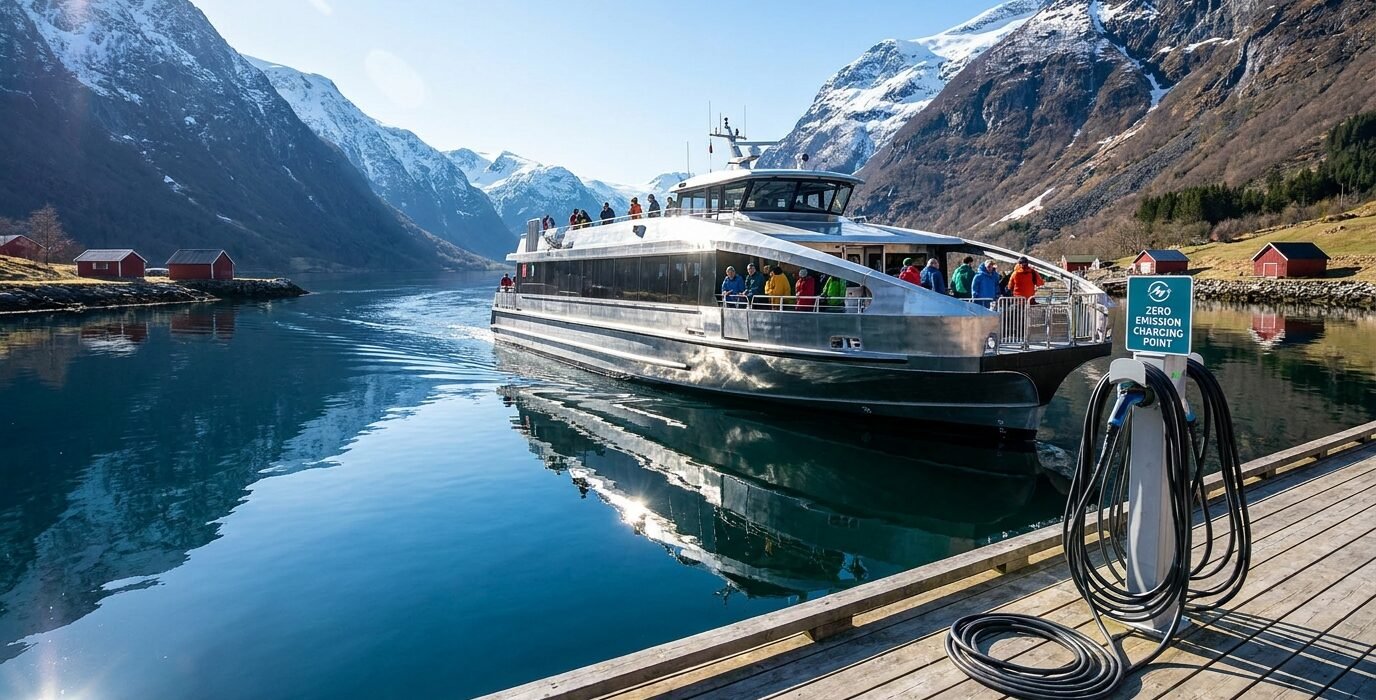
The crisp Norwegian air, usually carrying the scent of salt and pine, is starting to hum. It’s a new sound. A quiet revolution echoes across fjords and coastlines. Diesel engines once rumbled and puffed. Norway, a nation intrinsically linked to the sea, is charting a bold course. A cleaner maritime future awaits. Electric ferries lead the charge. This isn’t just about quieter commutes. It’s a fundamental reimagining of connection. We connect with our coastal communities. We protect the pristine environments we call home.
Key Takeaways:
- Norway is a global leader in electrifying its ferry fleet. Environmental goals and technological innovation drive this.
- The shift to electric ferries offers significant reductions. Air and noise pollution decrease. Life improves for coastal residents.
- Challenges remain. Charging infrastructure and grid capacity are concerns. Solutions are actively being developed.
- This maritime tech leap has potential. It can inspire and transform ferry services worldwide.
- Economic benefits are substantial. Reduced fuel costs. Job creation in a green sector.
The Fjords Get a Silent Makeover
Imagine gliding through the breathtaking Sognefjord. Majestic mountains rise sharply on either side. The only sound is the gentle lapping of water against the hull. For decades, this serene experience was punctuated. The thrum and exhaust of diesel-powered ferries. These were vital arteries. They connected communities scattered across Norway’s intricate coastline. These vessels, while essential, came with a considerable environmental price. They contributed to air pollution. They added to carbon emissions in sensitive areas.
But look around now. Especially in the western parts of the country. You’ll see something different. Sleek, modern ferries slip through the water. They are often painted in the distinctive colours of companies like Norled or Fjord1. They move with an almost eerie silence. This is the reality of Norway’s ambitious push. A push towards electric maritime transport. The change isn’t just aesthetic. It’s a profound shift in how we interact. We interact with our environment and each other.
It began subtly. Perhaps with a few pilot projects in the early 2010s. The momentum has built into a veritable wave. Today, dozens of routes are served. They are served by fully electric or hybrid-electric ferries. Many more are in the pipeline. The government’s commitment is strong. The ingenuity of Norwegian shipbuilders and technology providers is evident. This has placed the country at the forefront. It leads this global green maritime movement. It’s a testament to what can be achieved. A nation embraces innovation. It does so for its natural heritage. It does so for the well-being of its citizens. The impact on places like the Geirangerfjord is palpable. This UNESCO World Heritage site now experiences cleaner air. A more tranquil atmosphere draws in both locals and tourists. It promises a more sustainable way to experience its wonders. The data supports this. A study by the Norwegian Environment Agency indicated a significant drop. Particulate matter and nitrogen oxides decreased along frequently used ferry routes.
The Story of the Future Ferry
The journey from a diesel-guzzler to a whisper-quiet electric vessel is a story. It’s a story of human ingenuity. It’s a story of a deep-seated desire. A desire to protect Norway’s unparalleled natural beauty. Take, for instance, the tale of the Yara Birkeland. It’s often cited as the world’s first fully electric and autonomous container ship. While not a passenger ferry, its development in 2021 was significant. Yara International, a Norwegian chemical company, showcased the country’s cutting-edge maritime technology. It demonstrated that complex, heavy-duty maritime operations could be electrified. In this case, it was also automated. This paved the way for similar innovations. Innovations in passenger transport.
But the real heroes of the everyday journey are the ferries. They connect communities. They connect those around Stavanger and Bergen. I remember a trip from Moss to Horten a few years ago. The old ferry used to belch out fumes. The noise was considerable. The new electric ferry, the “Bastø Electric,” is a different beast entirely. It’s a cavernous vessel. It can carry hundreds of cars and passengers. Yet as it departs the dock, the transition is smooth. It moves from charging to propulsion silently. You barely notice it.
This technological leap isn’t accidental. It’s the result of strategic investments. It’s the result of a national will to lead. Companies like Siemens have been instrumental. They provide advanced battery systems and charging solutions. They’ve worked closely with shipyards like VARD. VARD is known for its advanced shipbuilding capabilities. Together, they integrate these complex systems. The challenges were immense. Not least of which was ensuring reliability. These ferries needed to operate reliably. They had to do so on demanding routes. They had limited charging windows.
This required innovative battery management systems. It needed efficient charging protocols. The engineers and designers had to think about everything. They considered the weight distribution of massive battery packs. They focused on rapid charging infrastructure. This was needed at busy terminals. The result is a fleet that meets stringent regulations. It also enhances daily lives. It improves the aesthetic appeal of Norway’s coastal landscapes. It’s a practical application of advanced technology. It makes a tangible difference to everyday life.
Navigating the Charging Currents
The most striking aspect of Norway’s electric ferry revolution is the sophisticated charging infrastructure. It has sprung up along its coast. It’s not as simple as plugging in your phone. These are behemoths. They require immense power. At ports like Brevik and Horten, you’ll see dedicated charging stations. They often resemble industrial-scale power outlets. These are linked to sophisticated grid management systems. These aren’t just power points. They are intelligent hubs. They are designed to manage immense energy demands. They charge an entire ferry. This happens in a matter of hours. Sometimes even minutes, between sailings.
One of the most impressive examples is the charging system. It was developed for the battery-electric ferries. They operate on the Halhjem-Sandvikvåg route. This is a critical link for traffic on the E39 highway. Here, powerful shore-side charging stations deliver electricity. It goes directly to the ferry’s batteries. This happens during its short turnaround times. This necessitates close collaboration. It involves ferry operators, such as Torghatten Nord. It involves local grid companies, like BKK. They have to ensure the local power grid can handle it. It can handle the sudden, massive surge in demand. It must do so without causing disruptions. This often involves significant upgrades. Upgrades to substations and transmission lines.
The sheer scale of the batteries involved is also staggering. Some of these ferries are equipped with battery packs. They weigh many tons. They offer enough power to traverse considerable distances. For example, the new electric ferries on the Finnfast route in western Norway are equipped with massive battery systems. These allow them to complete their journeys entirely on electric power. Charging occurs at the terminals. The innovation extends to the charging technology itself. Companies are exploring rapid charging solutions. Some are even looking at battery swapping in certain contexts. Though the latter is less common for larger ferries. The goal is always to minimize downtime. It’s to maximize operational efficiency. This ensures these vital transport links remain reliable. They do so even as they transition to cleaner energy. It’s a constant balancing act. It’s between technological capability and infrastructural reality. The statistics are illuminating. By 2023, over 70 electric or hybrid-electric ferries were in operation in Norway. They are supported by a growing network of charging facilities.
The Surprising Environmental Dividend
While the environmental benefits of electric ferries are widely acknowledged, there are some less obvious, but equally significant, positive impacts emerging. Reduced emissions and noise pollution are key. One of the most surprising is the ripple effect. It impacts local economies. It makes coastal living more attractive. Communities that were once subject to the constant drone of diesel engines are experiencing a remarkable transformation. The smell of exhaust fumes is gone. The quiet hum of electric propulsion means the natural soundscape is being restored. This isn’t just a minor improvement. It’s a genuine enhancement to the quality of life for residents.
Imagine living in a picturesque village like Flåm. The arrival and departure of ferries used to be a noticeable intrusion. Now, the experience is far more serene. It allows the natural beauty to take centre stage. This improved living environment is, in turn, making these areas more attractive. They are more attractive for tourism. They are also attractive for people considering relocating. Furthermore, the development of this new green maritime sector has created a demand. A demand for highly skilled jobs. Jobs in engineering, software development, battery technology, and specialized maintenance. Norway, already a leader in maritime technology, is solidifying its position. It does so by fostering this new ecosystem. The country isn’t just exporting ferries. It’s exporting knowledge and expertise. Companies that were once focused on traditional shipbuilding are now pivoting. They are incorporating advanced electrical systems and sustainable technologies. This transition is creating a new generation of maritime professionals.
Another fascinating, though perhaps counter-intuitive, benefit is the potential for grid stabilization. The large battery systems on ferries, when not actively charging or discharging, can theoretically be used to store excess renewable energy from the grid. They can even supply power back to the grid during peak demand periods. While this is still largely in the research and development phase for ferry applications, the concept of “vehicle-to-grid” (V2G) technology offers a glimpse into a future. A future where these vessels become active participants. They become participants in managing our energy infrastructure, not just consumers. The sheer volume of electricity these ferries will consume and store makes them prime candidates for such innovative grid integration.
Expert Voices: Charting the Course Ahead
To understand the full scope of Norway’s electric ferry ambition, it’s crucial to hear from those at the forefront. I spoke with Dr. Astrid Larsen. She is a senior researcher at the Norwegian Maritime Authority. She has been instrumental in developing regulatory frameworks. Frameworks for electric vessels. “The transition to electric ferries is not just about replacing a fossil fuel engine with a battery,” she explained. We spoke via video call from her office in Haugesund. “It’s a holistic approach. We had to rethink safety protocols. We re-evaluated charging standards. We considered the entire operational lifecycle of these vessels. The initial challenges were significant. Particularly concerning battery safety. We also had to ensure sufficient range. This was for our often demanding routes. However, the collaboration between industry, academia, and government has been exemplary.” She highlighted that for a country with over 100,000 kilometers of coastline and thousands of islands, reliable ferry services are non-negotiable. “The environmental imperative is clear,” she continued. “But so is the need for robust, dependable transport. We’ve seen tremendous innovation in battery technology. It’s making these systems safer and more powerful than ever before. Companies like Corvus Energy, a global leader in marine battery solutions, have been vital partners in this journey. They’ve developed systems specifically tailored for the harsh marine environment.”
Another key perspective comes from the ferry operators themselves. Bjørn Hansen, operations manager for a major ferry company on the western coast, shared his thoughts. “When we first started looking at electric ferries, there was a lot of skepticism. The upfront cost was higher. We worried about reliability. But the operational savings have been substantial. We’ve seen a drastic reduction in fuel costs. The maintenance requirements for electric drivetrains are significantly lower than for diesel engines. The passenger experience has also improved dramatically. No more exhaust fumes or engine noise. It’s a win-win.” He also pointed out the growing expertise within his own company. “We’ve had to train our crews extensively on the new systems. We’re now developing in-house expertise in battery management and electrical engineering. It’s a new era for maritime careers here in Norway.” These insights underscore that the success of electric ferries is built on a foundation. It’s built on collaboration, continuous learning, and a shared vision for a sustainable future.
A Wave of Change for the World
Looking beyond Norway’s dramatic fjords, the implications of this maritime tech leap are global. What is happening here isn’t just a national project. It’s a blueprint for how coastal nations worldwide can decarbonize their vital ferry networks. The technology and operational strategies being refined in Norway are directly applicable. They are applicable to countless other regions. From the islands of Scotland and the archipelagos of Greece to the coastal communities of Canada and New Zealand. The lessons learned about grid integration, battery management, and the economic viability of electric propulsion are invaluable.
As the world grapples with the urgent need to reduce carbon emissions, particularly in the transport sector, Norway’s pioneering efforts offer a tangible, proven path forward. The initial investment in electric ferries may seem substantial. But the long-term benefits are undeniable. Environmental, economic, and social benefits accrue. Reduced fuel costs, lower maintenance, and the elimination of harmful emissions translate into significant savings. They lead to a healthier planet. Moreover, the development of this green maritime technology sector creates new export opportunities. These opportunities exist for Norwegian companies. This further solidifies its position. It becomes a leader in sustainable innovation.
The psychological impact is also significant. Seeing large, essential vessels like ferries transition to clean energy provides a powerful symbol. It shows what is possible. It’s possible when we commit to ambitious environmental goals. It fosters a sense of optimism. It encourages further investment. Investment in renewable energy and sustainable transport solutions across the board. The quiet hum of an electric ferry is more than just a pleasant sound. It’s the sound of progress. It’s a testament to human ingenuity. It’s a hopeful signal for the future of global maritime transport. The world is watching. It is learning from Norway’s bold embrace of the electric tide. It proves that even the most challenging environmental goals are achievable. This is possible with vision and determination.