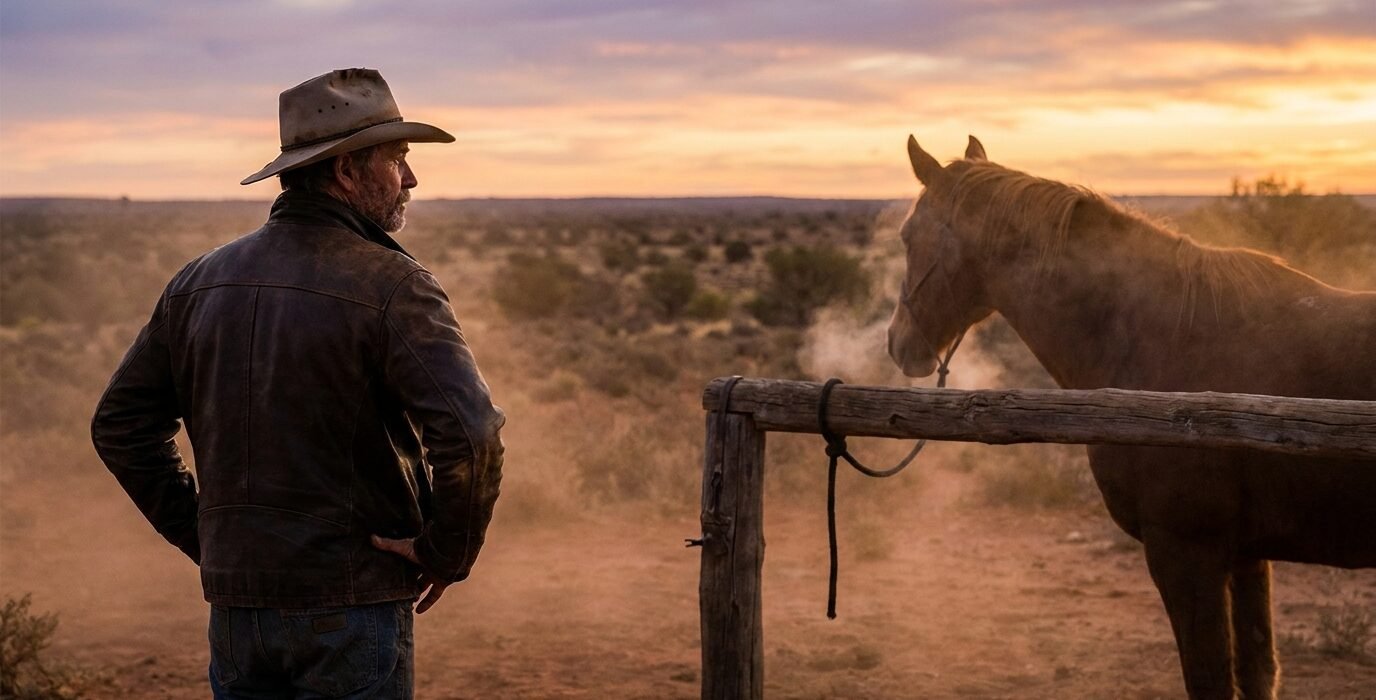
The dust devils danced across the cracked earth, a familiar ballet for young Maya. Her playground wasn’t manicured lawns or bustling city parks. It was the vast, sun-baked expanse of the Queensland Outback. Beneath a sky so big it seemed to swallow everything, dreams were often as distant as the horizon. Yet, Maya’s dream burned brighter than the midday sun. It was a dream whispered on the wind. A dream of roaring crowds and the glint of Olympic gold.
Key Takeaways:
- Discover Maya’s extraordinary journey from a remote Queensland station to the pinnacle of international sport.
- Learn about the unique challenges and unexpected advantages of growing up in the Australian Outback.
- Understand the crucial role of community, resilience, and unwavering belief in Maya’s success.
- Explore the specific training sacrifices and adaptations required to bridge the gap between rural life and elite athletics.
- Gain insight into the mental fortitude necessary to compete on the global stage.
A Life Shaped by the Land
Maya’s childhood unfolded in the raw, untamed beauty of Mount Isa. Her home wasn’t just a house; it was a station. A sprawling property where the rhythm of life was dictated by the seasons and the needs of the land. Days were long, filled with chores that demanded a strength far beyond her years. She’d rise before dawn. The chill of the desert morning was a sharp contrast to the heat that would soon descend. Her tasks were varied: helping with the livestock, mending fences battered by relentless winds, and carrying water from the bore. This wasn’t a life of luxury. It was a life of practicality, of grit, and of deep connection to the earth.
The nearest town, Mount Isa, was a significant drive away. This meant that social life, schooling, and access to amenities were all filtered through the lens of distance. Playdates were rare, and sporting clubs were a distant concept. Maya’s early athletic development wasn’t found on a sports field, but in the daily demands of station life. Running after stubborn sheep, climbing rugged terrain, and carrying heavy buckets built a natural athleticism. Her “gym” was the vast, open country. The sheer scale of her environment instilled a sense of endurance. She learned to push herself, not because of a coach’s instruction, but because the land demanded it. Her father, a man weathered by the sun and stoic in his demeanor, often said, “Out here, you learn to rely on yourself, and on the strength you find within.” This philosophy became Maya’s bedrock. The isolation, which might have crushed some, forged a remarkable self-reliance in her. She found joy in the simple things: the vast, star-filled nights, the call of the kookaburras at dawn, and the quiet companionship of her loyal kelpie, Dusty. This grounded upbringing, while seemingly miles away from elite sport, was quietly shaping the champion she would become. The resilience she learned mending fences became the resilience she would later call upon during grueling training sessions.
Her family’s station was situated near the Selwyn Range, a rugged area known for its mineral wealth and stark beauty. This landscape, with its hidden creeks and challenging ascents, provided Maya with an informal, natural obstacle course. She’d spend hours exploring, her small legs carrying her over rocky outcrops and through sparse vegetation, unknowingly building the cardiovascular fitness and agility that would later serve her so well. Even the iconic Queensland blue heeler, a breed renowned for its intelligence and stamina, was a constant presence, often accompanying her on these explorations, mirroring her own hardy spirit.
The Spark of a Dream Ignited
The turning point, the moment the dream of athletic greatness truly took root, came unexpectedly during a rare trip to the coast for a family holiday. Maya was about ten years old, a bundle of energy honed by her Outback upbringing. They were visiting Brisbane, a city that felt like a different planet compared to her familiar surroundings. While exploring, they stumbled upon a local swimming pool. Maya, a strong swimmer from her days splashing in makeshift dams, was mesmerized by the synchronized swimmers practicing their routines. The grace, the power, the sheer artistry of it all captivated her. She’d never seen anything like it. It was a world away from the dusty plains and the practicalities of station life.
Her mother, noticing Maya’s rapt attention, signed her up for a casual lesson. It was there, in the cool, chlorinated water, that Maya felt a new kind of freedom. The water supported her, allowing her to move with a fluidity and speed she’d only experienced in fleeting moments on horseback. Her natural strength and endurance, honed by years of physical labor, translated remarkably well. The instructor, a woman named Mrs. Davies, a former competitive swimmer herself, saw something special in the quiet, determined girl from the country. “She has incredible stamina for her age,” Mrs. Davies remarked to Maya’s parents. “And a natural feel for the water.” This was the first time Maya had received formal training, and it felt like unlocking a hidden potential. She returned to Mount Isa with a new fire in her belly. The vision of those synchronized swimmers became a powerful, recurring image. She began to imagine herself there, performing with that same level of skill and dedication. She started practicing in any water she could find – the creek after rain, a large water tank – anything to replicate the feeling of the pool. Her parents, though miles from any elite sporting infrastructure, supported her burgeoning passion. They recognized the spark in her eyes, the unwavering focus that was already a hallmark of her character. They understood that sometimes, the most profound dreams begin with the smallest, most unexpected encounters.
The contrast between the vast, open water of the dam on their station and the controlled environment of the Brisbane pool was stark. Yet, the fundamental principles of buoyancy and propulsion remained. Maya’s ability to adapt to this new element, to translate her innate physical capabilities into aquatic grace, was a testament to her innate athleticism. She’d spent countless hours in the local creek, learning to navigate its currents and depths, skills that were now finding a new, sophisticated application.
Bridging the Divide: Training Against the Odds
The journey from the Queensland Outback to elite international competition is not a short one, and for Maya, it was fraught with unique challenges. While her innate athleticism was undeniable, the infrastructure and resources available in Mount Isa were a world away from those enjoyed by athletes in major cities. Access to qualified coaches, specialized training facilities, and a competitive peer group was limited. Maya’s early training regimen was a testament to her resourcefulness and her family’s dedication. She relied heavily on the guidance she received during those initial lessons in Brisbane, meticulously practicing the techniques she’d learned. Her parents would drive her hundreds of kilometers to the nearest town with a proper swimming pool for occasional training sessions, a significant commitment of time and fuel.
These journeys became a regular feature of their lives, often requiring Maya to miss days of school. The sacrifices were immense, not just for Maya, but for her entire family. Her father would adjust his work schedule, and her mother would pack lunches and ensure Maya had enough rest for the demanding trips. There were times when the sheer distance and the lack of consistent coaching threatened to derail her progress. She had to learn to be incredibly disciplined, to push herself even when she felt alone, and to visualize her goals with an intensity that transcended her physical surroundings. One surprising advantage, however, was the mental toughness instilled by her Outback upbringing. The ability to persevere through tough conditions, to find solutions when faced with obstacles, and to endure long periods of solitude were all skills she’d acquired naturally on the station. This internal fortitude proved invaluable when facing the grueling demands of elite training. A statistic from the Australian Institute of Sport highlights this: approximately 70% of elite athletes report experiencing significant challenges in accessing resources during their developmental years. Maya’s story exemplifies this, showcasing how sheer determination can overcome geographical and infrastructural barriers. She was effectively self-coaching for long stretches, relying on her intelligence, her passion, and the memories of Mrs. Davies’s instruction.
The family’s commitment meant that their vehicle, a sturdy four-wheel drive essential for navigating Outback tracks, often served as a mobile training hub. Between long drives, Maya would review diagrams of swim strokes and mentally rehearse routines. The sheer effort involved in these regular excursions underscores the dedication required to bridge the vast distances inherent in rural Australian life. It wasn’t just about the destination; it was about the unwavering journey.
The Unexpected Edge: Outback Resilience
Growing up in the Australian Outback offers a unique set of advantages, though they might not be immediately apparent in the context of elite athletics. Maya’s childhood was a masterclass in adaptability and resourcefulness. The vast, often harsh environment demanded a constant state of awareness and problem-solving. From navigating treacherous terrain on horseback to understanding the subtle cues of the weather, Maya developed a keen sense of her surroundings and a capacity to respond to unexpected challenges. This translated directly into her athletic career. When faced with a difficult training session, an injury, or a competitive setback, Maya’s mind naturally accessed that deep well of resilience.
She learned to be comfortable with discomfort, a crucial trait for any athlete pushing their physical and mental limits. The sheer scale of the Outback also fostered a profound sense of perspective. Problems that might seem insurmountable in a more confined environment often felt manageable when viewed against the backdrop of the endless horizon. This psychological benefit is difficult to quantify but undeniably powerful. Furthermore, the isolation of her childhood meant Maya spent a great deal of time in her own company, developing a strong sense of self-reliance and an internal locus of control. She didn’t have constant external validation or structured activities; she had to create her own entertainment and find her own motivation. This fostered an intrinsic drive that coaches later described as “unshakeable.” A surprising insight from sports psychologists suggests that athletes who experience significant early adversity often develop a superior ability to manage pressure and anxiety. Their baseline for what constitutes a “tough situation” is often higher. Maya’s early life on the station, with its inherent risks and demands, provided precisely this kind of foundational experience. She wasn’t just training her body; she was training her mind in a way that few others could replicate. This Outback grit became her secret weapon, a silent but potent force that propelled her forward.
The extreme temperatures of the Outback, from scorching summer days to surprisingly cold desert nights, also played a subtle role in her physical conditioning. Her body became adept at regulating temperature and enduring physiological stress. This acclimatization to harsh conditions provided a unique advantage when competing in different climates around the world, a subtle but significant benefit often overlooked in traditional athletic development.
The Leap to the Global Stage
The transition from regional competitor to national contender is a monumental leap, demanding not only exceptional talent but also a significant shift in lifestyle and support systems. For Maya, this meant leaving her beloved Outback home and relocating to a major city to access the specialized training required for elite synchronized swimming. This was perhaps the most emotionally challenging aspect of her journey. The familiarity of the red dust, the open skies, and the quiet solitude of her childhood were replaced by the bustling energy of Sydney. The initial adjustment was profound. She missed the smell of eucalyptus after rain, the quiet hum of the station at night, and the unwavering support of her immediate family.
She found herself under the tutelage of Coach Anya Petrova, a former Olympic medalist known for her demanding yet brilliant approach. Anya recognized Maya’s raw talent but also saw the need to refine her technique and build her explosive power. Training became a relentless cycle of early mornings, grueling pool sessions, and demanding land-based exercises. Maya often described the feeling of being in a high-performance training center as both exhilarating and overwhelming. The competition for places was fierce, and the pressure to constantly improve was immense. There were moments of doubt, times when the sheer physical and mental exertion felt unbearable. However, Maya would often close her eyes and picture the vast, open spaces of home, drawing strength from the resilience that had been ingrained in her since childhood. She learned to communicate her needs, to advocate for herself, and to build new support networks, all while maintaining that core sense of self that was forged in isolation. One critical piece of advice she received from Coach Petrova was to embrace the discomfort, to see it not as a sign of failure, but as a necessary component of growth. This resonated deeply with Maya, who understood that the land had always demanded effort and perseverance. The number of hours dedicated to training by Olympic athletes can exceed 30 hours per week, a commitment Maya now fully embraced.
The transition also required Maya to adapt to a different kind of community. While the Outback fostered a tight-knit, interdependent social fabric, the city offered a more diverse and often anonymous environment. Building trust and forming genuine connections with teammates and coaches became a new skill to master, a different form of resilience in the face of social distance.
The Echo of Home in Every Performance
As Maya ascended the ranks, her performances began to capture the attention of the nation. The girl who once practiced in makeshift dams was now gracing international stages, her routines a breathtaking fusion of power, grace, and artistry. Yet, with every splash, every intricate movement, a part of her remained tethered to the sun-drenched plains of her youth. The resilience forged in the Outback wasn’t just a memory; it was an intrinsic part of her being, evident in the unwavering focus she displayed during high-pressure routines and the sheer determination she poured into every stroke.
The vastness of the Australian sky, the enduring spirit of its people, and the quiet strength of the land itself seemed to be woven into the fabric of her performances. When she stood on the podium, the roar of the crowd a stark contrast to the silence of her childhood, it wasn’t just her own victory being celebrated. It was a testament to the power of dreams, no matter how distant they may seem, and the incredible spirit of a nation that could produce champions from its most remote corners. Her journey served as a powerful reminder that talent can blossom in the most unexpected places, nurtured by dedication, community, and an unyielding belief in oneself. The echo of the Outback, that quiet strength and profound resilience, resonated in every powerful leg kick, every graceful extension, and every synchronized movement. It was a story that transcended sport, a human triumph that inspired millions, proving that with enough grit and heart, even the most distant horizons can be reached. The cheers from the Olympic arena were, in a way, the culmination of a lifetime of quiet determination, a symphony composed of both dust and diamonds.