Key Takeaways
- Discover quick and nutritious vegetarian breakfast recipes perfect for busy Indian mornings.
- Learn how to incorporate ancient grains and fresh produce for sustained energy.
- Explore regional variations and adapt recipes to your taste and pantry staples.
- Get tips on meal prepping and smart ingredient choices to save time and money.
Kickstart Your Day: The Power of a Smart Indian Veg Breakfast
As the sun rises over bustling cities like Mumbai and serene villages in Kerala, millions begin their day. For many of us in India and across the globe, the morning meal is more than just sustenance; it’s a ritual, a moment of calm before the daily rush. But in our fast-paced lives, finding the time for a truly nourishing and delicious vegetarian breakfast can feel like a Herculean task. We often resort to quick fixes that leave us feeling sluggish by mid-morning.
This article is your guide to reclaiming your mornings. We’ll explore vibrant, energizing vegetarian breakfast options that are genuinely quick to prepare, packed with nutrients, and bursting with the authentic flavours of India. Forget the bland or the time-consuming; we’re talking about recipes that will fuel your body and delight your palate, setting you up for a productive and positive day. Whether you’re a seasoned cook or a kitchen novice, these ideas are designed to be accessible and adaptable.
We understand the challenges. Early mornings often mean little time for elaborate cooking. You might be juggling work, family, or studies, and the thought of chopping vegetables or stirring batters can be daunting. That’s precisely why our focus is on efficiency without compromising on health or taste. You’ll find inspiration that caters to different preferences, from light and refreshing to hearty and filling.
Ancient Grains and Speedy Staples: Wholesome Starts
Our journey begins with the building blocks of a healthy Indian vegetarian breakfast: whole grains and smart staples. For centuries, Indians have relied on ingredients like millets, oats, and pulses, and in 2026, these ancient powerhouses are more relevant than ever. They offer sustained energy release, preventing those dreaded mid-morning energy crashes.
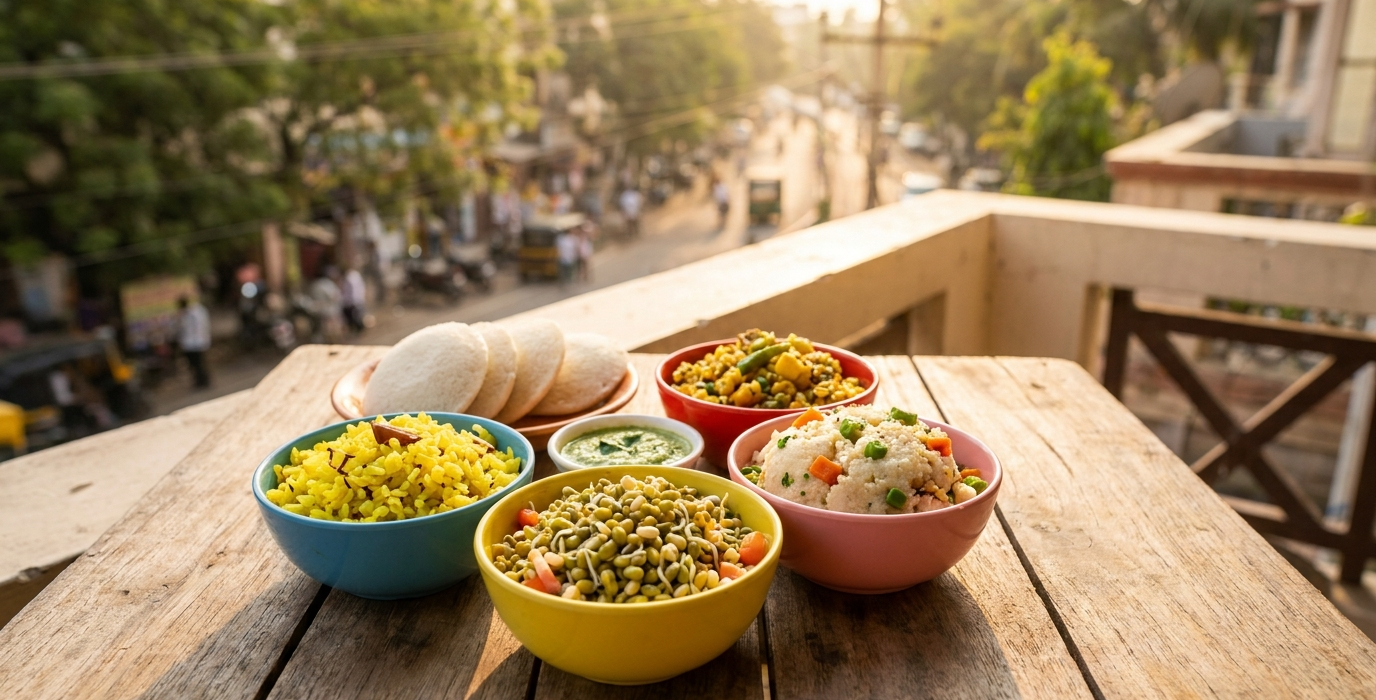
Consider the humble upma. Traditionally made with semolina, we can elevate it by using broken wheat (dalia) or foxtail millet (navarre). These grains are rich in fibre and complex carbohydrates. A quick tempering of mustard seeds, curry leaves, and a pinch of asafoetida, combined with finely chopped carrots, peas, and onions, transforms it into a flavourful and filling dish in under 20 minutes. The key is to have your vegetables pre-chopped or to use frozen mixed vegetables, which significantly cuts down preparation time.
Another fantastic option is Poha. Flattened rice is incredibly versatile and cooks in minutes. For a nutritional boost, try adding sprouted moong beans or finely grated paneer. A squeeze of lime and a sprinkle of fresh coriander add a burst of freshness. Did you know that in certain regions of Maharashtra, Poha is often enjoyed with a side of sev, a crispy chickpea flour noodle, adding a delightful textural contrast?
We also encourage incorporating pulses. A simple batter of soaked and ground idli or dosa rice can be a breakfast staple. However, for speed, consider pre-made batter or quick versions like pesarattu made from moong dal. These are protein-rich and can be served with a quick coconut chutney prepared the night before.
The South Indian Sunrise: Idli, Dosa, and Beyond
The culinary landscape of South India offers a treasure trove of breakfast delights, many of which are naturally vegetarian and can be adapted for speed. Idli and dosa are iconic for a reason: they are light, digestible, and can be incredibly healthy, especially when made with wholesome ingredients. While traditional fermentation takes time, modern kitchens have solutions.
Many brands now offer high-quality, ready-to-cook idli and dosa batter, available in most Indian cities and increasingly in international supermarkets. This is a game-changer for busy mornings. You can make perfectly fluffy idlis in a steamer in about 10-15 minutes, or crisp dosas on a hot griddle in just a couple of minutes each. Pair them with a sambar, which can be made in a larger batch over the weekend and reheated, or a quick tomato or mint chutney.
Beyond the classics, explore other regional specialties. Uttapam, a thicker, pancake-like dosa, is wonderfully forgiving and can be loaded with finely chopped onions, tomatoes, and capsicum. This adds extra fibre and vitamins. For those in Tamil Nadu, a quick Pongal, made with rice and moong dal, is a comforting and protein-rich choice. You can even make a savoury oat Pongal by substituting oats for rice.
A surprising fact about traditional idli preparation is the specific ratio of rice to urad dal, often around 2:1 or 3:1, which, when fermented correctly, yields the perfect texture and flavour. While commercial batters offer convenience, understanding these principles can help you make even better versions at home when you have a bit more time. Remember to keep a variety of chutneys ready – a spicy garlic chutney or a tangy tamarind chutney can instantly liven up any South Indian breakfast.
North Indian Nourishment: Parathas, Poha, and Quick Sabzis
Moving north, the breakfast scene is equally vibrant and adaptable. The paratha, a whole wheat flatbread, is a beloved staple. While stuffed parathas can be time-consuming, plain or lightly seasoned versions are quick to prepare. Whole wheat flour, water, a pinch of salt, and a teaspoon of oil are all you need for the dough. Roll it out thinly and cook on a tawa with a little ghee or oil.
To make them healthier and more interesting, consider adding finely grated vegetables like lauki (bottle gourd) or leftover cooked vegetables into the dough itself. This is a fantastic way to sneak in extra nutrients. Serve with a dollop of plain curd (dahi) or a quick homemade achar (pickle). A simple aloo paratha, using pre-boiled potatoes mashed with spices, can also be made in under 15 minutes if you have the filling ready.
Poha, while popular in the west, is also a common breakfast across North India. Its quick cooking time and versatility make it a champion for busy mornings. A simple onion-poha, tempered with cumin seeds, turmeric, and green chilies, is a complete meal. For added protein, stir in some crumbled paneer or roasted peanuts towards the end.
Another excellent speedy option is a quick vegetable stir-fry or sabzi that can be paired with roti. Think of a simple gobhi matar (cauliflower and peas) or a bhindi (okra) stir-fry. If you have some pre-chopped vegetables from the previous night, you can have a hot, nutritious sabzi ready in under 10 minutes. Pair this with a whole wheat roti or even a slice of toasted brown bread for a modern twist. The key here is efficient chopping and smart use of spices.
Sweet Treats and Savory Bites: Beyond the Usual
Sometimes, you crave something a little different, a breakfast that feels like a treat but is still good for you. We’re not talking about sugary cereals or fried snacks; we’re exploring wholesome sweet and savory options that are surprisingly quick.
Consider a quick fruit and yogurt parfait. Layer plain curd with seasonal fruits like mangoes, berries, or bananas. Sprinkle with a handful of toasted almonds, walnuts, or a sprinkle of roasted seeds like pumpkin or sunflower. A drizzle of honey or maple syrup, if needed, adds sweetness. This requires no cooking and can be assembled in less than five minutes. It’s packed with protein, vitamins, and healthy fats.
For a savory craving, think about a quick paneer bhurji. Scramble paneer with finely chopped onions, tomatoes, green chilies, and basic spices like turmeric, cumin powder, and coriander powder. This is ready in about 7-10 minutes. You can eat it on its own, with a piece of toast, or even scoop it up with a small whole wheat roti. It’s a protein powerhouse that keeps you full.
A surprising and delightful option is a savory oatmeal. Instead of the usual sweet preparation, cook your oats with vegetable broth instead of water or milk. Stir in sautéed mushrooms, spinach, or a pinch of garam masala. Top with a fried egg (if you consume eggs) or some roasted chickpeas for added protein and crunch. This offers a comforting, warm start that is far more nutritious than many breakfast cereals.
We also love a quick iteration of Besan Cheela. Whisk gram flour (besan) with water, chopped onions, tomatoes, coriander, and spices. Pour like a pancake onto a hot tawa and cook for a few minutes on each side. It’s protein-rich, easy to digest, and incredibly satisfying. This is a versatile dish that can be customized with various vegetables.
Smart Prep and Pantry Power: Your Time-Saving Toolkit
The secret to consistently enjoying quick and healthy Indian vegetarian breakfasts isn’t just about the recipes themselves, but about smart preparation and a well-stocked pantry. By investing a little time over the weekend, you can drastically cut down your weekday morning efforts. Meal prepping is your best friend here.
Chop and Store: Dedicate an hour or two to chopping vegetables like onions, tomatoes, carrots, and capsicum. Store them in airtight containers in the refrigerator. This makes assembling dishes like upma, poha, or sabzis significantly faster. You can also pre-grate ginger and garlic and store them in the fridge or freezer for instant use.
Batch Cooking: Cook larger quantities of staples like sambar, dal, or boiled potatoes over the weekend. These can be refrigerated and used as accompaniments or incorporated into weekday meals. Pre-made chutneys – mint, coriander, or coconut – also save a lot of time.
Pantry Staples: Ensure your pantry is always stocked with essentials like whole wheat flour, semolina, oats, millets, gram flour, lentils, and rice. Also, keep a good supply of spices, nuts, seeds, and healthy oils. Don’t underestimate the power of frozen vegetables and fruits for convenience.
Smart Gadgets: Invest in time-saving kitchen tools. A good blender or food processor can quickly grind batters or chop vegetables. An electric kettle boils water in minutes, perfect for instant oats or tea. A non-stick tawa or griddle heats up quickly for dosas and parathas.
Here’s a quick comparison of some common breakfast bases and their approximate preparation times:
| Breakfast Item | Prep Time (Approximate) | Key Ingredients | Nutritional Highlights |
|---|---|---|---|
| Upma (Semolina/Millet) | 15-20 minutes | Semolina/Millet, vegetables, spices | Carbohydrates, Fiber, Vitamins |
| Poha | 10-15 minutes | Flattened rice, onions, spices, optional peanuts/paneer | Carbohydrates, Fiber, Protein (with additions) |
| Idli (with ready batter) | 10-15 minutes (steaming) | Fermented rice and lentil batter | Light, easily digestible carbohydrates, Protein |
| Dosa (with ready batter) | 2-3 minutes per dosa | Fermented rice and lentil batter | Carbohydrates, Protein (depending on batter ratio) |
| Plain Paratha | 10-12 minutes | Whole wheat flour, water, salt, oil/ghee | Complex carbohydrates, Fiber |
| Paneer Bhurji | 7-10 minutes | Paneer, onions, tomatoes, spices | High Protein, Calcium |
| Besan Cheela | 8-10 minutes | Gram flour, water, vegetables, spices | Protein, Fiber |
By implementing these strategies, you can ensure that a healthy, delicious, and energizing Indian vegetarian breakfast is always within your reach, no matter how hectic your schedule.
“The right breakfast isn’t about speed alone; it’s about intelligent preparation that fuels your body and mind for the day ahead, using the vibrant flavours and nutrients India offers.”
Frequently Asked Questions
What is the healthiest Indian vegetarian breakfast?
The healthiest options are typically those rich in complex carbohydrates, protein, and fiber, with minimal added sugar and unhealthy fats. Dishes like idli, dosa (made with whole grains and served with sambar and chutney), moong dal cheela, or millet-based upma are excellent choices. Incorporating vegetables and nuts further enhances their nutritional value.
Can I prepare Indian breakfast items the night before?
Yes, absolutely! Many components can be prepped. You can make idli/dosa batter and let it ferment overnight, chop vegetables for upma or poha, prepare chutneys, or even boil potatoes for parathas. This significantly reduces morning preparation time.
Are oats a good addition to an Indian vegetarian breakfast?
Certainly. Oats are a versatile grain. You can make a savory masala oats dish similar to upma, or a sweet version with fruits and nuts. They provide excellent fiber and sustained energy, making them a healthy alternative to traditional grains for some meals.
How can I make my Indian vegetarian breakfast more filling?
To make your breakfast more filling, focus on protein and fiber. Add ingredients like paneer, sprouted legumes (like moong sprouts), yogurt, nuts, and seeds. Opt for whole grains like millets or broken wheat over refined flours. Including a side of curd or a glass of buttermilk can also contribute to satiety.
What are some quick breakfast ideas if I have less than 10 minutes?
In under 10 minutes, you can prepare besan cheela, a quick paneer bhurji, a fruit and yogurt parfait, or instant poha/upma using pre-chopped ingredients. Having ready-made batter for idli/dosa and a microwave or stovetop available are key for these super-quick options.