Key Takeaways
- By 2026, India’s remote and hybrid work models are solidifying, moving beyond pandemic necessity to strategic integration.
- Expect a rise in distributed teams, requiring robust digital infrastructure and a focus on cybersecurity.
- Employee well-being and mental health support will become non-negotiable differentiators for companies.
- The “Great Indian Commute” may see a significant reshaping, impacting urban planning and local economies.
The New Normal: Beyond the Pandemic Pivot
The dust has settled on the initial, chaotic shift to remote work. For India, the period post-2026 marks not a return to the past, but a deliberate embrace of evolving workplace dynamics. We’re no longer just reacting to a crisis; we’re strategically building a future where flexibility is paramount. This means a significant, permanent shift in how and where we work, with hybrid models becoming the dominant force.
Companies that once viewed remote work as a temporary measure are now integrating it into their core business strategies. This isn’t just about accommodating employee preferences; it’s about tapping into a wider talent pool, reducing operational costs, and fostering greater employee satisfaction. We’re seeing a calculated move away from the traditional office-centric model, a change that will have ripple effects across industries and geographies.
This transformation is fueled by advancements in technology, a growing awareness of work-life balance, and a changing demographic of the Indian workforce. The younger generation, in particular, values autonomy and flexibility, pushing companies to adapt or risk losing out on top talent. The post-2026 landscape is one of intentional design, where the “where” of work is as important as the “what.”
Distributed Teams: The Rise of the Borderless Workforce
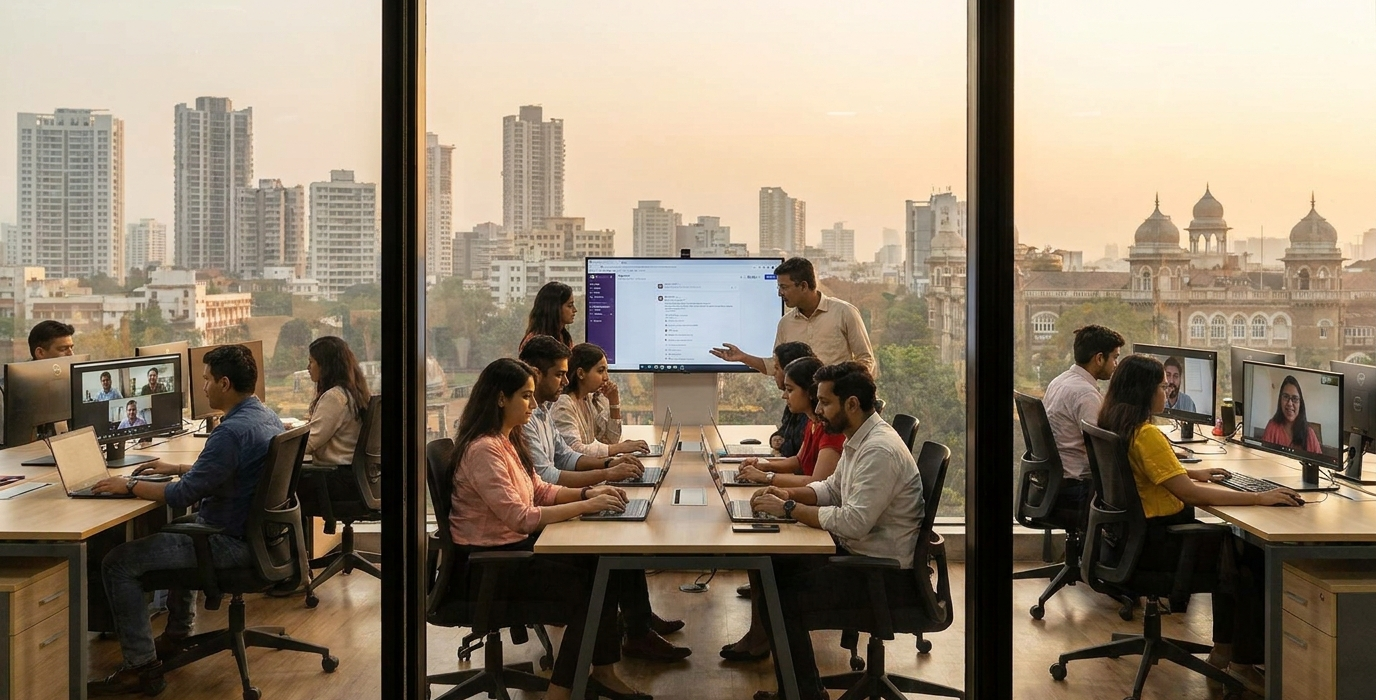
One of the most profound shifts we’re witnessing is the normalisation of distributed teams. Companies in India are no longer confined to hiring within a specific city or even state. The technological infrastructure is now mature enough to support seamless collaboration across vast distances. This opens up unprecedented opportunities for businesses to access specialized skills, regardless of geographical location.
Think about it: a startup in Bengaluru can now easily recruit a seasoned developer from Kochi, or a marketing specialist from Chandigarh, without the logistical hurdles of relocation. This democratisation of talent is a game-changer. It allows smaller businesses to compete with larger corporations by accessing expertise they might otherwise be unable to afford or find locally.
Of course, this rise in distributed teams necessitates a significant upgrade in digital infrastructure and cybersecurity. Companies must invest in reliable cloud solutions, robust communication platforms, and stringent security protocols. The risk of data breaches and cyberattacks increases with a dispersed workforce, making these investments non-negotiable. We’re seeing a surge in demand for cybersecurity professionals and advanced VPN solutions as businesses fortify their remote operations.
Talent Acquisition and Retention: A New Battlefield
The war for talent has intensified, and flexibility is now a primary weapon. In the post-2026 era, companies that offer genuine hybrid and remote work options will have a distinct advantage in attracting and retaining top performers. This isn’t just about offering a few days of remote work; it’s about creating a comprehensive framework that supports diverse working styles.
We’re seeing a recalibration of what constitutes a competitive compensation and benefits package. Beyond salary, factors like flexible hours, home office stipends, and clear pathways for career advancement in a remote setting are becoming crucial. The traditional office perks are being replaced by benefits that support well-being and productivity regardless of location.
Moreover, fostering a strong company culture in a distributed environment is a key challenge. Companies are experimenting with virtual team-building activities, regular online town halls, and dedicated channels for informal communication. The goal is to replicate the sense of camaraderie and belonging that was once exclusively fostered in a physical office. Those who fail to adapt will find their talent pool shrinking rapidly.
Rethinking the Office: Hubs, Not Headquarters
The traditional corporate office is not disappearing, but its role is fundamentally changing. Post-2026, the office is evolving from a place of mandatory daily attendance to a strategic hub for collaboration, innovation, and team connection. Companies are redesigning their spaces to facilitate these specific functions, rather than simply housing rows of desks.
Expect to see more emphasis on collaborative zones, meeting rooms equipped with advanced AV technology, and comfortable co-working spaces. The focus shifts from individual workstations to environments that encourage spontaneous interaction and problem-solving. Some businesses are even downsizing their traditional office footprints, opting for smaller, more agile hubs strategically located in areas accessible to their distributed workforce.
This shift also has significant implications for urban planning and local economies. As fewer people commute to large central business districts daily, we may see a resurgence of activity in suburban and semi-urban areas. Local businesses, cafes, and retail establishments that cater to a daytime population will need to adapt to these changing patterns. The “Great Indian Commute,” a daily struggle for millions, might finally see some much-needed relief, though new patterns will emerge.
Employee Well-being: The Unseen Pillar of Productivity
The increased prevalence of remote and hybrid work has brought the critical importance of employee well-being and mental health into sharp focus. In the post-2026 landscape, companies that prioritize this will not only retain their workforce but also boost overall productivity. Burnout, isolation, and the blurring of work-life boundaries are significant risks that need proactive management.
Companies are investing in more comprehensive mental health support, including access to counselling services, mindfulness apps, and workshops on stress management. There’s a growing recognition that employee well-being is not just a perk but a fundamental requirement for sustained performance. This includes encouraging regular breaks, promoting healthy work habits, and ensuring managers are trained to identify and support struggling employees.
A surprising trend emerging is the integration of wellness programs directly into the workday. This could involve virtual yoga sessions, guided meditation breaks, or even company-sponsored fitness challenges that can be done remotely. The aim is to embed well-being into the company’s culture, making it an intrinsic part of the employee experience, rather than an add-on. This proactive approach is proving more effective than reactive measures.
Navigating the Tech Stack: Essential Tools for the Modern Workplace
The success of remote and hybrid work hinges on a robust and integrated technology stack. In the post-2026 era, companies are investing heavily in tools that facilitate seamless communication, collaboration, and project management. This goes beyond basic video conferencing; it encompasses a suite of applications designed to create a virtual office environment.
Key components of this tech stack include advanced collaboration platforms like Microsoft Teams or Slack, which offer integrated chat, video, file sharing, and app integrations. Project management software such as Asana, Trello, or Jira becomes essential for tracking progress, assigning tasks, and maintaining transparency across distributed teams. Cloud storage solutions like Google Drive or Dropbox ensure secure and accessible file management from anywhere.
Furthermore, digital identity and access management (IAM) solutions are paramount for security. With employees accessing company resources from various locations and devices, verifying their identity and controlling access is critical. This includes multi-factor authentication (MFA) and single sign-on (SSO) capabilities. A truly integrated tech stack minimizes friction and maximizes efficiency, making it the backbone of the modern, flexible workplace.
Frequently Asked Questions
What is the biggest challenge for hybrid work in India post-2026?
The biggest challenge is likely maintaining a cohesive company culture and ensuring equitable opportunities for both remote and in-office employees. Preventing a “two-tier” system where in-office employees have an advantage in promotions or visibility is crucial.
Will office real estate prices decrease significantly in India due to remote work?
While demand for traditional large office spaces might decrease, the trend is more towards repurposing and redesigning existing spaces into collaborative hubs. We may see a shift in location preferences, with more demand for smaller, flexible office spaces closer to residential areas, rather than a universal price drop.
How are Indian companies adapting their hiring processes for remote roles?
Companies are increasingly relying on virtual interviews, online skill assessments, and digital onboarding processes. They are also broadening their geographical reach to tap into a wider talent pool, actively seeking candidates who possess strong self-management and communication skills suitable for remote work.
What are the key cybersecurity concerns for businesses embracing remote work in India?
The primary concerns revolve around unsecured home networks, the use of personal devices for work (BYOD), and phishing attacks. Companies need to implement strong endpoint security, enforce VPN usage, conduct regular cybersecurity awareness training for employees, and adopt robust data encryption measures.