Key Takeaways
- Discover stories of everyday Indians whose dedication and innovation are subtly reshaping communities.
- Learn about individuals championing sustainable practices, from rural water conservation to urban waste management.
- Explore how technology is being leveraged by local heroes to bridge divides and empower the underserved.
- Find inspiration in the resilience and ingenuity of people making a tangible difference without seeking the spotlight.
The Architects of Everyday Resilience
Across the vast tapestry of India, from the bustling streets of Mumbai to the tranquil villages of Kerala, countless individuals are quietly weaving the fabric of our society. These are not the figures who grace magazine covers or dominate news cycles, but rather the backbone of our communities, the ones who solve problems before they escalate and foster growth with unwavering commitment. We often speak of grand national goals, but it’s the persistent, often invisible, efforts of these unsung heroes that truly build resilience.
Consider, for instance, the story of Ramesh Patil, a farmer in Maharashtra’s Marathwada region. While many of his peers grappled with recurring droughts, Ramesh began experimenting with traditional rainwater harvesting techniques, not just for his own fields, but by rallying his neighbours. He meticulously dug percolation pits and contour bunds, transforming barren land into a water-rich oasis. His farm now stands as a testament to what can be achieved with a deep understanding of local ecology and a collaborative spirit. This quiet revolution in water management ensures not only his livelihood but that of an entire village, a ripple effect of his persistent vision.
Guardians of Our Waterways and Soil
Water scarcity is a growing concern, and in many parts of India, it is local champions who are leading the charge for conservation. These are individuals who understand that access to clean water is not just a convenience, but a fundamental right and the bedrock of community health and prosperity. Their work often involves meticulous planning, community mobilization, and a deep respect for traditional knowledge systems.
In Rajasthan, for example, a group of women in the arid village of Bhadla has revitalised ancient johads – small earthen check dams – that had fallen into disuse. Led by the indomitable Suraj Devi, they spent years clearing silt, reinforcing the structures, and educating younger generations on their importance. Their efforts have not only brought water back to their village, enabling them to cultivate crops even in challenging seasons, but have also significantly reduced the burden on women who previously had to walk miles for drinking water. This revival is a powerful reminder that solutions often lie in looking back, with a renewed sense of purpose and modern application.
Furthermore, the importance of soil health is being championed by many who see it as the very foundation of our food security. These guardians are promoting organic farming, discouraging the overuse of chemical fertilisers, and educating farmers on sustainable land management. Their impact extends beyond agriculture, contributing to cleaner air and water by reducing pollution from agricultural runoff. It’s a slow, patient process, but one that promises a more sustainable future for generations to come.
Innovators Bridging the Digital Divide
Technology, often seen as a tool for the urban elite, is being creatively harnessed by many in India to empower those at the margins. These innovators are not necessarily tech billionaires, but rather individuals who see technology as a means to an end – the end being greater access, education, and economic opportunity for all.
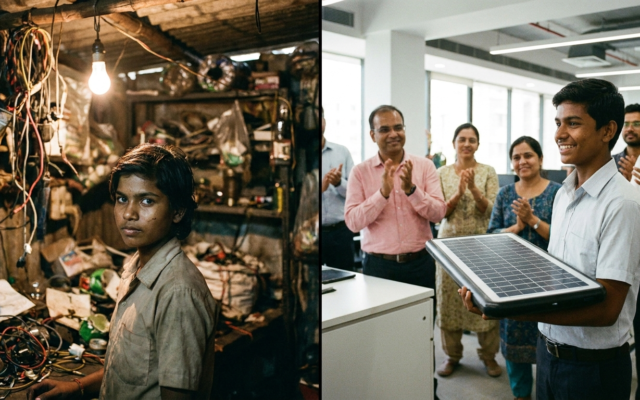
Take the example of a non-profit organisation in rural Bihar that has developed a simple, solar-powered tablet. This device provides access to educational content, agricultural best practices, and even basic healthcare information in local dialects. The organisation’s founder, a former software engineer who returned to his roots, worked closely with villagers to understand their specific needs and designed a user-friendly interface that requires minimal technical literacy. This initiative is dramatically improving learning outcomes for children and providing vital information to farmers, proving that the digital revolution can indeed reach the most remote corners of the country.
Another inspiring initiative is a platform developed in Chhattisgarh that connects local artisans and craftspeople directly with urban buyers. By cutting out intermediaries, this platform ensures that artisans receive a fairer price for their work, preserving traditional crafts and providing a sustainable income. The technology is relatively simple, relying on mobile phones and basic internet connectivity, but its impact is profound, empowering a community of artists and enriching the lives of consumers with authentic, handcrafted products. These are the real tech disruptors, not for profit, but for purpose.
The Champions of Local Waste Management
Waste management is a monumental challenge for India, but amidst the crisis, there are individuals and groups working diligently to turn the tide. These are the unsung heroes who are making our cities cleaner and our environment healthier, often with limited resources and facing significant public apathy.
In Bengaluru, a community group known as ‘Hasiru Dala’ (Green Brigade) has been instrumental in transforming the city’s informal waste-picking sector into a source of dignity and empowerment. They have organised thousands of waste pickers, providing them with training, healthcare, and fair wages. This approach not only diverts a significant amount of waste from landfills but also ensures that those who perform this vital service are treated with respect and receive their due. Their success has inspired similar initiatives in other Indian cities, demonstrating a scalable and humane model for waste management.
Another remarkable effort is happening in the small town of Alappuzha, Kerala, where an ambitious project is turning plastic waste into construction material. Engineers and local entrepreneurs have developed a low-cost technology to shred and melt discarded plastic, which is then mixed with bitumen to create durable roads. This innovative approach addresses two critical issues simultaneously: plastic pollution and the need for better infrastructure. The roads are not only stronger but also more cost-effective to build, a true win-win for the environment and the community.
Nurturing the Next Generation: Education and Empowerment
The future of any nation rests on the education and empowerment of its youth, and India’s quiet achievers are making significant strides in this domain. These individuals are going beyond conventional schooling, creating learning environments that foster critical thinking, creativity, and a sense of social responsibility.
In the remote tribal areas of Jharkhand, a retired teacher named Mrinalini Sharma has established a mobile library and learning centre. Armed with books, educational games, and a solar-powered projector, she travels to villages that lack formal schools, bringing knowledge and inspiration to children who would otherwise have limited access. Her dedication has not only improved literacy rates but has also instilled a love for learning in these young minds, opening up new possibilities for their futures. It’s a poignant reminder that education can bloom anywhere with the right kind of nurturing.
Similarly, in the bustling metropolis of Delhi, a young social entrepreneur has launched a programme that pairs underprivileged students with mentors from various professional fields. This mentorship initiative provides guidance on career choices, academic support, and crucial life skills. By connecting aspiring students with experienced professionals, it helps bridge the aspiration gap and equips them with the confidence and knowledge to pursue their dreams. The impact is visible in the improved academic performance and increased self-esteem of the participating students, a testament to the power of guided aspiration.
The Quiet Force of Cultural Preservation
In our rapidly modernising world, the preservation of India’s rich and diverse cultural heritage often falls to dedicated individuals working outside the mainstream. These are the custodians of traditions, languages, and arts that might otherwise fade into obscurity, ensuring that our unique identity continues to thrive.
In the northeastern state of Assam, an elderly scholar named Dr. Bhabesh Das has devoted his life to documenting and revitalising endangered folk art forms. He has travelled extensively, meticulously recording the techniques, stories, and songs associated with these dying arts. More importantly, he has established workshops where he teaches these skills to younger generations, ensuring their continuity. His efforts have brought national recognition to several art forms, preventing them from being lost forever and fostering a renewed appreciation for Assam’s cultural legacy.
Across the country, in the coastal regions of Gujarat, a group of women has taken it upon themselves to revive the ancient art of traditional embroidery, a craft that was once a vital source of income and cultural expression for their communities. Facing economic hardship and the allure of modern jobs, the younger generation had largely abandoned the intricate needlework. These women, through patient teaching and by creating a viable market for their exquisite creations, have not only revitalised the craft but have also provided economic empowerment to hundreds of women. Their success highlights how cultural preservation and economic upliftment can go hand in hand, a beautiful synergy of past and present.
“The most profound impact often comes not from grand pronouncements, but from the quiet, consistent dedication of individuals who choose to serve their communities with integrity and innovation.”
Frequently Asked Questions
What does the term “unsung hero” mean in the Indian context?
In India, an “unsung hero” refers to an ordinary individual whose significant contributions to society, whether through community service, innovation, or preserving traditions, go largely unrecognised by the wider public or media. They are the quiet achievers making a tangible difference without seeking fame or personal gain.
How can I support the work of unsung heroes in my community?
You can support unsung heroes by volunteering your time and skills, donating to their initiatives, raising awareness about their work through social media or local networks, and by simply acknowledging and appreciating their efforts. Even small acts of support can make a significant difference.
Are there government initiatives to recognise or support unsung heroes in India?
While not always widely publicised, various government bodies and cultural institutions do have programmes to acknowledge and support individuals making exceptional contributions in fields like social work, art, and environmental conservation. However, the true spirit of an unsung hero often lies in their work independent of such formal recognition.
Where can I find more stories of Indian unsung heroes?
You can find inspiring stories of Indian unsung heroes through dedicated non-profit organisations, community-focused news outlets, social media campaigns highlighting local changemakers, and through academic research on grassroots development and social impact. Many universities and research institutes also document such narratives.