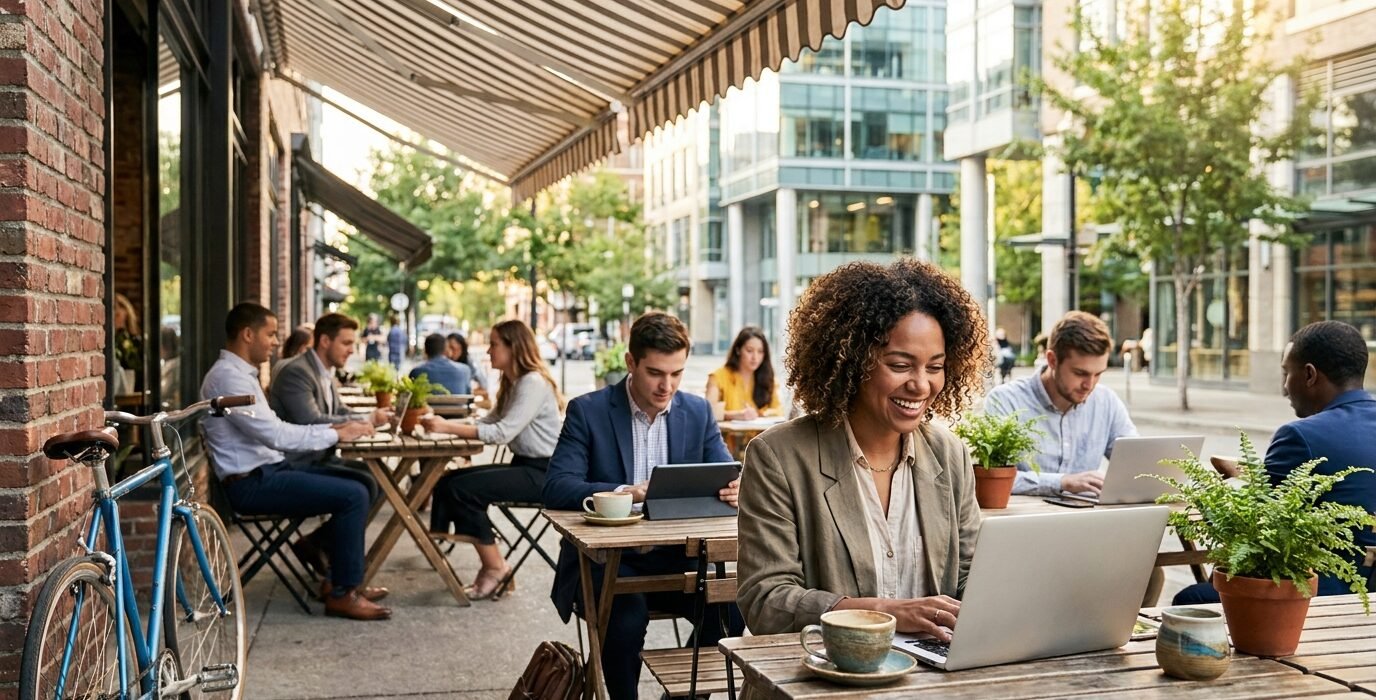
The clatter of keyboards used to be confined to bustling offices. Now, it echoes from trendy co-working cafes in Portland and sun-drenched balconies in Miami. A quiet revolution is underway. It’s transforming not just how we work, but where we live.
The “digital nomad” is a professional untethered by a physical office. They power their career from anywhere with a reliable internet connection. This is no longer a fringe phenomenon. They are a growing force. American cities are rethinking their very foundations. This isn’t just about attracting talent. It’s about reshaping urban life for a new generation of workers.
Key Takeaways:
Advertisement300×250 / native
- The digital nomad movement is reshaping urban economies and requiring cities to adapt infrastructure.
- Cities are actively creating incentives and improving amenities to attract remote workers.
- The trend impacts housing, co-working spaces, and community development.
- While offering opportunities, the rise of digital nomads also presents challenges for local residents.
- Understanding these shifts is crucial for anyone living or planning to live in a modern American city.
The Shifting Sands of the American Workplace
Remember those hushed cubicle farms? The fluorescent hum? The daily commute that stole precious hours? For millions of Americans, that’s becoming a distant memory. The pandemic acted as a colossal, albeit unintentional, social experiment. It proved what many already suspected: work doesn’t always need a fixed address. Suddenly, the concept of a “digital nomad” burst into the mainstream consciousness. This is someone who uses technology to work remotely while traveling. It’s more than just a trend. It’s a fundamental redefinition of the American workday.
This migration isn’t confined to backpackers in Bali or techies in Lisbon. It’s happening right here, across the sprawling landscapes of the United States. From the coffee shops of Seattle to the vibrant streets of Austin, people are logging in from wherever inspiration strikes. They’re developers coding on a beach in California. Graphic designers sketch in a New Orleans café. Marketing consultants strategize from a mountain cabin in Colorado. This newfound flexibility allows individuals to chase better weather. They can seek lower costs of living. Or simply a change of scenery. All while maintaining their professional careers. The economic ripple effect is undeniable. These nomads aren’t just passing through. They’re spending money. They’re seeking community. They’re contributing to local economies in ways that traditional tourism doesn’t always capture. Cities are taking note. They’re starting to actively court this mobile workforce. It’s a seismic shift. We’re moving away from an office-centric model. Towards something far more fluid and distributed. The average American worker now spends roughly 2.7 days per week working remotely. This is a significant leap from pre-pandemic levels. This statistic alone highlights the scale of this transformation.
Cities Roll Out the Red Carpet (and the Fast Wi-Fi)
Cities across the U.S. are waking up to the economic potential of this mobile workforce. They’re not just passively observing. They’re actively competing. Think of it as a new gold rush. But instead of pickaxes and panning for gold, it’s about high-speed internet and attractive visa programs. Many municipalities are realizing that digital nomads can inject new life and revenue into their economies. They can do this without requiring the massive infrastructure investments associated with attracting traditional industries.
Take Tulsa, Oklahoma, for example. A few years ago, they launched Tulsa Remote. This program offers up to $10,000 to individuals who move to the city and work remotely. It was a bold move. A deliberate effort to attract skilled workers and entrepreneurs. The program quickly gained traction. It attracted hundreds of applicants. More importantly, hundreds of new residents. These individuals aren’t just occupying apartments. They’re opening businesses. They’re joining local boards. They’re becoming active members of the community. Similarly, cities like Savannah, Georgia, with its charming historic district and burgeoning arts scene, are seeing an influx of remote workers. They’re drawn to its unique cultural appeal. They’re adapting by improving public Wi-Fi access in parks and public spaces. They’re fostering a more supportive ecosystem for co-working and freelance work. The conversation in city halls has shifted. It’s no longer just about attracting big corporations. It’s about creating an environment where individuals can thrive. This applies regardless of their employer’s physical location. This proactive approach is vital for cities looking to remain vibrant and competitive in the 21st century. In 2022 alone, over 15,000 applications were received for the Tulsa Remote program. This demonstrates the massive demand.
The Infrastructure Equation: More Than Just Wi-Fi
Attracting digital nomads isn’t just about offering financial incentives or a picturesque backdrop. It requires a deeper look at the underlying infrastructure and regulatory landscape. These individuals, while mobile, still need reliable services and supportive communities. Cities are grappling with how to provide for this new demographic. This often requires an upgrade to existing systems and a reevaluation of local policies.
One of the most significant areas of adaptation is housing. The traditional rental market, often geared towards long-term leases and family units, can be a challenge for someone who might only stay for six months or a year. Cities are seeing a rise in demand for flexible housing options. This includes serviced apartments, co-living spaces, and short-term rental platforms that cater to longer stays. In Denver, Colorado, for instance, developers are increasingly building mixed-use spaces. These incorporate co-living elements, designed to foster a sense of community among remote workers. Beyond housing, the availability of reliable and affordable high-speed internet is paramount. While many cities are investing in fiber optic networks, ensuring equitable access across all neighborhoods remains a critical challenge. Furthermore, access to co-working spaces is essential. These hubs provide not only a place to work. They also offer opportunities for networking and collaboration. This combats the isolation that can sometimes accompany remote work. Many cities are actively supporting the growth of these spaces. They recognize their value as economic engines and community anchors. Even public transportation needs to adapt. Nomads may not own cars. They rely on accessible transit to move between their accommodation, co-working spaces, and local amenities. The city of Pittsburgh has been investing heavily in its public transit system. It recognizes its importance for attracting and retaining a diverse workforce.
The Community Conundrum: Integration or Gentrification?
As digital nomads become a more visible part of urban life, cities face a delicate balancing act. On one hand, they bring new energy, skills, and economic activity. On the other, there are valid concerns about affordability and the potential for displacing long-term residents. This isn’t a new problem for cities. But the nature of the digital nomad movement adds a unique layer of complexity.
In popular hubs like Asheville, North Carolina, the influx of remote workers has undeniably boosted local businesses and the arts scene. However, it has also contributed to rising housing costs. This makes it harder for service workers and artists who have long called Asheville home to afford to stay. This creates a tension. A feeling that the very character that attracted these newcomers is being eroded. The challenge for city leaders is to foster an environment that welcomes new talent. They must also actively protect existing communities. This can involve implementing policies like inclusionary zoning. This requires a certain percentage of new housing developments to be affordable. It can also involve supporting community land trusts that aim to keep housing prices stable. Furthermore, cities need to consider how to integrate digital nomads into the fabric of local life. This goes beyond providing co-working spaces. It involves creating opportunities for engagement with local culture, volunteering, and participating in community events. The success of programs like “Neighborly” in cities like Austin, which connects new residents with local volunteer opportunities, highlights the importance of fostering genuine community connections. A survey by Upwork indicated that 59% of remote workers are considering relocating. This suggests that this trend is far from peaking. The question is not if cities will adapt. It’s how they will adapt. They must ensure that growth benefits everyone.
Surprising Synergies: Unexpected Benefits of a Mobile Workforce
While much of the discussion around digital nomads focuses on economic benefits and infrastructure, there are often surprising, less-talked-about advantages that emerge when cities embrace this lifestyle. These can range from a revitalization of underutilized spaces to an unexpected boost in local innovation and cultural exchange. It’s a reminder that urban adaptation is rarely a one-dimensional affair.
One fascinating aspect is the transformation of underused commercial spaces. As businesses embrace hybrid work models, traditional office buildings are seeing less foot traffic. Cities are exploring creative ways to repurpose these spaces. Digital nomads are often at the forefront of this movement. Think of former office floors being converted into vibrant co-working hubs. Or ground-level retail spaces becoming pop-up galleries and community event venues. In cities like Philadelphia, historical districts are seeing a resurgence. Remote workers are drawn to their unique charm and walkability. This leads to the renovation of older buildings. It also leads to the opening of new, independent businesses. Another unexpected benefit is the cross-pollination of ideas. Digital nomads come from diverse professional backgrounds and geographic locations. They bring with them a wealth of different perspectives and experiences. This can spark innovation in local startups. It can inspire new artistic endeavors. It can even lead to the development of new community initiatives. For example, a remote software engineer moving to a smaller city like Richmond, Virginia, might bring expertise. This expertise could help a local non-profit streamline its operations. It could even mentor aspiring tech entrepreneurs. This infusion of external talent can be a powerful catalyst for growth and progress. According to a recent study, 70% of digital nomads engage in local community activities. This contributes to a more vibrant social fabric. This often happens organically as they seek connection and purpose beyond their work.
The Future is Fluid: Planning for a Nomadic Tomorrow
The rise of the digital nomad is not a temporary blip. It’s a fundamental shift that is likely to shape urban development for decades to come. Cities that proactively adapt and embrace this evolving workforce will be the ones that thrive. They will offer a dynamic and inclusive environment for all residents. This requires forward-thinking leadership. It demands a willingness to experiment. It needs a deep understanding of the needs of a diverse and mobile population.
The implications for urban planning are profound. We’re moving towards cities that are more walkable, bikeable, and transit-oriented. They are designed to cater to individuals who prioritize lifestyle and community alongside career opportunities. This means investing in public spaces, green initiatives, and cultural amenities. These enhance the quality of life for everyone. Furthermore, cities need to foster a sense of belonging for digital nomads. They must ensure they are not just temporary visitors but integrated members of the community. This can be achieved through supporting local businesses. It involves encouraging civic engagement. It requires creating platforms for connection and collaboration. The success of cities like Boise, Idaho, which has actively marketed itself as a haven for remote workers by highlighting its outdoor recreation opportunities and relatively low cost of living, demonstrates the power of a targeted approach. They understand that attracting talent means offering more than just a job. It means offering a fulfilling lifestyle. The key is to balance the economic opportunities with the need to preserve the unique character and affordability of each city. This ensures that growth is sustainable and equitable. The story of the digital nomad is still being written. But one thing is clear: the cities that listen, adapt, and innovate will be the ones leading the way into this exciting new era of work and life.
The future of work is undeniably nomadic. Cities are just beginning to understand the full scope of its impact. As more professionals embrace the freedom of remote work, urban centers are being challenged to evolve. They are offering not just jobs but experiences. The cities that succeed will be those that create environments where innovation, community, and quality of life converge. They will welcome a new generation of residents who are redefining what it means to live and work in America.