Key Takeaways
- India’s EV market is poised for significant growth in 2026, driven by ambitious government policies and increasing consumer adoption.
- New incentive structures are making electric two-wheelers and three-wheelers more accessible, alongside emerging passenger EV options.
- Infrastructure development, particularly charging stations and battery swapping, is crucial for sustained momentum.
- Local manufacturing and R&D are key to India’s self-reliance in the EV ecosystem.
Navigating the New EV Landscape: Policy Tailwinds for 2026
The electric vehicle (EV) revolution in India is no longer a distant dream; it’s a rapidly unfolding reality. As we step further into 2026, a confluence of proactive government policies and burgeoning consumer interest is propelling the nation towards an electrified automotive future. For you, the discerning Indian consumer and global observer, understanding these shifts is key to grasping the immense opportunities and challenges ahead. The government’s commitment, evidenced by sustained policy interventions, is creating a fertile ground for both adoption and innovation.
This accelerated transition is not accidental. It’s the result of strategic planning aimed at reducing India’s reliance on fossil fuels, curbing pollution in its bustling metropolises, and fostering a robust domestic manufacturing sector. The impact is already visible, with electric two-wheelers and three-wheelers gaining significant market share, and passenger EVs slowly but surely entering the mainstream consciousness. We’re seeing a deliberate effort to make EVs not just an environmentally sound choice, but an economically viable and practical one for a wider demographic. The ambition is clear: to position India as a global leader in electric mobility.
The Evolving Policy Framework
At the heart of this transformation lies a dynamic policy framework. The Production Linked Incentive (PLI) schemes for Advanced Chemistry Cell (ACC) battery storage and automobiles are providing substantial financial impetus for local manufacturing and R&D. These initiatives are designed to attract significant investments, create jobs, and build a self-reliant EV ecosystem from the ground up. We’re witnessing a concerted effort to de-risk the investment landscape for manufacturers, encouraging them to set up sophisticated production facilities across the country.
Beyond manufacturing, policies are also focusing on demand-side incentives. While some direct subsidies might be phasing out or evolving, the focus is shifting towards creating a more sustainable ecosystem. This includes support for charging infrastructure, tax benefits for EV buyers, and stringent emission norms that indirectly favour electric alternatives. The aim is to create a virtuous cycle where increased adoption leads to economies of scale, further driving down costs and making EVs even more attractive. It’s a multi-pronged approach designed for long-term success.
The Two and Three-Wheeler Surge: Electrifying Daily Commutes
For most Indians, the first encounter with electric mobility is likely to be on two or three wheels. This segment has become the true vanguard of India’s EV revolution, thanks to its inherent practicality, lower upfront cost compared to cars, and a favourable policy push. The sheer volume of electric scooters and motorcycles hitting our roads is a testament to their growing acceptance. These vehicles are not just for the environmentally conscious urban elite; they are becoming the workhorses for delivery personnel and the daily companions for millions of commuters across Tier 1, Tier 2, and even Tier 3 cities.
The reasons for this surge are multifaceted. Government incentives, especially those aimed at reducing the initial purchase price, have been pivotal. Furthermore, the increasing variety of models available, catering to different needs and budgets, has broadened their appeal. From sleek, performance-oriented scooters to robust, load-carrying three-wheelers, the market is responding with diverse options. The lower running costs, owing to cheaper electricity compared to petrol, also make them a compelling economic proposition over their lifespan.
Beyond Subsidies: The Case for Battery Swapping
While direct subsidies have played a role, innovative solutions like battery swapping are proving crucial for the widespread adoption of electric two and three-wheelers. Companies are establishing networks of swapping stations, particularly in high-traffic areas and commercial hubs. This technology dramatically reduces downtime for users, especially for commercial fleets, by allowing them to exchange a depleted battery for a fully charged one in a matter of minutes. This eliminates the range anxiety associated with long charging times and makes electric vehicles a truly viable alternative for businesses reliant on constant mobility. We’re seeing a growing number of fleet operators, from food delivery services to e-commerce logistics, embracing this technology.
A surprising fact that highlights this segment’s impact: by the end of 2025, India’s electric two-wheeler market was projected to be the largest globally, a position it is set to solidify in 2026. This isn’t just about numbers; it signifies a fundamental shift in how millions of Indians perceive and use personal transportation, moving decisively towards cleaner, more efficient alternatives for their daily commutes and livelihoods.
Passenger EVs: Gaining Traction, Facing Hurdles
The passenger electric vehicle (EV) segment in India is steadily gaining momentum, though it still faces more significant hurdles than its two and three-wheeler counterparts. As of 2026, while the market share remains modest compared to the overall automotive industry, the trend is undeniably upward. A wider array of models from both established Indian manufacturers and international players are now available, offering consumers more choices in terms of price, features, and performance. From compact hatchbacks to feature-rich SUVs, the options are expanding, catering to a growing segment of the population willing to embrace electric mobility for their personal transport.
The primary drivers for this growth are a combination of increasing environmental awareness, the allure of advanced technology, and the long-term cost savings associated with lower running and maintenance expenses. The evolving policy landscape, with its focus on manufacturing incentives and charging infrastructure development, is also playing a crucial role in building manufacturer confidence and consumer trust. However, the higher upfront cost of passenger EVs remains a significant barrier for mass adoption, necessitating continued policy support and technological advancements to bring prices down.
The Charging Conundrum: Infrastructure is Key
The availability and accessibility of charging infrastructure remain a critical bottleneck for passenger EVs. While the government and private players are actively working to expand the charging network, it is still nascent, especially outside major urban centres. The current pace of installation, though accelerating, needs to keep pace with vehicle sales to prevent range anxiety from hindering further adoption. We’re seeing a push for both public charging stations and home charging solutions, but a truly ubiquitous network is still some way off.
A surprising challenge that emerged in late 2025 and continues into 2026 is the grid capacity in certain areas as EV adoption scales up. While the overall grid is expanding, localized capacity can become a strain during peak charging hours. This necessitates smart grid technologies and decentralized charging solutions to ensure a seamless experience for EV owners. Without robust and widespread charging infrastructure, the full potential of passenger EVs in India will remain unrealized.
Battery Technology and Manufacturing: The Road to Self-Reliance
India’s ambition to become a global EV hub hinges critically on its ability to develop and manufacture advanced battery technologies domestically. The reliance on imported battery cells has been a significant concern, impacting cost, supply chain security, and technological innovation. However, 2026 marks a period of accelerated progress in this domain, with substantial investments flowing into battery manufacturing facilities and research and development centres. The government’s PLI scheme for ACC battery storage is a cornerstone of this strategy, incentivizing companies to set up gigafactories and develop next-generation battery chemistries.
The focus is not just on assembling batteries but on mastering the entire value chain, from raw material sourcing and processing to cell manufacturing and recycling. This includes exploring alternative chemistries beyond lithium-ion, such as solid-state batteries, which promise greater safety, energy density, and faster charging capabilities. Localizing battery production is vital for making EVs more affordable and for ensuring that India benefits fully from the EV revolution, rather than being merely a consumer of foreign technology.
The Promise of Local Innovation
Beyond large-scale manufacturing, there’s a vibrant ecosystem of startups and research institutions in India working on innovative battery solutions. These include advancements in battery management systems (BMS), thermal management, and recycling technologies. The government is actively fostering this innovation through grants, incubation programs, and collaborations with academic institutions. We’re seeing promising developments in indigenous battery designs that are tailored to India’s unique climatic conditions and usage patterns.
A surprising development that gained traction in late 2025 and is set to expand in 2026 is the exploration of mineral extraction and processing within India, or through strategic international partnerships, to reduce dependence on specific countries for key battery materials like lithium and cobalt. This push towards greater self-sufficiency in battery technology is a complex but essential undertaking for India’s long-term EV vision.
Charging Infrastructure: Powering the EV Ecosystem
The expansion of charging infrastructure is the lifeblood of any burgeoning EV market, and India is no exception. As of 2026, significant strides are being made, driven by both government initiatives and private sector investments. We’re witnessing a rapid proliferation of public charging stations in cities, along highways, and at commercial establishments. The aim is to make charging as convenient as refueling a traditional vehicle, thereby alleviating range anxiety and encouraging wider EV adoption.
The types of charging solutions are also diversifying. Fast chargers are becoming more common along major arterial routes, enabling quick top-ups for long-distance travel. In residential areas and workplaces, slower, more accessible AC chargers are being installed. Furthermore, the concept of ‘charging-as-a-service’ is gaining traction, with companies offering integrated charging solutions for fleet operators and individuals. This includes smart charging management, billing, and maintenance.
The Role of Technology and Standardization
A crucial aspect of charging infrastructure development is standardization. Ensuring interoperability between different charging hardware providers and vehicle models is paramount for a seamless user experience. The government and industry bodies are working towards establishing common standards for connectors, communication protocols, and payment systems. This will prevent fragmentation and ensure that EV owners can charge their vehicles at any compatible station, regardless of the provider.
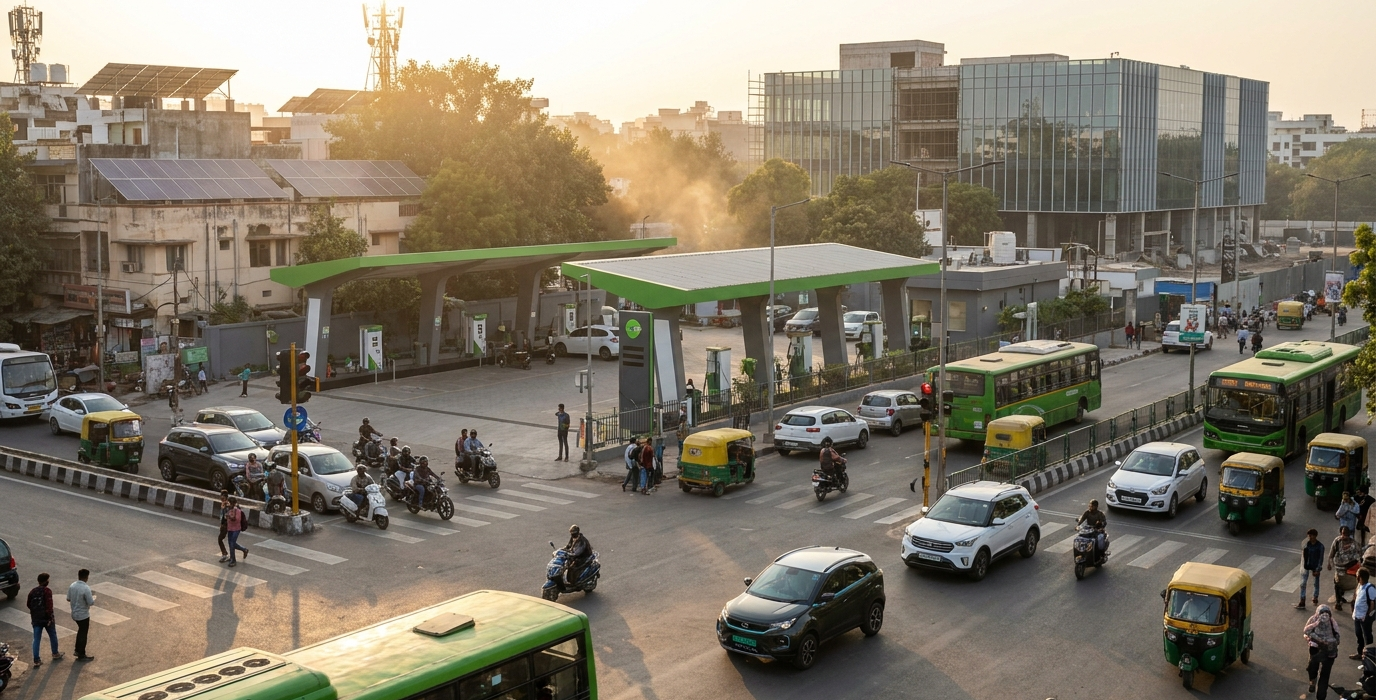
A surprising, yet critical, aspect of charging infrastructure development is the integration with renewable energy sources. Many new charging stations are being co-located with solar panels, allowing for cleaner, more sustainable charging. This not only reduces the carbon footprint of EV charging but also helps to manage grid load by utilizing decentralized power generation. The vision is to power the EV revolution with renewable energy, creating a truly green transportation ecosystem for India.
The Future Outlook: Opportunities and Challenges Ahead
Looking ahead, the future of electric vehicles in India, especially in 2026 and beyond, appears exceptionally bright, albeit not without its challenges. The trajectory indicates a sustained period of growth, driven by an increasingly supportive policy environment, maturing technologies, and a growing consumer appetite for sustainable mobility. We are likely to see a significant increase in the market share of EVs across all segments, from two-wheelers to commercial vehicles, and a growing presence of electric cars in our households.
The key opportunities lie in fostering local innovation, strengthening the domestic manufacturing ecosystem, and ensuring that the benefits of this transition are inclusive. India has the potential to not only meet its domestic demand but also to become a significant exporter of EVs and EV components. This requires continued investment in R&D, skill development, and the creation of robust supply chains. The government’s ‘Make in India’ and ‘Atmanirbhar Bharat’ (Self-Reliant India) initiatives are providing a strong foundation for this ambitious goal.
Navigating the Roadblocks
However, several challenges need to be addressed to ensure this optimistic outlook materializes. The most pressing is the need for continued investment in and expansion of charging infrastructure, particularly in rural and semi-urban areas, to ensure equitable access. The affordability of EVs, especially passenger cars, remains a barrier for a significant portion of the population, necessitating sustained efforts to reduce costs through technological advancements and economies of scale. Furthermore, the development of a robust battery recycling ecosystem is crucial for environmental sustainability and resource management.
A surprising yet significant challenge that will continue to be a focus in 2026 and beyond is the development of a skilled workforce capable of designing, manufacturing, maintaining, and repairing these new-generation vehicles and their complex components. Training and upskilling initiatives will be paramount to harness the full employment potential of the EV sector. Successfully navigating these challenges will cement India’s position as a global leader in the electric mobility revolution.
Frequently Asked Questions
What are the main government incentives for EV buyers in India in 2026?
In 2026, while direct subsidies may be evolving, incentives often include reduced GST on EVs and components, road tax exemptions in many states, and potential tax benefits on loans for EV purchases. Specific incentives can vary by state and vehicle type. The focus is shifting towards supporting manufacturing and infrastructure, which indirectly lowers EV costs.
How is India addressing the issue of charging infrastructure for EVs?
India is aggressively expanding its charging network through government initiatives like the Faster Adoption and Manufacturing of Electric Vehicles (FAME) scheme, which supports public charging infrastructure. Private players are also investing heavily in setting up charging stations in urban areas, highways, and commercial complexes. Battery swapping technology is also being promoted, particularly for two and three-wheelers.
Will electric cars become more affordable in India by 2026?
Affordability is gradually improving. While passenger EVs still have a higher upfront cost than their internal combustion engine counterparts, economies of scale, government production-linked incentives for manufacturers, and advancements in battery technology are expected to drive down prices. However, mass affordability will likely be a gradual process extending beyond 2026.
What are the key challenges facing the widespread adoption of EVs in India?
The primary challenges include the high upfront cost of EVs, the need for widespread and reliable charging infrastructure, range anxiety among consumers, and the availability of skilled manpower for servicing and repair. Addressing these will be crucial for sustained growth.
Is India developing its own battery technology, or is it still reliant on imports?
India is making significant strides in developing its own battery technology and manufacturing capabilities. Government policies like the PLI scheme for ACC battery storage are encouraging local production. While some reliance on imported components persists, the country is actively investing in R&D and Gigafactories to achieve greater self-sufficiency.