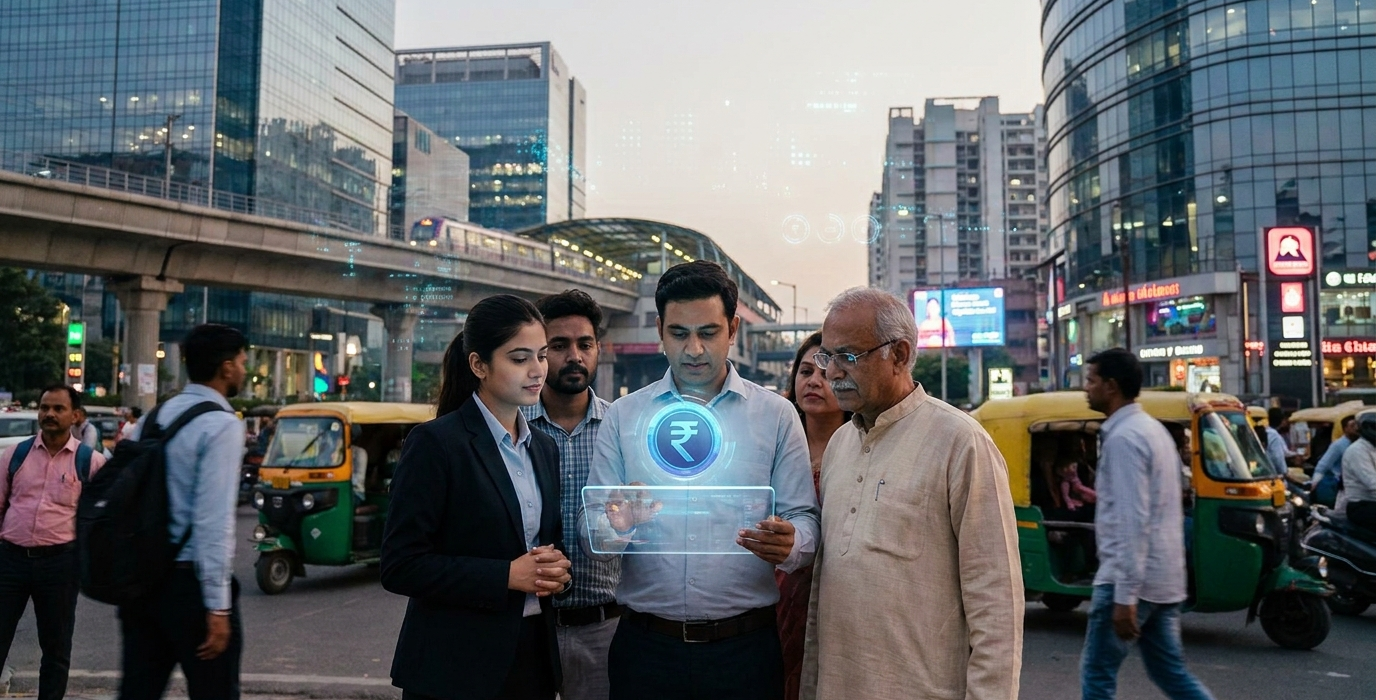
Key Takeaways
- India’s Digital Rupee (e₹) is evolving into a robust payment system, offering faster, cheaper, and more transparent transactions.
- Explore how e₹ can simplify everyday purchases, from street food in Delhi to groceries in Bengaluru, with reduced friction and enhanced security.
- Understand the potential for e₹ to boost financial inclusion, bringing banking services to previously unbanked or underbanked populations.
- Discover how businesses can leverage e₹ for streamlined supply chain payments and improved operational efficiency.
The Digital Rupee: A New Era of Payments in India
Imagine buying your morning chai from a roadside vendor in Connaught Place, Delhi, not with crumpled notes or a tap of your phone, but with a simple, secure digital transaction directly from your bank. This is the promise of India’s Central Bank Digital Currency (CBDC), the Digital Rupee, or e₹, which is steadily integrating into our financial landscape in 2026. It’s more than just another digital payment method; it’s a foundational shift in how we transact, designed to be as familiar as cash but with the inherent advantages of digital technology.
The Reserve Bank of India (RBI) has been meticulously piloting and refining the e₹, focusing initially on wholesale and then retail segments. We’re now seeing its potential blossom, moving beyond theoretical discussions to tangible benefits for everyday users and businesses alike. For you, the consumer, this means potentially lower transaction costs, faster settlement times, and enhanced security features that traditional payment systems often struggle to match. Think about sending money to a friend or paying your monthly electricity bill – these processes are set to become even smoother and more efficient.
The goal is to complement, not replace, existing forms of money. Your physical cash will continue to be legal tender. The e₹, however, offers an additional layer of convenience and innovation, aiming to bridge the gap between physical cash and current digital payment solutions. As we delve deeper, you’ll understand why this digital evolution is not just about technology, but about empowering every Indian with more control and access to their finances.
Unlocking Everyday Convenience: From Street Food to Shopping
The true test of any new currency is its usability in the everyday moments of our lives. For many of us across India, these moments often involve quick, informal transactions – buying fresh produce at a local mandi in Pune, grabbing a vada pav in Mumbai, or paying for a ride on an auto-rickshaw in Chennai. The Digital Rupee is being designed with these very scenarios in mind, aiming to make them as seamless as possible.
With e₹, you can expect transactions to be near-instantaneous. This means no more waiting for payments to clear or worrying about the exact change. The digital nature of e₹ also enhances security. Unlike physical cash, which can be lost or stolen, digital units of e₹ are protected by robust cryptographic measures. Furthermore, the RBI is exploring features like offline capabilities, which means you might be able to make payments even when your internet connection is spotty, a crucial feature for many parts of India.
Imagine you’re attending a bustling festival in Jaipur, surrounded by vibrant handicrafts and tempting street food stalls. With e₹, you could simply tap your device or scan a QR code to complete your purchase, receiving instant confirmation. This level of convenience and security can significantly enhance your shopping experience, allowing you to focus on enjoying the moment rather than the logistics of payment. The potential for e₹ to integrate with existing payment apps and wallets means you won’t need a completely new system; it will likely work within the ecosystem you’re already familiar with, making the transition smooth and intuitive.
Financial Inclusion: Bringing Banking to Every Doorstep
One of the most profound impacts of the Digital Rupee lies in its potential to drive financial inclusion across India. For millions who have traditionally been outside the formal banking system, e₹ could be a gateway to a world of financial services. Think of individuals in remote villages in rural Maharashtra or daily wage earners in the informal sector in Kolkata who may not have easy access to bank accounts or digital payment infrastructure.
The e₹ aims to bridge this gap by offering a simplified, accessible digital currency. It can be held in digital wallets, much like mobile money is used in many parts of Africa. This means that even without a traditional bank account, individuals can receive, store, and spend money. This is particularly revolutionary for women in rural areas who often manage household finances but lack formal financial access.
This innovation can empower them to participate more actively in the economy, save more securely, and access credit more easily. Furthermore, government welfare schemes and subsidies could be disbursed directly into these digital wallets, reducing leakage and ensuring that the intended beneficiaries receive the full amount. This direct benefit transfer (DBT) mechanism, powered by e₹, can significantly improve the lives of the most vulnerable sections of our society, fostering economic growth from the grassroots up. It’s a step towards a truly cashless and financially empowered India, where no one is left behind.
Business Opportunities: Streamlining Operations and Expanding Reach
The Digital Rupee isn’t just for consumers; it presents a significant opportunity for businesses of all sizes to enhance their operations and expand their reach. For small and medium-sized enterprises (SMEs) that form the backbone of India’s economy, e₹ can mean faster access to capital and more efficient payment processing. Imagine a textile manufacturer in Surat receiving payment for an order instantly via e₹, allowing them to immediately purchase raw materials for their next production run.
This speed of settlement reduces the need for working capital loans, freeing up valuable resources. For larger corporations, e₹ can revolutionize supply chain management. Payments to suppliers, distributors, and logistics partners can be automated and made in real-time, leading to greater transparency and reduced administrative overhead. This also helps build stronger relationships with partners, as timely payments are crucial for trust and cooperation.
Furthermore, businesses can leverage e₹ to offer innovative new services. Consider loyalty programs that reward customers with digital currency, or subscription models that automatically deduct payments. The potential for programmability in CBDCs means that payments can be embedded with specific conditions, such as being usable only for certain goods or services, or expiring after a certain period, which could be useful for targeted promotions. This opens up a new frontier for business strategies, allowing for greater precision and customization in customer engagement and operational efficiency.
Security and Transparency: A New Level of Trust
In an era where digital security is paramount, the Digital Rupee is being built with robust security protocols. The RBI is committed to ensuring that e₹ transactions are secure, private, and resilient. Unlike physical cash, which carries the risk of counterfeiting, e₹ is designed to be inherently secure, leveraging advanced cryptographic techniques to prevent fraud and unauthorized access.
Each unit of e₹ is unique and traceable, which enhances transparency in financial dealings. This traceability, while respecting user privacy, can help combat illicit activities such as money laundering and corruption. For you, this means a greater sense of trust and security when conducting your financial transactions. The RBI is carefully balancing the need for transparency with the imperative of user privacy, ensuring that your personal financial data remains protected.
The digital ledger technology underpinning e₹ allows for an immutable record of transactions, making it difficult to tamper with financial data. This inherent transparency can simplify audits for businesses and provide greater clarity for regulatory oversight, ultimately leading to a more stable and trustworthy financial ecosystem for everyone.
The Future of Money: Beyond the Horizon
The introduction and gradual expansion of the Digital Rupee represent a significant leap forward in India’s financial evolution. It’s a strategic move to harness the power of technology to create a more efficient, inclusive, and secure monetary system. As the e₹ ecosystem matures, we can anticipate even more innovative applications and services emerging, further transforming how we interact with money.
The potential for offline payments, smart contracts, and cross-border transactions facilitated by e₹ is immense. Imagine being able to send money to a family member in Singapore instantly and at a fraction of the current cost, or enabling automated payments for services based on predefined conditions. These are not distant dreams but tangible possibilities on the horizon.
As you continue to navigate your financial life in 2026 and beyond, understanding the Digital Rupee will be increasingly important. It’s an evolving tool that promises to empower individuals and businesses alike, making financial transactions smoother, more accessible, and more secure for all Indians. We are at the cusp of a new financial era, and the e₹ is at its heart.
“The Digital Rupee is not just about digitizing currency; it’s about democratizing finance, ensuring that the benefits of technological advancement reach every corner of India and every citizen.”
Frequently Asked Questions
What is the difference between Digital Rupee and UPI?
The Digital Rupee (e₹) is a digital form of the Indian Rupee issued by the Reserve Bank of India (RBI), functioning as legal tender. UPI (Unified Payments Interface) is a payment system that facilitates transactions between bank accounts using existing infrastructure. Think of e₹ as the money itself, and UPI as a method to move money between accounts.
Do I need a special app to use the Digital Rupee?
Initially, you will likely access e₹ through apps provided by participating banks or wallet providers. The RBI aims for seamless integration, so it’s probable that many existing payment apps will incorporate e₹ functionality over time. You won’t necessarily need a completely new app.
Will the Digital Rupee replace physical cash?
No, the Digital Rupee is designed to complement, not replace, physical cash. Cash will continue to be a valid legal tender. The e₹ offers an additional digital option for transactions.
Is the Digital Rupee safe to use?
Yes, the Digital Rupee is built with advanced security features and cryptography by the RBI to ensure secure and private transactions. It aims to be as safe, if not safer, than traditional digital payment methods.