Key Takeaways
- The 2027 completion of Mumbai’s Coastal Road is set to transform daily commutes, offering a vital artery for a city choking on traffic congestion.
- Expect significantly reduced travel times between the southern tip of Mumbai and Bandra, with potential ripple effects across the city’s western suburbs.
- The project integrates innovative engineering and sustainable design, including noise barriers and green spaces, aiming to mitigate environmental impact.
- While the immediate benefits are clear, long-term impacts on property values and public transport integration are areas to watch.
The Promise of a Smoother Ride: Unpacking the Coastal Road’s Impact
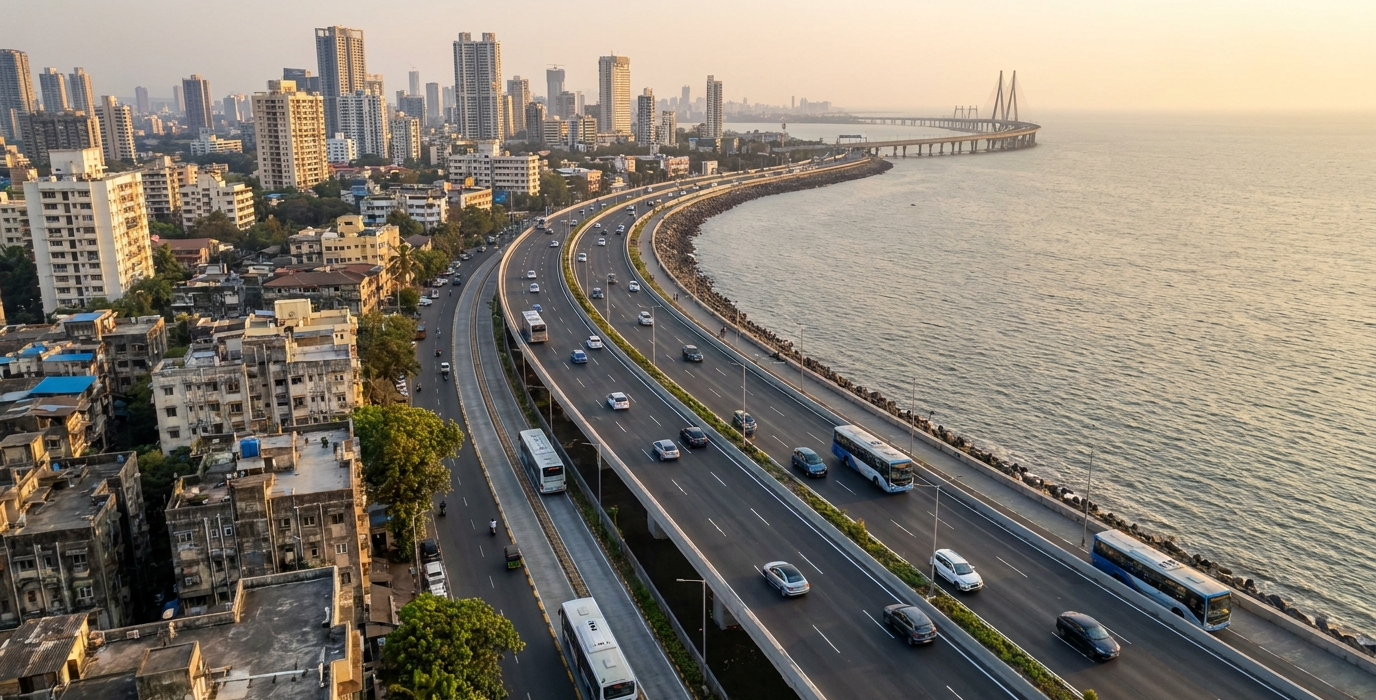
For decades, Mumbaikars have navigated a city defined by its relentless traffic. Gridlock is not just an inconvenience; it’s a daily reality that steals hours from lives and impacts the very pulse of India’s financial capital. The much-anticipated Coastal Road project, slated for substantial completion by early 2027, promises a dramatic shift in this narrative. This ambitious infrastructure undertaking aims to create a lifeline, a sleek new artery designed to bypass the notorious congestion of South Mumbai and connect it seamlessly with the western suburbs.
Imagine a journey from Nariman Point to Bandra that currently takes an hour or more, often during off-peak times, slashed to a fraction of that. This is the core promise of the Coastal Road. It’s more than just a road; it’s a strategic intervention designed to unshackle millions from the daily grind of traffic jams. As we inch closer to its operational phase, understanding the tangible benefits and the nuanced changes it will bring to your commute is crucial.
Engineering Marvels and Green Aspirations: Beyond the Asphalt
The Coastal Road is not merely a feat of civil engineering; it’s a testament to Mumbai’s drive to integrate modern infrastructure with environmental consciousness. Spanning approximately 10.58 kilometers, the initial phase connects Worli to Nariman Point, with further extensions planned. What sets this project apart are the innovative solutions embedded within its construction. For instance, the use of recycled construction debris from various projects across the city is a significant stride towards sustainable waste management.
Noise pollution, a constant companion in a bustling metropolis, has also been addressed. Extensive noise barriers have been strategically placed along residential areas bordering the road, aiming to minimize the auditory impact on communities. Furthermore, the project incorporates dedicated green belts and recreational spaces, transforming what could have been a purely utilitarian structure into an integrated urban landscape. These efforts are not just about building a road; they are about building a better urban environment for the people who live and work here.
Surprising Fact 1: A Submerged Section for Marine Life
One of the most intriguing aspects of the Coastal Road’s design is the submerged tunnel section near the Worli-Bandra Sea Link. This isn’t just for aesthetic appeal or traffic flow. Engineers have incorporated specific design elements to ensure minimal disruption to marine ecosystems. The aim is to allow for the natural movement of marine life and to prevent the blockage of tidal currents, a crucial consideration for the delicate balance of the Arabian Sea’s ecosystem adjacent to the city.
The Commuter’s New Reality: Reduced Travel Times and Enhanced Connectivity
The most immediate and profound impact of the Coastal Road will be felt by the daily commuters who traverse its length. The current travel time between South Mumbai and the western suburbs, notoriously unpredictable and often lengthy, is projected to reduce by as much as 70% in the initial operational phases. This translates to substantial time savings, allowing individuals more hours for work, family, or leisure, a priceless commodity in a city like Mumbai.
Consider a professional living in Bandra and working in the Colaba business district. A journey that currently consumes 90 minutes during peak hours could potentially be completed in under 30 minutes once the Coastal Road is fully operational. This isn’t just a minor improvement; it’s a fundamental alteration of daily life, alleviating the stress and fatigue associated with long commutes. The road’s strategic alignment is designed to absorb a significant portion of the traffic that currently strains the existing arterial roads, offering a much-needed respite.
Surprising Fact 2: Integrated with Public Transport Hubs
While the Coastal Road primarily caters to private vehicles and public buses, its design includes provisions for future integration with public transport hubs. Plans are already in motion to develop feeder services and connect entry/exit points to existing and planned metro lines and bus depots. This foresight ensures that the road doesn’t simply become another conduit for cars but contributes to a more holistic, multimodal transportation network for the city, encouraging a shift away from sole reliance on private vehicles in the long run.
Economic Ripples: Property Values and Business Dynamics
Any major infrastructure development of this magnitude inevitably sends ripples through the economic landscape, and the Coastal Road is no exception. The areas flanking the road, particularly those with direct access to its entry and exit points, are likely to witness a significant appreciation in property values. Proximity to improved connectivity is a prime driver for real estate demand, making these vicinities more attractive for both residential and commercial ventures.
Businesses that rely on efficient logistics and timely deliveries will also see substantial benefits. Reduced transit times can lead to lower operational costs and improved supply chain efficiency. This could, in turn, attract new businesses to set up operations in or around these well-connected areas. However, it’s also important to consider the potential impact on areas that might become less accessible or less desirable due to traffic diversion. The long-term economic story of the Coastal Road will be one of shifting accessibility and evolving urban desirability.
Navigating the Future: Challenges and Opportunities Ahead
While the Coastal Road promises a revolution in Mumbai’s urban mobility, it is not without its challenges. The sheer scale of the project, its proximity to the sensitive coastline, and the ongoing need for maintenance present continuous operational considerations. Ensuring the long-term structural integrity of the road, especially in a coastal environment prone to monsoons and tidal influences, will require vigilant monitoring and proactive upkeep.
Furthermore, the integration of the Coastal Road into the broader urban fabric needs careful planning. How will it interface with existing road networks? What measures will be in place to manage traffic flow at entry and exit points to prevent new bottlenecks? The success of the Coastal Road will ultimately depend on its seamless integration with the city’s existing and future transportation strategies, ensuring it serves as a true artery rather than an isolated marvel. The opportunity lies in leveraging this new infrastructure to foster a more livable, breathable, and economically vibrant Mumbai.
Frequently Asked Questions
When will the Coastal Road be fully operational?
While parts of the Coastal Road are expected to be operational earlier, the full completion and public opening are anticipated by early 2027. This includes the integration of all planned phases and ancillary facilities.
What are the expected toll charges on the Coastal Road?
Specific toll structures are still being finalized by the Brihanmumbai Municipal Corporation (BMC). However, reports suggest variable toll rates will be implemented, likely influenced by the type of vehicle and the distance traveled. Details are expected closer to the operational date.
Will the Coastal Road affect existing public transport routes?
The Coastal Road is designed to complement, not replace, existing public transport. It will integrate with bus routes and is planned to have connections to future metro lines, aiming to improve overall connectivity and encourage multimodal travel.
What measures are in place to protect the environment along the Coastal Road?
Significant environmental safeguards have been incorporated, including noise barriers, extensive green belts, and the use of recycled materials. The design also accounts for marine ecosystem protection, particularly in submerged sections.