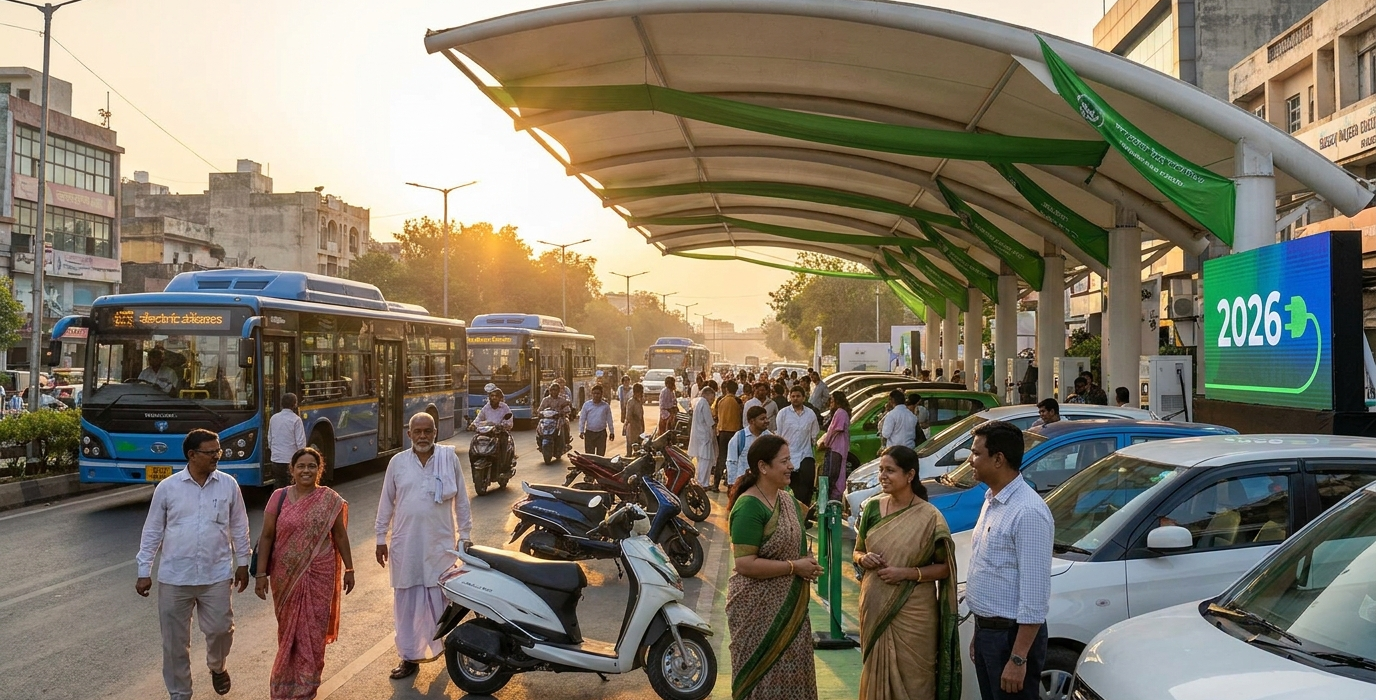
Key Takeaways
- India’s 2026 electric vehicle (EV) push is backed by substantial new government incentives, aiming to significantly boost adoption rates across two- and four-wheeler segments.
- Buyers can expect direct subsidies, reduced GST, and tax rebates, making EVs more financially attractive than ever before.
- The focus extends beyond individual buyers, with new schemes supporting charging infrastructure development and local manufacturing to create a robust EV ecosystem.
- Navigating these incentives requires understanding eligibility criteria and application processes, which are detailed in new government portals and dealer networks.
The 2026 Electric Vehicle Surge: What You Need to Know
India’s transition to electric mobility is entering a pivotal phase in 2026, driven by a robust new wave of government initiatives. The Ministry of Heavy Industries, in collaboration with state governments, has rolled out a comprehensive package designed to accelerate EV adoption at an unprecedented pace. This isn’t just about cleaner air; it’s a strategic move to bolster domestic manufacturing, reduce our reliance on imported fossil fuels, and position India as a global leader in sustainable transportation. For you, the consumer, this translates into tangible benefits and a clearer path to owning an electric vehicle.
The landscape of EV ownership is set to transform dramatically. Previous schemes have laid the groundwork, but the 2026 policies are more ambitious, targeting both individual buyers and the broader industry infrastructure. We’re seeing a multi-pronged approach that addresses cost, convenience, and long-term sustainability. This article will break down these new incentives, explain how you can benefit, and highlight what this means for the future of transport in India and beyond.
Direct Subsidies and Tax Breaks: Making EVs More Affordable
The most immediate impact for consumers comes in the form of enhanced direct subsidies. The government has allocated a significant budget for the FAME III (Faster Adoption and Manufacturing of Hybrid and Electric Vehicles) scheme, with a renewed focus on making electric two-wheelers and four-wheelers more accessible. For electric two-wheelers, expect subsidies that can significantly bring down the upfront cost, making them competitive with their petrol counterparts. Similarly, electric cars, especially those manufactured domestically, will see substantial purchase incentives, easing the initial financial burden.
Beyond direct subsidies, crucial tax reforms are also in play for 2026. The Goods and Services Tax (GST) on electric vehicles remains at a reduced rate, a policy that has proven effective and is set to continue. Furthermore, income tax rebates for individuals purchasing EVs are being expanded. This means that not only is the sticker price lower, but the overall cost of ownership, including tax benefits, becomes significantly more attractive. For instance, if you’re looking at a popular electric scooter, the combined effect of subsidies and potential tax deductions could save you tens of thousands of rupees in the first year alone.
Navigating the Subsidy Landscape
Understanding the specifics of these subsidies is key. While the general outlines are clear, the exact amount can vary based on the vehicle’s battery capacity, price, and whether it meets certain domestic content requirements. Dealers are your primary point of contact for the most up-to-date information regarding eligibility and how the subsidies are applied – often directly at the point of sale, reducing complexity for the buyer. We’ve seen a trend towards more transparent online portals where you can cross-reference eligible models and expected savings, simplifying the decision-making process considerably.
Charging Infrastructure: Addressing Range Anxiety
One of the biggest hurdles to widespread EV adoption has always been ‘range anxiety’ – the fear of running out of charge. The 2026 initiatives tackle this head-on with a massive push for expanding and improving charging infrastructure across the country. Significant investments are being channelled into setting up public charging stations, not just in major metropolitan areas like Delhi and Mumbai, but also along national highways and in Tier-2 and Tier-3 cities. This means more convenience and greater freedom to travel longer distances without worry.
This isn’t just about more charging points; it’s also about faster and more accessible charging. The government is encouraging the adoption of fast-charging technologies, reducing the time you spend waiting to get back on the road. Imagine pulling over at a highway dhaba in Gujarat or a roadside eatery near Chennai and finding a rapid charger readily available. Furthermore, there are new incentives for apartment complexes and corporate offices to install charging facilities, making it easier for you to charge your vehicle at home or at work. This integrated approach aims to build a seamless charging ecosystem that supports your daily commute and longer journeys.
The Role of Private Players
Crucially, these government initiatives are designed to catalyse private sector involvement. Companies are being encouraged through policy support and financial incentives to set up and operate charging networks. This leads to greater competition, innovation, and ultimately, better service for consumers. We are already seeing partnerships forming between automotive manufacturers and energy companies to create comprehensive charging solutions. The goal is to make charging as ubiquitous and straightforward as finding a petrol pump today.
Boosting Local Manufacturing: The ‘Make in India’ EV Dream
A cornerstone of the 2026 EV policy is the strong emphasis on bolstering domestic manufacturing. The government is keen to reduce India’s dependence on imported components, particularly batteries, and foster a self-reliant electric vehicle ecosystem. This means more opportunities for Indian companies, job creation, and potentially, more affordable EVs as local supply chains mature.
There are targeted incentives for manufacturers to invest in R&D, set up production facilities for EV components like motors and power electronics, and scale up battery manufacturing capabilities within India. For you, this focus on local production has several benefits. It can lead to a wider variety of EV models tailored to Indian conditions and preferences. Moreover, domestically produced EVs often qualify for higher subsidies, making them an even more attractive proposition. The aim is to create a virtuous cycle where increased demand fuels local production, which in turn lowers costs and further drives demand.
Surprising Fact: The Battery Recycling Mandate
A particularly forward-looking aspect of the 2026 policy is the stringent mandate for battery recycling and end-of-life management. Manufacturers are now incentivised not just to produce batteries, but also to establish robust systems for their collection, refurbishment, and recycling. This addresses a critical environmental concern and ensures that valuable materials are recovered, reducing the need for new raw material extraction. It’s a holistic approach that looks beyond the initial sale to the entire lifecycle of the vehicle.
Two-Wheeler Dominance: Electrifying India’s Roads
India’s automotive market is heavily dominated by two-wheelers, and the 2026 push recognises this. The incentives are particularly aggressive for electric scooters and motorcycles, aiming to make them the default choice for millions of daily commuters. The subsidies for electric two-wheelers are designed to directly offset a significant portion of their cost, bringing them on par with, or even cheaper than, their petrol counterparts over their lifecycle.
We are seeing a surge in new electric scooter models being launched, many of which are designed with Indian road conditions and rider habits in mind. Expect to see more durable designs, better suspension, and longer-lasting batteries. The government’s support extends to encouraging battery swapping infrastructure, which can significantly reduce charging times to mere minutes, further enhancing the practicality of electric two-wheelers for busy urban lifestyles. If you live in a city like Bengaluru or Pune, the shift to electric scooters is already palpable, and these new policies will only accelerate that trend.
The TCO Advantage
The Total Cost of Ownership (TCO) for electric two-wheelers is becoming increasingly favourable. When you factor in lower running costs (electricity vs. petrol), reduced maintenance (fewer moving parts), and the new subsidies, the economic argument for switching is becoming undeniable. For a daily commuter travelling 30-40 km, the savings in fuel and maintenance over a year can be substantial, quickly recouping any initial price difference.
Four-Wheeler Adoption: From Niches to Mainstream
While two-wheelers are leading the charge, the 2026 policies also aim to push electric cars into the mainstream. For individual car buyers, the expanded subsidies and tax benefits make electric sedans and SUVs a more viable option. The government is working with manufacturers to introduce a wider range of electric vehicles across different price segments, ensuring there’s an option for various budgets and needs.
Beyond individual purchases, there’s a significant push for the electrification of commercial fleets. Ride-hailing services, delivery companies, and corporate car fleets are being incentivised to transition to EVs. This is crucial because it increases the visibility of EVs on the road, normalises their usage, and builds confidence among potential individual buyers. Imagine seeing more electric taxis in cities like Kolkata or Hyderabad; this exposure is vital for changing perceptions. The availability of more charging points and a wider variety of models are key to unlocking this segment’s potential.
Surprising Fact: The Government EV Procurement Push
A little-known but significant aspect of the 2026 push is the increased mandate for government departments and public sector undertakings to procure electric vehicles. This creates a stable demand for EV manufacturers and sends a strong signal to the market about the government’s commitment to electric mobility. It also means you’ll likely see more electric official vehicles in your city, further normalising the technology.
| Vehicle Segment | Typical Subsidy (Estimated % of Price) | Key Benefit | Target Audience |
|---|---|---|---|
| Electric Two-Wheelers | 15-30% | Significant upfront cost reduction, lower running costs | Daily commuters, urban dwellers |
| Electric Cars (Domestic) | 10-20% | Reduced purchase price, tax rebates | Families, urban professionals |
| Electric Commercial Vehicles | Variable (Fleet-based) | Lower operational costs, environmental compliance | Logistics companies, taxi aggregators |
| Electric Buses | High (Government procurement) | Public transport decarbonisation, reduced air pollution | State transport corporations |
Looking Ahead: A Greener Future for Indian Mobility
The 2026 Indian EV policies represent a determined stride towards a sustainable and electrified future. By combining direct financial incentives with strategic investments in infrastructure and manufacturing, the government is creating a powerful ecosystem for EV growth. This isn’t just about meeting emission targets; it’s about fostering innovation, creating economic opportunities, and providing consumers like you with cleaner, more efficient, and increasingly affordable transportation options.
The journey to full electrification will undoubtedly have its challenges, but the renewed vigour and comprehensive nature of these 2026 schemes suggest a strong commitment to overcoming them. As consumers, your engagement and adoption of EVs are crucial to the success of this transition. By understanding the benefits and navigating the available incentives, you can play a direct role in shaping India’s cleaner transportation future. The next few years promise to be an exciting period for electric mobility in India, and for all of us who will be driving, or riding, into that future.
“The 2026 EV push is more than just incentives; it’s a fundamental reorientation of India’s automotive sector towards sustainability and self-reliance.”
Frequently Asked Questions
What is the main goal of the 2026 EV incentives?
The primary goal is to significantly accelerate the adoption of electric vehicles across India by making them more affordable and convenient for consumers, while also boosting domestic manufacturing and charging infrastructure.
Are the subsidies available for all types of electric vehicles?
Yes, the incentives cover electric two-wheelers, three-wheelers, four-wheelers (cars and commercial vehicles), and even electric buses, though specific subsidy amounts and eligibility criteria may vary by segment and vehicle specifications.
How can I find out if a specific EV model is eligible for these incentives?
You can typically find this information through the official websites of the Ministry of Heavy Industries, state transport departments, or by consulting with authorised dealerships of EV manufacturers. Many manufacturers also list eligible models and potential savings on their own websites.
Will the cost of electricity for charging EVs increase due to these policies?
The policies primarily focus on vehicle purchase and infrastructure. While electricity tariffs are determined by regulatory bodies, the aim is to make EV charging cost-effective compared to fossil fuels. Specific tariffs for EV charging are evolving, and many states are introducing dedicated EV charging tariffs.
What is the timeline for these 2026 EV incentives?
These incentives are part of the government’s 2026 fiscal year planning and are expected to be implemented throughout 2026 and potentially extended or revised in subsequent years based on their effectiveness and market response.