Key Takeaways
- Mumbai’s rooftop farms are transforming underutilised urban spaces into productive agricultural hubs.
- These initiatives offer a fresh, local food source, reducing reliance on long-distance supply chains and cutting carbon footprints.
- Beyond food, rooftop farms foster community engagement, provide educational opportunities, and enhance urban biodiversity.
- Challenges like water access, initial investment, and regulatory hurdles persist, but innovative solutions are emerging.
The Concrete Jungle Blooms: Rooftops Reimagined
Mumbai, a city synonymous with relentless urban sprawl and a towering skyline, is experiencing a quiet revolution. Across its vast expanse, from the affluent terraces of South Mumbai to the bustling rooftops in the suburbs, a new kind of green is taking root. Rooftop farming is no longer a niche hobby; it’s a burgeoning movement reshaping how Mumbaikars connect with their food and their city.
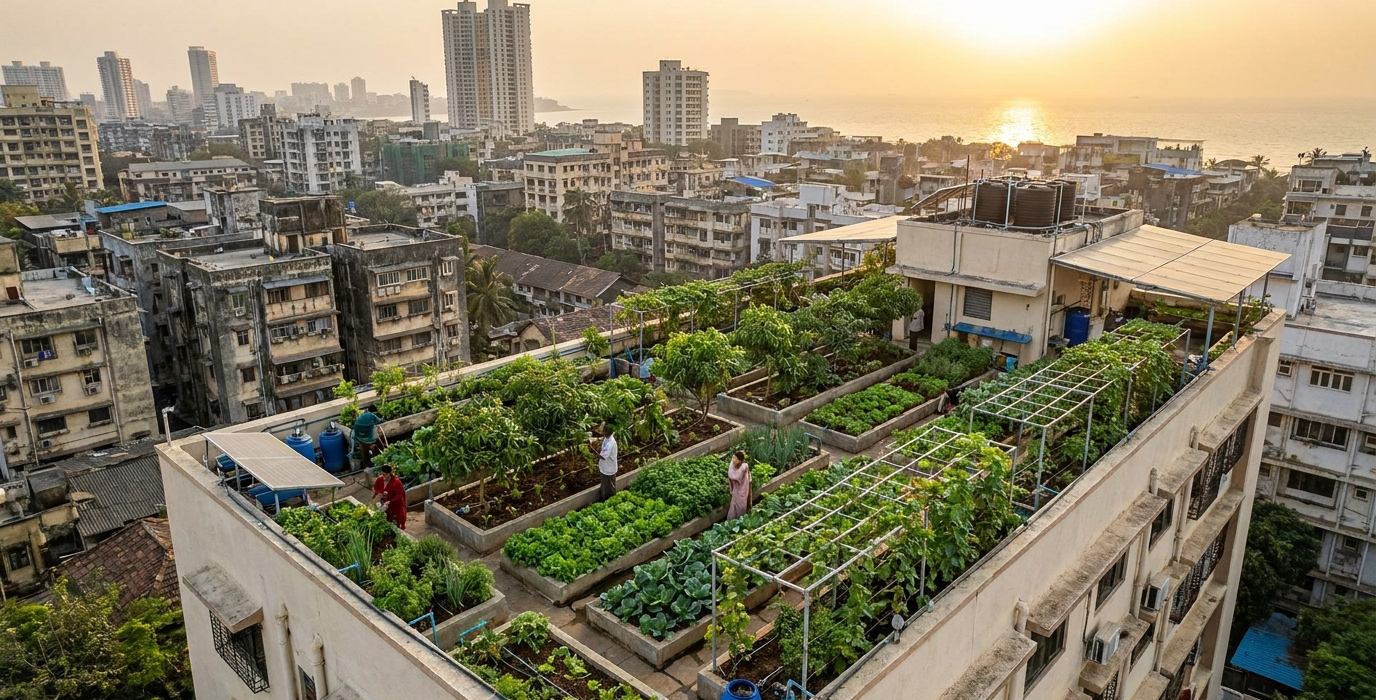
Imagine stepping onto a terrace, the cacophony of traffic fading, replaced by the gentle rustling of leaves and the hum of bees. Here, vibrant greens, plump tomatoes, and fragrant herbs thrive, nurtured by dedicated urban farmers. This transformation of barren, sun-baked spaces into productive oases is not just about aesthetics; it’s about resilience, sustainability, and a deeper connection to nature in one of the world’s most densely populated metropolises.
We’re seeing a growing number of Mumbaikars, from individuals tending to small balcony gardens to larger community initiatives, embracing this urban agriculture trend. It’s a response to the increasing awareness of food miles, the desire for fresher produce, and a yearning for a greener, more liveable city. This shift is particularly significant in a city where arable land is scarce and food often travels hundreds, if not thousands, of kilometres to reach our plates.
From Barren Terraces to Bountiful Harvests: The Mechanics of Urban Farming
The essence of rooftop farming in Mumbai lies in its ingenious adaptation to the urban environment. Unlike traditional agriculture, it leverages underutilised spaces – the vast, often unused expanses of concrete that crown residential and commercial buildings. These farms employ a variety of techniques, from raised beds filled with nutrient-rich soil to sophisticated hydroponic and aquaponic systems that use minimal water.
One of the most popular methods you’ll find is the use of grow bags and containers. These are lightweight, manageable, and allow for precise control over the growing medium. Many urban farmers in areas like Bandra and Andheri are opting for organic compost, often sourced from household waste, creating a closed-loop system that further enhances sustainability. Hydroponics, which grows plants in nutrient-rich water without soil, and aquaponics, which combines aquaculture with hydroponics, are also gaining traction for their water efficiency and faster growth cycles.
A surprising fact about Mumbai’s rooftop farms is their scale and diversity. While many are small, personal gardens, there are now several larger, professionally managed operations supplying directly to restaurants and local markets. These aren’t just growing basic vegetables; we’re seeing exotic herbs, microgreens, and even some fruits being cultivated with remarkable success. For instance, a community farm in Powai has managed to grow strawberries, a crop typically associated with cooler climates, by carefully managing temperature and humidity.
Nourishing the City: The Food Security and Health Benefits
The most direct impact of Mumbai’s rooftop farms is the provision of exceptionally fresh produce. Imagine picking your salad greens minutes before preparing your meal, or enjoying tomatoes that haven’t spent days in transit. This hyperlocal approach significantly enhances the nutritional value of food, as vitamins and minerals are preserved when produce is consumed soon after harvesting.
Beyond individual kitchens, these farms contribute to food security for the wider community. By decentralising food production, they reduce the vulnerability of the city’s food supply to disruptions in long-distance logistics, whether due to weather, strikes, or other unforeseen events. This is especially critical in a megacity like Mumbai, which relies heavily on external sources for its sustenance.
The health benefits extend beyond nutrition. Access to fresh, pesticide-free produce is a significant advantage. Many rooftop farmers meticulously avoid chemical pesticides and herbicides, opting for natural pest control methods. This not only ensures healthier food for consumers but also contributes to a healthier environment on the rooftops themselves, supporting beneficial insects and pollinators. We’ve also seen a rise in community-supported agriculture (CSA) models, where residents subscribe to a farm’s harvest, ensuring consistent access to this fresh produce.
Beyond the Harvest: Community, Education, and Biodiversity
Rooftop farming in Mumbai is far more than just a source of food; it’s a powerful catalyst for community building and education. These green spaces often become vibrant hubs where neighbours connect, share knowledge, and work together. Imagine community gardening sessions in a bustling neighbourhood like Chembur, where people of all ages come together, hands in the soil, fostering a sense of belonging and shared purpose.
Educational opportunities abound. Many rooftop farms host workshops and training sessions on urban gardening techniques, composting, and sustainable living. Schools are increasingly integrating visits to these farms into their curriculum, teaching children about where their food comes from and the importance of environmental stewardship. This hands-on learning is invaluable in an urban setting, providing a tangible connection to nature that might otherwise be missing.
The ecological benefits are also substantial. These green rooftops act as urban oases for biodiversity. They provide habitats for birds, bees, butterflies, and other beneficial insects, which are often struggling to find space in the concrete landscape. A surprising fact is that some rooftop farms are now actively cultivating native plant species to further support local wildlife, contributing to a more resilient urban ecosystem. These green patches also help to mitigate the urban heat island effect, absorbing sunlight and releasing moisture, thus cooling the surrounding environment.
Navigating the Hurdles: Challenges and Innovative Solutions
Despite the immense potential, rooftop farming in Mumbai faces its share of challenges. Access to water is a primary concern, especially in a city that experiences monsoonal rains but also faces water scarcity during other periods. Many buildings have older plumbing systems not designed for the constant water needs of agriculture, and the cost of water can be prohibitive.
Another significant hurdle is the initial investment. Setting up a functional rooftop farm, whether it’s for personal use or commercial purposes, requires capital for soil, containers, irrigation systems, and potentially even shade nets or greenhouses. For many aspiring urban farmers, this upfront cost can be a major deterrent. Furthermore, navigating building regulations and obtaining necessary permissions from housing societies or local authorities can be complex and time-consuming.
However, innovative solutions are emerging to address these obstacles. For water issues, rainwater harvesting systems are being integrated into farm designs, and efficient drip irrigation techniques are employed to minimise water usage. Many initiatives are exploring partnerships with the Brihanmumbai Municipal Corporation (BMC) to streamline permissions and gain access to resources. The rise of social enterprises and crowdfunding platforms is also helping to bridge the funding gap, making urban farming more accessible. For instance, a collective in Wadala has developed a modular, low-cost vertical farming system that significantly reduces the initial setup costs.
The Future of Urban Agriculture: Scaling Up and Sustaining Growth
The trajectory of rooftop farming in Mumbai points towards a future where urban agriculture plays an increasingly integral role in the city’s fabric. We’re seeing a shift from individual efforts to more organised, scalable models. This includes the development of urban farming cooperatives and the integration of rooftop farms into the designs of new residential and commercial buildings, making green spaces a standard feature rather than an afterthought.
Technological advancements will also be crucial. The adoption of smart farming technologies, such as automated irrigation, sensor-based monitoring of soil conditions, and AI-driven pest detection, will enhance efficiency and yield, making urban farming more commercially viable. These technologies can help optimise resource use, ensuring that every drop of water and every nutrient is utilised effectively. We could soon see rooftop farms equipped with miniature weather stations and automated nutrient delivery systems.
Policy support will be vital to sustaining this growth. The government and civic bodies have a crucial role to play in creating an enabling environment through incentives, simplified regulations, and access to subsidies or low-interest loans for urban farmers. A surprising aspect of this growth is the potential for job creation, not just in farming itself but also in related fields like agri-tech, logistics, and marketing of urban-grown produce. The vision is a Mumbai where fresh, healthy food is a readily available commodity, grown within the city limits, fostering a more sustainable, resilient, and vibrant urban life for all its residents.
Frequently Asked Questions
Can anyone start a rooftop farm in Mumbai?
Yes, with proper planning and understanding of the requirements, anyone can start a rooftop farm. Consider your available space, sunlight, and water access. Local regulations and building society permissions are also crucial factors to investigate.
What are the biggest challenges for rooftop farmers in Mumbai?
The primary challenges include access to consistent water supply, the initial investment cost for setting up the farm, and navigating building permissions and society rules. Managing pests and diseases in a dense urban environment can also be demanding.
How much does it cost to set up a small rooftop farm?
The cost can vary significantly. A small personal balcony garden using grow bags and basic tools might cost anywhere from ₹5,000 to ₹15,000. A more sophisticated setup with hydroponics or a larger area could range from ₹50,000 to several lakhs, depending on the scale and technology used.
Can rooftop farms in Mumbai supply produce to restaurants?
Absolutely. Many urban farms are already supplying fresh produce directly to restaurants, cafes, and even local markets. This offers chefs incredibly fresh ingredients and a unique selling point, while supporting local urban agriculture initiatives.