Key Takeaways
- Indian startups are spearheading a revolution in sustainable technology, with innovations ranging from solar energy storage to biodegradable packaging and AI-driven waste management.
- The focus is on practical, scalable solutions addressing India’s unique environmental challenges, often leveraging local resources and traditional knowledge.
- Investors are increasingly backing green tech, recognizing both the environmental imperative and the significant market opportunities.
- Consumers are playing a crucial role, demanding eco-friendly products and services, which in turn fuels further innovation and adoption.
The Dawn of India’s Green Tech Renaissance
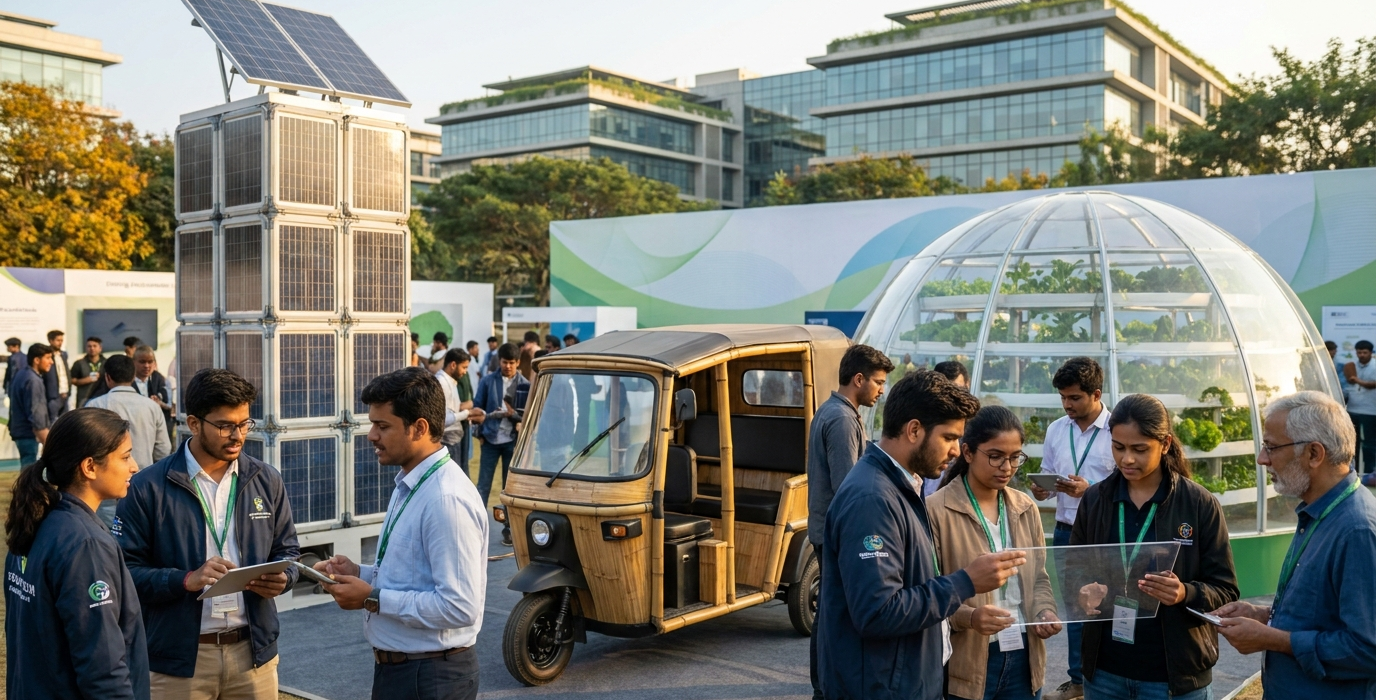
India is no longer just a participant in the global sustainability conversation; it’s rapidly becoming a leader. As of August 2026, a vibrant ecosystem of Indian startups is proving that environmental responsibility and economic growth can, and must, go hand in hand. We’re witnessing a profound shift, driven by ingenuity and a deep-seated understanding of our nation’s pressing ecological needs. From the scorching deserts of Rajasthan to the lush Western Ghats, innovative solutions are emerging, tackling everything from burgeoning waste piles to the critical need for clean energy.
This isn’t about incremental changes; it’s a full-blown renaissance. The ingenuity on display is remarkable, often born from necessity and a keen eye for what works in the Indian context. Think of solar power solutions designed for remote villages or agricultural technologies that drastically reduce water consumption. These aren’t abstract concepts; they are tangible innovations making a real difference on the ground. We are seeing a generation of entrepreneurs who are as passionate about protecting our planet as they are about building successful businesses.
The spirit of innovation is palpable. It’s fueled by a confluence of factors: increasing government support for green initiatives, growing investor appetite for impact-driven ventures, and a rising awareness among the Indian populace about the importance of sustainability. This creates a fertile ground for new ideas to take root and flourish. We are entering an era where “made in India” increasingly means “made sustainably.”
Powering the Future: Breakthroughs in Clean Energy Storage
One of the most significant hurdles to widespread renewable energy adoption has always been energy storage. The sun doesn’t always shine, and the wind doesn’t always blow. However, Indian startups are now tackling this challenge head-on with groundbreaking battery technologies and innovative storage solutions. These aren’t just incremental improvements; they are paradigm shifts that promise to unlock the full potential of solar and wind power across the nation.
Consider the work being done by companies developing next-generation battery chemistries. They are moving beyond traditional lithium-ion, exploring options like solid-state batteries that offer higher energy density, improved safety, and longer lifespans. The goal is to make renewable energy not just an alternative, but the primary choice for powering our homes, industries, and transportation networks. This is crucial for India’s ambitious renewable energy targets, aiming for widespread decarbonization by 2047.
Furthermore, innovative approaches to grid-scale energy storage are emerging. Startups are deploying modular battery systems that can be scaled up to meet the demands of entire cities. They are also integrating these systems with smart grid technology to ensure a stable and reliable power supply, even when renewable energy generation fluctuates. This level of sophistication was unthinkable just a few years ago, but it’s now a reality being built by Indian engineers.
A surprising fact in this domain is the focus on locally sourced materials for battery production. Instead of relying solely on imported rare earth minerals, some Indian firms are exploring alternatives and even developing circular economy models to recycle and reuse battery components. This not only reduces costs but also enhances India’s energy security and minimizes its environmental footprint from raw material extraction. This self-sufficiency is a cornerstone of our sustainable energy future.
Solar Innovations Beyond the Panel
While solar panel efficiency continues to improve, the real revolution lies in how we store and utilize the generated power. Startups are developing intelligent energy management systems that optimize power consumption and distribution. These systems use AI and machine learning to predict energy needs and seamlessly switch between grid power and stored renewable energy, ensuring maximum efficiency and minimal waste. This is vital for balancing the grid and preventing power outages.
We are also seeing advancements in distributed energy solutions. Instead of large, centralized power plants, the focus is shifting towards smaller, localized energy generation and storage units. This approach enhances resilience, reduces transmission losses, and empowers communities to manage their own energy needs more effectively. Imagine a village in rural Maharashtra powering itself entirely through locally generated solar energy, stored in batteries developed by an Indian startup.
Rethinking Resources: Circular Economy and Waste Management
The sheer scale of waste generated in India presents a monumental challenge, but it’s also a fertile ground for innovation. Startups are leading the charge in transforming waste from a problem into a valuable resource, embracing circular economy principles to create sustainable loops. This shift is crucial for reducing landfill burden, conserving natural resources, and mitigating pollution.
One of the most exciting areas is biodegradable and compostable materials. Companies are developing alternatives to single-use plastics derived from agricultural waste, such as banana leaves or corn husks. These materials are designed to break down naturally, leaving no harmful residue. This is particularly impactful for packaging, cutlery, and other disposable items that contribute heavily to plastic pollution. The aim is to eliminate the need for petroleum-based plastics entirely.
Beyond materials, advanced waste-to-energy technologies are gaining traction. Instead of just burying or burning waste, startups are employing sophisticated processes to convert organic waste into biogas for cooking and electricity generation. They are also exploring methods to extract valuable components from electronic waste and industrial byproducts. This not only generates clean energy but also recovers precious metals and raw materials that can be reintegrated into the manufacturing process.
The impact of these initiatives is profound. For instance, a startup based in Chennai has developed a system that converts food waste from restaurants and markets into high-quality organic fertilizer. This fertilizer is then sold back to local farmers, creating a closed-loop system that reduces waste, enriches soil, and supports agricultural productivity. This kind of integrated approach is what defines the future of waste management.
AI’s Role in Smarter Waste Streams
Artificial intelligence is playing a pivotal role in optimizing waste management processes. Startups are developing AI-powered sorting systems that can identify and separate different types of waste with remarkable accuracy. This dramatically increases the efficiency of recycling plants and reduces contamination. Predictive analytics are also being used to forecast waste generation patterns, allowing for more efficient collection routes and resource allocation.
Furthermore, digital platforms are connecting waste generators with recyclers and waste processors. These platforms use technology to track waste streams, verify compliance with environmental regulations, and create transparency in the waste management ecosystem. This ensures that waste is handled responsibly and efficiently, from collection to final processing. The goal is to create a truly traceable and accountable waste management system.
Sustainable Agriculture: Feeding the Nation, Protecting the Planet
Agriculture, the backbone of India, is undergoing a green transformation. Startups are innovating across the entire agricultural value chain, from seed to table, focusing on resource efficiency, reduced chemical dependence, and climate resilience. These innovations are critical for ensuring food security while minimizing the environmental impact of farming practices.
We are seeing a surge in precision agriculture technologies. Drones equipped with sensors are mapping farmlands, identifying areas that need water or nutrients. AI-powered platforms analyze this data to provide farmers with precise recommendations on irrigation, fertilization, and pest control. This not only conserves precious water resources but also reduces the overuse of chemicals, leading to healthier soil and produce. The savings in water alone can be substantial, especially in drought-prone regions.
Biotechnology and organic farming solutions are also on the rise. Startups are developing bio-pesticides and bio-fertilizers derived from natural sources, offering effective alternatives to synthetic chemicals. They are also promoting crop diversification and heritage seed preservation, which enhance biodiversity and improve the resilience of crops to changing climate conditions. The focus is on working with nature, not against it.
A surprising and incredibly impactful innovation is the development of water-efficient irrigation systems that mimic natural plant processes. Some startups have developed subsurface irrigation methods that deliver water directly to the root zone, minimizing evaporation and maximizing absorption. This technology is proving revolutionary in arid regions, allowing farmers to grow crops with a fraction of the water previously required.
Smart Farming for a Changing Climate
The challenges posed by climate change are acutely felt in India’s agricultural sector. Startups are developing climate-smart agriculture solutions that help farmers adapt to unpredictable weather patterns. This includes early warning systems for extreme weather events, drought-resistant crop varieties, and innovative techniques for soil moisture conservation. The aim is to build a more resilient and sustainable agricultural system.
We are also witnessing the growth of agri-tech platforms that provide farmers with access to crucial information, market linkages, and financial services. These platforms empower farmers by giving them better control over their produce and improving their livelihoods. By digitizing aspects of agriculture, these startups are making the sector more efficient and transparent.
Innovations in Clean Mobility and Sustainable Transport
The transportation sector is a major contributor to air pollution and carbon emissions. Indian startups are at the forefront of developing eco-friendly mobility solutions, ranging from electric vehicles and charging infrastructure to sustainable public transport options. The goal is to create a cleaner, greener, and more efficient way for people and goods to move across the country.
The electric vehicle (EV) revolution is gaining significant momentum, and Indian startups are playing a vital role. They are not only manufacturing affordable electric two-wheelers and three-wheelers tailored for the Indian market but also developing innovative charging solutions. This includes fast-charging stations, battery-swapping technologies, and even solar-powered charging hubs. The focus is on making EV ownership practical and accessible for the average Indian.
Beyond personal vehicles, there’s a strong emphasis on sustainable public transportation. Startups are developing electric buses, smart traffic management systems that reduce congestion and emissions, and app-based platforms for shared mobility services. The aim is to reduce reliance on fossil fuel-powered public transport and make commuting more environmentally friendly and efficient. We want to see more people choosing public transport, and making it green is key.
A surprising development in this sector is the innovation in biofuels derived from agricultural waste. Several Indian companies are pioneering the production of advanced biofuels that can be used in existing vehicle engines with minimal modifications. This offers a sustainable alternative to fossil fuels, especially for heavy-duty transport and aviation, and simultaneously provides an additional income stream for farmers by utilizing crop residues.
The Road Ahead for EV Charging
The availability and accessibility of charging infrastructure remain a critical bottleneck for EV adoption. Startups are addressing this by deploying charging stations in diverse locations, from residential complexes and shopping malls to highways and remote villages. They are also leveraging IoT and smart grid technologies to manage charging loads and optimize energy usage. The vision is a robust charging network that supports widespread EV adoption.
We are also seeing innovation in battery recycling and second-life applications. As the number of EVs grows, so does the challenge of managing used batteries. Indian startups are developing processes to safely recycle these batteries, recovering valuable materials, and finding second-life applications for them, such as in energy storage systems for homes and businesses. This creates a circular economy for EV batteries.
Empowering Consumers: Sustainable Choices at Your Fingertips
The power of the consumer is a potent force in driving sustainable change, and Indian startups are making it easier than ever for us to make eco-conscious choices. From e-commerce platforms dedicated to sustainable products to apps that help us track our carbon footprint, the focus is on empowering individuals with information and access.
A significant trend is the rise of e-commerce platforms exclusively for sustainable goods. These platforms curate a wide range of products, from organic clothing and ethically sourced home decor to eco-friendly personal care items. They vet brands based on their environmental and social impact, providing consumers with a trusted source for their green purchases. This makes it simple for us to discover and buy products that align with our values.
Furthermore, apps and digital tools are emerging to help individuals track and reduce their environmental impact. These apps can monitor energy consumption at home, suggest eco-friendly travel options, provide information on recycling points, and even gamify sustainable behaviors. They make the journey towards a greener lifestyle more engaging and achievable.
One surprising aspect is the integration of sustainability scores for everyday products. Some startups are developing transparent rating systems that allow consumers to easily compare the environmental impact of different brands and products at the point of purchase, both online and in physical stores. This forces companies to be more accountable and encourages them to innovate towards more sustainable offerings.
The Rise of Conscious Consumption
The Indian consumer is becoming increasingly aware of the environmental and social implications of their purchasing decisions. This growing consciousness is driving demand for transparency, ethical sourcing, and products with a lower ecological footprint. Startups are responding by offering bespoke sustainable solutions that cater to specific needs and preferences.
We are also seeing a trend towards rental and sharing economy models for goods that are used infrequently. This reduces the need for individual ownership and promotes the efficient use of resources. Whether it’s tools, appliances, or even clothing, the sharing economy is making sustainable consumption more accessible and affordable.
Frequently Asked Questions
What are the biggest environmental challenges India’s green tech startups are addressing?
Indian green tech startups are primarily focused on tackling air and water pollution, waste management, energy security and access to clean energy, and sustainable agriculture. They are developing practical solutions for issues like plastic waste accumulation, reliance on fossil fuels, and inefficient water usage in agriculture.
How is the Indian government supporting the growth of green technology startups?
The Indian government is actively supporting green tech through policy initiatives, financial incentives, and research grants. Schemes like the National Green Hydrogen Mission, Production Linked Incentives (PLI) for solar manufacturing, and various startup incubation programs provide crucial backing. There’s a clear focus on creating an ecosystem conducive to innovation and investment in the sector.
Are there specific regions in India leading the green tech innovation?
While innovation is widespread, major tech hubs like Bengaluru, Delhi NCR, and Pune are significant centers for green tech startups. However, solutions are also emerging from Tier 2 and Tier 3 cities, often addressing specific local needs, such as in renewable energy solutions for rural areas or waste management technologies for smaller municipalities.
What is the role of consumers in driving India’s green tech revolution?
Consumers are playing an increasingly vital role by demanding sustainable products and services, influencing market trends, and adopting eco-friendly behaviors. Their choices create market demand, encouraging startups to innovate and invest in greener solutions. Consumer awareness and purchasing power are critical drivers of this revolution.
How can I find and support Indian green technology startups?
You can support these startups by actively seeking out and purchasing their products and services. Following them on social media, sharing their work, and investing in them (if you are an investor) are also impactful ways to contribute. Look for certifications and transparent reporting on their sustainability practices to make informed choices.