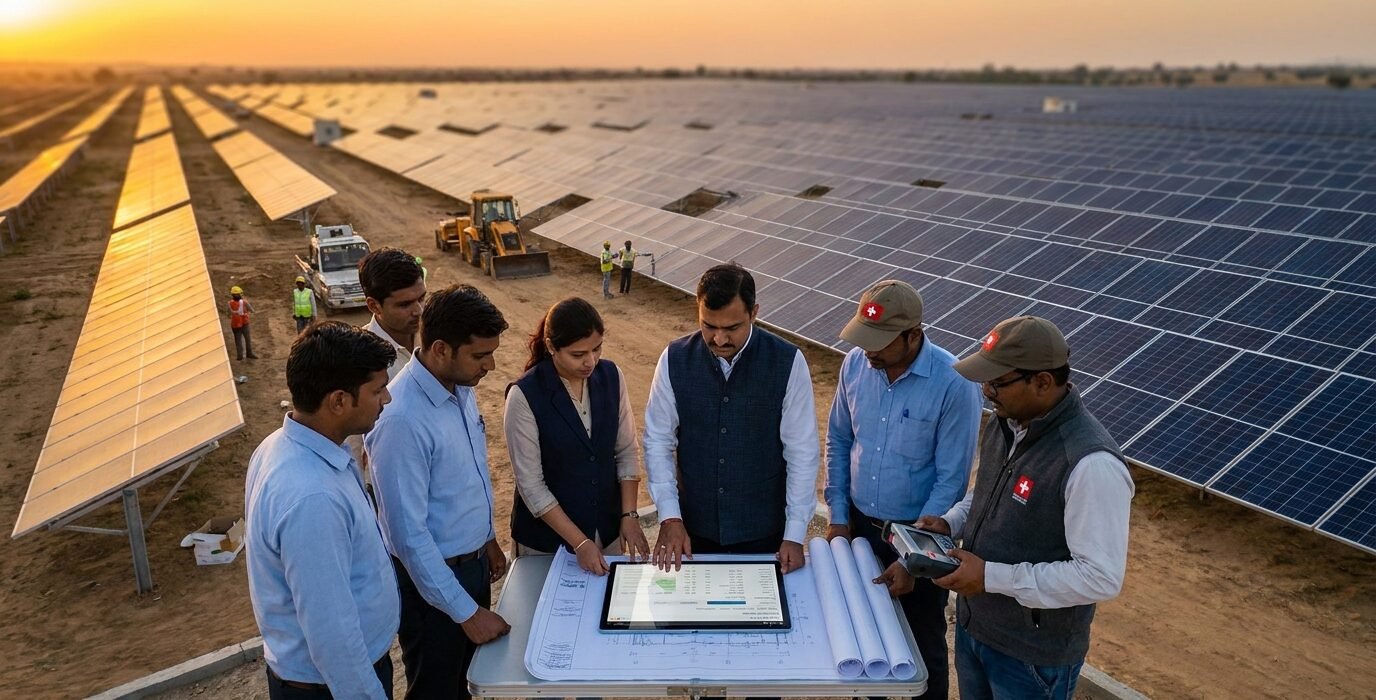
Imagine the crisp, alpine air of Zurich. It’s a city synonymous with financial prowess and meticulous planning. Now, picture that same precision and capital flowing across continents. This capital is powering wind turbines in Rajasthan and solar farms in Gujarat. This isn’t a distant dream; it’s the unfolding reality. Swiss banks are increasingly becoming vital financiers for India’s ambitious green energy transition.
Key Takeaways:
- Swiss financial institutions are significantly increasing their investments in India’s renewable energy sector.
- This trend is driven by India’s vast market potential, strong government support for green energy, and a desire for diversification by Swiss banks.
- Specific Swiss banks, like Credit Suisse (now UBS) and others, have been instrumental in backing major renewable energy projects in India.
- The “green finance” aspect aligns with Switzerland’s own commitment to sustainability and ESG (Environmental, Social, and Governance) principles.
- This partnership offers mutual benefits: India gets much-needed capital, and Swiss banks gain access to a high-growth, impactful market.
The sheer scale of India’s energy needs is staggering. The nation races towards ambitious climate targets. Demand for clean, sustainable power generation has never been higher. This is where the quiet, steady influence of Swiss finance enters the picture. For years, Switzerland has been a global hub for banking. It manages wealth with discretion and expertise. This reputation is almost legendary. Now, a growing segment of this financial muscle is being directed towards powering India’s sustainable future. This partnership is as strategic as it is impactful. You might be surprised to learn just how deeply woven this connection is becoming.
The Alpine Advantage: Why Switzerland Looks East
The allure of Switzerland for global finance is undeniable. Think of the serene beauty of Lake Geneva. Picture the discreet offices lining Zurich’s Bahnhofstrasse. Consider the centuries-old tradition of banking excellence. This isn’t just about managing money. It’s about trust. It’s about stability. It’s about a forward-thinking approach to investment. For Swiss banks, the decision to invest in India’s green energy sector isn’t a sudden whim. It’s a calculated move. It’s driven by a confluence of factors.
India, with its burgeoning economy, presents an enormous market for energy. Its population exceeds 1.4 billion. The government’s clear policy direction towards renewables is a major draw. This includes ambitious targets for installed capacity by 2030. This creates a stable and predictable environment for investors.
Furthermore, Swiss banks themselves are under increasing pressure. Regulators, shareholders, and their own ethical compasses are driving this. They are pushing for portfolios to align with Environmental, Social, and Governance (ESG) principles. Investing in renewable energy in a rapidly developing economy like India offers a compelling way to meet these goals. It also seeks attractive returns. It’s a chance to put their capital to work. It addresses climate change directly.
One significant factor is the diversification strategy. Relying solely on established European markets can be limiting. India, with its unique growth trajectory and massive unmet energy demand, offers a different kind of opportunity. It’s about spreading risk. It’s about tapping into new frontiers of growth. This is particularly true in sectors deemed essential for the future. This strategic vision is what makes the Indo-Swiss green finance corridor so potent. We are seeing a deliberate shift. Capital is moving from historic financial centers to where the future growth and impact lie.
Bridging Continents: Landmark Deals and Key Players
The financial pages often read like a dry ledger. But behind the numbers lie stories of ambition and progress. In the realm of Indo-Swiss green finance, several landmark deals have illuminated the path. Many transactions happen behind closed doors. But public announcements offer a glimpse into the scale of this burgeoning partnership. Consider the role of major Swiss financial institutions. For instance, UBS, post its acquisition of Credit Suisse, inherits a legacy of involvement in the Indian market.
Credit Suisse, in particular, had been a significant player. It provided debt financing for various infrastructure projects. This included those in the renewable energy space. They’ve been involved in syndicated loans. They’ve also facilitated project finance for large-scale solar and wind projects. These were developed by Indian conglomerates.
One notable example, though not exclusively Swiss but indicative of the international financial community’s engagement, involved the financing of large solar parks. These projects, often spanning hundreds of megawatts, require substantial upfront capital. Swiss banks, with their deep pockets and expertise in structured finance, are well-positioned to provide this. They can underwrite large loans. They can arrange complex financial instruments. They offer advisory services critical for project viability.
It’s not just about lending money. It’s about structuring deals. These deals mitigate risks and ensure long-term success. The motivation for these banks is multifaceted. Beyond the ESG imperative, there’s the sheer economic opportunity. India’s commitment to renewable energy is not just a policy choice. It’s a necessity for its development. This creates a consistent pipeline of projects. It offers predictable revenue streams for financiers once operational.
The presence of strong local partners, like Reliance Industries or Adani Green Energy, is crucial. They possess the execution capabilities. This further de-risks these investments for international players. This is where the true synergy lies. Swiss capital meets Indian execution power.
Beyond the Capital: The Swiss Ethos in Indian Green Projects
The involvement of Swiss banks in India’s green energy sector goes beyond mere capital infusion. It brings with it a certain ethos. It’s a philosophy of meticulous planning. It embodies robust risk management. It reflects a long-term perspective deeply ingrained in Swiss business culture. Imagine the rigorous due diligence conducted by a Swiss bank. This happens before approving a loan for a large-scale wind farm project. The project might be in the challenging terrain of the Western Ghats. Every aspect is scrutinized. This includes wind resource assessment and technological viability of turbines. Financial projections and regulatory compliance are also examined. This scrutiny is almost microscopic. This is the “Swiss way.” It’s a commitment to quality and sustainability. This extends to their financial dealings.
This meticulous approach is invaluable for India’s nascent but rapidly expanding renewable energy industry. It helps to professionalize project development. It ensures projects are not just built, but built to last and perform optimally. This can involve setting stringent performance benchmarks. It ensures compliance with international environmental standards. It fosters best practices in project management.
For Indian developers, partnering with Swiss financiers often means gaining access to more than just capital. They gain a wealth of experience and a reputation for reliability. It adds a layer of credibility to projects. This makes it easier to secure further funding or partnerships down the line. Think of the implications for community engagement or land acquisition. Swiss financial institutions often advocate for transparent and ethical practices in these areas. This aligns with global best practices. It contributes to the social sustainability of the projects. This brings a subtle but significant influence. It shapes the broader ecosystem of green energy development in India. It’s about building sustainable energy infrastructure, yes. But it’s also about building a more sustainable way of doing business.
The Unexpected Dividend: Surprising Benefits for Both Nations
The partnership between Swiss banks and India’s green energy sector yields benefits that often surprise observers. The primary driver for Indian businesses is access to crucial capital. For Swiss banks, it’s about ESG compliance and diversification. But the ripple effects are far more profound. For India, the influx of Swiss finance means more than just solar panels and wind turbines. It means a faster, more efficient transition to cleaner energy.
This translates to reduced reliance on imported fossil fuels. It’s a significant boost to energy security. It has a tangible impact on air quality in its rapidly urbanizing cities. Moreover, the stringent due diligence and high standards demanded by Swiss financiers often elevate the quality and reliability of the renewable energy infrastructure being built. This leads to better long-term performance and lower operational costs.
For Switzerland, the benefits extend beyond the financial returns. By investing in India’s green transition, Swiss banks are actively contributing to global climate action. This enhances Switzerland’s reputation as a leader in sustainable finance. It solidifies its image as a responsible global citizen. There’s a growing awareness among Swiss citizens. They see their nation’s financial strength as a powerful force for good. This investment allows them to witness their country’s financial prowess making a tangible difference. It combats climate change in a developing nation.
Furthermore, it fosters deeper economic ties between the two countries. It creates opportunities for Swiss technology providers, engineering firms, and consultants to participate in these large-scale projects. A surprising counter-intuitive fact is that while India’s renewable energy sector is often seen as a recipient of aid or foreign investment, this partnership is increasingly becoming a two-way street. Indian companies are developing expertise and technologies. These could eventually find applications in other markets, including potentially back in Europe. This dynamic creates a truly symbiotic relationship.
Navigating the Future: Challenges and Opportunities Ahead
The path forward for Swiss banks investing in India’s green energy transition is not without its challenges. But the opportunities far outweigh them. One of the primary hurdles can be the sheer complexity of the Indian regulatory landscape. The government has made significant strides in streamlining processes. However, navigating permits, land acquisition, and grid connectivity can still be daunting. For a Swiss bank accustomed to a more predictable and standardized regulatory environment, this requires patience. It also demands robust local partnerships.
Currency fluctuations also present a risk. Investments made in Indian Rupees can be subject to volatility. This impacts the final returns when converted back into Swiss Francs or Euros. Sophisticated hedging strategies are essential to mitigate this.
Despite these challenges, the future looks exceptionally bright. India’s commitment to renewable energy is unwavering. This is driven by both environmental necessity and economic opportunity. The government’s policies, such as Production Linked Incentives (PLI) for solar manufacturing and ambitious renewable energy targets, continue to create a conducive investment climate. The recent geopolitical shifts and a growing global focus on energy security are further accelerating the push towards domestic renewable sources. This makes India an even more attractive destination for capital.
Swiss banks, with their long-term perspective and commitment to sustainability, are perfectly positioned to capitalize on this trend. They can continue to play a pivotal role in financing not just large-scale utility projects. They can also fund emerging areas like green hydrogen, battery storage, and electric vehicle infrastructure. The growing maturity of India’s financial markets and increasing transparency in project execution will further reduce perceived risks for foreign investors. This is a journey of mutual growth. Swiss financial acumen meets India’s immense potential for a greener tomorrow.
The Quiet Power of Shared Ambition
As the sun sets over the Swiss Alps, casting long shadows across snow-capped peaks, and the vibrant hues of an Indian sunset paint the skies over the Thar Desert, a connection is being forged. It’s a connection powered not just by capital, but by a shared ambition for a sustainable future. The quiet, methodical approach of Swiss banking, honed over centuries, is finding fertile ground. This is in India’s dynamic and rapidly growing green energy sector. This isn’t just about financial transactions. It’s about building infrastructure. This infrastructure will power homes and industries for generations to come. It simultaneously mitigates the existential threat of climate change. You can feel the palpable sense of purpose in these partnerships.
The story of Swiss cash fueling India’s green future is a testament to what can be achieved. This happens when financial expertise meets genuine need and a clear vision. It demonstrates that investing in sustainability is not just an ethical imperative. It is a sound economic strategy. The mutual benefits are clear. India accelerates its transition to clean energy. It enhances its energy independence and environmental well-being. Switzerland solidifies its role as a global leader in sustainable finance. It actively contributes to a healthier planet. This collaboration offers a powerful model. It serves other developed nations and developing economies. They are looking to navigate the complexities of climate action and economic growth. The silent hum of a solar inverter in Gujarat, the steady turn of a wind turbine in Maharashtra – these are the tangible results. They are the outcome of a partnership that is quietly, powerfully, reshaping the future.