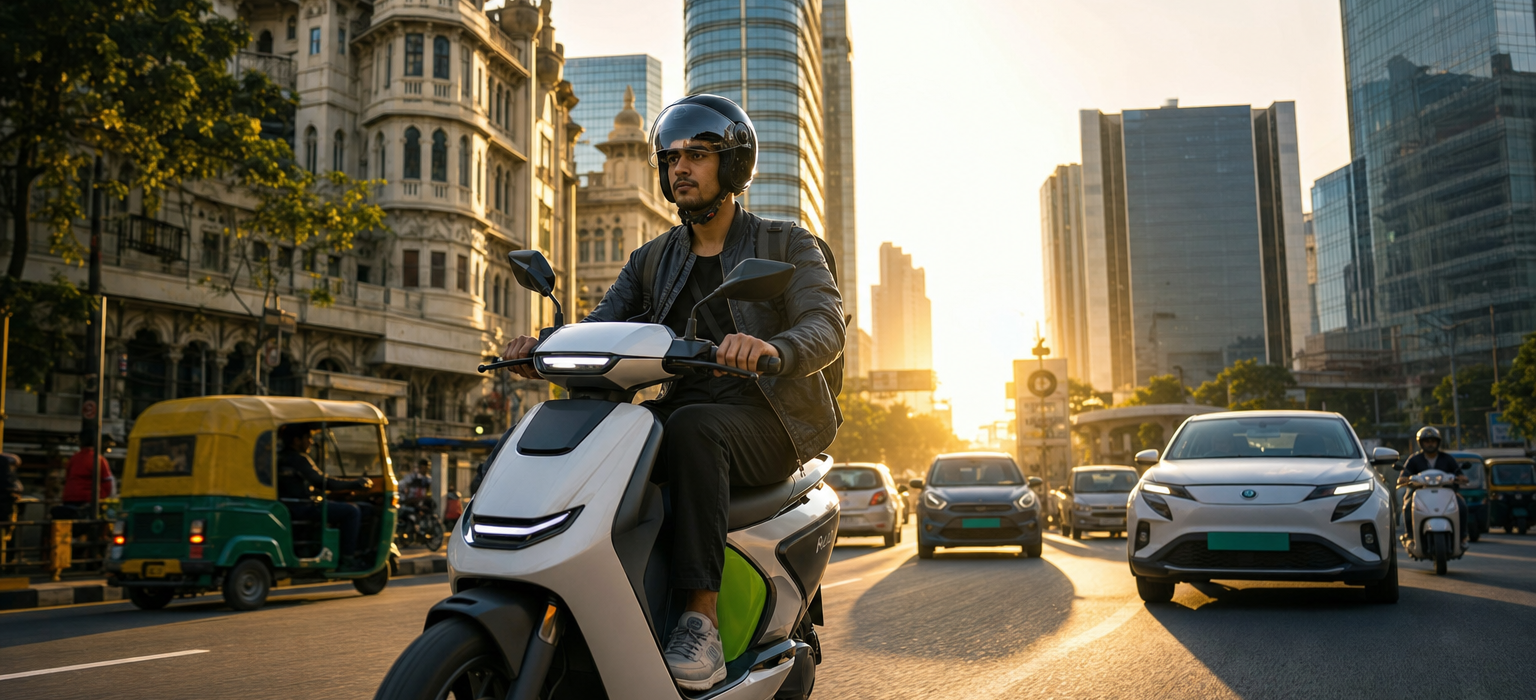
The air in India’s bustling cities often hangs thick with the scent of exhaust fumes. It’s a familiar soundtrack to millions of lives. But a new, quieter hum is starting to cut through the din. It’s the sound of electric vehicles. And it’s being amplified by a new generation of Indian entrepreneurs.
These startups aren’t just building cars. They’re reimagining mobility. They’re challenging established norms. They’re injecting innovation into a sprawling automotive landscape. Their journey is a testament to Indian ingenuity. They face formidable odds. Audacious vision meets gritty determination.
Key Takeaways:
Advertisement300×250 / native
- Indian EV startups are rapidly innovating with unique business models, from battery swapping to affordable electric scooters.
- They are attracting significant funding, but also grappling with infrastructure and manufacturing scalability challenges.
- These agile players are forcing traditional auto giants to accelerate their own EV strategies.
- The government’s policy support is a crucial enabler, but the road ahead requires sustained private sector commitment.
- The impact extends beyond the auto sector, touching on energy, job creation, and India’s environmental goals.
The Spark of Disruption in Bengaluru
Bengaluru, India’s Silicon Valley, is buzzing. It’s buzzing with more than just software code these days. It’s the heartland of India’s electric vehicle startup boom. Here, amidst the traffic-snarled streets, companies like Ather Energy are proving that electric two-wheelers can be aspirational.
Ather, co-founded by Swapnil Jain and Tarun Mehta, started with a vision. They wanted to build an electric scooter that wasn’t a compromise. Not on performance. Not on design. Their flagship Ather 450X is a far cry from the clunky, utilitarian EVs of yesteryear. It’s sleek. It’s connected. It offers a thrilling riding experience. It challenges the perception that EVs are slow or boring.
The company’s approach goes beyond the vehicle. Ather has built its own charging infrastructure. It’s called the Ather Grid. It’s strategically placed across cities. This proactive step tackles range anxiety. It addresses the lack of charging points. These are big worries for potential EV buyers. They’ve also focused on a direct-to-consumer model. This controls the entire customer experience. From purchase to service. This level of integration is a key differentiator. It allows them to gather valuable data. It enables rapid iteration.
We spoke with a young professional in Koramangala, Bengaluru. He proudly showed us his Ather scooter. “Before, I was always worried about petrol prices and pollution,” he said. “Now, I charge it overnight at home. It’s cheaper and cleaner.” A broad smile spread across his face. “Plus, it’s so much fun to ride!” Ather’s success is a powerful signal. The Indian market is ready for premium, well-engineered electric mobility. Even in the two-wheeler segment. This segment traditionally prioritizes affordability. Their focus on a holistic ecosystem sets a benchmark. Charging and community are key.
Ola Electric: A Disruptor’s Ambitious Gambit
Bhavish Aggarwal, the charismatic founder of Ola Electric, has emerged as a significant force. He’s a major player in the Indian EV narrative. His ambition isn’t just to build electric scooters. It’s to revolutionize the entire two-wheeler industry. He wants to establish India as a global hub for electric mobility.
The company’s acquisition of Amsterdam-based Etergo in 2020 was a bold move. It signaled their intent. Etergo had a promising scooter platform. Aggarwal’s vision of a “Future Factory” in Krishnagiri, Tamil Nadu, is astonishing. It aims to produce millions of scooters annually. This facility is touted as the world’s largest two-wheeler factory. It aims for high automation. Vertical integration is a priority.
The launch of the S1 and S1 Pro models was met with immense fanfare. Pre-orders broke records. Aggarwal’s marketing prowess is undeniable. His aggressive pricing strategy put immense pressure on existing players. However, the journey hasn’t been without its bumps. Reports of software glitches have surfaced. Delivery delays have occurred. Customer service issues have been raised. These highlight the immense challenges of scaling production. Managing customer expectations at such a rapid pace is tough.
“We’ve seen a lot of excitement, but also some frustration,” commented a tech analyst based in Chennai. “When you promise a revolution, people expect perfection from day one.” They continued, “Ola has the potential to lead, but they need to iron out these operational kinks quickly to retain customer trust.” The company is also exploring battery-swapping technology. This model could significantly reduce charging times. It would appeal to riders who can’t charge at home. This dual approach is key. Offering innovative products. Exploring alternative ownership and charging models. It positions Ola Electric as a pivotal player. They are shaping India’s EV future. Their scale and aggressive strategy are forcing the entire industry to adapt.
The Rise of Affordable Electric Two-Wheelers
Beyond the premium offerings and ambitious giants, a crucial segment of India’s EV revolution is being driven by startups. They focus on the mass market. Companies like Ampere Electric, Okinawa Autotech, and Hero Electric are making electric scooters and motorcycles accessible. Hero Electric, though more established, has embraced the startup ethos.
Their focus is on affordability. Practicality is paramount. They address the daily commuting needs of millions of Indians. This is especially true in Tier 2 and Tier 3 cities. Purchasing power is lower there. Public transport options can be limited. These manufacturers understand a key principle. For electric mobility to truly take hold, it must be within reach. It must be accessible to the average Indian household.
Consider the typical commuter in a city like Lucknow. Their primary concern is often the cost of fuel. Maintenance of their petrol-powered scooter is also a worry. Ampere Electric offers a range of scooters. They are significantly cheaper to buy and run. They are cheaper than traditional counterparts. Their strategy often involves simpler technology. Locally sourced components are used where possible. They focus on building a robust dealer network.
“We found that many people wanted to go electric, but the initial cost was a barrier,” explains a sales executive at an Ampere dealership in Ghaziabad. “Our models offer a solution that makes economic sense over time. With lower running costs that quickly offset the initial investment.” This segment is vital. It’s where the most significant reduction in carbon emissions can be achieved. Fuel import bills can also be reduced. The success of these startups hinges on their ability to maintain competitive pricing. Reliability and adequate service support are crucial. They prove that sustainability doesn’t have to come at a prohibitive cost. They are the unsung heroes of India’s clean mobility transition.
Funding Frenzy and the Roadblocks Ahead
The promise of India’s electric vehicle market has not gone unnoticed. Investors are paying attention. Venture capital firms and private equity funds have been pouring billions of dollars into the sector. This fuels the rapid growth of these startups. Companies like Ather Energy and Ola Electric have successfully raised substantial rounds of funding. Prominent investors are involved. This allows them to scale production. Invest in R&D. Expand their reach. This influx of capital is a testament to the confidence in India’s potential. India is seen as a global EV manufacturing and consumption hub.
However, securing funding is just one part of the equation. The real challenge lies in translating that investment into sustainable, scalable businesses. One of the primary hurdles for many Indian EV startups is the establishment of a robust and reliable supply chain. India has historically lacked a strong domestic ecosystem. This is for critical EV components like batteries, motors, and advanced electronics. Unlike mature automotive markets, this is a significant gap. This often means relying on imports. This can lead to higher costs. It can cause longer lead times. It creates vulnerabilities in production.
Furthermore, the infrastructure deficit remains a significant concern. Companies are investing in their own charging networks. But a widespread and accessible public charging infrastructure is still in its nascent stages. This lack of charging points, especially outside major metropolitan areas, continues to be a deterrent. It discourages many potential buyers.
“We see a lot of potential, but scaling manufacturing and building out charging infrastructure requires massive, long-term investment. This goes beyond venture capital,” notes an industry consultant. They advise several EV startups in Pune. “There’s also the challenge of skilled labor. And ensuring quality control across a rapidly expanding network.” Despite these obstacles, the sheer dynamism of the sector is evident. These challenges are being met with innovative solutions. A relentless drive to succeed is evident.
Government Push and Policy Tailwinds
The Indian government has recognized the strategic importance of electric mobility. It has been actively promoting its adoption. This is done through various policies and incentives. The Faster Adoption and Manufacturing of (Hybrid &) Electric Vehicles in India (FAME India) scheme has been instrumental. It provides subsidies for electric vehicles. It supports the development of charging infrastructure. Schemes like the Production Linked Incentive (PLI) for the automotive sector are also crucial. Specifically for advanced chemistry cell batteries, these aim to boost domestic manufacturing. They reduce import dependence. These policy interventions are crucial. They level the playing field. They encourage investment in a sector that requires significant upfront capital. It faces stiff competition from established internal combustion engine (ICE) vehicle manufacturers.
Beyond direct subsidies, the government has also been working on setting up charging infrastructure standards. It encourages state governments to facilitate the deployment of charging stations. Cities like Delhi and Mumbai have seen proactive measures. These include exemptions on road tax and registration fees for EVs. This makes them more attractive to consumers. The push for electrification is also deeply intertwined with India’s broader climate change commitments. It aligns with its goal of reducing oil imports.
However, the effectiveness of these policies often depends on consistent implementation. A clear long-term vision is essential. “The government’s intent is clear, and the FAME scheme has certainly helped,” says an official from the Society of Indian Automobile Manufacturers (SIAM). “But we need to see sustained policy support. Simplified regulatory processes are needed.” Greater collaboration between the government, private sector, and research institutions is vital. This will truly accelerate the transition. The success of India’s EV revolution will undoubtedly be a story of how effectively these policy tailwinds can propel the industry forward.
The Broader Impact: Beyond the Tailpipe
The rise of India’s electric vehicle startups is much more than a shift in transportation technology. It’s a catalyst for broader economic and societal transformation. As these companies scale up, they are creating new job opportunities. This is not just in manufacturing and engineering. It extends to software development, battery technology, charging infrastructure management, and after-sales service. This is particularly significant for a country with a large youth population. They are seeking meaningful employment.
Furthermore, the move towards electric mobility has profound implications for India’s energy sector. It necessitates a greater focus on renewable energy sources. These will power these vehicles. This accelerates the transition to a cleaner energy grid. Imagine a future where the electricity powering your car or scooter comes from solar panels. These could be installed on rooftops across the country. A truly sustainable ecosystem.
The environmental benefits are perhaps the most widely discussed impact. Air pollution is a major health concern in many Indian cities. The widespread adoption of EVs promises cleaner air. It offers a healthier urban environment. This is not just about reducing carbon emissions. It’s about improving the quality of life for millions. A surprising statistic reveals that even with the current energy mix in India, EVs generally have a lower lifecycle carbon footprint. This advantage grows significantly as the grid becomes greener.
The cultural shift is also palpable. For years, cars and scooters have been symbols of status and freedom. Electric vehicles, with their advanced technology and eco-conscious appeal, are beginning to redefine these aspirations. They are shaping the desires of a new generation of Indian consumers. They represent a forward-looking identity. A conscious choice for a better future. The startups leading this charge are not just building businesses. They are building a narrative for a cleaner, more sustainable, and technologically advanced India.
Conclusion
The journey of India’s EV startups is a vibrant, dynamic saga. From the sleek designs emerging from Bengaluru to the ambitious manufacturing plans in Tamil Nadu, these companies are demonstrating a key principle. Innovation and sustainability can go hand-in-hand. They are challenging the status quo. They are forcing legacy players to adapt. Crucially, they are making electric mobility a tangible reality for a growing number of Indians.
While the road ahead is paved with challenges, the momentum is undeniable. Building robust supply chains is one hurdle. Ensuring equitable access to charging is another. But the sheer ingenuity on display suggests a powerful conclusion. The electric revolution is not just coming. It’s already here. And it’s being driven by India’s own innovators. The hum of their electric motors is the sound of a nation charting a new course. A course towards a cleaner, smarter, and more sustainable future.