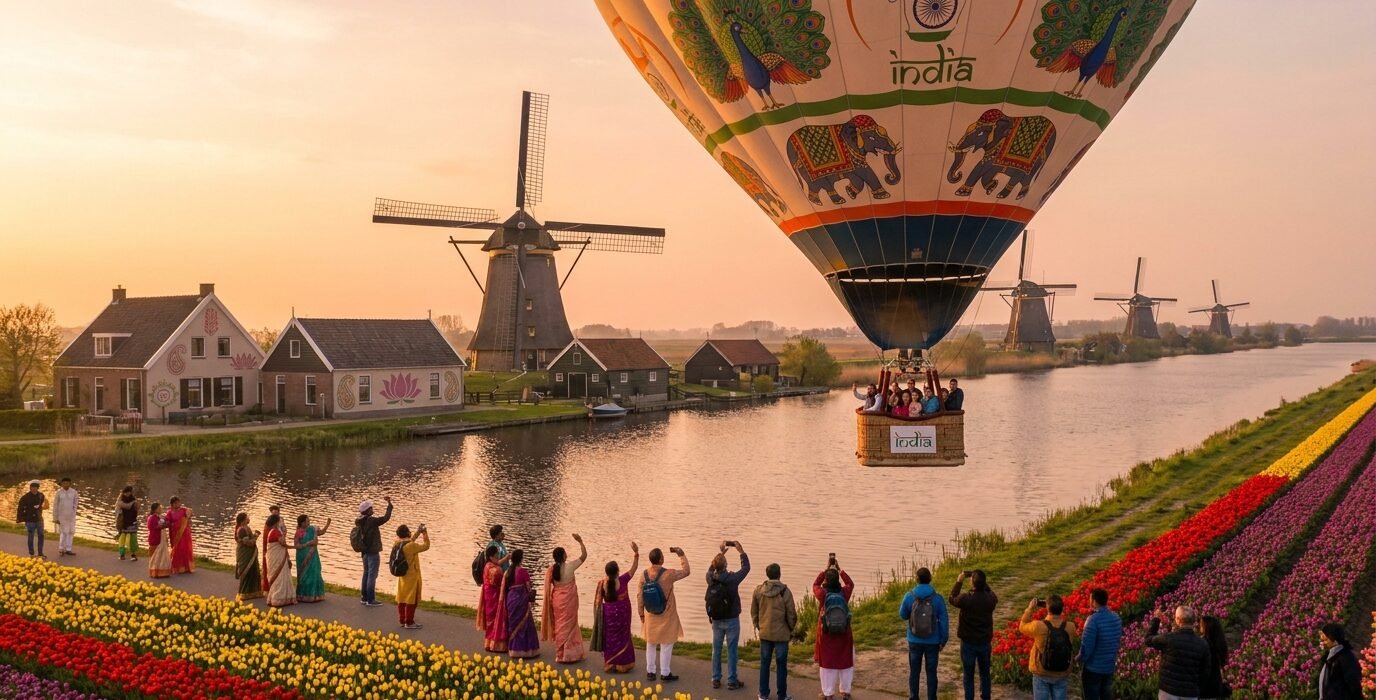
The scent of stroopwafels and the chime of Delft blue pottery now mingle with the excited chatter of Indian travellers exploring Amsterdam’s canals. A quiet revolution is underway. Indian tourists are flocking to the Netherlands in unprecedented numbers. They are transforming quaint villages and bustling cities alike. This isn’t just a fleeting trend. It’s a vibrant cultural exchange breathing new life into Dutch economies.
Key Takeaways:
- Indian tourist arrivals in the Netherlands have seen a significant surge. This is driven by enhanced flight connectivity and targeted cultural exchange initiatives.
- Key destinations like Amsterdam, Rotterdam, and the tulip fields of Keukenhof are experiencing a notable increase in visitors from India.
- Indian travellers are seeking authentic cultural experiences. This includes art museums, traditional windmills, and local culinary delights.
- The influx of Indian tourists is providing a substantial economic boost to Dutch businesses. This spans hospitality, retail, and transport sectors.
- Efforts are underway to further deepen cultural ties. The goal is to cater to the evolving preferences of the Indian travel market.
Van Gogh, Windmills, and a Warm Welcome in Amsterdam
Amsterdam’s iconic canals are reflecting more than just the Dutch skies these days. They’re mirroring the vibrant colours of Indian saris and the excited faces of families exploring the city. The recent surge in Indian tourism isn’t just a statistic. It’s visible in the queues at the Rijksmuseum. It’s in the bustling markets of Albert Cuypstraat. It’s in the quiet hum of conversations in cafés.
For years, Europe was a dream destination. It was often seen as a distant, almost mythical land. Now, with direct flights from major Indian cities like Delhi and Mumbai becoming more frequent and affordable, that dream is within reach. This accessibility is for a growing segment of the Indian population. Air India’s increased frequency, for instance, has been a game-changer. It has cut down travel time. It has reduced the hassle of multiple layovers. This improved connectivity is the bedrock upon which this tourism boom is built.
Local businesses are adapting. Boutique hotels in the Jordaan district are seeing more Indian patrons. Souvenir shops near Dam Square are too. Many are adapting their services. Some offer multilingual menus. Others employ staff who can communicate in Hindi or English with a nuanced understanding of Indian customs. The city, with its rich history and artistic heritage, offers a compelling narrative for travellers. They come eager to stand before Van Gogh’s masterpieces. They want to wander through the Anne Frank House. They simply want to soak in the unique atmosphere of a city that seamlessly blends historical charm with modern dynamism.
A study by the Netherlands Board of Tourism & Conventions (NBTC) noted a 15% year-on-year increase in Indian visitors in the last fiscal year. This figure has surprised many within the industry. This isn’t just about sightseeing. It’s about experiencing a different pace of life. It’s about exploring a different cultural landscape.
Beyond the Capital: The Allure of Keukenhof and the Tulip Trail
While Amsterdam remains the primary draw, the Netherlands’ appeal for Indian tourists extends far beyond its vibrant capital. The ethereal beauty of the Keukenhof Gardens, often dubbed the “Garden of Europe,” is a particular magnet during the spring bloom. Imagine vast fields ablaze with tulips in every conceivable colour. This is a spectacle that resonates deeply with an Indian audience. They are accustomed to the vibrant hues of festivals like Holi. For many Indian families, the opportunity to witness this natural wonder firsthand is a bucket-list item. They arrive in droves, cameras in hand, eager to capture the breathtaking vistas. The experience is often enhanced by the sheer scale and meticulous planning of the gardens. It’s not just about the flowers. It’s about the artistry of Dutch horticulture. It’s a testament to centuries of agricultural innovation.
Many visitors also venture into the surrounding Bollenstreek region. This is a scenic area dotted with flower farms. This allows for a more immersive experience. It offers insights into the cultivation process. It highlights the economic significance of flowers in Dutch society. Beyond the floral displays, the iconic windmills of Zaanse Schans and Kinderdijk offer a glimpse into the Netherlands’ historical battle against water. They showcase its ingenuity in harnessing natural resources. These picturesque sites, with their rustic charm and historical resonance, provide a stark yet beautiful contrast to the urban energy of Amsterdam.
Local guides in these regions have noted a growing curiosity among Indian visitors. They are interested in Dutch history and agricultural practices. They ask insightful questions. This demonstrates a genuine desire to understand the Dutch way of life beyond the superficial. This engagement enriches the tourist experience for everyone involved. It fosters a deeper cultural appreciation. The economic ripple effect is palpable here too. It supports local artisans selling traditional Dutch crafts. It benefits farm-to-table eateries offering local delicacies.
Culinary Journeys: From Stroopwafels to Indonesian Influences
The Netherlands’ culinary landscape offers a surprising and delightful exploration for Indian palates. It often finds common ground in shared histories and evolving tastes. While the iconic stroopwafel, a thin waffle filled with caramel syrup, is a must-try for almost every visitor, the Dutch food scene offers much more. Indian tourists are increasingly exploring local markets and eateries. They are seeking out traditional dishes. Think of the bitterballen, crispy fried meatballs that are a popular snack. Or the hearty stamppot, a mashed potato dish often served with sausage or kale. These hearty, comforting flavours often appeal to Indian sensibilities. They also value wholesome, filling meals.
What adds an intriguing layer to this culinary exploration is the significant Indonesian influence on Dutch cuisine. This is a legacy of colonial history. Dishes like Rijsttafel (rice table), a lavish spread of many small dishes originating from Indonesia, are a unique fusion experience. It fascinates Indian travellers. The complex spices and varied textures of a Rijsttafel offer a familiar yet exotic adventure. This is for those who appreciate the nuances of Indian cooking. Many Dutch restaurants are now actively promoting these fusion dishes. They recognize the growing interest from the Indian market. They are also becoming more aware of dietary preferences. Some offer vegetarian or vegan options. These are increasingly important considerations for Indian travellers. The rise of food tourism is undeniable. Platforms showcasing Dutch culinary traditions are gaining traction. This is among Indian travel bloggers and influencers. They, in turn, inspire their followers. This organic growth, fueled by shared appreciation for diverse flavours, is creating a truly cross-cultural gastronomic dialogue. The willingness of Dutch establishments to embrace and adapt their offerings to cater to these evolving tastes is a testament to the growing cultural exchange.
The Economic Heartbeat: Boost for Dutch Businesses
The influx of Indian tourists is more than just a cultural phenomenon. It’s a significant economic driver for the Netherlands. Local businesses are feeling the positive impact. This ranges from the smallest souvenir shop to major hotel chains. The increased spending power of this demographic is translating into tangible revenue growth. This is happening across various sectors.
Consider the retail industry. Indian visitors are often keen shoppers. They are drawn to Dutch diamonds, Delft blue ceramics, and fashion brands. Duty-free shops at Schiphol Airport are reporting a noticeable uptick in sales. High-street retailers in Amsterdam’s P.C. Hooftstraat are too. These sales are directly attributable to Indian travellers.
The hospitality sector is also experiencing a boom. Hotels, particularly those offering comfortable amenities and proximity to popular attractions, are seeing higher occupancy rates. Many are now investing in better Wi-Fi. They are offering diverse breakfast options. Staff training is also a focus to cater specifically to Indian guests. This includes understanding the importance of specific meal timings and preferences.
The transportation sector is also benefiting. Increased demand for guided tours, canal cruises, and car rentals signifies a healthy flow of economic activity. Tour operators are adapting their packages. They offer itineraries that highlight cultural landmarks and shopping opportunities relevant to Indian interests. Beyond the direct spending, there’s an indirect economic benefit. The jobs created in these sectors, from hotel staff and tour guides to shop assistants and restaurant servers, contribute to the overall Dutch economy.
A recent report by the Dutch Central Bureau of Statistics indicated that tourism spending by non-EU visitors, including those from India, has grown by over 12% in the past year. This sustained growth suggests a long-term positive outlook. The emphasis on cultural exchange programs, often supported by government initiatives, further solidifies this trend. It fosters a deeper, more meaningful connection between the two nations. This naturally translates into sustained tourism.
Cultural Bridges: Festivals, Art, and Shared Heritage
The growing tourism from India to the Netherlands is deeply rooted in a desire for cultural immersion. It also stems from a surprising resonance between shared historical threads. It’s not just about ticking off landmarks. It’s about understanding the essence of Dutch culture. This is evident in the increasing popularity of art museums. Beyond the universally acclaimed Van Gogh Museum, Indian visitors are showing a keen interest in institutions like the Mauritshuis in The Hague. This museum is home to Vermeer’s “Girl with a Pearl Earring.” The Kröller-Müller Museum is also a draw. It boasts an impressive collection of Impressionist and Post-Impressionist art. This collection is set within a beautiful sculpture garden. These artistic pilgrimages offer a quiet contemplation. This appeals to a sense of aesthetic appreciation often found in Indian art forms.
Furthermore, Dutch cultural events are becoming more accessible and appealing to Indian travellers. The annual Keukenhof flower show, as mentioned, is a prime example. But there’s also a growing appreciation for traditional Dutch music, dance performances, and craft workshops. Imagine an Indian family learning the art of clog painting. Or witnessing a demonstration of traditional cheese making in Gouda. These experiences offer a tangible connection to Dutch heritage.
There’s a fascinating, albeit often overlooked, historical connection. This exists through trade routes and colonial pasts. It subtly shapes perceptions. The Indonesian influence on Dutch cuisine, for instance, creates a sense of familiarity. Similarly, the Dutch presence in India, particularly in cities like Mumbai (formerly Bombay) and Chennai (formerly Madras), has left a subtle imprint. This can foster a sense of connection. This shared history, however complex, adds a layer of understanding and curiosity.
Local cultural organizations and tourism boards are actively working to highlight these connections. They organize special events and exhibitions that cater to an Indian audience. The Netherlands Board of Tourism & Conventions (NBTC) has been instrumental in developing targeted marketing campaigns. These emphasize cultural exchange. This proactive approach ensures that the burgeoning interest translates into meaningful and memorable experiences for Indian visitors. It solidifies the Netherlands as a favoured destination.
The Future of Indian Tourism in the Netherlands: What Lies Ahead
Looking forward, the trajectory of Indian tourism to the Netherlands appears exceptionally promising. There’s a clear emphasis on deepening cultural understanding and enhancing the visitor experience. It’s not merely about attracting more visitors. It’s about fostering a richer, more meaningful exchange. The Dutch tourism industry is already taking proactive steps. They are catering to the evolving preferences of Indian travellers.
This includes an increased focus on sustainable tourism practices. This is a growing concern for many environmentally conscious Indian travellers. Furthermore, there’s a growing demand for personalized experiences. Instead of generic tours, visitors are seeking out niche activities. These align with their specific interests. This could be exploring historical windmills. It might be attending artisanal cheese-making workshops. Or it could be delving into the Dutch Masters’ art beyond the most famous pieces.
The expansion of direct flight routes is also a key factor. As more Indian cities gain direct connectivity to Amsterdam and potentially other Dutch hubs, accessibility will further increase. This could open up new markets within India. It could reach beyond the major metropolitan areas. The development of themed travel packages is another area of focus. Imagine packages centered around Dutch design and architecture. Or itineraries dedicated to exploring the rich history of Dutch maritime trade. These specialized offerings cater to a more discerning traveller. They provide a deeper dive into specific aspects of Dutch culture.
The use of technology will also play a crucial role. Enhanced digital platforms will become increasingly important. These will offer information in multiple Indian languages. They will provide personalized recommendations. Virtual reality experiences that allow potential visitors to explore destinations before they arrive could also be a powerful tool. The Netherlands is actively seeking to solidify its position. It aims to be more than just a tourist destination. It wants to be a cultural partner. The goal is to move beyond transactional tourism towards a more relational approach. This builds lasting connections between the people of India and the Netherlands. This forward-thinking strategy ensures that the current boom is not a fleeting moment. It is the foundation for sustained and mutually beneficial cultural and economic ties.
The scent of stroopwafels still wafts through the air. But now it’s accompanied by a deeper appreciation. It’s a shared understanding that transcends borders. The Netherlands, once a distant dream, has become a vibrant reality for countless Indian travellers. It is weaving a new chapter in the story of global cultural exchange. This isn’t just about numbers. It’s about the human connections forged. It’s about the stories shared. It’s about the enduring legacy of mutual curiosity. As more Indian families discover the charm of Dutch canals and the warmth of its people, the bond between these two nations will only grow stronger. This promises a future filled with continued exploration and shared experiences. It’s a reminder that the most profound journeys are often those that connect us to the world and to each other in unexpected and beautiful ways.